Why an Indoor American Shorthair Keeps the Instinct
You bring home an American Shorthair, perhaps a sleek silver tabby or a handsome brown classic, expecting a calm, companionable cat, and then you discover your shoelaces are under attack, or a dust bunny has met a swift end with surprising ferocity. It can be perplexing and even a little frustrating when your supposedly placid house cat acts like a miniature jungle predator. This guide will delve deep into why your indoor American Shorthair retains its powerful hunting instincts, and more importantly, how you can understand and channel these deeply ingrained behaviors in a positive way for both of you.
The Deep Roots of the American Shorthair's Hunting Drive
When we talk about the American Shorthair, we're not just discussing another pretty face in the cat world. We're talking about a living testament to centuries of purpose and survival. These cats weren't bred for their fluffy coats or extreme features; they were bred, quite naturally, for their utility. Their lineage traces back to working cats who earned their keep, often in the harshest environments. Understanding this history is crucial to grasping why the hunting instinct runs so incredibly strong in the breed, even generations removed from a barn or ship.
Imagine a world before modern pest control, where rats and mice could decimate food stores, spread disease, and make life miserable. That's the world the American Shorthair's ancestors inhabited. They were indispensable crew members on ships, protecting precious cargo from rodents during long voyages across oceans. Ships Carried the American Shorthair's Ancestors as Ratters is a prime example of their maritime history. Once on land, they became vital partners in farms, barns, and early settlements, ensuring that harvests were safe and homes were free of vermin. Their very survival, and the survival of the humans they lived with, depended on their keen hunting abilities. This wasn't a hobby; it was a job. It was their life.
Centuries of Survival Built on Skill
This isn't a story of selective breeding by humans in a cattery, at least not initially. This was natural selection at its finest. The cats that were the most agile, the most patient, the most effective at catching prey, were the ones that survived, thrived, and passed on their genes. Over hundreds of years, this constant culling for hunting prowess forged a deeply embedded genetic blueprint for the ideal predator. Every stalk, every pounce, every efficient kill was reinforced, making these behaviors not just learned actions but inherent traits.
Think about it: a cat that wasn't good at hunting wouldn't eat, and therefore wouldn't live long enough to reproduce. Only the most skilled and driven hunters made it. This created a powerful genetic legacy that prioritizes the hunt. When you see your American Shorthair twitching its tail at a bird outside the window or giving a toy mouse a serious run for its money, you're seeing those centuries of survival instincts bubbling right up to the surface. It's an echo of their past, a testament to their enduring effectiveness.
Instinct Isn't a "Switch"
One of the biggest misconceptions we have about animal behavior is that once an animal is domesticated, its wild instincts simply disappear, as if someone flipped a switch. This is especially true for cats. While American Shorthairs are undeniably domesticated, thriving in human homes, their hunting instincts are not simply "learned tricks" that can be unlearned. They are innate, hardwired drives. It's a fundamental part of their being, woven into their very DNA.
These instincts manifest as a drive to patrol, to observe, to stalk, to pounce, and to secure "prey." It’s not about hunger for an indoor cat with a full bowl; it’s about fulfilling a deep, biological imperative. You might notice this drive come out at odd times – perhaps they're particularly "on alert" at dawn or dusk, much like their wild ancestors. The American Shorthair Still Hunts, Whether You Want It To or Not is a truth that many owners come to realize. Ignoring or trying to suppress these instincts can actually lead to frustration and behavioral issues for your cat, because it's asking them to deny a core part of who they are.
Why an Indoor Life Doesn't Erase Instincts
It’s a common thought: "My cat has a warm bed, endless food, and toys galore. Why would it still want to hunt?" While the motivations might shift from pure survival to satisfying an internal urge, the instinct itself doesn't just vanish because a cat lives indoors. The creature comfort of a home simply changes the expression of these deeply embedded behaviors, not their existence.
Genetic Programming Over Environment
Cats, and American Shorthairs in particular, have a genetic makeup that has been honed over millennia for certain behaviors. Domestication, while significant, hasn't fundamentally altered the core genetic programming for hunting in the same way it might have for, say, a highly specialized dog breed. Cats were welcomed into human homes largely because of these skills, not in spite of them. So, the genetic traits that make them exceptional hunters have been preserved, even as their environment has shifted dramatically.
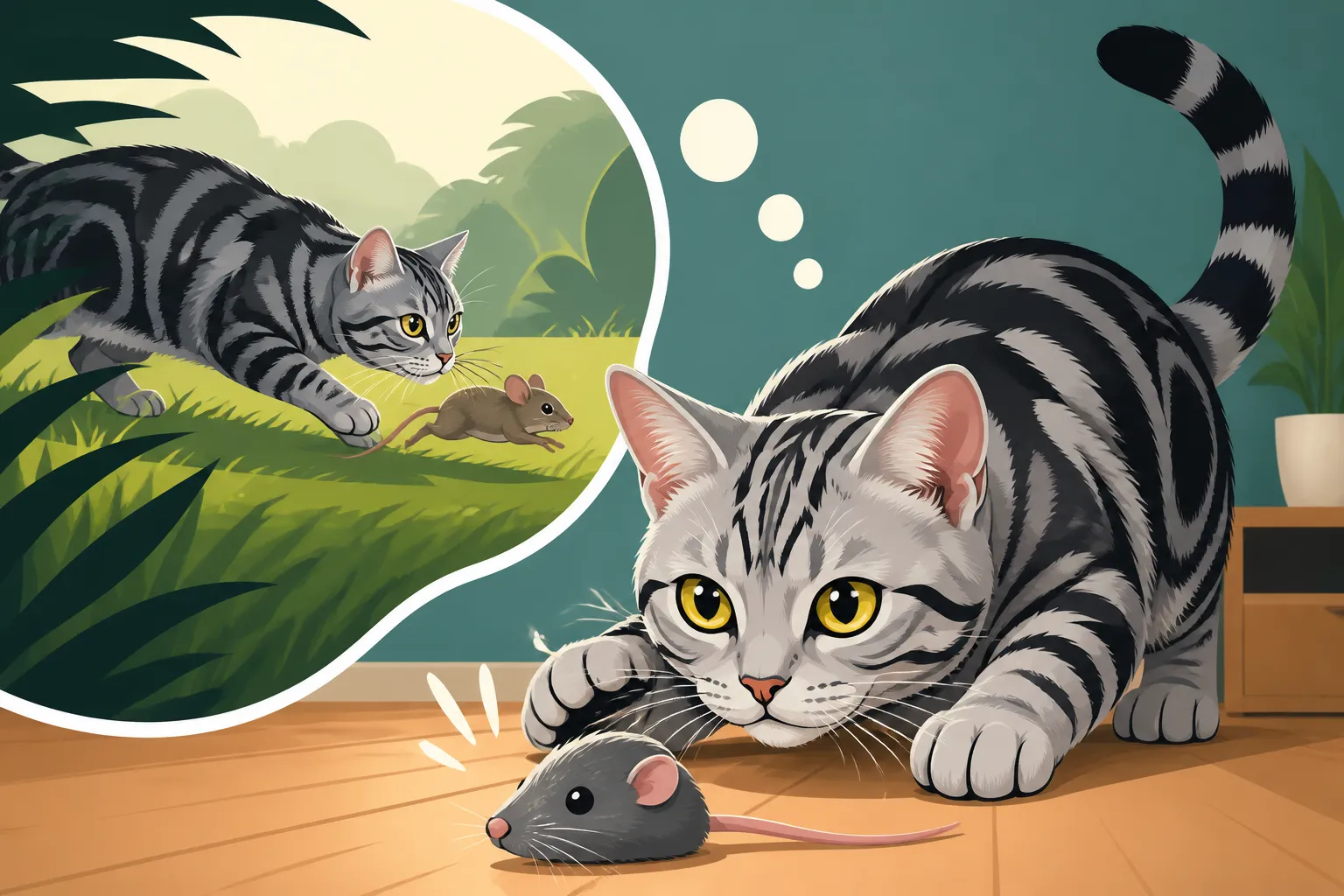
Think of it like this: a human might have a genetic predisposition for athleticism, but if they never train, they won't become an Olympic athlete. However, the potential and the drive are still there. For your American Shorthair, the genetic programming for hunting is so strong that even without actual prey, the urge to perform the hunting sequence persists. This is why you see them "hunting" shadows, dust bunnies, or even your moving toes under a blanket. Their environment has changed, but the deep biological command to hunt remains active.
Learned Behaviors vs. Innate Drives
It's important to differentiate between learned behaviors and innate drives. Learned behaviors are those a cat acquires through experience and training, like coming when called or using a litter box. These can be modified or redirected with relative ease. Innate drives, however, are instincts – hardwired actions that are part of the cat's fundamental behavioral repertoire. The complete hunting sequence, from stalking to the final "kill" bite, is an innate drive.
Even if an American Shorthair kitten is raised entirely indoors, never seeing a live mouse, it will still naturally exhibit stalking, pouncing, and batting behaviors. These aren't taught by the mother cat as much as they are demonstrated and practiced because the internal programming is already there. How an American Shorthair Kitten Learns to Hunt highlights this blend of observation and innate ability. The indoor environment merely provides new, often less-than-ideal, targets for these ancient drives. This can sometimes lead to frustration, as the cat can't always complete the full hunting sequence, especially with certain toys or interactions.
Recognizing the Hunter in Your Home
So, how does this deeply ingrained hunting instinct manifest in your average indoor American Shorthair? It's often subtle, sometimes endearing, and occasionally a little mischievous. Understanding these behaviors is the first step to effectively managing and enriching your cat's life. It's about seeing your cat not just as a pet, but as a small, perfectly evolved predator living in your living room.
The Stalk, Pounce, and Kill Sequence
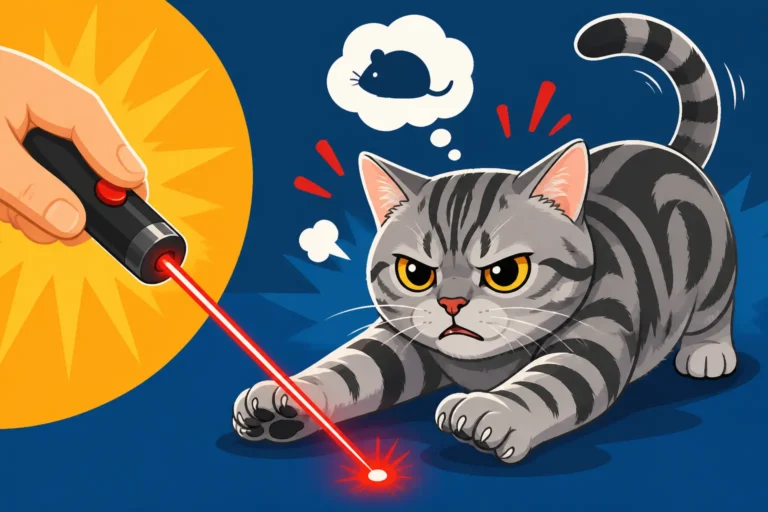
Cats are masters of the hunting sequence, and it's a precise, instinctual ballet. It typically involves several stages: locate, stalk, chase, pounce, and kill. Even if your American Shorthair hasn't seen a live mouse in its life, it will perform variations of these steps. You might see them intensely focused on a dust motes dancing in a sunbeam, or slowly creeping low to the ground towards a wiggling wand toy. How an American Shorthair Stalks involves a deliberate, low-to-the-ground approach, using cover, and intense focus.
The pounce is often quick, powerful, and precise. How an American Shorthair Pounces demonstrates their athletic ability, even if it's just onto a crinkly ball. What follows is the "kill" bite – a quick, decisive action often aimed at the neck of their "prey." With toys, this can look like a vigorous shaking or a firm, sustained bite. This final stage is crucial for a cat's psychological satisfaction. If they can't "kill" the toy, they can become frustrated, leading to a loss of interest or even acting out.
Sometimes, after a successful "hunt" of a toy, they might even bring it to you. This "presenting the kill" behavior is a fascinating remnant of their hunting heritage. It's not necessarily a gift in the human sense, but more an instinct to bring their quarry back to the "den" or perhaps to share with their "colony" – which, in an indoor setting, means you! Why an American Shorthair Brings You Things isn't just cute; it's a profound display of their instincts.
Redirected Prey Drive
Because live prey isn't readily available indoors, your American Shorthair's powerful prey drive gets redirected. Anything that moves, rustles, or can be batted around might become a target. This is What an Indoor American Shorthair Does With a Mouser's Instinct. This includes:
- Your feet and ankles: Especially when they're moving under a blanket or you're walking across a room. Why an American Shorthair Stalks Your Ankles is a classic example of redirected hunting.
- Small, errant objects: Dust bunnies, dropped pens, bottle caps, or even crumbs can become fascinating "prey."
- Shadows and reflections: The movement is enough to trigger the stalk-and-pounce sequence, even if there's no tangible object.
- Flies or other insects: How Often an American Shorthair Catches Flies can show just how much they still operate on a predatory schedule.
It's not uncommon for American Shorthairs to be particularly active hunters around dawn and dusk, mirroring the natural hunting times of their ancestors. Why an American Shorthair Hunts at Dusk and Why an American Shorthair Wakes at Dawn are directly related to this primal timing. Recognizing these patterns and the objects of their redirected attention helps you understand your cat's needs better and provide appropriate outlets.
Channeling the Instinct: Engaging Your Indoor Hunter
The good news is that you don't need to turn your house into a mini-forest or bring home live mice to satisfy your American Shorthair's hunting instincts. With a little creativity and understanding, you can provide ample enrichment that fulfills their natural drives. The key is to mimic the hunting sequence and give them the satisfaction of the "catch."
Interactive Play for a Satisfied Hunter
This is arguably the most important aspect of fulfilling an indoor American Shorthair's hunting needs. Interactive play with you, using the right tools, can simulate the entire hunting sequence, from the initial stalk to the final capture.
- Wand Toys: These are gold standard for American Shorthairs. Look for durable ones with feathers, fur, or crinkly material that mimic small prey. When you play, try to make the toy dart, hide, and pause like real prey. Let the cat "catch" the toy frequently, ending the session with a decisive "kill." Which Wand Toy Reads as Prey to an American Shorthair will guide you to toys that genuinely engage them. A great place to find a wide variety of durable wand toys is on Amazon, where you can read reviews and find options with different textures and movements to keep things interesting.
- Feather Teasers: Similar to wand toys, these allow you to mimic the erratic flight of a bird or the scurry of a small animal. Remember, the goal is not just to make the cat jump, but to allow them to successfully capture the "prey" with their paws and mouth. Why an American Shorthair Needs to Catch the Toy emphasizes this critical point – frustration sets in if they can't achieve that final, satisfying hold.
Aim for multiple short play sessions throughout the day, perhaps 10-15 minutes each, especially around dawn and dusk when their natural hunting drive is highest. How Many Hunts a Day an Indoor American Shorthair Needs suggests that several focused sessions are more effective than one long, desultory one.
Environmental Enrichment
Beyond direct play, your home environment can be designed to cater to their hunting and patrolling instincts. Think about vertical space and opportunities for exploration.
- Cat Trees and Shelves: American Shorthairs, with their strong, muscular builds, love to climb and observe. Cat trees or wall-mounted shelves provide elevated vantage points, allowing them to "patrol" their territory from above, much like a vantage point in nature. This fulfills their need to survey their domain.
- Window Perches: A secure perch overlooking an active outdoor scene can be hours of entertainment, allowing them to observe birds, squirrels, and passersby. It's safe hunting from a distance, satisfying their visual predatory drive without any actual harm to wildlife.
- Puzzle Feeders: These ingenious devices make your cat work for their food, mimicking the effort involved in hunting. Instead of simply eating from a bowl, they have to bat, nudge, or figure out how to release kibble or treats. This taps into their problem-solving and foraging instincts. You can find a fantastic selection of puzzle feeders, from simple treat balls to more complex mazes, on Amazon. Whether a Puzzle Feeder Satisfies an American Shorthair confirms that these can be highly effective in engaging their minds and bodies.
- Hiding Food: Go beyond the feeder! Hide small portions of their daily kibble in various spots around the house – under a rug, inside a paper bag, behind a curtain. This encourages them to "hunt" and "forage" for their meals, providing mental stimulation.
Routine and Consistency
Cats thrive on routine, and American Shorthairs are no exception. Establishing consistent playtimes and feeding schedules can help manage their expectations and energy levels. If they know that after your evening meal, it's "hunt time," they are less likely to seek out inappropriate targets at other moments. Predictability reduces anxiety and allows them to anticipate the fulfillment of their natural drives.
A consistent routine, especially for a self-sufficient cat like the American Shorthair, also helps them feel secure in their territory. How an American Shorthair Splits Its Day Between Patrol and Sleep is a good read on how their internal clock operates, and aligning your play sessions with their natural rhythms can lead to a more harmonious household.
When Instinct Becomes a Nuisance
Despite your best efforts, sometimes those strong instincts can lead to behaviors you'd rather avoid.
- Destructive Scratching: If your American Shorthair is clawing at furniture, it's often a sign they don't have appropriate scratching posts that satisfy their instinctual need to maintain their claws and mark territory. Ensure you have sturdy posts (both vertical and horizontal) in prime locations. Look for sisal rope or cardboard options, as many American Shorthairs prefer these textures. Amazon offers a huge range of scratching posts, so you can experiment to find what your cat loves.
- Counter Surfing: While not always pure hunting, a cat that once had to find its own meals might be prone to scavenging. Why an American Shorthair That Hunted for Meals Takes What It Finds explains this. Make sure food isn't left out, and consider booby-trapping counters with things that make noise when disturbed (like stacked empty cans) to create an aversion without direct punishment.
- Attacking Your Feet: If your feet are still fair game, immediately redirect with a wand toy. Never use your hands or feet as toys, as this encourages rough play and reinforces the idea that human body parts are acceptable prey.
By providing consistent, engaging outlets for their innate hunting drive, you'll not only have a happier, more fulfilled American Shorthair, but you'll also build a stronger bond based on understanding and respect for their unique heritage.
| Instinctual Behavior | Indoor Manifestation | Recommended Solution |
|---|---|---|
| Locate & Stalk Prey | Staring intently, creeping low, tail twitching | Wand toys, feather teasers, laser pointers (with caution), window perches, cat trees |
| Chase & Pounce | Running, leaping onto toys, attacking moving feet | Interactive play with toys that mimic erratic prey movement |
| Kill Bite & Capture | Vigorous shaking of toys, firm bite, holding prey | Allow "capture" of toys, offer plush toys for wrestling, puzzle feeders with treats |
| Patrol Territory | Exploring, climbing, surveying from high spots | Cat trees, wall shelves, window perches, varied room access |
| Foraging for Food | Investigating smells, sometimes counter surfing | Puzzle feeders, hiding portions of food around the house |
Disclaimer
This article is for general informational purposes only and does not constitute professional advice. Laws, prices and regulations vary by location and change over time. Consult a qualified professional for guidance on your specific situation.