How an American Shorthair Stalks
It's easy to assume that once our beloved American Shorthair is indoors, curled up on the sofa, their wilder instincts simply fade away. But anyone who lives with one knows that's just not true! You've probably seen it – that sudden, intense focus, the low crouch, the twitching tail, right before they pounce on a dust bunny or your unsuspecting foot. This isn't just random play; it's a demonstration of their deeply ingrained stalking behavior, a skill honed over centuries. This guide will delve into the fascinating world of how your American Shorthair stalks, explaining the mechanics, motivations, and how you can best support this natural, vital part of their personality.
The Primal Blueprint: Understanding the American Shorthair's Stalking Instinct
For generations, long before they became cherished house pets, American Shorthairs and their ancestors were working cats. They weren't just decorative; they earned their keep as highly efficient rodent controllers on farms, in barns, and even aboard ships. This isn't just some cute historical tidbit; it's the very foundation of their behavioral wiring. The instinct to hunt, and specifically to stalk, is not merely a preference for them; it's a deeply ingrained behavioral pattern that dates back centuries. Why Centuries of Ratting Left the American Shorthair Its Drive
Stalking, in a cat's world, is a complex sequence of behaviors designed to secure prey. It's not just about the final pounce, but everything that leads up to it. Think of it as a meticulously choreographed dance, where every movement, every pause, every shift of weight, is calculated for maximum effectiveness. For an American Shorthair, this isn't aggression, though it can certainly look intense. It's an expression of their evolutionary success, a testament to their heritage as capable predators. When you see your cat stalk, you're observing a living piece of history, an echo of the vital role their ancestors played in human settlements. It’s important to acknowledge this rather than trying to suppress it entirely, which can lead to frustration for your cat.
This intrinsic drive is often misunderstood, especially by those who expect a cat to be purely cuddly or docile. The reality is that the American Shorthair, even in the most comfortable indoor environment, retains a strong connection to its ancestral role. They need to express this instinct. Imagine being built for a specific, demanding job your entire lineage was known for, and then suddenly having that job taken away. You'd still feel the urge to perform, wouldn't you? That's precisely what's happening with your American Shorthair. They have this incredible "mouser's instinct" What an Indoor American Shorthair Does With a Mouser's Instinct, and it needs an outlet. Without appropriate channels, this powerful urge can manifest in less desirable ways, such as boredom, anxiety, or even targeting human feet with a bit too much enthusiasm. Recognizing this fundamental need is the first step in truly understanding and living harmoniously with your American Shorthair.
The Art of Stealth: The American Shorthair's Stalking Posture and Technique
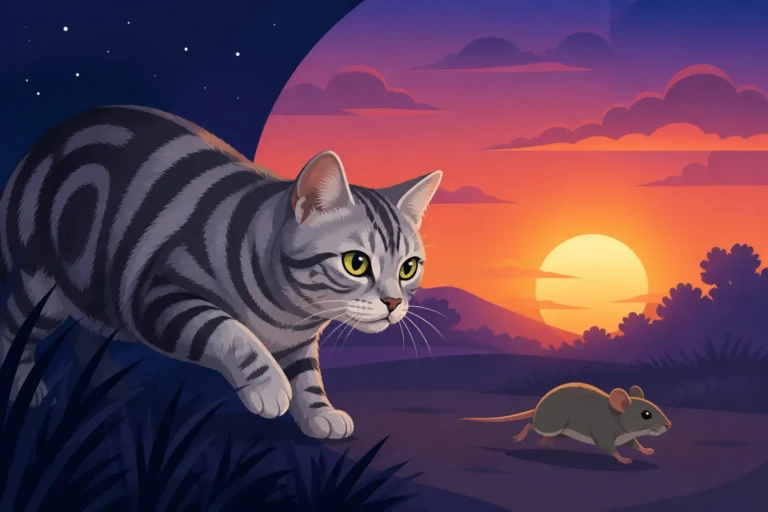
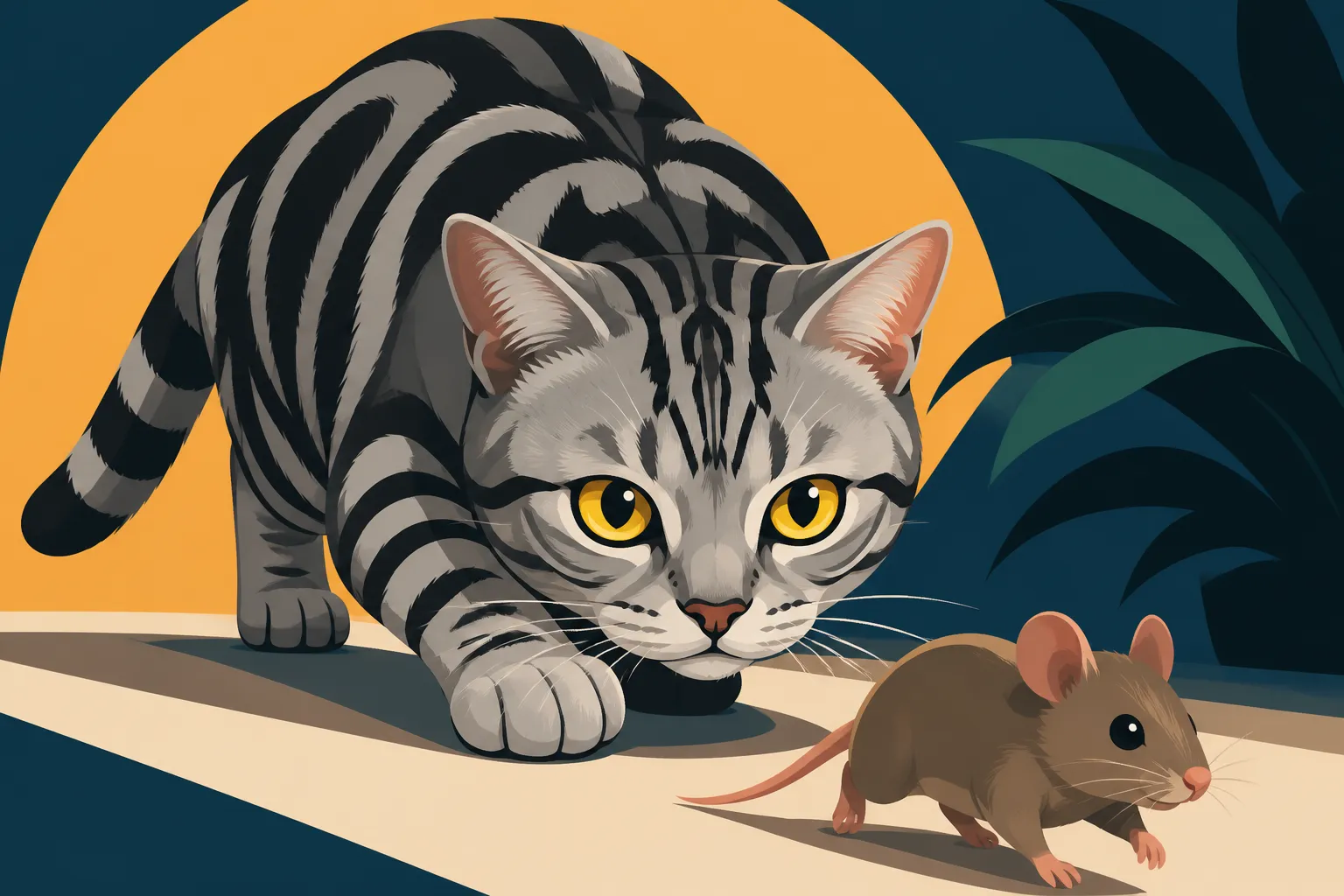
Observing an American Shorthair in full stalking mode is like watching a master class in predatory movement. Every fiber of their being is dedicated to the task at hand. It's a symphony of calculated stillness and explosive motion. Their body language during a stalk is unmistakable: they become incredibly low to the ground, almost slithering forward with their belly close to the floor. This minimizes their profile, making them harder for potential prey to spot. Their spine becomes a fluid line, muscles coiled and ready, while their head remains perfectly level, eyes locked onto the target.
The tail, often seen as a barometer of feline emotion, tells its own story during a stalk. It might be held low and still, perhaps with just the very tip twitching almost imperceptibly – a tiny tremor of anticipation. As the cat gets closer, that twitch can become more pronounced, betraying the immense focus and contained energy within. Their ears are swiveled forward, acting like radar dishes, picking up the slightest sound or rustle. Every sense is heightened, every nerve attuned. This isn't a casual approach; it's a dedicated pursuit.
Once in position, the American Shorthair employs a combination of tactics. There's the "slow creep," where they advance with agonizing slowness, sometimes freezing for long moments, blending into their surroundings. They use every available piece of cover, whether it's the leg of a chair, a pile of laundry, or even just a shadow on the floor. Then, when the moment is right, comes the "burst of speed" How an American Shorthair Pounces. It’s an explosion of power, propelled by those strong, muscular hind legs. Their short, dense coat, originally a practical feature for weather protection, also aids in silent movement, preventing snagging or rustling that a longer coat might cause. This agile yet powerful movement is a direct inheritance from their working ancestry, enabling them to navigate varied terrain and capture fast-moving prey. Indoors, this might mean a swift dash across the living room carpet to corner a rogue dust bunny or a carefully planned ambush from behind the sofa as you walk by.
Targets and Triggers: What an American Shorthair Stalks and Why
So, what exactly captures the laser-like focus of an American Shorthair's stalking instinct? Well, for an indoor cat, the definition of "prey" broadens considerably from their wilder cousins. While they might not be bringing down large game, anything that moves, makes a sudden sound, or offers a fleeting shadow can become an irresistible target.
Small, erratic movements are particularly captivating. Think about those tiny house spiders scurrying across the floor, or a fly buzzing against a windowpane. These are prime targets, triggering that innate hunting drive. Dust bunnies, those elusive tumbleweeds of fluff that gather under furniture, become formidable foes demanding a strategic approach. Even a stray piece of kibble that's rolled away can initiate a full-blown stalk and pounce sequence. The key is the illusion of prey – something that moves independently, inviting the chase.
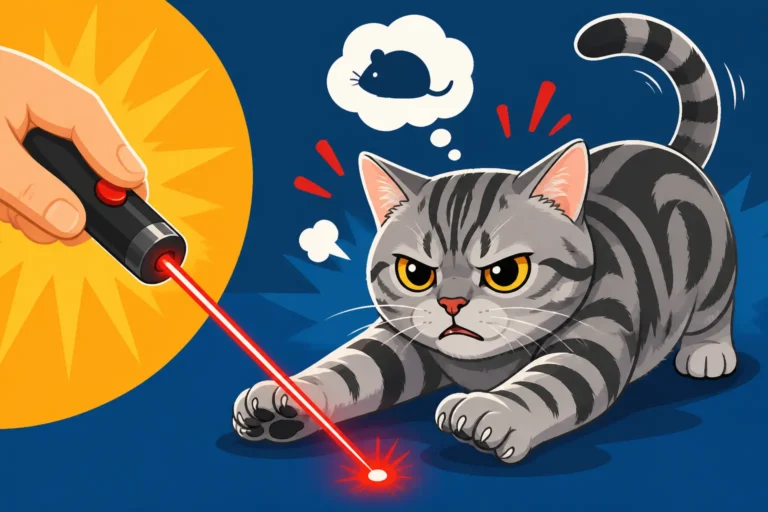
Human feet and ankles are, perhaps, the most common "prey" for many indoor American Shorthairs. There's something about the way feet move under blankets, or the swift, unpredictable motion of walking across a room, that speaks to their predatory nature. Why an American Shorthair Stalks Your Ankles It's not malicious; it's simply their instinct kicking in. Laser pointers are another classic example. The tiny red dot darting across walls and floors perfectly mimics the erratic movement of a small animal, and cats will stalk it with intense concentration. However, this is where we, as owners, need to be mindful. Why an American Shorthair Loses Interest in a Laser While a laser pointer can be a great way to get them moving, if they never get to catch the 'prey,' it can lead to frustration and a sense of unfulfillment. Imagine hunting for hours and never getting to make the kill – it would be incredibly unsatisfying!
The role of scent and sound is also crucial. A faint squeak from a hidden toy, the rustle of a bag, or even the subtle scent of an insect that's wandered indoors can instantly switch on that hunting focus. Their incredibly sensitive hearing and keen sense of smell, honed over centuries of detecting hidden prey, means they're often aware of things we humans completely miss. It's a reminder that their world is far richer in sensory input than ours, especially when it comes to the subtle cues of a potential hunt. Understanding these triggers allows us to create an environment that satisfies their natural urges in a healthy way, rather than leaving them perpetually searching for an outlet.
Channelling the Inner Hunter: Providing Healthy Outlets for Stalking Behavior
Since we understand that stalking isn't just a quirky habit but a fundamental need for your American Shorthair, the next step is providing safe and stimulating ways for them to express it. An unfulfilled hunting instinct can lead to boredom, destructive behavior, or even stress. Our goal is to simulate the hunting sequence – stalk, chase, pounce, and catch – in a way that’s engaging and enriching.
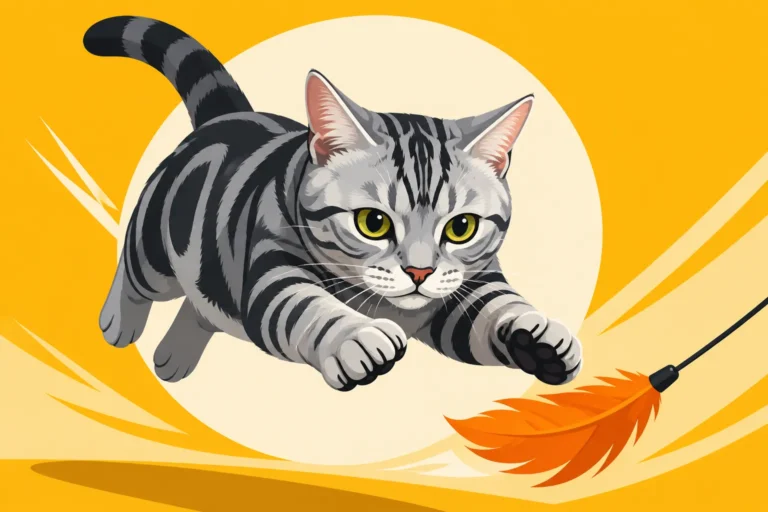
Interactive toys are your best friend here. Think beyond static plushies. Wand toys with feathers or fabric strips on the end are fantastic because you control the movement, mimicking erratic prey. You can make the "prey" hide, scurry, and leap, allowing your cat to stalk, chase, and finally pounce and "capture" the toy. This completes the hunting cycle and provides immense satisfaction. You can find a huge variety of these on sites like Amazon, from simple feather wands to elaborate fishing pole-style toys. Just be sure to put wand toys away after play so your cat doesn't chew off and swallow parts. Small, lightweight balls or crinkly toys that can be batted around and "killed" are also great. Which Wand Toy Reads as Prey to an American Shorthair
Scheduled play sessions are key. Instead of just leaving toys out all day, dedicate 10-15 minutes, two to three times a day, to active, interactive play. This mimics the episodic nature of hunting in the wild. During these sessions, let your American Shorthair stalk, chase, and catch the toy multiple times. Always end the session with a successful "kill" of the toy, allowing them to feel triumphant. This helps them burn off energy and satisfy that innate drive. How Many Hunts a Day an Indoor American Shorthair Needs
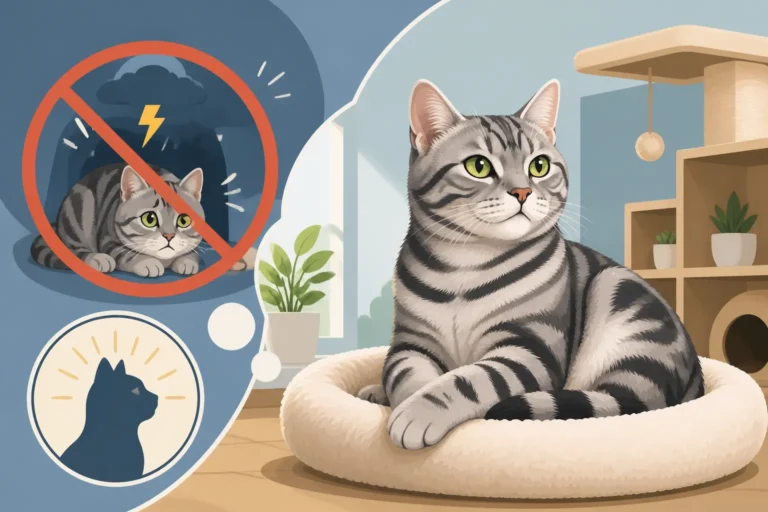
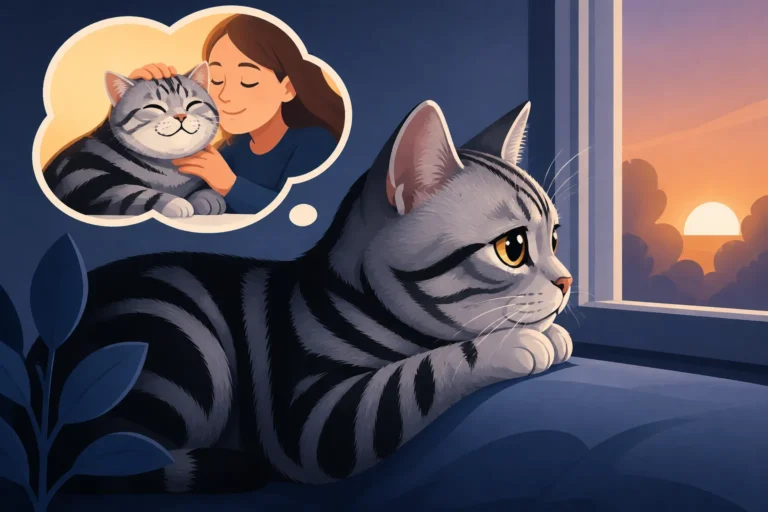
Creating an enriching environment also plays a huge role. Vertical space is incredibly important for a stalking cat. Cat trees, shelves, or wall-mounted perches give them elevated vantage points, much like a wild cat would use a tree branch to survey its territory. A window perch, especially one overlooking a bird feeder or busy outdoor scene, can provide hours of simulated hunting entertainment. Why a Window Is a Hunting Post to an American Shorthair They might not be able to catch the squirrel, but the act of watching, tracking, and stalking its movements through the glass is still stimulating. Puzzle feeders, which require your cat to "work" for their food by batting or manipulating the feeder, can also tap into their predatory instincts, making mealtime a mini-hunt. You can find excellent options for these on Amazon that cater to various levels of difficulty.
Sometimes, despite our best efforts, a cat's stalking behavior might become problematic – perhaps they're too aggressively targeting family members or other pets. In these cases, consistent redirection is crucial. If your cat starts to stalk your ankles, immediately redirect their attention to an appropriate toy. A quick toss of a favorite crinkle ball or a jiggle of a wand toy can often shift their focus. Never use your hands or feet as toys, as this only encourages the behavior. Why an American Shorthair Needs to Catch the Toy If you notice them getting restless, initiate a structured play session before they find their own (unwanted) targets. Providing ample, enriching opportunities to stalk and hunt appropriate "prey" is the best way to ensure your American Shorthair remains a happy, healthy, and well-adjusted member of your family.
| Aspect of Stalking | Description | Indoor Example | Outdoor/Ancestral Example |
|---|---|---|---|
| Body Posture | Low to the ground, head level, muscles coiled, tail twitching tip. | Crawling under a sofa, eyes fixed on a dust bunny. | Crouching in tall grass, tracking a mouse. |
| Movement Style | Slow, deliberate creep, utilizing cover, followed by explosive burst. | inching behind a curtain towards a wiggling toy, then leaping out. | Moving silently through brush, then a swift dash across open ground. |
| Target Focus | Small, erratic, or intriguing movement; sound, scent. | Your toes wiggling under a blanket; a laser pointer dot. | A bird flitting in a bush; the rustle of leaves indicating a vole. |
| Sensory Input | Highly attuned senses of sight, hearing, and smell. | Ears swiveling to pinpoint the source of a distant squeak. | Pinpointing prey by sound alone in dense undergrowth. |
| Outcome | "Capture" of the prey (toy, bug) or redirection. | Pouncing on a feather wand; batting at a crinkly ball. | Catching a rodent or bird. |
Disclaimer
This article is for general informational purposes only and does not constitute professional advice. Laws, prices and regulations vary by location and change over time. Consult a qualified professional for guidance on your specific situation.