How an American Shorthair Kitten Learns to Hunt
It’s a common sight: a tiny American Shorthair kitten, barely old enough to walk, already batting at a dangling toy with an intensity that belies its size. There's a deep-seated instinct there, a primal drive that makes us wonder how such a small creature inherently knows how to hunt. This isn't just random play; it's the blossoming of a sophisticated predatory sequence, and understanding how these intelligent little furballs learn and refine these skills is key to providing them a fulfilling life.
The Instinctive Spark: Unpacking the Hunter's Blueprint
Before a kitten ever sees a mouse or a feather toy, the groundwork for hunting is already laid deep within its genetic code. The American Shorthair, with its rich history as a working cat, carries these instincts strongly, making them exceptional hunters even in modern homes.
Genetic Predisposition to Predation
Think of it like this: an American Shorthair doesn't learn to be a predator from scratch; they are born with the potential and the drive to be one. Their ancestors were vital companions on ships and farms, relied upon for pest control. This history means that centuries of selection have hardwired them for successful hunting. From the moment they're born, there's an innate curiosity about movement, a quickness to their reflexes, and an almost magnetic pull towards anything that scurries. This isn't taught; it's simply there, waiting to be activated. It’s why Why Centuries of Ratting Left the American Shorthair Its Drive is so strong in these cats.
Even a brand-new kitten, wobbly on its legs, will track movement with its eyes. This isn't about conscious thought; it's an automatic response, a blueprint for survival passed down through generations. You'll see them twitching their ears towards distant sounds, their tiny bodies tensing when something catches their eye. This readiness, this inherent physical and mental setup, is the essential first step on their journey to becoming adept hunters.
The Sensory Toolkit: Sight, Sound, and Smell
A kitten's world is a sensory overload, and their senses are finely tuned for detecting prey. Their large eyes are designed for detecting motion, especially in low light conditions, which is prime hunting time for felines. Watch a kitten's pupils dilate as it focuses on a shifting shadow – it's already practicing its visual acuity for the hunt.
But it's not just sight. Their ears are incredibly sensitive, able to swivel independently to pinpoint the smallest rustle of a leaf or the high-pitched squeak of a rodent. They learn to associate these sounds with potential prey from a very young age. Imagine a kitten hearing a faint scratching behind a wall; even if they can't see it, that sound triggers their predatory sequence. Their whiskers, too, are crucial sensory tools, helping them navigate in the dark and sense air currents that indicate nearby movement, all vital for How an American Shorthair Stalks its target without being seen. These combined senses create a rich tapestry of information that guides their developing hunting prowess.
Mama's Classroom: The Crucial First Lessons
While the instinct is innate, the refinement of hunting skills is heavily influenced by a kitten's mother and littermates. The early weeks of life are a masterclass in observation and hands-on learning.
Observation and Mimicry: Learning by Watching
One of the most profound ways an American Shorthair kitten learns to hunt is by simply watching its mother. Mother cats are natural teachers, and they demonstrate the entire hunting sequence, from stalking to the final pounce, in incredible detail. A mother might bring a partially incapacitated mouse back to the nest, allowing her kittens to observe its struggles and begin to understand the concept of prey.
The kittens will mimic her actions, even if clumsily at first. If she crouches low, they'll attempt to do the same, even if their little bodies aren't quite ready for such stealth. They watch her tail twitch, her ears swivel, her eyes narrow, and they store these observations away. This observational learning is critical. It's not just about seeing what she does, but how she does it, picking up on the subtle cues and body language that define an effective hunter. This is where the foundation for complex behaviors like How an American Shorthair Pounces is laid.
Live Prey Training: The Mother's Introduction
As kittens grow and their motor skills improve, the mother's lessons become more interactive. Initially, she might bring dead prey for them to investigate, allowing them to sniff, bat, and mouth the object. This helps them understand the nature of their quarry without the danger of a live animal. As they gain confidence, she might introduce injured or stunned prey, allowing the kittens to practice their stalking, pouncing, and killing bites under her watchful supervision.
This isn't about cruelty; it's about survival. The mother is teaching her offspring how to secure a meal. She might let a struggling mouse go, only to recapture it and demonstrate the kill again, giving the kittens a chance to participate. This hands-on experience, often starting around 4-6 weeks of age, is absolutely vital for translating their innate predatory drive into actual hunting competence. It directly answers the question, Whether a Mother Teaches an American Shorthair Kitten to Hunt, by showing just how direct and intentional her teaching can be.
The Art of the Catch and Kill: Practical Demonstrations
Beyond just bringing prey, the mother actively teaches the nuances of the catch and the humane kill. She'll show them how to disable prey quickly and efficiently, often targeting the neck or spine. This critical lesson ensures that when the kittens are on their own, they can effectively subdue prey without prolonged struggle, which is safer for them and more efficient for their energy expenditure.
Kittens learn about the 'bite to the back of the neck' that is so characteristic of feline predation. They observe how she uses her paws to pin down and secure the prey, and how her strong jaws are employed for the final, decisive action. This isn't just instinct anymore; it's instinct refined by practical, real-world application. Without these early, often graphic, lessons from their mother, a kitten's hunting skills would be significantly less developed, highlighting the profound impact of maternal guidance.
Playtime Prowess: Refining Skills Through Fun
Once the initial lessons from mom are absorbed, play becomes the primary vehicle for honing these critical hunting abilities. It's not just fun; it's serious business for a developing hunter.
Siblings as "Prey" and "Predators"
The littermates are a kitten's first sparring partners and practice prey. Hours spent wrestling, chasing, and ambushing each other are invaluable. These playful skirmishes teach crucial skills:
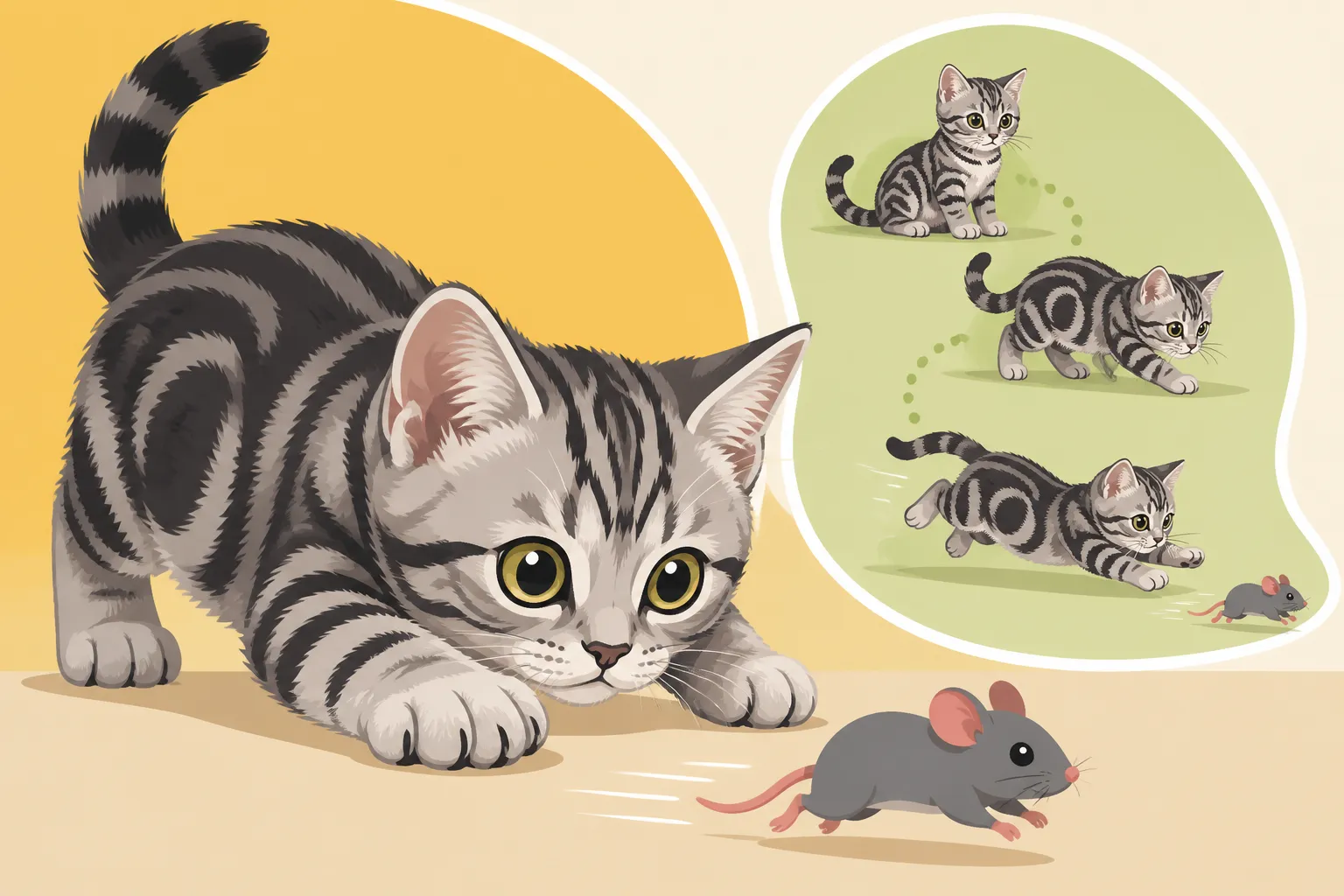
- Stalking: A kitten learns to creep silently, using furniture or siblings as cover, perfecting its low crouch and slow, deliberate movements.
- Pouncing: They refine their timing and accuracy, learning how to spring onto a moving target, whether it's a sibling's tail or a wiggling ear.
- Ambush tactics: Kittens learn to wait patiently, observing their environment and choosing the opportune moment to strike, just like they would with real prey.
- Bite inhibition: While it might look rough, play teaches kittens how much pressure is too much. A yelp from a sibling teaches them to moderate their bite, a vital lesson for interactions with future prey and even human family members.
These interactions are a dynamic, living lesson in predatory behavior, preparing them for solo hunting expeditions later in life.
Toy-Based Training: Simulating the Hunt with Objects
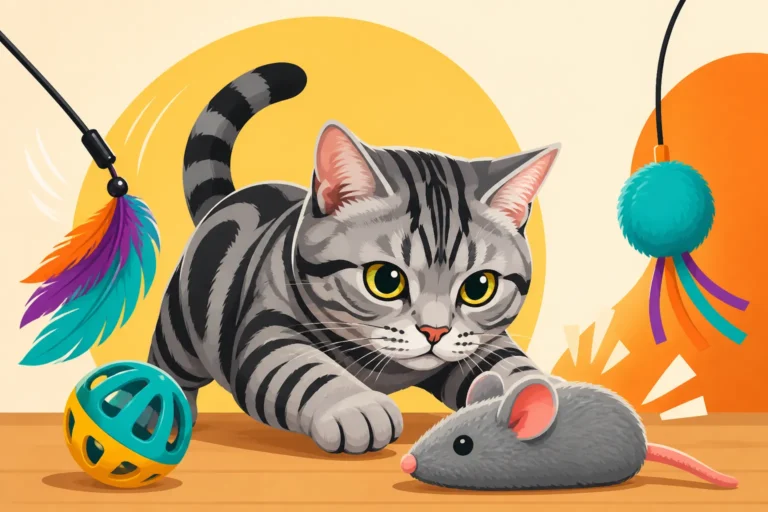
As kittens grow, toys become essential tools for further developing their hunting skills. We, as their human companions, can act as proxies for the mother, presenting "prey" in a way that encourages their natural instincts. Feather wands, crinkle balls, and even simple pieces of crumpled paper can trigger the full predatory sequence.
When choosing toys, think about what truly mimics prey. A wand toy that dips, dashes, and hides will engage a kitten far more than a stationary plush. Look for toys on Amazon that allow you to simulate erratic prey movement. Something like a "Da Bird" wand toy, for instance, perfectly emulates the flight of a bird, making it a fantastic tool to engage an American Shorthair's instinct. Remember, Which Wand Toy Reads as Prey to an American Shorthair best are often those that are unpredictable and allow for a 'kill'. This is critical because Why an American Shorthair Needs to Catch the Toy is paramount to their satisfaction and learning. The satisfaction of the catch, the "kill," completes the hunting cycle and reinforces the behavior.
The Reward Cycle: Understanding the Satisfaction of the Catch
Every successful pounce on a toy, every captured "mouse" (whether it's a fuzzy toy or a stray dust bunny), provides a reward. This reward isn't just a treat; it's the intrinsic satisfaction of fulfilling a deeply ingrained instinct. When a kitten catches a toy, they often "kill" it with a quick bite or by bunny-kicking it with their back legs. Then, they might carry it off, proudly parading their "prey."
This completion of the hunting cycle is incredibly important. It releases endorphins, making the kitten feel good and reinforcing the desire to hunt again. This positive feedback loop is how they learn that hunting is not only a necessity but also an inherently rewarding activity. For indoor cats, replicating this cycle with interactive play is essential for their mental and physical well-being. Knowing How to End a Play Session With an American Shorthair effectively, allowing them to 'catch' the toy at the end, is vital for this satisfaction.
The Indoor Hunter: Nurturing Instincts in a Safe Home
Once an American Shorthair kitten transitions into adulthood, especially if they are strictly indoor cats, their hunting instincts don't just disappear. They need appropriate outlets to express these ingrained behaviors in a safe and enriching way. This is where responsible pet ownership comes in.
Safe and Stimulating Environments
An indoor American Shorthair needs an environment that acknowledges and supports its hunting drive. This means more than just a bowl of food and a soft bed. It means providing vertical spaces, like cat trees or shelves, where they can survey their territory from a high vantage point, mimicking how they might observe prey from above. Look on Amazon for robust cat trees that can accommodate their solid, muscular build.
It also means offering a variety of toys that simulate different types of prey: wands for birds, small fuzzy toys for rodents, and puzzle toys that require "work" to get a treat. Placing toys in different spots, rotating them, and even hiding treats for them to "hunt" can provide vital mental stimulation. Remember, Why an Indoor American Shorthair Keeps the Instinct is because it's hardwired; we just need to provide appropriate scenarios.
Interactive Play for Continued Development
You, the owner, become a key player in maintaining their hunting skills. Structured, interactive play sessions are not just fun; they are crucial for your American Shorthair's well-being. Aim for several short play sessions throughout the day, mimicking the natural hunting patterns of a cat (often at dawn and dusk).
Use wand toys or other interactive toys to make the "prey" move unpredictably. Let it dart, hide, and pause. Crucially, allow your cat to catch the toy frequently. Don't frustrate them by always keeping the toy out of reach. The satisfaction of the catch is what completes the cycle and prevents behavioral issues. Many fantastic interactive toys for this can be found on Amazon, ranging from automatic laser pointers (though always end with a physical catch!) to battery-operated mice that scurry. Think about How Many Hunts a Day an Indoor American Shorthair Needs to truly satisfy this innate drive.
Managing Undesirable Hunting Behaviors
Sometimes, an American Shorthair's strong hunting drive can lead to behaviors we find less desirable, such as stalking our ankles, pouncing on our feet, or even "hunting" other small pets. It's important to remember that this isn't malice; it's simply their instinct finding an outlet.
The key is redirection. If your cat stalks your ankles, immediately engage them with an appropriate toy, like a wand toy. This teaches them that this is the acceptable target for their hunting prowess. Ensure they have plenty of appropriate toys and play opportunities to burn off that predatory energy. If you have small pocket pets or birds, always ensure they are housed securely, as Why an American Shorthair Cannot Live With a Bird or Hamster is a stark reality of their strong prey drive. Providing ample enrichment and understanding their inherent needs will lead to a happier, healthier, and well-adjusted American Shorthair.
| Aspect of Learning | Kitten's Initial Experience | Mother's Role | Playmate's Role | Owner's Role (Indoor Cat) |
|---|---|---|---|---|
| Instinct Activation | Innate drive, sensory focus | Guides observation | Indirect practice | Provide safe outlets, enriching environment |
| Stalking | Wobbly attempts, observation | Demonstrates technique | Practice on siblings | Use wand toys that hide/move erratically |
| Pouncing | Basic batting, clumsy jumps | Allows practice on prey | Refines timing and aim | Encourage jumping and pouncing on toys |
| Catch/Kill Bite | Mouthing, gentle bites | Teaches decisive action | Develops bite inhibition | Allow 'capture' of toys to complete sequence |
| Prey Retrieval | Mimicry of mother | Brings prey to nest | N/A | Offer puzzle feeders and scatter treats |
| Satisfaction | Instinctual gratification | Reinforces behavior | Enjoyment of play | Ensure successful "kills" in play, positive reinforcement |
Disclaimer
This article is for general informational purposes only and does not constitute professional advice. Laws, prices and regulations vary by location and change over time. Consult a qualified professional for guidance on your specific situation.