Why an American Shorthair Stalks Your Ankles
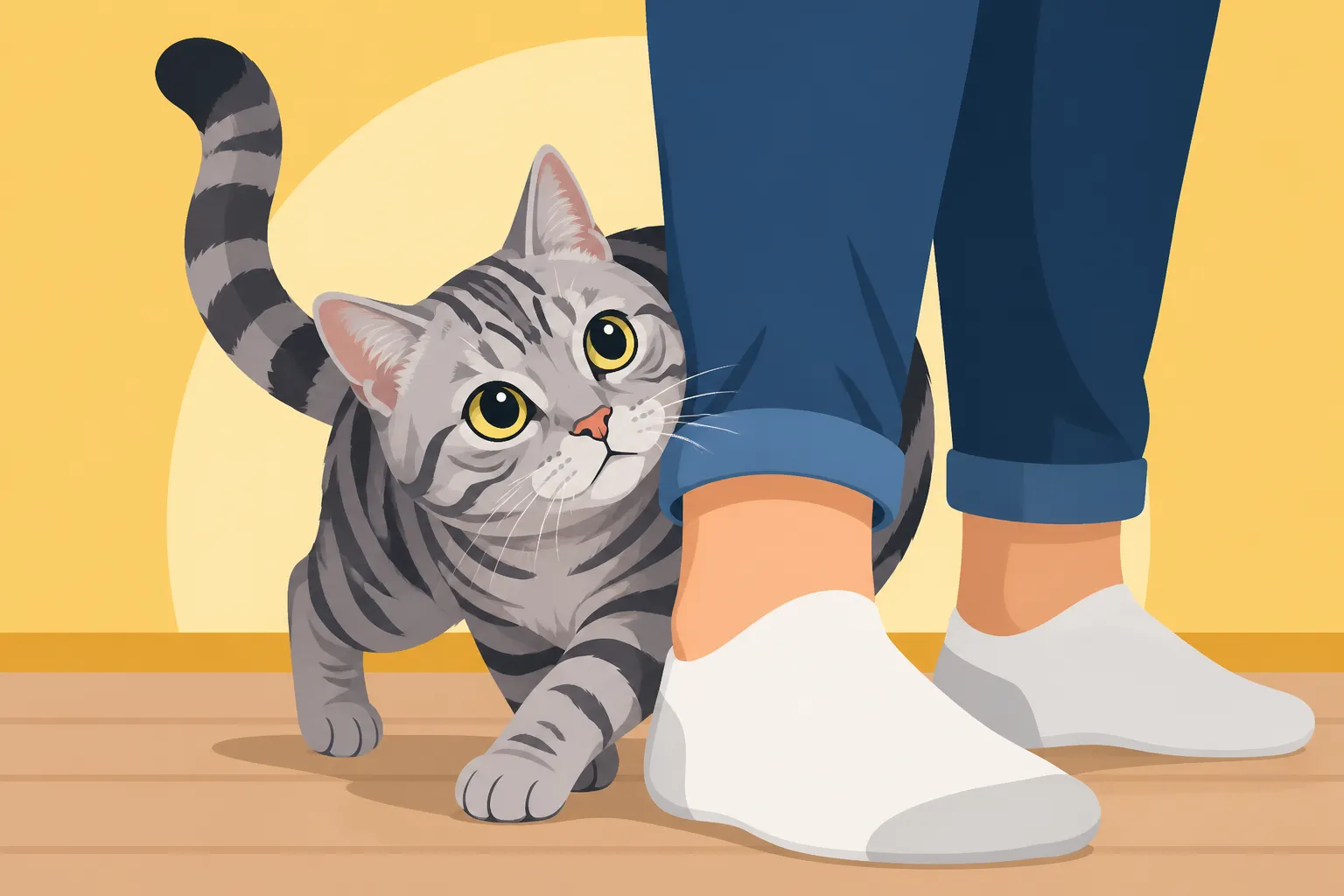
It's a scene many American Shorthair owners know all too well: you're walking across the living room, perhaps just emerging from the kitchen with a snack, and suddenly, a furry blur launches itself at your ankles. You might jump, let out a yelp, and then turn to see your beloved American Shorthair looking up at you with wide, innocent eyes, as if nothing out of the ordinary just happened. This guide is all about understanding why your American Shorthair stalks your ankles, delving into their deeply ingrained instincts and offering practical ways to redirect this playful, yet sometimes startling, behavior.
The Enduring Hunter Instinct of the American Shorthair
Let's be real, our American Shorthairs are descendants of working cats, bred for centuries not for their looks, but for their prowess as pest control. When your American Shorthair stalks your ankles, they're not trying to annoy you; they're simply channeling an ancient, powerful instinct that has served their ancestors for generations. It’s deeply embedded in their DNA.
Tracing Back to Ancestral Hunting Behavior
Imagine cats on ships, in barns, or scurrying through early American settlements. Their job was clear: keep the rodent population in check. This wasn't a leisure activity; it was essential for survival and for protecting valuable food stores. These cats were lean, quick, and incredibly efficient hunters. They learned to stalk, pounce, and dispatch their prey with precision. Every movement, every twitch of an ear, every low crouch was honed over countless generations to make them effective mousers. Our modern American Shorthairs carry this blueprint within them, even if their most demanding job today is deciding which sunbeam to nap in. Their bodies are still built for agility, their minds still wired for the hunt. It's a fundamental part of what makes them who they are. You can learn more about this deep-seated drive in Why Centuries of Ratting Left the American Shorthair Its Drive.
Why an Indoor American Shorthair Still Needs to "Hunt"
Here's the rub: we've taken these incredible natural hunters and brought them indoors, often into environments where they don't encounter live prey. This doesn't magically erase thousands of years of evolutionary programming. The instinct to stalk, chase, and pounce is still there, bubbling under the surface. If there are no mice or crickets to chase, their hunting drive has to find another outlet. And that's often where your unsuspecting feet and ankles come into play. They are simply responding to an innate need to engage in the behaviors that define their species. It's not malice; it's instinct. Depriving them of this outlet can lead to frustration, boredom, and even stress, which can manifest in other unwanted behaviors. Understanding this helps us approach their ankle-stalking not as a nuisance, but as a plea for appropriate enrichment. This is a cat whose very being is tied to the thrill of the chase, even if the "prey" is now your fuzzy slipper. It's a good reminder of Why an Indoor American Shorthair Keeps the Instinct.
Understanding the "Ankle Stalk" as a Form of Play
When your American Shorthair zeroes in on your feet, it's not random. They're engaging in a complex sequence of behaviors that mimics a real hunt, only this time, you're an unwitting participant in their game. Think of it as their playful interpretation of what they're truly meant to do.
The Stalk, Pounce, and Catch Sequence
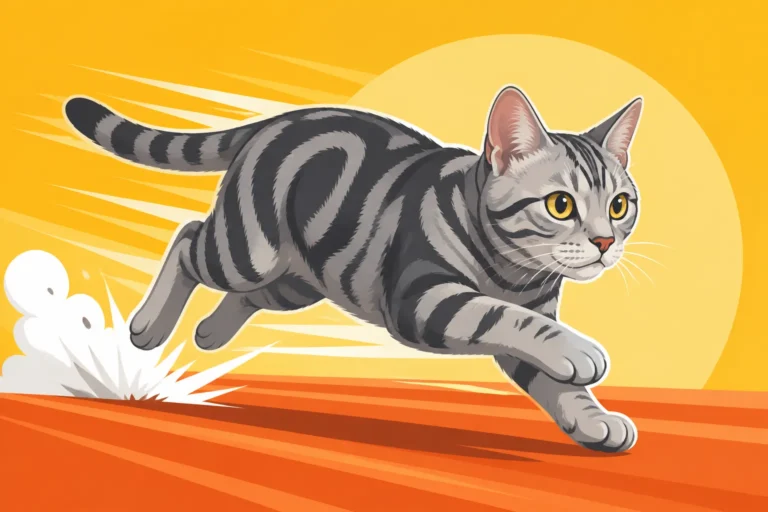
Every hunting encounter, whether real or simulated, follows a similar script for a cat. First, there's the stalk. Your American Shorthair will often crouch low, their body language coiled and focused, tail perhaps twitching just the tip. Their eyes will be locked onto your moving feet as if you were a tiny rodent scuttling across the floor. They might even emit a low, focused rumble or chatter, especially if they're particularly excited. Next comes the chase – a sudden burst of speed, usually accompanied by a swift dash or a sideways scuttle that's surprisingly quick. Then, the pounce: a leap, a grab with their paws (claws sometimes extended, sometimes not, depending on their level of excitement and intent), and often a gentle (or not-so-gentle) bite. For them, this completes the sequence. They've "caught" their prey. It’s a full-body workout for them, engaging all their senses and muscles in a way that feels natural and deeply satisfying. This entire process is a vivid reenactment of what their ancestors did daily to survive, a testament to How an American Shorthair Stalks.
Why Your Feet Are the Perfect Prey Item
So, why your feet specifically? Well, think about it from a cat's perspective. Your feet, especially when moving, are at their eye level. They move erratically, sometimes quickly, sometimes slowly. They disappear under furniture and reappear, mimicking the evasive maneuvers of small prey. Bare feet, socks, or even slippers present interesting textures and shapes that can easily be interpreted as a scurrying creature. The very act of you walking provides a constant, moving target that is endlessly fascinating to a cat whose instincts scream "hunt!"
It’s an interactive, dynamic "toy" that never quite stops. Unlike a static toy, your feet offer unpredictability, which is a key component in stimulating a cat's predatory drive. They learn that engaging with your feet often leads to a fun, albeit brief, wrestling match. They might also learn that a sudden foot movement from you can trigger a play response in them. It's a self-reinforcing game for them, even if it's a bit jarring for you when you're just trying to get a glass of water. They see opportunity in your every step, a chance to fulfill their internal urge to chase and capture.
Redirecting That Predatory Energy Positively
Since we know your American Shorthair isn't attacking you out of malice but out of instinct, the key is to provide them with appropriate, engaging outlets for that energy. This isn't about stopping the behavior entirely, but rather redirecting it towards things that are meant to be "hunted."
Providing Appropriate Hunting Outlets
This is where you become the ultimate playmate! Interactive wand toys are your best friend. Look for ones with feathers, crinkly materials, or small, furry attachments that mimic prey animals. The key is to make the toy move like real prey. Drag it along the floor, hide it behind furniture, make it dart and pause, just like a mouse would. Don't just wave it in the air; engage with the toy as if you are trying to lure out a hidden creature. The goal is to stimulate their stalking, chasing, and pouncing instincts.
Think about variety too. One day it might be a feather wand, the next a toy on a string that bounces unpredictably. You can find a huge array of options on sites like Amazon, from simple feathered wands to more elaborate electronic toys that move on their own. The best toys are those that allow your cat to fully engage their predatory sequence. For example, a toy that can be dragged under a rug and then quickly pulled out from another side can be incredibly stimulating. Remember, it's not just about the toy, but how you animate it. To delve deeper into what truly grabs their attention, consider Which Wand Toy Reads as Prey to an American Shorthair.
The Importance of a "Catch" at the End of Play
This is a crucial, often overlooked, aspect of cat play. For a cat, the hunt isn't truly satisfying unless there's a successful "kill" at the end. Imagine spending all that energy stalking and chasing, only for the prey to always get away. That would be incredibly frustrating! When playing with your American Shorthair, make sure they get to "catch" the toy. Let them bat it, grab it with their paws, and even do a little mock-killing bite.
Once they've "caught" it, let them hold onto it for a moment, giving them that sense of victory. Then, gently wiggle it free and start the game again. This positive reinforcement completes their natural hunting cycle and leaves them feeling satisfied and fulfilled. Without this "catch," they might continue to feel that unspent energy, leading them back to your ankles. Ending a play session abruptly without a successful "kill" can leave them feeling aroused but not satisfied, which isn't fair to their natural instincts. It’s all about creating a sense of accomplishment for them. For more tips on this, read How to End a Play Session With an American Shorthair.
Environmental Enrichment Beyond Playtime
Beyond active play sessions, providing a stimulating environment can also help redirect that innate energy.
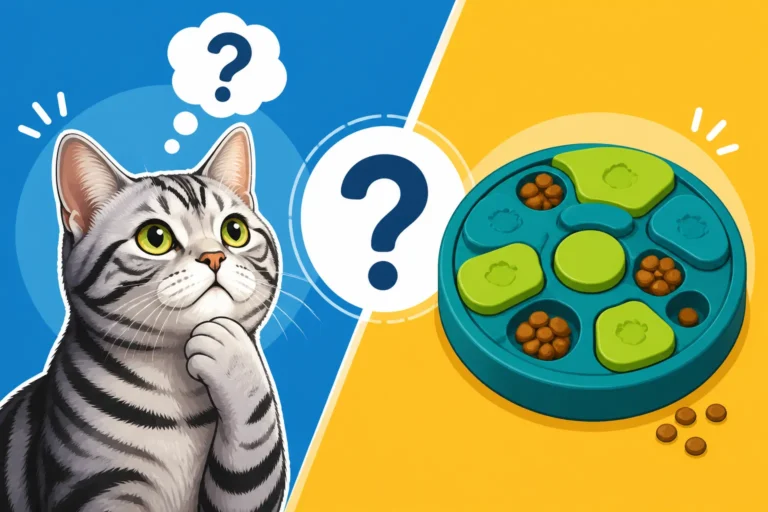
- Puzzle Feeders: These are fantastic for making your American Shorthair "work" for their food, mimicking the effort they'd expend in a hunt. Instead of simply eating from a bowl, they have to bat, roll, or solve a puzzle to get their kibble or treats. This engages their minds and their natural foraging instincts, providing mental and physical stimulation. Many different styles of puzzle feeders are readily available on Amazon, from simple treat balls to more complex mazes.
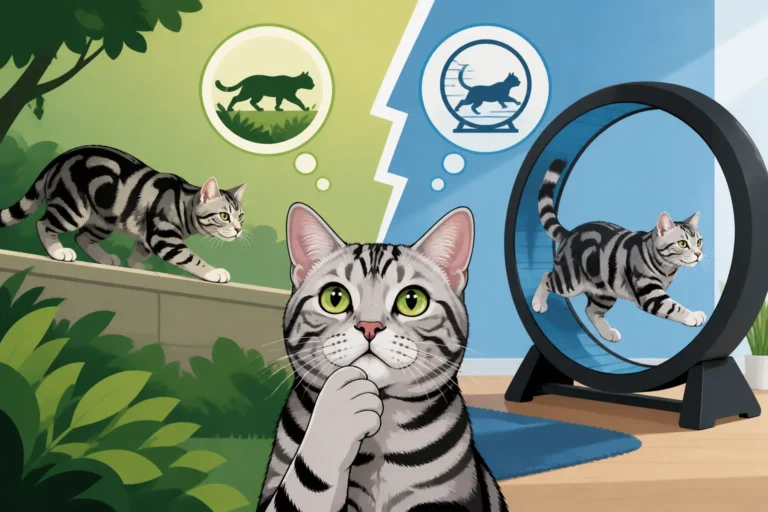
- Cat Trees and Vertical Space: American Shorthairs, like all cats, love high vantage points. A sturdy cat tree gives them a place to climb, survey their "territory," and feel safe. It also allows them to exercise their climbing muscles and observe the world from above, which is another aspect of their natural patrol behavior. Consider a multi-level cat tree with scratching posts built in, providing both climbing and scratching opportunities. A window perch also serves a similar purpose, giving them a perfect "hunting post" for watching birds or squirrels outside, as discussed in Why a Window Is a Hunting Post to an American Shorthair.
- Rotating Toys: Cats can get bored with the same toys day in and day out. Keep a selection of toys and rotate them every few days. This keeps things fresh and exciting, making old favorites feel new again. Put away some toys and bring out others, ensuring that when a toy reappears, it holds renewed interest.
When Stalking Becomes a Problem and How to Address It
While playful ankle-stalking is a natural behavior, sometimes it can cross the line from cute to genuinely painful or frustrating. It's important to recognize when the behavior needs a more direct approach and how to manage it without scaring your feline friend.
Identifying Over-Arousal or Frustration
There’s a difference between a playful pounce and an aggressive attack. If your American Shorthair's claws are always out, their bites are drawing blood, or they seem agitated and difficult to calm down after a "session," it might indicate over-arousal or underlying frustration. This can happen if they aren't getting enough appropriate outlets for their hunting drive, or if they're feeling stressed or bored.
Signs of over-arousal might include dilated pupils, ears flattened back, body tensed, and a tail that's lashing or tucked tightly. If the ankle-stalking is accompanied by hissing or growling, it’s a clear sign that something is amiss, and you need to intervene. It's crucial not to punish them in these moments, as it can damage your bond and make them fearful, potentially worsening the behavior. Instead, focus on redirection and addressing the root cause of their heightened state. A cat displaying these behaviors might be trying to tell you that their needs aren't being met, or they're overwhelmed.
Gentle Deterrents and Behavior Modification
When your American Shorthair initiates an unwanted ankle attack, the worst thing you can do is reinforce the behavior by reacting dramatically. Yelling, screaming, or running away can inadvertently become part of the game for them. Instead, aim to disengage calmly.
- Stand Still: If your cat pounces, freeze. Your immobility signals that the "prey" is no longer active and interesting. This often makes them disengage.
- Redirect Immediately: Have a favorite wand toy or a crinkly ball nearby. As soon as you anticipate a stalk or if one has just occurred, immediately throw or dangle the appropriate toy away from your feet. This teaches them that toys are for hunting, not human body parts.
- Avoid Using Hands and Feet as Toys: This is a big one! From kittenhood, never encourage play with your hands or feet. If you wrestle with your cat using your hands, you're teaching them that human extremities are fair game for biting and scratching. Always use an appropriate toy, keeping a safe distance between their claws/teeth and your skin.
- Create a Barrier: If you know your cat is prone to ankle attacks at certain times (e.g., when you first wake up), put on thick socks or even shoes as a temporary barrier. This protects your skin and can reduce the immediate reward for the cat.
- Walk Away: If the behavior persists despite redirection, calmly disengage and walk into another room, closing the door behind you. This isn't a punishment, but a signal that the fun stops when they target you inappropriately. After a few minutes, re-enter and try to initiate proper play.
The Role of Routine and Consistency
Cats thrive on routine and predictability. Establishing a consistent schedule for playtime, feeding, and attention can significantly reduce anxiety and help manage unwanted behaviors like ankle-stalking.
- Scheduled Play Sessions: Aim for at least two dedicated, interactive play sessions a day, especially during their natural crepuscular hours (dawn and dusk) when their hunting instincts are highest. These sessions should last 10-15 minutes each, ending with a successful "catch" and perhaps a small treat or meal to mimic the natural hunt-eat cycle.
- Consistent Feeding Times: Regular meal times provide structure and help manage their energy levels. A well-fed cat, especially after a stimulating play session, is often a calmer cat.
- Enrichment Schedule: Rotate toys regularly and ensure puzzle feeders are filled and accessible. This consistency provides them with reliable outlets for their energy and mental stimulation.
A predictable environment helps your American Shorthair feel secure and understood. When their needs are consistently met through appropriate channels, they are less likely to seek out alternative (and sometimes painful) methods like attacking your ankles. Consistency helps them learn what is expected and where they can safely channel their powerful, inherent drives. This continuous effort forms the bedrock of a happy, well-adjusted American Shorthair, making their days, and yours, much more peaceful. Establishing these routines can be a powerful tool for behavior management, as they help provide the cat with a sense of control and expectation, reducing the need for them to resort to instinctual behaviors in ways that aren't ideal for household harmony. This is a journey of understanding and adaptation, for both you and your cherished American Shorthair.
Disclaimer
This article is for general informational purposes only and does not constitute professional advice. Laws, prices and regulations vary by location and change over time. Consult a qualified professional for guidance on your specific situation.