How Often an American Shorthair Catches Flies
It's a familiar scene for any cat parent: that sudden, intense focus, eyes tracking an invisible target, followed by a silent crouch and a lightning-fast pounce. Often, the object of this primal attention is nothing more than a common housefly. If you've ever wondered just how often your American Shorthair manages to snag one of these airborne intruders, or if their hunting instincts for tiny prey are as sharp as their ancestors', you're in the right place. This guide will delve into the world of American Shorthair fly-catching, exploring why they do it, what influences their success rate, and what it all means for their inherent predatory nature.
The Inherited Instinct: Why American Shorthairs See Flies as Prey
The American Shorthair, with its sturdy build and alert demeanor, descends from working cats brought to North America centuries ago. These felines weren't pampered pets; they were essential members of the crew on ships and later, on farms, tasked with keeping rodent populations under control. This long history of utility ingrained a formidable prey drive into their very essence. It’s why even the most domesticated American Shorthair in a cozy apartment still possesses that undeniable urge to hunt, chase, and capture. Flies, no matter how small, tap into this ancient programming, becoming fascinating, albeit fleeting, targets.
Think about it: for generations, these cats earned their keep by being efficient predators. That instinct doesn't just vanish because they now get a bowl of kibble twice a day. The smallest flicker of movement, the most subtle buzz, can trigger a hardwired response. It’s part of Why Centuries of Ratting Left the American Shorthair Its Drive and really defines What an American Shorthair Bred Only for Usefulness Turns Out Like. Their focus and determination, whether it's on a mouse in a barn or a fly buzzing near a windowpane, are direct links to their heritage.
The Visual Trigger: How Movement Catches Their Eye
A fly's movement is practically designed to attract a cat's attention. Flies are erratic, unpredictable, and often move in short, darting bursts. This kind of motion is a classic trigger for a predator's visual system. Cats, especially American Shorthairs, have incredibly keen vision optimized for detecting movement, particularly in low light conditions. Their eyes are perfectly adapted to perceive even the slightest twitch or flutter.
Imagine your American Shorthair lounging on a sunbeam, seemingly asleep. A fly enters the room, buzzing lazily near the ceiling. Initially, there might be no overt reaction. But then, the fly suddenly changes direction, a quick, jerky movement. That's when you'll see it: an ear might swivel, an eye might crack open, and then, a slow, deliberate head turn. It's not just the fly itself, but the way it moves that screams "prey!" to your cat. Their peripheral vision is also excellent, allowing them to spot these tiny movements even if the fly isn't directly in their line of sight. It's an involuntary response, a deep-seated instinct taking over.
The Stalk and Pounce: Applying Hunting Skills to Insects
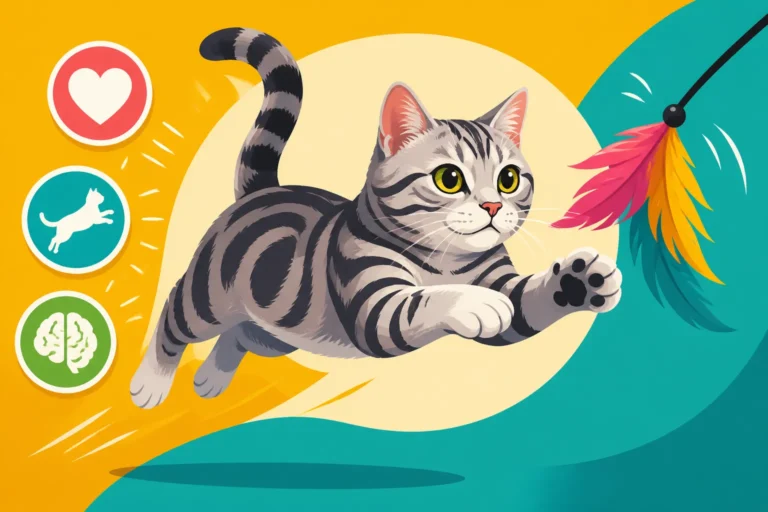
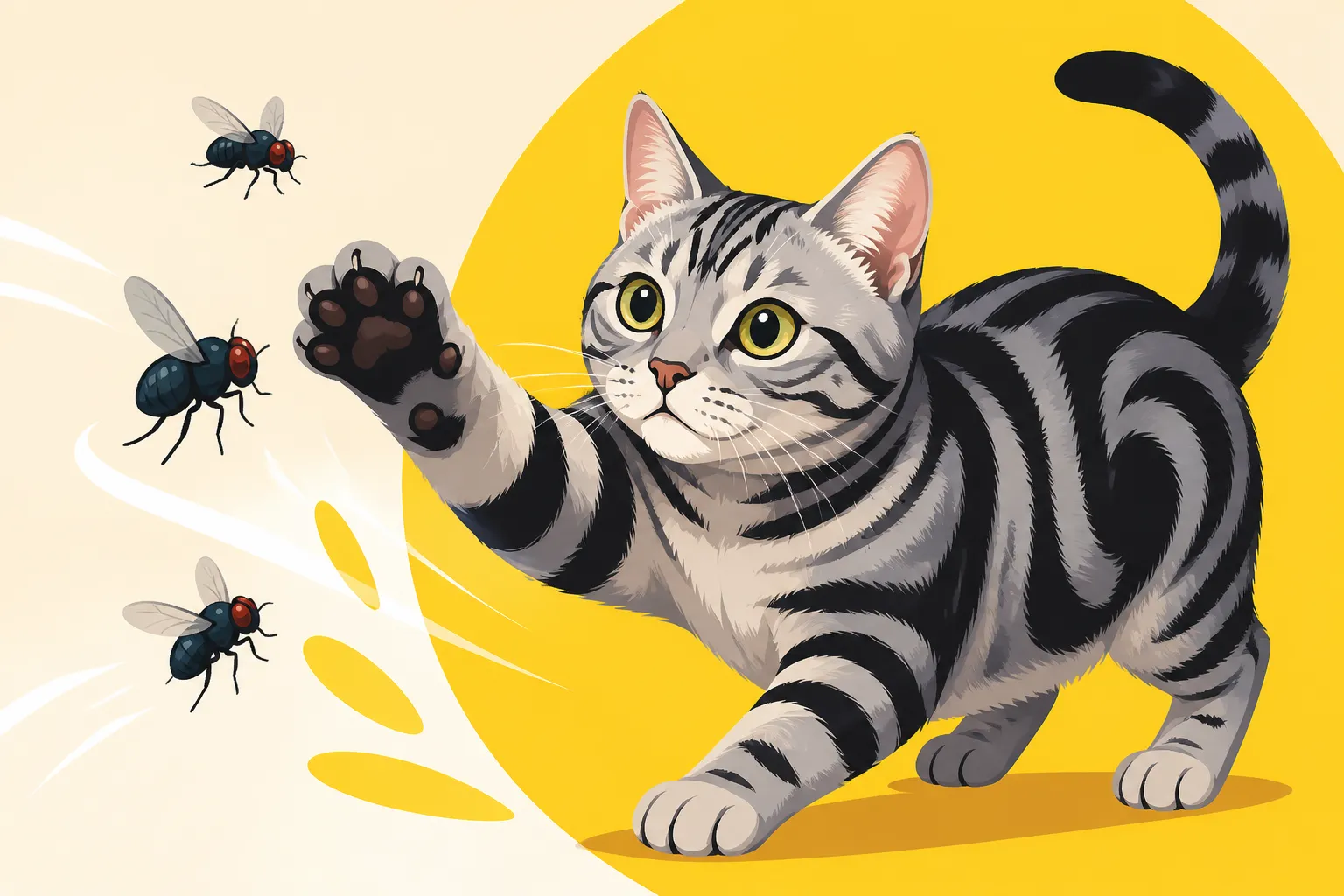
Once a fly has been targeted, an American Shorthair often reverts to classic hunting behaviors, albeit in miniature. While they might not be creeping through tall grass for a fly, the sequence of behaviors is remarkably similar. You'll observe the characteristic low crouch, the tensing of muscles, the focused stare, and sometimes even the distinct "waggling" of their hindquarters before the final strike. It’s a scaled-down version of How an American Shorthair Stalks and How an American Shorthair Pounces.
For a fly on a wall or window, the approach might be a slow, deliberate crawl, trying to get within striking distance without startling it. If the fly is airborne, the strategy shifts to a waiting game, tracking its flight path until it lands or comes within leaping range. Then, with an explosive burst of energy, they'll launch themselves, batting with a paw or attempting a snap of the jaws. Sometimes they're successful, sometimes they miss spectacularly, but the effort and the application of their innate hunting skills are always present. It's all about fulfilling that ancient predatory drive, even if the "kill" is a tiny, annoying insect.
Factors Influencing Fly-Catching Frequency
How often an American Shorthair actually catches a fly isn't just about their raw instinct; several other factors come into play. These can range from their living environment to their individual personality and even how much other stimulation they have in their daily lives.
Indoor vs. Outdoor Environments
The most obvious factor is exposure. An American Shorthair with outdoor access will naturally encounter a much wider variety of insects, including flies, on a regular basis. Whether they're exploring a garden, sitting on a patio, or making a quick dash through the grass, opportunities for fly encounters are plentiful. These outdoor adventures are full of sensory input – the rustling of leaves, the chirping of birds, the scent of fresh earth – all of which can heighten their hunting senses. Of course, outdoor life comes with its own set of risks and considerations, but from a purely fly-catching perspective, outdoor cats have a higher volume of targets.
For indoor American Shorthairs, their fly-catching opportunities are limited to what manages to get inside the home. This might mean flies buzzing around food, entering through an open door, or simply appearing mysteriously. While fewer in number, these indoor flies can sometimes become an even more captivating target for an indoor cat who has less access to other forms of "live" prey. It’s a classic example of What an Indoor American Shorthair Hunts Instead. Without the rich tapestry of outdoor hunting, a lone fly can become the undisputed star of their day's "hunt" simulation.
Individual Personality and Play Drive
Just like people, cats have unique personalities. Some American Shorthairs are intensely driven by prey, and absolutely anything that moves will grab their attention. These are the cats who will stalk a dust bunny with the same ferocity they'd apply to a toy mouse. Other American Shorthairs, while still possessing a strong prey drive, might be more selective, or simply have a lower overall play drive. A slow, lazy fly might not spark their interest as much as a fast-moving one.
Age can also play a significant role. A lively American Shorthair kitten or a young adult, bursting with energy and curiosity, is likely to be a more enthusiastic and persistent fly hunter. As cats mature, their play drive can sometimes mellow, and while they might still notice and track a fly, the urgency to chase and catch it might diminish. However, many American Shorthairs retain a surprising amount of their youthful vigor well into their senior years, continuing to bat at flies with gusto. The Age an American Shorthair Settles Down can vary wildly, and for many, the urge to hunt never truly disappears.
Competing Enrichment and Toy Availability
If your American Shorthair has a home full of engaging toys, regular interactive play sessions with you, and plenty of mental stimulation, they might be less hyper-focused on every single fly that crosses their path. A cat with a rich, enriching environment might still find flies interesting, but they might not dedicate as much time and energy to them as a cat who is bored or under-stimulated.
Think of it this way: if you have a huge variety of Which Wand Toy Reads as Prey to an American Shorthair to choose from, along with puzzle feeders and climbing structures, a fly is just one more option. But if your cat's day is largely uneventful, that fly suddenly becomes the most exciting thing happening. Providing varied enrichment, perhaps sourced from an online retailer like Amazon, can help direct their predatory instincts towards appropriate outlets. This doesn't mean they'll stop hunting flies entirely, but it might mean they don't see every fly as their sole mission for the day.
The Reality of the "Catch Rate" and What It Means
So, how often do American Shorthairs actually catch flies? The truth is, it's probably not as often as we might think they'd like to. Flies are surprisingly agile, and their small size makes them tricky targets. But for your American Shorthair, the actual "kill" isn't always the most important part of the equation.
The Thrill of the Chase: More Important Than the Kill
For a cat, the hunting process itself is incredibly rewarding. The stalking, the tracking, the focused attention, and the explosive burst of energy are all deeply satisfying, regardless of whether the prey is ultimately captured. When your American Shorthair is intensely focused on a fly, their body is flooded with natural chemicals that create a sense of excitement and reward. This is mental and physical exercise rolled into one, a mini-workout for their brains and bodies.
Even if they miss a fly repeatedly, the act of trying provides a vital outlet for their predatory instincts. It sharpens their senses, hones their coordination, and provides a sense of purpose. It’s their equivalent of a puzzle or a challenging game. So, while you might observe them missing more often than they connect, remember that the "thrill of the chase" is a huge part of the experience for them. It's a natural behavior that helps keep them mentally sharp and physically active.
When Flies Become a Nuisance (for you!)
While it's endearing to watch your American Shorthair hunt a fly, sometimes the sheer number of flies can become a problem for us humans! A few flies are entertainment; a swarm is a nuisance, and potentially a hygiene issue. In these cases, relying solely on your cat's hunting prowess might not be enough.
You might need to implement more direct solutions, such as screens on windows and doors, or even humane fly traps. If you're looking for solutions, a quick search on an online marketplace like Amazon can reveal various options, from sticky traps to electronic zappers (though exercise caution with anything that could harm curious paws). The goal isn't to take away your cat's "job," but to manage the insect population to a comfortable level for the whole household. It's a balance between letting your cat indulge their natural instincts and maintaining a clean, comfortable living space.
Encouraging Safe Prey Drive with Toys
Given their strong prey drive, it's crucial to provide appropriate outlets for your American Shorthair's hunting instincts. This prevents them from becoming overly frustrated by elusive flies or, worse, turning their hunting attention to inappropriate targets (like your feet under a blanket!). Interactive toys that mimic prey movement are fantastic for this. Think wand toys with feathers or small plush animals that you can dangle and move erratically. These allow your cat to engage in the full hunt sequence – stalk, chase, pounce, and "kill" – in a safe and satisfying way.
Puzzle feeders are another excellent tool, forcing your American Shorthair to "work" for their food, much like their ancestors had to hunt for their meals. These feeders, readily available on Amazon and other pet supply sites, engage their problem-solving skills and provide mental stimulation, reducing the likelihood that every passing fly becomes an obsessive quest. Remember, a fulfilled hunter is a happy cat. Regularly dedicating time to play, even just 10-15 minutes a few times a day, can make a huge difference in their overall well-being and satisfaction. It's also a great way to bond with your American Shorthair.
Here’s a quick overview of factors that influence fly-catching:
| Factor | Description | Impact on Fly-Catching Frequency |
|---|---|---|
| Environmental Exposure | Access to outdoors vs. strictly indoors. | Outdoors: High; Indoors: Medium |
| Individual Play Drive | Some cats are naturally more energetic/playful than others. | High Play Drive: High |
| Age | Kittens and young adults often more active; seniors may be less so, but many remain active. | Young: High; Older: Variable |
| Competing Enrichment | Availability of other toys, interactive play, and mental stimulation. | High Enrichment: Lower |
| Fly Population | The sheer number of flies present in the environment. | More Flies: More Opportunities |
| Cat's Hunger Level | A hungrier cat might be more motivated to "hunt" (even if for sport). | Hungrier: Potentially Higher |
Remember, every American Shorthair is an individual, and their fascination with flies will vary. Some might be relentless hunters, while others are more casual observers. The important thing is to understand that this behavior is deeply ingrained and a natural, healthy expression of their heritage.
Disclaimer
This article is for general informational purposes only and does not constitute professional advice. Laws, prices and regulations vary by location and change over time. Consult a qualified professional for guidance on your specific situation.