Why an American Shorthair Needs to Catch the Toy
It’s a common scenario: you’re trying to play with your American Shorthair, dangling a feather toy or shining a laser pointer, and your cat gives it a half-hearted bat, then walks away. Or maybe they chase the laser with intense focus, only to look utterly deflated when the red dot disappears, leaving them empty-pawed. This guide is here to explain why the "catch" is non-negotiable for your American Shorthair's happiness and how to ensure every play session leaves them feeling like the magnificent hunter they truly are.
Understanding the American Shorthair's Innate Hunting Drive
Your American Shorthair might be a pampered housecat now, snoozing on sunbeams and demanding treats, but beneath that calm exterior lies centuries of primal instinct. These cats weren't bred for their looks alone; they were working animals, essential companions on ships and in barns, keeping rodent populations under control. That deep-seated drive to hunt isn't something that disappears just because they've moved indoors.
Centuries of Instinct: The Mouser's Legacy
Imagine a cat aboard a ship crossing the Atlantic or patrolling a bustling farmstead in colonial America. Their survival, and often the survival of the human inhabitants, depended on their ability to stalk, chase, and catch prey. This wasn't a recreational activity; it was their job, a fundamental aspect of their very being. The American Shorthair's ancestors were tough, resourceful, and incredibly effective hunters.
This history has imprinted a profound drive into the breed's DNA. They are genetically wired for the entire predatory sequence. Even if your cat has never seen a live mouse in its life, its brain and body still crave the satisfaction of that complete hunting cycle. Ignoring this fundamental need can lead to a cat that feels bored, frustrated, or even anxious, because an essential part of their natural behavior is being denied. The American Shorthair Still Hunts, Whether You Want It To or Not is a testament to this enduring instinct.
The Full Hunting Sequence: Why the Catch Matters
When a cat hunts, it's not just about the chase. It's a complex, multi-stage process that typically includes:
- Stalking: Slowly, stealthily approaching the "prey."
- Chasing: A burst of speed, often accompanied by playful leaps and bounds.
- Pouncing: Leaping onto the prey.
- Catching: Securing the prey with paws and claws.
- Kill Bite: Delivering a decisive bite to the neck, rendering the prey motionless.
- Eating (or presenting): Consuming the prey or bringing it back to a safe spot, or even to their human "colony" members.
For your American Shorthair, that "catch" and "kill bite" (even if simulated) are the critical endpoints. The entire sequence builds up tension, and the successful capture releases it. Without that release, the cat is left in a state of perpetual anticipation and frustration. It's like building up to a sneeze that never comes – incredibly unsatisfying! This is particularly true for What an Indoor American Shorthair Does With a Mouser's Instinct, as their environment provides few natural opportunities to complete this sequence.
The Problem with Unfinished Play: Why Lasers Frustrate
Many well-meaning cat owners gravitate towards laser pointers for playtime. They’re easy, they get the cat moving, and it seems like great exercise. But for an American Shorthair, a laser pointer is often the epitome of unfinished business.
The Mental and Physical Repercussions of No Catch
Imagine running a marathon, putting in all that effort, pushing your body to its limits, only to have the finish line vanish the moment you get close. That's what a laser pointer does to your American Shorthair. They stalk, they chase, they pounce, but there's never a tangible catch. There's no physical object to grab, no triumphant "kill bite" to deliver.
This constant pursuit of an uncatchable target can have several negative consequences:
- Frustration and Anxiety: The cat's predatory instincts are activated, but never satisfied. This can lead to a build-up of unreleased energy and anxiety. Some cats may become agitated, irritable, or even destructive, turning their pent-up frustration on household items or even their owners.
- Obsessive Behaviors: Some American Shorthairs might become fixated on reflections, shadows, or even the memory of the laser dot, constantly searching for that elusive prey. This isn't healthy mental stimulation; it's a form of obsessive compulsion born out of unfulfilled instinct.
- Apathy and Disengagement: Other cats might simply give up. If every "hunt" ends in failure, why bother? They might lose interest in playtime altogether, becoming less active and more prone to boredom, which can contribute to other issues like weight gain.
- Lack of Learning: Hunting isn't just about physical exertion; it's also a learning process. Cats refine their motor skills, timing, and strategy with each successful hunt. Without the physical interaction of a catch, they miss out on this crucial developmental feedback. This is precisely Why a Laser Frustrates an American Shorthair That Needs the Catch.
Recognizing the Signs of Frustration
Your stoic American Shorthair might not overtly complain, but they will show signs if their play isn't satisfying their hunting instincts. Look out for these cues:
- Sudden Disinterest: While they might initially be thrilled by a laser, after a few minutes, they just sit down and watch it, no longer engaging. They've realized it's a game they can't win. This can explain Why an American Shorthair Loses Interest in a Laser.
- Excessive Grooming: Over-grooming can be a sign of stress or anxiety. If they're constantly licking themselves, especially after an intense but unfulfilling play session, it could be a coping mechanism.
- Destructive Behaviors: Are they suddenly scratching furniture more than usual? Chewing on things they shouldn't? This could be a redirection of their frustrated hunting energy.
- Aggression: Some American Shorthairs, particularly males, might become more prone to nipping or swatting at hands and feet if their natural hunting drive isn't adequately channeled. They're looking for a "catch" wherever they can find it.
- Restlessness: Pacing, excessive vocalization (though ASH are generally quiet), or an inability to settle down even after apparent exercise can indicate unreleased energy and frustration.
Satisfying the Instinct: Toys That Deliver the Catch
The good news is, satisfying your American Shorthair's hunting instinct isn't complicated. It just requires understanding their needs and choosing the right tools for the job. The key is to provide a "prey" item they can actually capture and feel triumphant about.
Wand Toys and Feather Teasers: The Best Tools for a Full Hunt
Wand toys and feather teasers are hands-down the best way to replicate the full hunting sequence. These toys, often available for great prices on Amazon, allow you to mimic the erratic movements of real prey. You can make the "prey" dart, hide, twitch, and finally, be caught.
Here's how to make the most of them:
- Mimic Prey Behavior: Don't just wave the toy aimlessly. Make it move like a mouse or a bird. Drag it across the floor, let it disappear behind furniture, make it "flutter" in the air. Vary the speed and direction.
- Allow for the Stalk: Start with the toy visible, then let it hide. Your American Shorthair will naturally go into stalk mode, crouching low and focusing intently. This is crucial for their mental engagement.
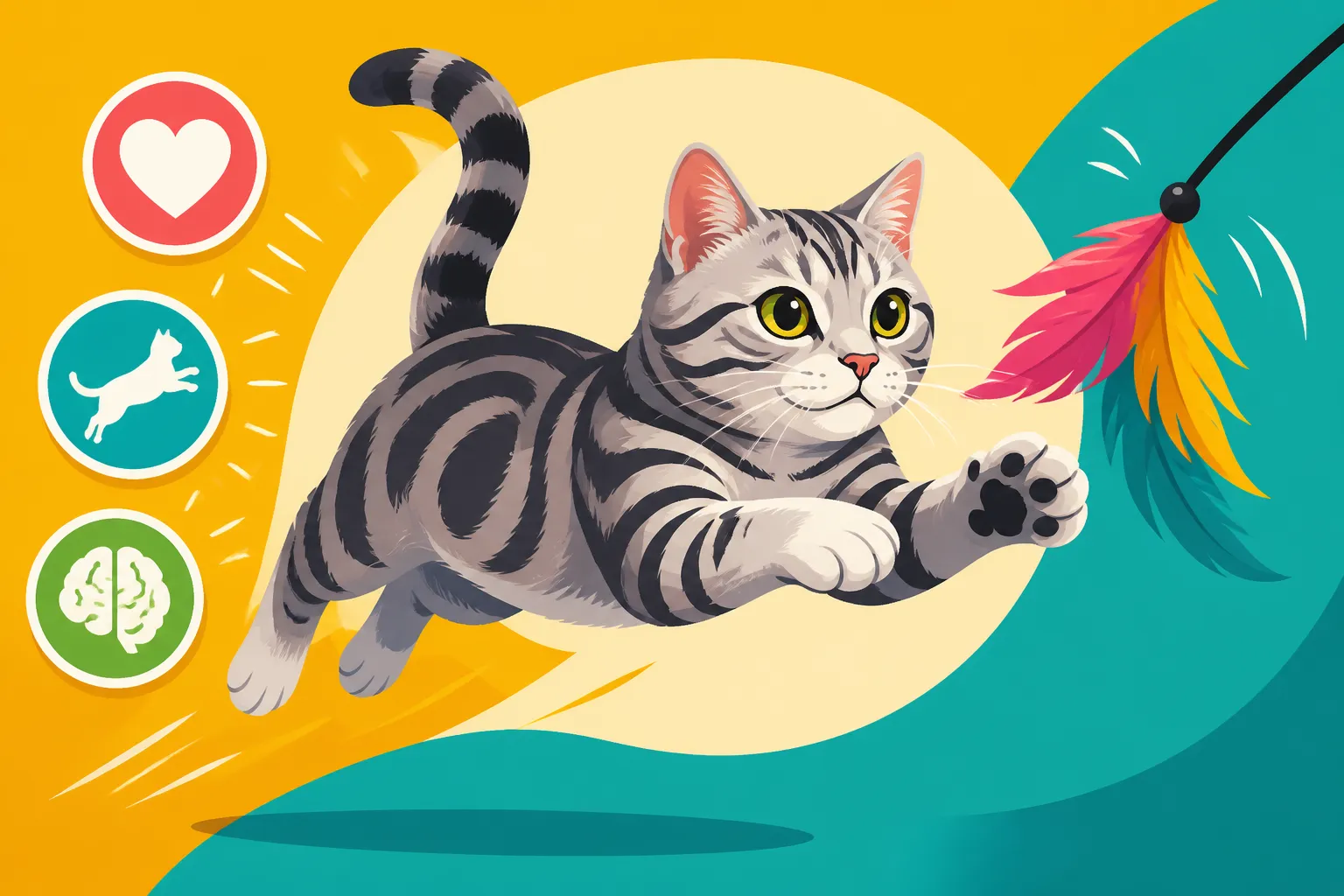
- Encourage the Chase and Pounce: Once they're stalking, make the toy dart away, initiating the chase. Let them pounce and grab it.
- Crucially, Allow the Catch: This is the big one! Don't pull the toy away every time they get close. Let them catch it in their paws, let them wrestle with it for a moment. This provides that vital physical and mental release. This is why Which Wand Toy Reads as Prey to an American Shorthair is so important to choose carefully.
- Rotate Toys: Keep a variety of wand toys on hand and rotate them to prevent boredom. Different textures (feathers, crinkly plastic, fur) and shapes will keep their interest fresh. You can find a huge selection of high-quality, durable wand toys on Amazon that will withstand even the most enthusiastic hunter.
Incorporating the "Kill" and "Eat" Phases
To truly complete the hunting sequence, we can add a couple of extra steps:
- The "Kill" Bite: After your American Shorthair has caught the toy, let them have a moment to "kill" it. This might involve them mouthing it, bunny-kicking it with their back legs, or gently shaking it. This simulates the decisive action they would take with real prey. Don't immediately snatch the toy away; allow them this brief, satisfying moment.
- The "Eat" or "Reward" Phase: The hunt ends with either consuming the prey or bringing it back to the den. You can simulate this by offering a small, delicious treat immediately after they've "killed" the toy. Alternatively, at the end of a session, allow them to keep the toy for a few minutes, giving them a sense of possession before you put it away. This helps them understand the sequence is truly finished. How to End a Play Session With an American Shorthair discusses this in more detail.
Puzzle Feeders and Interactive Toys: Extending the Hunt Beyond Playtime
Playtime with you is essential, but you can also provide opportunities for your American Shorthair to "hunt" for their food. This taps into their natural foraging instincts and provides mental enrichment throughout the day.
- Puzzle Feeders: These toys require your cat to manipulate them to release treats or kibble. This simulates the effort involved in finding and acquiring food, turning mealtime into a mini-hunt. They come in various difficulty levels, so you can start simple and gradually challenge your cat. You can find a wide range of puzzle feeders, from beginner-friendly options to more complex designs, on Amazon.
- Hide-and-Seek Meals: Instead of just putting their food in a bowl, hide small portions of their kibble in various locations around the house. Under a rug, behind a door, on a low shelf – make them search for it. This mimics the scattered nature of prey and encourages movement and exploration.
- Dispensing Balls: These are simple toys that dispense a few pieces of kibble or treats as your cat bats them around. It's a low-effort way to get them moving and engage their hunting instincts without needing your direct involvement.
- Whether a Puzzle Feeder Satisfies an American Shorthair delves into the benefits of these fantastic tools.
Here's a quick comparison of different toy types and how they fulfill the American Shorthair's hunting sequence:
| Toy Type | Stalking | Chasing | Pouncing | Catching | Kill Bite | Notes |
|---|---|---|---|---|---|---|
| Wand/Teaser | High | High | High | High | High | Mimics live prey best; requires human interaction for full sequence. |
| Laser Pointer | High | High | High | Low | Low | Fails to provide physical capture and satisfaction, leading to frustration. |
| Puzzle Feeder | Low | Low | Low | High | N/A | Excellent for mental stimulation and foraging; good for independent "hunting" for food. |
| Plush/Kicker | Low | Low | High | High | High | Good for independent "kill bite" practice, especially if infused with catnip. |
| Ball/Track | Low | Medium | Low | Low | Low | Primarily for batting and chasing; usually lacks a satisfying "catch" or "kill." |
Common Mistakes and How to Fix Them
Even with the best intentions, it's easy to fall into habits that don't quite meet your American Shorthair's needs. Let's look at some common pitfalls and how to steer clear of them.
The Endless Laser Pointer Trap
We've talked about why laser pointers can be frustrating. The biggest mistake is making them the only form of interactive play. If your American Shorthair loves chasing the dot, that's fine as a warm-up, but it should never be the finale.
The Fix:
- Transition to a Tangible Toy: After a few minutes of laser play, when your cat is all revved up, seamlessly transition to a wand toy. Shine the laser onto the wand toy, letting your cat chase the dot right to the physical object. Then, let them catch and "kill" the wand toy.
- Always End with a Catch: Make it a rule: every play session, especially with you, must end with a triumphant catch of a physical toy.
- "Disappear" the Laser: Never let the laser simply vanish into thin air. Guide it under a blanket, into a box, or onto a soft toy, and then let your cat "catch" the object it disappeared into. This provides some closure, even if not a full capture.
Remember, the goal is to fulfill that deep-seated hunting sequence. A laser pointer activates the first few stages, but it's like a story without an ending. Your American Shorthair needs the resolution.
Overcoming Boredom with Varied Play
American Shorthairs are intelligent, and while they might seem laid-back, they can get bored if their environment and playtime aren't stimulating enough. If they have the same toy every day, or if you play in the same predictable way, their interest will wane.
The Fix:
- Toy Rotation: Don't leave all the toys out all the time. Keep a selection of interactive and independent toys stored away, and rotate them every few days. When a "new" toy appears, it often sparks renewed interest. This is a great tip for extending the life and engagement with toys you've picked up from Amazon.
- Vary Play Locations: Instead of always playing in the living room, take your wand toy to a different room, or even a secure catio if you have one. New environments add an element of exploration to the hunt.
- Different "Prey" Types: Offer different kinds of wand toys – feather teasers, fuzzy mice on a string, crinkly toys. Each offers a different texture, sound, and movement pattern, keeping the hunt exciting.
- Schedule Play Sessions: Aim for at least two dedicated interactive play sessions a day, ideally around dawn and dusk when cats are naturally most active. These sessions don't have to be long – 10-15 minutes of intense, satisfying play can be enough. How Many Hunts a Day an Indoor American Shorthair Needs gives more insight into this.
- Build the Bond: Playtime isn't just for exercise; it's a fantastic way to bond with your American Shorthair. By understanding and catering to their natural instincts, you're communicating with them on a deep, instinctual level, strengthening your relationship and ensuring they live a happy, fulfilled life.
Your American Shorthair is a magnificent creature, a living echo of the brave, capable cats who helped build a nation. By honoring their innate need to hunt and ensuring they can "catch" their prey during playtime, you're not just entertaining them; you're fulfilling a fundamental part of their being, leading to a happier, healthier, and more engaged feline companion.
Disclaimer
This article is for general informational purposes only and does not constitute professional advice. Laws, prices and regulations vary by location and change over time. Consult a qualified professional for guidance on your specific situation.