Why an American Shorthair Retreats Before It Scratches
It’s a common misconception that cats are quick to lash out, swatting or scratching at the slightest annoyance. Many cat owners, especially those new to felines, might even expect it. But if you live with an American Shorthair, you’ve likely noticed a different pattern: they tend to retreat long before they ever raise a paw in aggression. This isn’t just a quirk; it’s a deeply ingrained behavioral trait rooted in their history and temperament. This guide will explore the fascinating reasons behind your American Shorthair’s preference for a graceful exit over a defensive strike, and how understanding this can foster an even stronger bond.
The American Shorthair's Ancestral Temperament: A Legacy of Self-Preservation
When you look at your placid, sturdy American Shorthair lounging on the sofa, it might be hard to imagine them as intrepid working cats. Yet, their ancestors were exactly that – skilled hunters and hardy companions who earned their keep on farms, in homes, and even aboard ships, keeping rodent populations under control. This isn't just a quaint historical fact; it’s the bedrock of their current personality, influencing how they perceive threats and react to discomfort even today.
From Barn Cat to Beloved Pet: The Instinct to Avoid Conflict
Imagine a cat living centuries ago on a bustling farm. Survival depended on keen hunting skills, health, and a certain amount of self-preservation. A working cat couldn't afford a debilitating injury from a needless fight with a larger animal, another cat, or a human. If a cat got hurt, it couldn't hunt, and if it couldn't hunt, its survival was severely compromised. This stark reality meant that cats who were quick to escalate conflict often didn't fare as well.
Over generations, this selective pressure favored individuals who were more cautious, more observant, and more inclined to avoid confrontation if a safe escape route was available. The American Shorthair inherited this pragmatic approach. Their ancestors weren't bred for aggression, but for steady, reliable pest control and a generally amiable disposition towards their human caretakers. This inherent desire to avoid physical harm, coupled with a calm assessment of situations, means they'd much rather slip away unnoticed than engage in a scrap. It's part of Why a Farm Bred American Shorthair's Tolerance Suits a House With Children – they learned to navigate busy environments without resorting to aggression.
Self-Reliance and Independence: A Quiet Confidence
Another key aspect of the American Shorthair's historical role was their independence. They weren't lap cats in the traditional sense, constantly seeking human validation or protection. They were self-sufficient hunters, capable of fending for themselves. This bred a quiet confidence, rather than a nervous, reactive temperament. A truly self-reliant cat understands its own capabilities and limits, and often doesn't feel the need to posture or assert dominance through aggression.
This self-contained nature translates into a cat that trusts its own judgment to remove itself from an uncomfortable situation. They don't typically panic or feel trapped easily, because their instinct tells them to find an exit. This is a big part of Why an American Shorthair Was Never Bred to Need You – they're not needy, and that includes not needing to stand their ground unnecessarily. They have a certain stoicism that allows them to simply walk away, preserving their energy and avoiding potential harm.
Reading the Room: How American Shorthairs Communicate Discomfort
Understanding your American Shorthair's communication style is like learning a subtle, nuanced language. They don't usually broadcast their displeasure with loud vocalizations or overt aggression as a first resort. Instead, they offer a series of increasingly clear, yet often understated, signals that indicate they're uncomfortable and considering a tactical withdrawal. Missing these cues is often where misunderstandings arise.
The Subtle Art of Cat Body Language Before Reacting
Before an American Shorthair decides to retreat, they will almost always give a preliminary set of signals. These might be so fleeting you hardly notice them, but they are there, serving as a polite "please stop" before they take matters into their own paws. Keep an eye out for:
- Ear Position: Ears that flatten slightly to the sides, or rotate backward, signal irritation or defensive posturing. It’s their way of saying, "I'm not happy with this."
- Tail Movement: A tail that starts to twitch at the tip, or slowly lash from side to side, is a clear indicator of growing agitation. It's not the full, angry thrashing of a truly enraged cat, but a warning flutter.
- Body Stiffening: You might notice their body posture become rigid, a subtle tensing of their muscles. This is often accompanied by a slight lean away from whatever is causing the discomfort.
- Pupil Dilation: In situations of stress or perceived threat, their pupils might widen, even in bright light. This is an involuntary physiological response, preparing them for fight or flight.
- Whiskers: Whiskers that are pulled back tightly against their face indicate fear or defensiveness.
These aren't signs of an imminent attack; rather, they are the early warning signs that your American Shorthair is feeling overwhelmed, annoyed, or simply overstimulated. They are gauging the situation, hoping you'll pick up on their quiet plea before they have to make their move. This calm assessment is a hallmark of Why an American Shorthair Assesses Before It Approaches in new situations, and it applies just as much to uncomfortable ones.
The Calculated Disengagement: Backing Away as a Strategy
Once your American Shorthair has given their subtle warnings and they haven't been heeded, their next move is typically calculated disengagement. This isn't a panicked flight but a deliberate withdrawal. They will often shift their weight, turn their head away, and then smoothly, almost gracefully, walk or trot away from the source of their discomfort.
This act of backing away is a sophisticated strategy. It's an energy-efficient, low-risk method of conflict resolution. Why expend energy on a confrontation when a peaceful exit is available? This behavior speaks volumes about their confidence and their understanding that they don't have to engage. They're telling you, "I'm done with this, and I'm leaving." It's a testament to their intelligence and their deeply ingrained desire for harmony within their environment. Even when faced with changes or disruptions, their coping mechanism often involves finding a quiet spot to observe, as seen in How an American Shorthair Copes With Change.
Respecting Boundaries: Creating a Safe Space for Your American Shorthair
Understanding that your American Shorthair prefers to retreat is wonderful, but it also places a responsibility on us as their human companions. We need to be attuned to their subtle signals and proactively create an environment where they feel safe and respected. This fosters trust and reinforces their natural inclination towards peace.
Recognizing and Respecting Their "No"
The most crucial step is to recognize and respect their "no." If your American Shorthair gives any of the subtle cues of discomfort or starts to move away, the best thing you can do is immediately cease whatever is causing their stress and give them space.
This means:
- Stop petting: If they twitch their tail or flatten their ears, stop petting immediately. Don't chase them if they walk away.
- Lower your voice/volume: If they seem agitated by noise, quiet down or move them to a calmer room. How an American Shorthair Handles Household Noise is another resource that highlights their tolerance, but even the most tolerant cat has limits.
- Give them an escape route: Don't corner them, especially if children or other pets are present. Ensure they always have an easy way to retreat to a safe haven.
- Teach others: Educate children and guests about proper cat interaction and respecting boundaries. Explain that a cat moving away isn't being rude; it's being polite by avoiding a confrontation.
Consistently respecting their need for space reinforces that you are a safe, predictable companion. It builds a foundation of trust that prevents them from ever feeling the need to escalate to a scratch. Providing them with places to retreat, like cat trees or cozy beds on high shelves, readily available on places like Amazon, can empower them to manage their own comfort levels.
Avoiding Triggers and Understanding Their Limits
While American Shorthairs are generally placid, every cat has individual preferences and triggers. Part of responsible pet ownership is learning what these are for your particular cat and doing your best to minimize exposure.
Common triggers that might push an American Shorthair past their retreat phase if escape isn't possible include:
- Excessive handling or restraint: Being held when they don't want to be, or for too long.
- Unwanted physical contact: Belly rubs are often a no-go for many cats. Always observe where they like to be touched and for how long.
- Sudden, loud noises or movements: While generally tolerant, an unexpected scare can be overwhelming.
- Invasion of personal space: Especially around food bowls, litter boxes, or when they are sleeping deeply.
- Pain or discomfort: A cat in pain might have a much shorter fuse than usual and may scratch if touched in a sensitive area or if they feel cornered. Why a Stoic American Shorthair Hides Pain the Longest reminds us that cats are experts at masking pain, so an unexpected reaction could be a sign of an underlying issue. If you notice a sudden change in their behavior, a vet visit is always a good idea. Similarly, a stiffness that might not seem obvious to us could be bothering them, as covered in How to Tell an American Shorthair's Stiffness From Middle Age.
By understanding these potential flashpoints and proactively avoiding them, you significantly reduce the chances of your American Shorthair ever feeling the need to scratch. Provide plenty of vertical spaces, such as cat trees or shelves, which are perfect for a quick escape from a busy room. How Much Vertical Space an American Shorthair Needs is a great guide to making your home a sanctuary for your feline friend.
When a Retreat Isn't Possible: Understanding the Last Resort Scratch
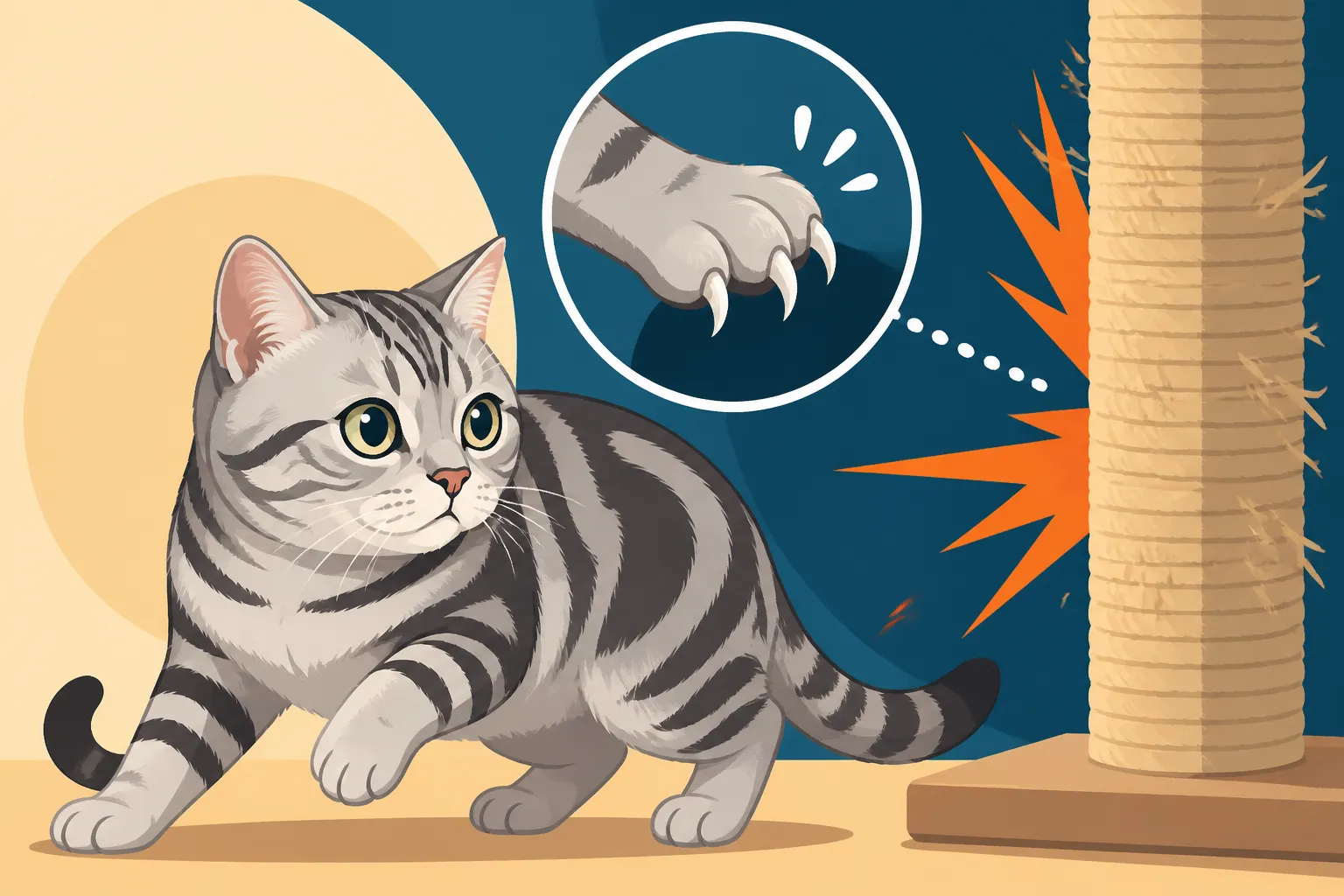
So, we've established that the American Shorthair's primary defense mechanism is retreat. But what happens when that option is taken away? It's important to understand that even the most peace-loving American Shorthair can and will scratch if they feel their back is truly against the wall. This isn't a sign of aggression for aggression's sake, but a desperate act of self-preservation.
The "Trapped" Factor: When Retreat Is Blocked
A scratch from an American Shorthair is almost always a last resort, a signal that their earlier, more polite attempts to communicate discomfort and create distance have failed. They resort to scratching when they feel genuinely trapped, with no perceived escape route. Imagine these scenarios:
- Being physically restrained: If someone holds them too tightly, or prevents them from jumping down, they might feel cornered. This is especially true if they are being forced into something they dislike, like a carrier, as detailed in How to Get a Patrol Minded American Shorthair Into a Carrier.
- Backed into a corner: Literally. If they are in a confined space with a perceived threat (a child, another pet, or even an overly zealous human) approaching and blocking their only exit.
- Startled and unable to flee: A sudden, unexpected grab from behind when they are relaxed and unaware can trigger an instinctive, defensive lash out before they even register what's happening.
In these situations, the scratch is not an act of malice. It is an act of pure, primal self-defense. Their body has gone from "flight" mode to the absolute "fight" necessity because flight has been denied. It's a desperate plea for the perceived threat to back off and allow them to escape.
Learning from the Exceptions: What a Scratch Teaches Us
If your American Shorthair does scratch you, take a deep breath and understand that it's a critical learning moment, not a reason to be angry at your cat. Instead of thinking "My cat scratched me," shift to "What did I miss, or what did I do, that caused my cat to feel so threatened they couldn't retreat?"
A scratch, in this context, is a stark indicator that:
- You missed all their previous, subtle warnings. Their body language signals were either ignored or not understood.
- Their escape route was cut off. They felt cornered, physically or psychologically.
- They were in pain or extreme discomfort. And their polite attempts to get away from the source of that pain were ineffective.
Use any scratching incident as a powerful incentive to reassess your interactions, your home environment, and your understanding of cat behavior. It's a clear communication that you need to adjust your approach to ensure your American Shorthair always feels safe, respected, and has the freedom to retreat when they need to. Building this understanding is key to nurturing the calm, affectionate bond that makes American Shorthairs such wonderful companions, suitable even for Why an American Shorthair Suits a First Time Owner.
| American Shorthair Body Language Signal | Meaning (Early) | Meaning (Late/Warning) |
|---|---|---|
| Ears Forward/Relaxed | Content, curious | Alert, assessing |
| Ears Swiveled Back/Flattened | Annoyed, nervous | Irritated, defensive, preparing to retreat |
| Tail High, Relaxed Swish | Happy, confident | |
| Tail Tip Twitching | Slight irritation, contemplation | Growing agitation |
| Tail Low, Wrapped Close | Insecure, nervous | Intense fear, ready to bolt |
| Body Relaxed, Loose | Comfortable, trusting | |
| Body Stiff, Leaning Away | Discomfort, warning | Retreat imminent |
| Pupils Normal | Calm, well-lit | |
| Pupils Dilated | Excited, fearful, or low light | High stress, perceived threat |
| Whiskers Forward | Curious, happy | |
| Whiskers Pulled Back | Defensive, fearful | Severe stress |
Disclaimer
This article is for general informational purposes only and does not constitute professional advice. Laws, prices and regulations vary by location and change over time. Consult a qualified professional for guidance on your specific situation.