Which Litter Box Suits a Square Built American Shorthair
Finding the right litter box for your American Shorthair can feel like a surprisingly daunting task. Many cat owners, especially those new to this wonderful, sturdy breed, often grapple with boxes that are simply too small, too flimsy, or just don't meet their cat's inherent needs, leading to frustration for both pet and parent. This comprehensive guide is here to unravel the mysteries of litter box selection, helping you understand why a standard box might not cut it and how to choose the perfect potty setup that honors your American Shorthair's unique physique and instincts.
Why Size and Sturdiness Matter for an American Shorthair's Litter Box
It’s easy to assume all cats are roughly the same size when it comes to their bathroom needs, but anyone who has lived with an American Shorthair knows this simply isn't true. These are not delicate, fine-boned creatures; they are robust, muscular, and carry a substantial amount of weight, which profoundly impacts their litter box requirements.
Understanding the American Shorthair's Broad Build
The American Shorthair is renowned for its solid, muscular, and "square" build. Think of a compact, powerful package built for hunting and patrolling. They're not excessively long, but they are broad across the chest and hips, with strong, medium-length legs. This body type is part of their charm and history as working cats, but it also means they need ample space to maneuver comfortably. Imagine trying to use a tiny airplane lavatory if you're a broad-shouldered person – it's awkward, uncomfortable, and you're probably going to bump into things. Your American Shorthair feels much the same in a standard-sized litter box. They need room to step in, turn around completely, dig enthusiastically, and then cover their business without feeling cramped or bumping their head on a lid. How Big an American Shorthair Gets and Why an American Shorthair Is Built Square both highlight the physical attributes that influence this need for space.
When an American Shorthair feels constrained, they're not just mildly inconvenienced; their natural instincts are being thwarted. These cats have a strong desire to bury their waste thoroughly, a behavior rooted in their wild ancestors avoiding predators by concealing their presence. If they can't perform this ritual comfortably, they might start looking for other, more spacious "toilets" around your home, or simply stop burying altogether, leading to unpleasant odors and messes. It’s not a matter of pickiness; it’s a matter of accommodating their fundamental behavioral needs.
The Impact of an Inadequate Litter Box on Behavior
A litter box that's too small for an American Shorthair isn't just an inconvenience; it can become a source of stress and behavioral issues. If your cat can't turn around without brushing against the sides, or if their hindquarters hang over the edge while they’re trying to squat, they might quickly develop an aversion to using it. This aversion can manifest in several ways, none of them fun for a cat owner. You might find "accidents" just outside the box, on rugs, or even in unexpected places where they feel more secure and have more room.
Beyond size, sturdiness is also critical. An American Shorthair, with its substantial weight and vigorous digging habits, can easily tip over a flimsy box or scratch through thin plastic over time. A wobbly box or one that slides across the floor every time they hop in can make them feel insecure. Remember, these cats appreciate stability and predictability in their environment. Why a Self Reliant American Shorthair Rarely Panics Alone speaks to their calm nature, but even the most self-reliant cat can be put off by an unstable bathroom. A good litter box needs to stand firm, giving them the confidence to do their business without fear of a mishap. Investing in a robust, appropriately sized box is an investment in your cat's comfort and your home's cleanliness, preventing a host of potential problems before they even start.
Exploring Different Types of Litter Boxes for Your American Shorthair
Just as there are many different types of homes, there are many different types of litter boxes. Understanding the pros and cons of each, especially from an American Shorthair's perspective, is key to making the right choice.
Open-Top Boxes: The Traditional Choice
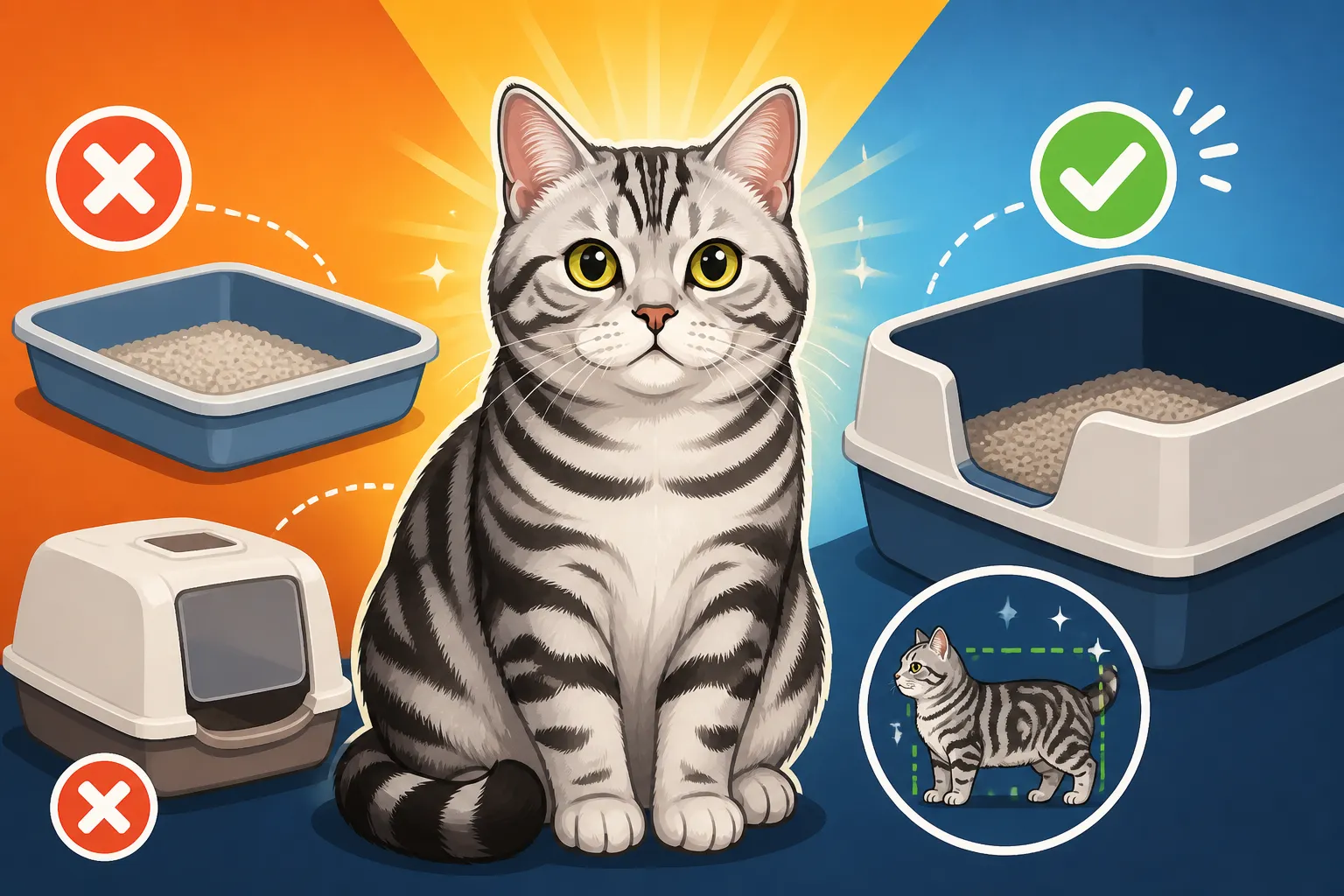
Open-top litter boxes are the classic design, often the first image that comes to mind when you think of a cat's toilet. They are, at their core, simple plastic trays. For many American Shorthairs, these can be a perfectly acceptable option, provided they are generously sized. The main advantage of an open-top box is its accessibility and the sense of openness it provides. Cats, being both prey and predator, often prefer to have a clear line of sight to their surroundings while they're vulnerable during elimination. This open design allows them to easily survey their environment, which can reduce anxiety.
However, open-top boxes come with their own set of challenges, particularly for vigorous diggers like the American Shorthair. Their enthusiastic burying can lead to significant litter scatter outside the box. If your American Shorthair is one of those cats who really gets into a digging frenzy, you might find more litter outside the box than inside it. This is where features like high sides become incredibly important, which we'll discuss shortly. Also, for owners sensitive to odors, open-top boxes offer no containment, meaning smells can diffuse more readily into the surrounding air, requiring more frequent scooping and litter changes.
Hooded and Covered Boxes: Human Appeal vs. Cat Preference
Hooded or covered litter boxes are often appealing to human owners. They promise odor control, less litter tracking, and a more discreet appearance, often blending better with home decor. From a human perspective, they seem like a win-win. However, for many cats, and especially larger breeds like the American Shorthair, these can be problematic. The enclosed space, while designed to contain odors, also traps them inside the box, making it a very unpleasant experience for a cat with a much more sensitive sense of smell. Imagine using an outhouse on a hot summer day – not ideal. This trapped odor can be a significant deterrent.
Furthermore, the confined space can feel restrictive and even threatening to a cat. It limits their ability to survey their surroundings, which, as mentioned, can increase their vulnerability. A big, broad American Shorthair may also find it difficult to turn around comfortably inside a hooded box, potentially leading to them bumping their head or rubbing their fur against the soiled sides. This discomfort can lead to refusal to use the box or, at best, a reluctance that compromises their sense of well-being. While they might look neat to us, a cat's comfort and instinct should always take precedence.
Top-Entry Boxes: A Solution for Mess, But Not All Cats
Top-entry litter boxes have gained popularity in recent years, primarily for their ability to contain litter scatter effectively. With an entry hole on the top, cats jump down into the box, and when they jump out, any litter clinging to their paws often falls back into the box through grated tops. This design is a godsend for owners tired of sweeping up granules all day long. For an agile American Shorthair, jumping in and out isn't usually an issue in their younger, spry years.
However, there are important considerations. The height of the jump can become a barrier for older American Shorthairs or those with joint issues, like arthritis, which can sometimes affect their hips as they age. When a Stiff American Shorthair Needs Joint Support is a good read on how their mobility can change. If your cat struggles to get in and out, this box will quickly become a no-go zone. The internal space also needs to be sufficiently large for them to turn around comfortably, as with any covered box. While the top is open, the high walls still create an enclosed feeling that some cats dislike. Always observe your American Shorthair closely if you opt for a top-entry box; their behavior will tell you if it's working for them.
Self-Cleaning Systems: Convenience vs. Cat Acceptance
The allure of a self-cleaning litter box is undeniable. Imagine never having to scoop again! These high-tech solutions automate the cleaning process, sifting waste into a separate compartment. Brands like Litter-Robot often come to mind in this category, offering advanced features and a promise of reduced manual labor. While incredibly convenient for owners, the biggest hurdle with self-cleaning systems is often cat acceptance. The motor noise, the movement of the rake or sifter, and the novelty of the design can be intimidating for some cats. An American Shorthair, generally calm and observant, might approach it with caution. How an American Shorthair Copes With Change emphasizes their steady nature, but a sudden, noisy mechanical scoop can still be startling.
Furthermore, self-cleaning boxes, by their very nature, are often enclosed and can sometimes be smaller internally than a broad-chested American Shorthair truly needs. Trapped odors can also be an issue, similar to hooded boxes, although many modern designs incorporate carbon filters or other odor-reducing features. If you're considering a self-cleaning system, introduce it slowly, keeping an existing, familiar box available until your American Shorthair is fully comfortable. Monitor for any signs of avoidance or stress. They can be a fantastic solution for the right cat, but they are not a guaranteed fit for every feline, especially when their robust build and preference for space are factored in.
Key Features to Look For in an American Shorthair's Litter Box
When you're shopping for a litter box for your magnificent American Shorthair, it’s not just about picking the first one that looks "big." There are specific features that will make all the difference in their comfort and your overall satisfaction.
Generous Dimensions: Length, Width, and Depth
This is perhaps the most crucial factor. For an American Shorthair, you need a litter box that is significantly larger than what's often marketed as "standard" or even "large" for cats. I'm talking about boxes that allow your cat to stand fully inside and turn a full 360 degrees without touching the sides. A good rule of thumb is that the box should be at least 1.5 times the length of your cat from nose to the base of their tail. For a male American Shorthair, which can be quite substantial, this often means looking at boxes designed for multiple cats or even dog litter boxes, which are frequently much wider and longer. Whether a Standard Box Is Too Small for an American Shorthair directly addresses this common oversight.
Depth is also essential. American Shorthairs are notorious for their enthusiastic digging. If the sides aren't high enough, that perfectly good litter you just poured in will end up scattered across your floor in minutes. Look for boxes with high sides – ideally, at least 8-10 inches – to help contain the mess. Many standard boxes have very shallow sides, which are completely inadequate for a cat that excavates with gusto. You want enough depth to fill with several inches of litter while still leaving plenty of room above for your cat to dig and move freely without kicking litter over the edge.
Entry Height and Accessibility Considerations
While high sides are great for containing litter, the entry point needs careful consideration. For a young, healthy American Shorthair, a higher lip isn't usually a problem. They're agile and can easily step over. However, as they age, or if they develop conditions like arthritis or hip dysplasia (which can occasionally affect broad-chested breeds), a high entry lip can become a significant barrier. Why an American Shorthair Stops Jumping to the Counter illustrates how mobility can decrease with age. For senior cats, or those with known joint issues, look for boxes with a lower entry point on one side, or consider a ramp.
An accessible entry ensures your American Shorthair can comfortably get into and out of their box without pain or struggle. For cats, pain often leads to avoidance, and the last thing you want is for your beloved pet to start avoiding their litter box because it's too difficult to access. There are "senior-friendly" or "handicap-accessible" litter boxes on the market that feature a lower dip, making them much easier for cats with mobility challenges. Even if your cat is currently spry, planning ahead for their senior years can save you and them a lot of trouble down the line.
Material and Ease of Cleaning
The material of the litter box might seem like a minor detail, but it plays a huge role in hygiene and longevity. Most litter boxes are made from plastic, which is affordable and lightweight. However, plastic can absorb odors over time, and scratches from enthusiastic digging can create nooks and crannies where bacteria can thrive, leading to persistent smells even after cleaning. Replacing plastic boxes periodically (every 6-12 months, depending on use) is often recommended to maintain hygiene.
For a more durable and less odor-retentive option, consider stainless steel litter boxes. These are more expensive upfront but are incredibly easy to clean, don't absorb odors, and are virtually scratch-proof. They last much longer and can be a fantastic investment for a multi-cat household or for owners who prioritize maximum hygiene. When you're cleaning, avoid harsh, abrasive chemicals that can leave residues or damage the box material, opting instead for mild, pet-safe detergents. The easier a box is to clean thoroughly, the more likely you are to keep it spotless, which is paramount for your American Shorthair's acceptance and your home's freshness. Brands like Chewy and Amazon offer a wide range of options in both plastic and stainless steel, making it easy to compare and find what works for you.
Optimal Placement and Number of Litter Boxes for Your American Shorthair
You've picked out the perfect, spacious litter box – now where does it go? And how many do you really need? These are questions that often stump even experienced cat owners, but getting it right is crucial for your American Shorthair's happiness and the absence of "accidents."
The "N+1" Rule of Thumb for Multiple Boxes
The golden rule for litter box provision is "N+1," where N is the number of cats you have. So, if you have one American Shorthair, you should ideally have two litter boxes. If you have two cats, you'd aim for three boxes, and so on. This might sound excessive, especially for a single cat, but there's solid reasoning behind it. Cats are particular creatures, and having multiple options gives them a choice of location and ensures there's always a clean option available, even if one has just been used. For a territorial cat like the American Shorthair, who appreciates their own space, having options can prevent anxiety. How Many Litter Boxes an American Shorthair Needs is a helpful resource that delves deeper into this concept.
Additionally, some cats prefer to urinate in one box and defecate in another. Offering multiple boxes caters to this subtle preference, making them feel more comfortable and less likely to seek alternatives outside the designated areas. This rule is especially important in multi-level homes; you should aim to have at least one litter box on each floor to ensure easy access for your American Shorthair, preventing them from having to undertake a lengthy "patrol" to find a suitable spot, particularly as they get older.
Strategic Location: Quiet, Accessible, and Discreet
The location of the litter box is almost as important as the box itself. You need to find spots that are:
- Quiet and Private: Your American Shorthair needs to feel safe and unthreatened while doing their business. Avoid high-traffic areas like busy hallways, laundry rooms with noisy appliances, or places where young children or other pets might disturb them. A quiet corner of a spare room, a less-used bathroom, or even a large closet (with the door kept ajar) can work well. Remember, Why a Self Reliant American Shorthair Rarely Panics Alone describes their independence, but privacy during vulnerable moments is still key.
- Easily Accessible: While privacy is good, being locked away in an inaccessible dungeon is not. The box should be easy for your American Shorthair to get to at any time, day or night, without obstacles. Don't hide it so well that they can't find it!
- Away from Food and Water: This is a non-negotiable. Cats are instinctively clean animals and will not want to eat or drink near their toilet. Keep food and water bowls in completely separate areas from the litter boxes. Imagine trying to eat your dinner in your bathroom – it's just not appealing.
- Good Ventilation (but not drafty): While enclosed boxes can trap odors, placing an open box in a well-ventilated area can help dissipate smells. However, avoid drafty spots near exterior doors or windows, as cats don't like feeling cold or exposed.
Spreading the boxes throughout your home, rather than clustering them all in one room, can also help distribute your American Shorthair's "territory" and prevent resource guarding if you have multiple cats. Thoughtful placement truly goes a long way in promoting good litter box habits.
Addressing Common Litter Box Problems with Your American Shorthair
Even with the perfect litter box and ideal placement, issues can sometimes arise. American Shorthairs, while generally placid, are still cats with their own preferences and sensitivities. Understanding why problems occur is the first step to solving them.
When a Cat Refuses the Box: Behavioral and Medical Causes
If your American Shorthair suddenly stops using their litter box, it's incredibly frustrating, but it's a clear signal that something is wrong. The very first step is always a trip to the vet. Many medical conditions can cause litter box aversion, including urinary tract infections, bladder stones, kidney disease, diabetes, and even arthritis that makes getting into the box painful. Why a Male American Shorthair's Urethra Blocks First and Why a Thirsty American Shorthair Should Be Tested highlight specific health concerns that can lead to inappropriate urination. Your vet can rule out or treat any underlying health issues. Never assume it's "just behavioral" without a veterinary check-up.
Once medical causes are ruled out, it's time to investigate behavioral triggers. Ask yourself:
- Has anything changed recently? Cats are creatures of habit. A new type of litter, a new cleaning product, moving the box, new furniture, or even a change in household routine can stress them out. How an American Shorthair Copes With Change shows their adaptability, but they still have limits.
- Is the box truly clean enough? Some cats are incredibly fastidious. If the box isn't scooped at least once, ideally twice, daily, or if the litter isn't changed frequently enough, they might refuse to use it.
- Is the litter itself the problem? Cats have strong preferences for litter texture and scent. A heavily perfumed litter might be pleasant to you but repulsive to your American Shorthair. Most prefer unscented, fine-grained, soft litter.
- Is there enough privacy or space? Revisit the size, type, and location of your boxes. Could another pet or person be ambushing them while they're in the box?
Patience and careful observation are key. Try to think like your cat and identify what might be making the litter box an unpleasant experience for them.
Managing Mess Outside the Box: High Sides and Mats
One of the most common complaints with litter boxes, especially for a vigorous digger like the American Shorthair, is litter scatter. No matter how meticulously you clean, those little granules seem to migrate everywhere!
- High-Sided Boxes: As previously mentioned, a box with higher sides is your first line of defense. Many companies offer extra-high litter pans specifically to combat scatter. Some popular choices can be found on sites like Amazon or Chewy, often labeled "jumbo" or "extra-large" with high walls.
- Litter Mats: Place a litter trapping mat directly outside the box. These mats have textured surfaces or deep grooves designed to catch litter from your cat's paws as they exit. There's a wide variety available, from simple rubber mats to more elaborate honeycomb designs that funnel litter back into the box. Regularly shaking out these mats will significantly reduce the amount of litter tracked through your home.
- Strategic Litter Choice: While personal preference varies, some types of litter are inherently less prone to tracking. Larger granules or crystals might track less than very fine clay litter, but always prioritize your cat's preference first. A cat that dislikes the litter will simply not use the box.
- Regular Scooping: A full, dirty box encourages vigorous digging as your cat tries to find a clean spot, leading to more scatter. Frequent scooping helps maintain cleanliness and reduces the need for excessive digging.
Remember, the goal is to create an environment where your American Shorthair wants to use the litter box. By addressing their needs for space, privacy, cleanliness, and comfort, you can foster positive litter box habits and enjoy a cleaner, happier home.
| Feature / Box Type | Open-Top (High Sides Recommended) | Hooded/Covered (Large Internal Space) | Top-Entry (Wide Opening) | Self-Cleaning (Cat Acceptance Critical) |
|---|---|---|---|---|
| Pros for ASH | Easy access, good visibility, natural preference for many cats | Contains odor (for humans), reduces scatter | Excellent for scatter control, can deter dogs | Automates scooping, always a clean box |
| Cons for ASH | Prone to litter scatter (without high sides), no odor containment | Can feel cramped, traps odors inside, limits visibility, potential anxiety | Higher entry jump (issue for seniors/arthritic cats), enclosed feel | Cost, potential noise/movement aversion, enclosed feel, can be too small for some ASH |
| Key Considerations | Must be extra-large with high sides for broad build and digging | Requires very large internal dimensions to avoid cramped feeling; good ventilation | Entry height must be manageable for cat's age/mobility; internal space | Cat must accept noise/movement; ensure ample internal space; high cost |
| Ideal ASH Age | All ages, with appropriate entry height as needed | Best for very calm, non-anxious ASH that tolerates enclosure | Young to middle-aged, agile ASH | Highly adaptable, non-anxious ASH |
Making the Transition to a New Litter Box
Even with the best intentions, changing things up in your American Shorthair's world, especially something as fundamental as their litter box, requires a thoughtful approach. Cats thrive on routine and familiarity, and a sudden change can lead to stress and avoidance.
Gradual Introduction: The Side-by-Side Method
The absolute best way to introduce a new litter box is gradually. Don't just swap out the old one for the new one overnight. That's a recipe for disaster and will likely result in your American Shorthair giving the new box a wide berth. Instead, place the new, ideal litter box right next to the old one. This "side-by-side" method allows your cat to explore the new option at their own pace, sniff it, perhaps even try it out, while still having the comfort and security of their familiar toilet. How an American Shorthair Handles Leaving Its Territory highlights their need for secure spaces, and a familiar litter box is very much part of that.
Keep both boxes meticulously clean. Most cats will gravitate towards the cleaner box, so if the new box is consistently pristine, they'll likely start experimenting. Once you observe your American Shorthair regularly using the new box (give it at least a week or two), you can then slowly move the old box further and further away, perhaps to a less prominent location, before eventually removing it altogether. Never force your cat into the new box or try to "show" them how to use it; that will only increase their anxiety. Let them discover it on their own terms.
Litter and Scent Familiarity: Don't Change Everything at Once
When introducing a new litter box, try to keep the type of litter consistent initially. If your American Shorthair is used to a particular brand or type of litter, use that same litter in the new box. Changing both the box and the litter at the same time can be overwhelming and confusing for your cat. Scent is incredibly important to cats; it's how they identify safe and familiar spaces. Introducing too many new scents or textures at once can lead to rejection. Which Litter an American Shorthair Accepts can give you insights into common preferences.
Once your American Shorthair is comfortably using the new box with their familiar litter, and the old box has been completely removed, then you can consider transitioning to a new type of litter if you wish. Even then, do it gradually. Mix a small amount of the new litter in with the old over several days, slowly increasing the proportion until it's entirely the new litter. This slow transition allows your cat to adjust to the new texture and scent without feeling like their entire world has been turned upside down. Patience is truly a virtue when it comes to feline preferences, and it will pay off with a contented cat who consistently uses their designated facilities.
Caring for the Litter Box to Support Your American Shorthair's Health
Beyond choosing the right box, the ongoing care and maintenance of the litter box setup are paramount to your American Shorthair's health and happiness. A clean, well-maintained litter box isn't just about reducing odors for you; it's about providing a sanitary and inviting environment for your cat.
The Importance of Regular Scooping and Deep Cleaning
For a meticulous cat like the American Shorthair, cleanliness is king. You should aim to scoop the litter box at least once a day, and ideally twice a day, especially in a multi-cat household or if your cat produces frequent waste. This removes waste before odors can build up significantly and ensures there’s always a fresh spot for your cat to use. Leaving waste in the box can lead to your American Shorthair trying to dig excessively to find a clean patch, increasing scatter, or even seeking alternative, less desirable places to relieve themselves. Remember, they are meticulous self-groomers (How Much Time an American Shorthair Spends Grooming Itself), so they appreciate a clean environment.
Beyond daily scooping, regular deep cleaning is essential. For plastic litter boxes, this usually means emptying all the old litter, scrubbing the box thoroughly with warm water and a mild, unscented soap (like dish soap), and then rinsing it completely. Ensure no soap residue is left behind, as strong chemical smells can deter your cat. Frequency depends on the type of litter and your cat's usage, but a full litter change and deep clean weekly or bi-weekly is a good general guideline. Stainless steel boxes are even easier to deep clean, as their non-porous surface resists odors and bacteria more effectively. Allow the box to air dry completely before refilling it with fresh litter.
Choosing the Right Litter for Health and Comfort
The type of litter you use is just as important as the box itself. With so many options on the market, it can be overwhelming to choose, but focus on what's best for your American Shorthair.
- Unscented Clumping Clay Litter: This is often the preferred choice for many cats. The fine texture is soft on their paws, and the lack of scent is less irritating to their sensitive noses. Clumping litter also makes scooping much easier and more efficient, as urine forms solid clumps that can be removed cleanly, leaving the rest of the litter fresh.
- Dust Control: Excessive dust from litter can be irritating to your cat's respiratory system and can leave a fine film on surfaces in your home. Look for low-dust or dust-free formulas, which are widely available.
- Alternative Litters: If you or your cat have allergies or sensitivities, or if you prefer more eco-friendly options, there are alternative litters made from materials like recycled paper, wood pellets, corn, or silica gel crystals. Each has its own pros and cons regarding absorbency, odor control, and texture. If you switch to an alternative litter, always do so gradually, mixing it with their current litter over several days to weeks to allow for adjustment. Some cats might be particular about texture, and a sudden change could lead to box aversion.
Monitoring Litter Box Habits for Early Signs of Illness
Your American Shorthair's litter box habits are a vital indicator of their overall health. Changes in frequency, consistency, or behavior around the box can signal a problem that requires veterinary attention.
- Increased or Decreased Urination: Urinating more frequently or in larger volumes can be a sign of diabetes or kidney disease. Straining to urinate, producing only a few drops, or crying in the box can indicate a urinary tract infection or a dangerous blockage, especially in male cats. Why a Female American Shorthair Faces Fewer Urinary Risks clarifies that while both genders can get UTIs, blockages are more common and dangerous for males.
- Changes in Stool: Diarrhea, constipation, or blood in the stool all warrant a vet visit. Why a Well Muscled American Shorthair Gets Constipated covers this specific issue. Straining to defecate can also indicate discomfort.
- Litter Box Aversion: As discussed, suddenly refusing to use the box is a major red flag for either a medical issue or significant stress. Don't ignore it.
- Pain Signals: If your American Shorthair cries, strains, or shows difficulty getting in or out of the box, it could be a sign of pain from arthritis or other conditions. How an Old American Shorthair Shows Its Joints Hurt will give you more information on recognizing these subtle signs.
Regularly observing your American Shorthair's litter box habits allows you to catch potential health issues early, leading to quicker diagnosis and treatment, and ultimately, a healthier, happier cat for years to come.
Disclaimer
This article is for general informational purposes only and does not constitute professional advice. Laws, prices and regulations vary by location and change over time. Consult a qualified professional for guidance on your specific situation.