Which Litter an American Shorthair Accepts
Choosing the right litter for your beloved American Shorthair might seem like a straightforward decision, but many cat parents find themselves puzzled when their feline friend turns up their nose at a new brand or texture. It's a common frustration, trying to find that perfect balance between odor control for you and comfort for them. This comprehensive guide will help you understand the nuances of your American Shorthair's preferences, explore various litter options, and ultimately, find the ideal solution to keep your furry companion happy and their litter box habits impeccable.
Understanding Your American Shorthair's Instincts and Preferences
Our American Shorthairs carry a rich history in their DNA, echoing back to working cats on farms and ships. These aren't just pretty faces; they possess deep-seated instincts that often dictate their comfort and choices, especially when it comes to something as fundamental as where they relieve themselves. Ignoring these instincts can lead to frustrating litter box issues, which nobody wants!
The Inherited Preference for Natural Substrates
Think about where the ancestors of your American Shorthair would have done their business: soft earth, sand, loose soil, or even hay in a barn. These were natural, easily diggable substrates that allowed them to effectively bury their waste, a crucial instinctual behavior for hiding their presence from predators and prey alike. This deep-rooted preference for a natural feel translates directly into what they prefer in a modern litter box.
When a litter feels too alien, too hard, or too uncomfortable under their paws, it can go against every fiber of their being. They want to dig, cover, and then forget about it. A material that doesn't allow for this satisfying excavation can cause an American Shorthair to either avoid the box entirely or perform a rather unsatisfactory, frustrated scratching ritual on the edges, leaving their business uncovered. This isn't them being naughty; it's them trying to work with what they've got, and sometimes what they've got just isn't cutting it. Their original job meant they were very much Why a Barn Bred American Shorthair's Habits Make an Easy Litter Box Cat.
Scent Sensitivity and the American Shorthair
Cats, including the American Shorthair, have an incredibly sensitive sense of smell – far more acute than ours. While we might appreciate a strong lavender or fresh linen scent from our litter, our cats often find these overwhelming, irritating, or even repulsive. Imagine trying to use a public restroom that smells like a perfume factory; it's not a pleasant experience, and it can make you want to find somewhere, anywhere else.
Heavily scented litters are designed to mask odors for human noses, but they don't eliminate the actual smell of waste. For a cat, they just add a powerful, often artificial, layer on top of an already strong scent profile. Many American Shorthairs will simply refuse to use a box with overpowering perfumed litter, preferring a cleaner, more neutral environment. This often means they will hold it, which can lead to urinary issues, or they'll find an alternative, less ideal spot in your home. Why a Male American Shorthair's Urethra Blocks First can be a serious concern, and avoiding the box due to scent can contribute to this.
Common Litter Types and How American Shorthairs React to Them
With so many litter options lining the shelves, it can feel like a maze trying to pick the right one. Let's break down the most common types and how your American Shorthair is likely to react. Understanding these differences is key to making an informed choice that caters to your cat's well-being.
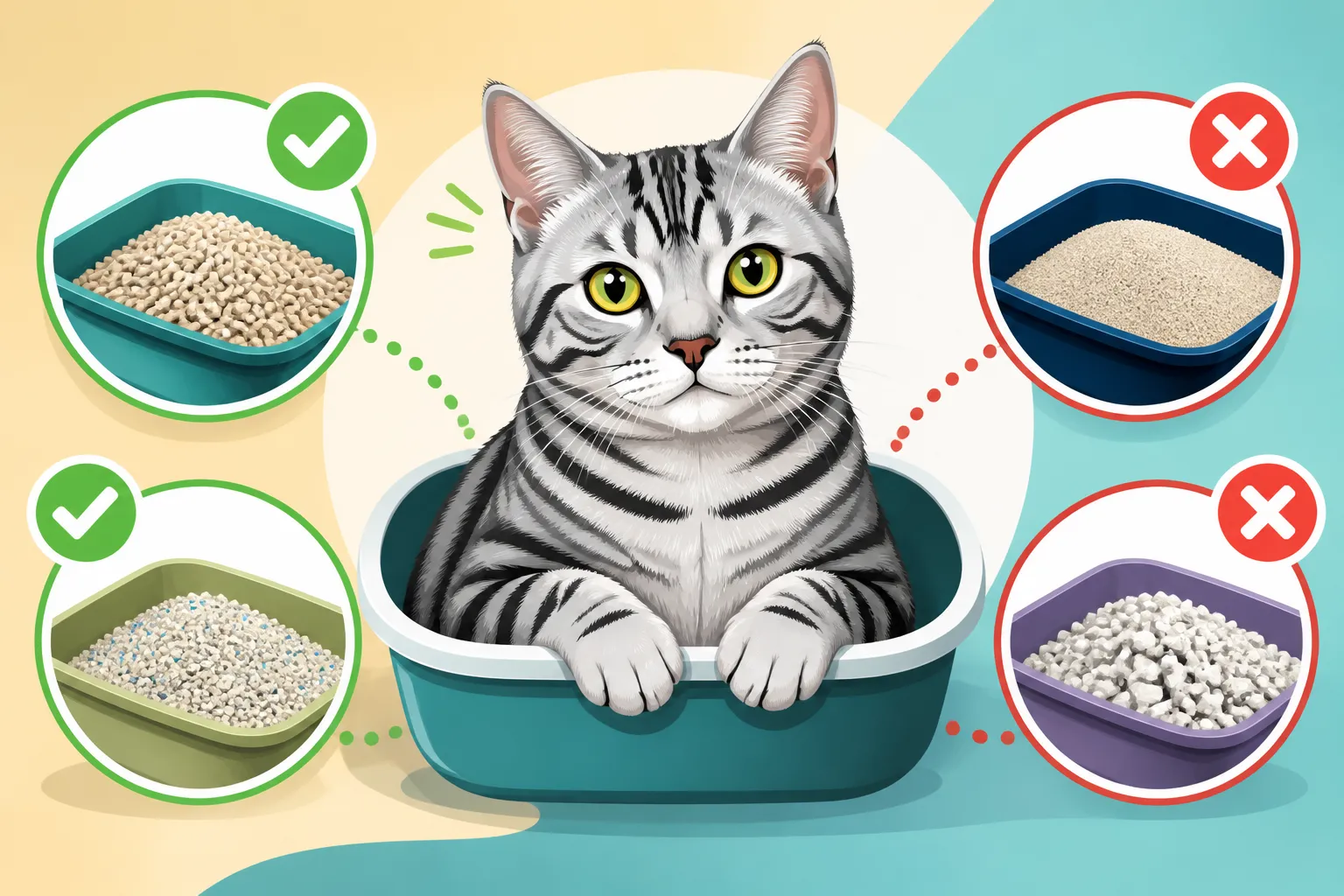
Clay Litter: The Traditional Choice
For decades, clay litter has been the go-to for cat owners, and for good reason. It's widely available, generally affordable, and cats tend to accept its granular texture due to its similarity to natural soil.
- Pros: Clay litter comes in various forms, including clumping and non-clumping. Clumping clay is fantastic for easy scooping, as it forms solid balls around urine and feces, making cleanup a breeze and helping to contain odors by removing the source quickly. Many American Shorthairs readily take to its familiar feel under their paws, echoing that primal digging satisfaction. You can find a vast array of clay litters, both scented and unscented, at most pet supply stores and online retailers like Chewy.
- Cons: The biggest drawback of clay litter, especially the cheaper varieties, is dust. This dust can be a respiratory irritant for both you and your cat. Have you ever seen a cloud rise from the litter box after your cat does its business or you pour in fresh litter? That's the dust we're talking about. High-dust litters can contribute to respiratory issues over time. Additionally, clay litter can be quite heavy to lug home, and tracking small particles out of the box is a common complaint. Many scented clay litters, while appealing to humans, fall foul of your American Shorthair's sensitive nose, as we discussed.
- American Shorthair Reaction: Many American Shorthairs will tolerate or even prefer unscented, low-dust clumping clay litter because the texture is familiar and it allows for good burying. However, if the dust is excessive, or the scent too strong, you might notice them shaking their paws excessively after exiting the box, or even starting to eliminate just outside the box. A cat that seems to rush out of the litter box the moment they're done might be telling you the litter isn't quite right.
Silica Gel Litter: The Modern Alternative
Silica gel litter, often recognizable by its crystal-like appearance, represents a significant departure from traditional clay. It's designed for maximum absorbency and odor control.
- Pros: The primary advantage of silica gel litter is its incredible ability to absorb moisture and trap odors. A small amount of litter can last much longer than clay, making it seem more economical in the long run and reducing the frequency of full litter box changes. It's also virtually dust-free, which is a huge bonus for anyone with allergies or respiratory sensitivities. This low-dust feature means a cleaner air environment around the litter box, which is healthier for everyone in the home, including your American Shorthair.
- Cons: The main hurdle with silica gel litter is its texture. Those hard, often irregular crystals can feel quite alien and uncomfortable under some cats' paws. It's not the soft, fine sand-like material their instincts crave. The initial cost can also be higher than clay, although its longevity often balances this out. Some owners find that while it absorbs urine well, scooping solid waste can sometimes leave lingering odors if not removed immediately, and some cats might not bury their waste as thoroughly on the slick crystals.
- American Shorthair Reaction: An American Shorthair might approach silica gel litter with caution. Some will adapt, especially if introduced gradually, but others may simply refuse to use it due to the unfamiliar and potentially uncomfortable texture. If you notice your cat gingerly stepping around the crystals, or doing their "digging" motions on the floor next to the box, it's a clear sign they're not thrilled with the feel. You might have better luck if you've been careful with the transition, as detailed in How to Get a Patrol Minded American Shorthair Into a Carrier – a similar gradual approach is often needed.
Natural Plant-Based Litters: A Growing Trend
As more owners look for eco-friendly and natural options, plant-based litters have gained significant popularity. These are derived from materials like pine, corn, wheat, walnut shells, and even recycled paper.
- Pros: These litters are often lauded for being biodegradable, renewable, and often compostable, making them a more environmentally conscious choice. Many varieties are naturally low in dust, and some offer excellent odor control through natural enzymes or by absorbing moisture effectively. The textures vary greatly; pine pellets are coarser, while corn or wheat litters can be finer and softer under paw. Brands like those found on Amazon offer a wide range of these types.
- Cons: The main challenges with natural litters can be their price, which tends to be higher than conventional clay. Their clumping ability can also vary wildly from brand to brand, and some may not clump as tightly as clay, making scooping a bit messier. Another consideration, especially with kittens or highly curious cats, is that some plant-based litters might be ingested, either accidentally or out of curiosity. While generally safe in small amounts, it's something to monitor.
- American Shorthair Reaction: American Shorthairs often take well to plant-based litters, particularly those with a softer, more granular texture like corn or wheat, as they mimic natural earth. Pine pellets, while effective, might be less popular with some cats due to their coarser, harder feel. The natural, often subtle, scent of these litters is usually much more acceptable than artificial perfumes. If your American Shorthair has been having issues with clay dust or scent, a natural, unscented option could be a game-changer. Just be mindful of the texture and introduce it slowly.
Here's a quick comparison of common litter types:
| Litter Type | Texture | Dust Level | Odor Control | Clumping Ability | Environmental Impact | American Shorthair Acceptance |
|---|---|---|---|---|---|---|
| Clay (Clumping) | Fine granules | Moderate | Good | Excellent | High | Often good, if unscented/low dust |
| Silica Gel | Crystals | Very Low | Excellent | Poor | Moderate | Variable, some dislike texture |
| Pine (Pellets) | Coarse, pellets | Low | Good | Fair | High (biodegradable) | Variable, can be too coarse |
| Corn | Fine to medium | Low | Good | Good | High (biodegradable) | Often good, natural feel |
| Walnut | Medium granules | Low | Good | Good | High (biodegradable) | Often good, natural feel |
Factors Beyond Type That Influence Acceptance
Beyond the primary material of the litter, there are several other critical factors that can make or break your American Shorthair's relationship with their litter box. We're talking about comfort, cleanliness, and subtle sensory cues that often go unnoticed by us, but are paramount to our feline friends.
Texture and Paw Comfort
Imagine walking barefoot across a surface you find irritating or painful every time you need to use the restroom. You'd probably find another spot, right? Our American Shorthairs' paws are incredibly sensitive, and the texture of the litter plays a huge role in their comfort. Fine-grained litters, those that feel like soft sand or fine soil, are almost universally preferred by cats. They allow for easy digging and feel pleasant under sensitive toe beans.
On the other hand, litters with coarse, sharp, or very large particles can be uncomfortable or even painful for them to walk on and dig in. This discomfort isn't just a minor annoyance; it can be enough to make them avoid the box. An American Shorthair, with their generally sturdy build and desire to do things "properly," wants to perform their burying ritual without pain or hesitation. If the litter feels like walking on gravel, they might hover at the edge, rush through the process, or decide to find a softer spot elsewhere, perhaps your carpet or a laundry pile. Keeping their paws healthy is also important for their overall mobility, especially as they get older, linking back to ideas like Why an American Shorthair Stops Jumping to the Counter.
Dust and Respiratory Health
We've touched on dust with clay litter, but it warrants its own discussion. Excessive dust in any litter is not just a nuisance for cleaning; it's a genuine health concern for your cat and for you. Every time your American Shorthair digs, covers, or even jumps into the litter box, dust particles are aerosolized into the air. These tiny particles can irritate their delicate respiratory system, potentially leading to coughing, sneezing, or even more serious conditions over time.
While American Shorthairs are generally considered a robust and healthy breed, continuous exposure to airborne irritants is never ideal. Opting for low-dust or dust-free litter is one of the easiest ways to protect their respiratory health. Think about it: a cat spends a lot of time with its nose directly in the litter when doing its business. They are inhaling that dust directly. Choosing a high-quality, low-dust option can make a significant difference in their long-term well-being and their willingness to use the litter box consistently. This concern about respiratory health reminds us that even with a generally healthy breed, vigilance is key, similar to Why an American Shorthair Still Needs a Yearly Heart Scan.
Odor Control or Lack Thereof
From a human perspective, a foul-smelling litter box is unacceptable. We want odor control, and we often reach for scented litters to achieve it. However, from your American Shorthair's perspective, the story is quite different. As mentioned, their powerful sense of smell makes strong artificial perfumes offensive. The best odor control, from a cat's point of view, is a clean box.
Frequent scooping is paramount. Even the most advanced, expensive litter won't perform magic if it's left to sit for days. For an American Shorthair, a clean box signals a safe, acceptable place to eliminate. A dirty box, or one that smells strongly of old waste and overpowering air freshener, is often a no-go. They might start to seek out cleaner spots in your home. Aim to scoop at least once, ideally twice, a day. This not only keeps your home smelling fresh for you but, more importantly, keeps the environment appealing and hygienic for your cat. This proactive cleanliness is a core part of Caring for an American Shorthair Past Twelve and throughout their life.
Transitioning and Troubleshooting Litter Aversions
So, you've read all about the different litters and you've decided to try something new, or maybe your American Shorthair has suddenly developed an aversion to their current setup. Changing litter or addressing issues requires patience and a strategic approach. Cats are creatures of habit, and disruptions to their bathroom routine can cause stress.
Gradual Introduction Is Key
Never, ever make an abrupt change to your cat's litter. This is almost a guaranteed recipe for rejection. If you're introducing a new litter, whether it's a different brand of clay or a completely new material like corn or walnut, a slow, gradual transition is absolutely essential.
Here’s a step-by-step guide to a successful transition:
- Start with a Mix: For the first few days, mix a small amount of the new litter (about 1/4) with 3/4 of their old, familiar litter in one of their boxes. This allows them to get used to the new scent and texture without being overwhelmed.
- Increase Gradually: Over the next week or two, slowly increase the proportion of the new litter. Move to a 50/50 mix, then 3/4 new litter to 1/4 old.
- Monitor Closely: Pay close attention to your American Shorthair's behavior during this time. Are they still using the box consistently? Are they digging and burying normally? Any hesitation, quick exits, or attempts to eliminate outside the box are signs to slow down the transition or even revert to a previous step.
- Offer Choices (if possible): If you have multiple litter boxes (and you should, ideally one more than the number of cats you have), consider filling one box with the old litter and another with the new litter, or a mix. This gives your cat a choice and reduces pressure. Remember, How Many Litter Boxes an American Shorthair Needs is a vital consideration for cat happiness.
This gradual approach minimizes stress and gives your American Shorthair time to accept the change on their own terms. Rushing it will only create problems.
Recognizing Signs of Dislike
American Shorthairs are known for their calm, stoic demeanor. They're not always outwardly dramatic, which means you need to be a keen observer to spot signs of litter aversion. They might not explicitly tell you they hate the new litter, but their body language and subtle behavioral changes will.
Look out for these indicators:
- Eliminating Outside the Box: This is the most obvious sign. If your American Shorthair starts urinating or defecating anywhere other than the litter box – be it on carpets, bath mats, clothes, or in house plants – it's a strong indicator of a problem. This isn't spite; it's a signal that something is wrong with their designated toilet area.
- Perching or Hovering: Instead of confidently entering the box, digging, and squatting, they might perch on the edge, or squat in an awkward position, barely touching the litter. This often points to discomfort with the texture or depth of the litter.
- Excessive Digging or Scratching Outside the Box: An American Shorthair that digs furiously at the walls or floor around the litter box, but barely touches the litter itself, is telling you they can't effectively bury their waste in the current substrate.
- Quick Exit: Does your cat leap out of the box the moment they're done, shaking their paws as they go? They're indicating a discomfort or dislike of the litter.
- Unburied Waste: If your American Shorthair, normally fastidious, starts leaving their waste uncovered, it suggests they found the litter unsuitable for proper burying.
- Reluctance to Enter: They might approach the box, sniff, and then walk away, or hesitate for a long time before finally going in. This subtle reluctance is a red flag.
Remember, a stoic cat like the American Shorthair might internalize discomfort before it becomes obvious, making careful observation even more critical. Why a Stoic American Shorthair Hides Pain the Longest applies to litter discomfort too! Addressing these signs promptly can prevent a small issue from becoming a deeply ingrained behavioral problem.
The Importance of the Litter Box Itself
Sometimes, the problem isn't the litter at all, but the container it's in. Even the perfect litter won't be used if the box itself isn't suitable. For a robust and solid cat like the American Shorthair, the size and style of the litter box are incredibly important.
- Size Matters: American Shorthairs are typically medium to large, well-muscled cats. A standard small or medium litter box simply won't cut it. They need ample space to enter, turn around comfortably, dig, and squat without feeling cramped or touching the sides. The general rule of thumb is a box that is at least 1.5 times the length of your cat, from nose to tail base. A cramped box can make them feel vulnerable and uncomfortable, similar to how What an American Shorthair Weighs at One and How Much Is Left indicates their mature size needs. This directly relates to Which Litter Box Suits a Square Built American Shorthair.
- Depth and Entry: While depth is good for containing litter, the sides shouldn't be so high that an older or less agile American Shorthair struggles to get in. For kittens or senior cats, low-entry boxes are a godsend. Conversely, for vigorous diggers, a higher-sided box can help contain the scattered litter.
- Location, Location, Location: Even with the perfect litter and box, a poor location can cause problems. The litter box should be in a quiet, easily accessible, and private spot where your American Shorthair feels safe and unthreatened. Avoid high-traffic areas, loud appliances, or places where they might feel trapped. Noisy environments or sudden disruptions can stress a cat, and a stressed cat is more likely to avoid the box. Ensure they always have a clear escape route.
- Cleanliness Beyond Scooping: Beyond daily scooping, regular, thorough cleaning of the entire litter box with mild, unscented soap and water is crucial. Residue can build up and contribute to odors, even if the litter itself is clean. Many owners clean their boxes entirely every 2-4 weeks, depending on the litter type and number of cats.
By considering all these aspects – the right litter type, a gradual transition, keen observation of behavior, and a suitable, well-maintained litter box – you can ensure your American Shorthair remains a happy, healthy, and perfectly well-behaved member of your family. Maintaining good litter box habits is a cornerstone of a happy cat household, and it's a key part of ensuring How Much Water Keeps an American Shorthair's Bladder Clear and other health considerations.
Disclaimer
This article is for general informational purposes only and does not constitute professional advice. Laws, prices and regulations vary by location and change over time. Consult a qualified professional for guidance on your specific situation.