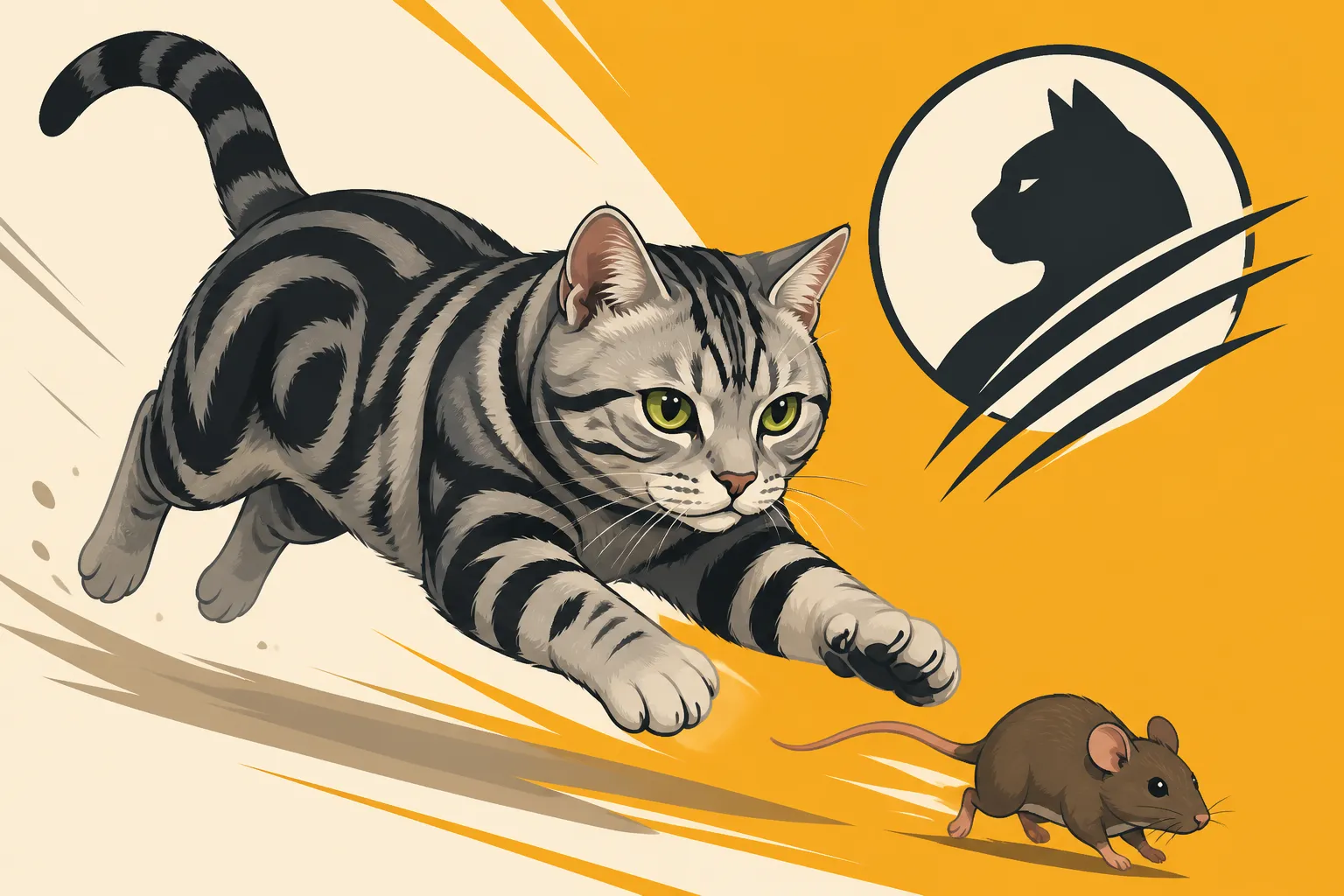
How Strong an American Shorthair’s Hunting Drive Is
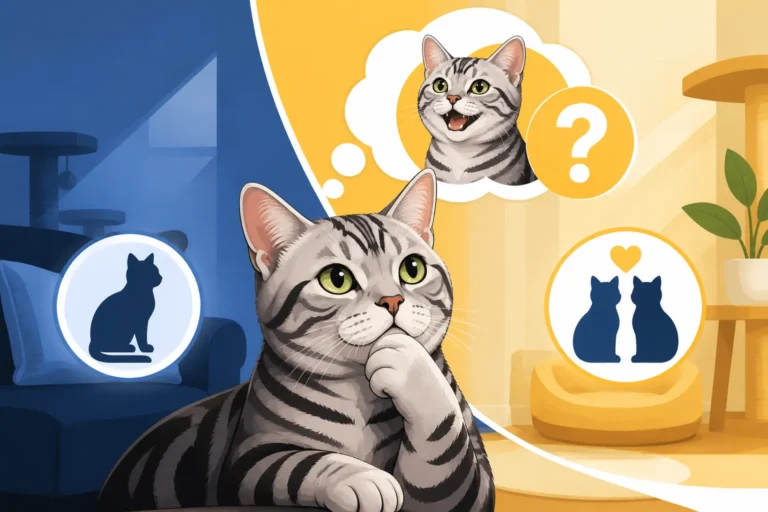
Many American Shorthair owners find themselves scratching their heads, wondering why their seemingly placid, easygoing companion still exhibits such intense focus on a stray fly or a wiggling shoelace. It's easy to forget that beneath that calm exterior lies a millennia-old predatory instinct. This guide delves into the powerful hunting drive inherent in the American Shorthair, helping you understand its origins, how it manifests in your home, and most importantly, how to provide appropriate outlets for this deep-seated, natural behavior.
The Deep Roots of the American Shorthair's Hunting Instinct
It’s easy to look at our pampered house cats, curled up on a sunbeam, and forget their wilder ancestors. But the American Shorthair, perhaps more than many other pedigrees, carries a strong, clear echo of its working past. This isn't just a quirky trait; it's a fundamental part of who they are, woven into their very DNA. Understanding this lineage is the first step to truly appreciating and managing their formidable hunting prowess.
Centuries of Purpose: The Working Cat Legacy
For generations, the cats that would eventually become the American Shorthair weren't pets in the modern sense; they were employees. They were vital members of households, farms, and ships, earning their keep by keeping vermin populations in check. Imagine a time before pest control sprays or even readily available traps – a cat was often the most effective, and sometimes the only, solution to rodents threatening crops, food stores, or the structural integrity of a wooden ship. This selective pressure over hundreds of years meant that only the most skilled, most persistent, and most successful hunters passed on their genes. Why Centuries of Ratting Left the American Shorthair Its Drive is not just a historical note; it's the foundation of their very being.
This isn't a mere suggestion of a hunting past; it's a deeply ingrained behavioral pattern that proved critical for survival. Cats that were less inclined to hunt simply didn't thrive or reproduce as successfully. The very traits we admire in them today – their alertness, agility, quick reflexes, and keen senses – were all honed by this relentless need to find, stalk, and capture prey. They were not bred for delicate features or exotic coats initially; they were bred for utility, and hunting was their primary job description. Even after they became recognized as a formal breed, the early American Shorthair breeders understood the value of preserving these functional traits, ensuring that the hunting drive remained strong.
Built for the Hunt: Physical Traits and Genetic Predisposition
When you observe an American Shorthair, you're looking at a cat physically designed for efficiency and success in hunting. Their medium to large, well-muscled body isn't just for show; it's a compact, powerful machine. Their broad chest allows for powerful lung capacity, crucial for short bursts of speed and sustained pursuit. Their strong, medium-length legs provide excellent propulsion and balance, whether they are pouncing from a standstill or navigating uneven terrain. These aren't fragile, delicate cats; they are robust and athletic, perfectly adapted to their original purpose.
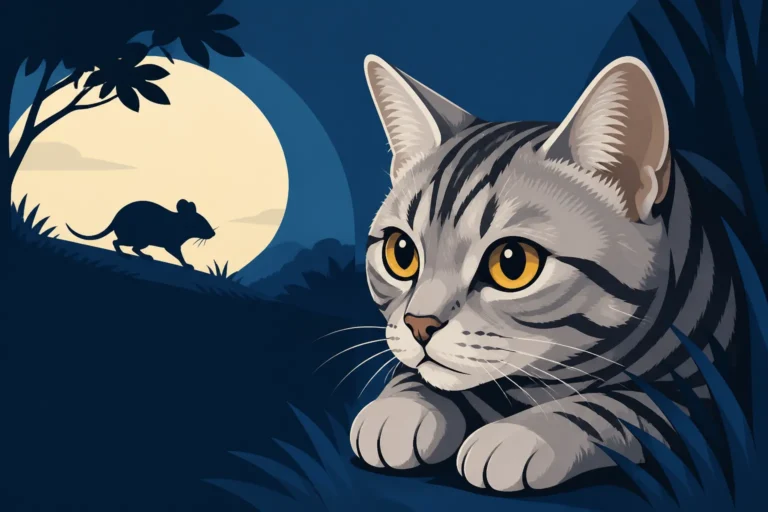
Beyond their musculature and bone structure, consider their senses. American Shorthairs possess exceptional eyesight, especially in low light, which would have been invaluable for hunting at dawn or dusk when rodents are most active. Their large, rounded ears can swivel independently, pinpointing the slightest rustle of a mouse in the grass or behind a wall. And their whiskers, those incredible sensory tools, help them navigate tight spaces and feel for prey even in complete darkness. All these physical attributes combine with a genetic predisposition for keen observation, patience, and explosive action. They are wired to detect movement, interpret subtle sounds, and execute precise, calculated attacks. It’s a remarkable example of natural selection shaping a creature for a specific, demanding role, a role that remains a part of them today.
How the Hunting Drive Manifests in a Domestic Setting
Even if your American Shorthair has never seen a live mouse outside of a nature documentary, that primal urge to hunt doesn't simply vanish. It needs an outlet, and in the absence of actual prey, it will find creative (and sometimes inconvenient) ways to express itself within the confines of your home. Recognizing these behaviors for what they are – expressions of a natural instinct – is key to providing appropriate enrichment and preventing frustration for your feline friend.
Stalking, Pouncing, and the Indoor "Prey"
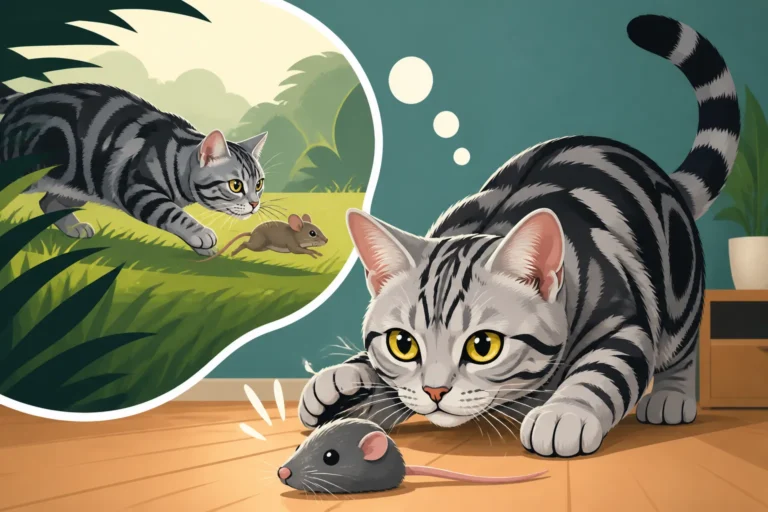
The domestic environment, devoid of actual wild prey, becomes a substitute hunting ground. You'll often see your American Shorthair engage in classic predatory behaviors directed at unexpected targets. A dust bunny skittering across the floor, a sunbeam playing on the wall, or even your own wiggling toes can trigger the full hunting sequence. First comes the intense focus, eyes narrowed, body low to the ground. Then the slow, deliberate stalk, every muscle tensed, tail twitching slightly. How an American Shorthair Stalks is a masterclass in silent, efficient movement, a silent ballet of calculated approach.
This stalking is often followed by the explosive pounce. How an American Shorthair Pounces demonstrates incredible coordination and power, even if it's just on a crumpled piece of paper. They might hide behind furniture, peering out with that characteristic intense gaze, waiting for the perfect moment to ambush an unsuspecting toy. Feather wands, laser pointers (with a crucial caveat we'll discuss later), or even just a piece of string dragged across the floor can elicit this powerful response. It’s not just playing; it’s practicing, honing skills that were once essential for survival. This is why even a well-fed house cat can seem utterly captivated by something as insignificant as a stray insect – it's their instinct kicking in.
The Ritual of the "Kill" and Presenting Trophies
For an American Shorthair, the hunt isn't over with the capture. There's often a "kill bite" – a series of quick, precise bites to the toy, sometimes accompanied by a vigorous shake. This simulates the neck bite that would dispatch real prey, and it's a vital part of completing the hunting sequence for them. They need to feel like they've "caught" and "subdued" their prey. This is why a laser pointer alone can be frustrating if it never offers a tangible object to capture and "kill." Why an American Shorthair Needs to Catch the Toy is an important concept here; without that satisfying conclusion, the cat can become agitated or redirect its pent-up energy in less desirable ways.
After the "kill," some American Shorthairs will proudly carry their "prey" (toys, socks, hair ties) to a special spot, often depositing them at your feet. How to React When an American Shorthair Brings You Something is crucial; while it might seem a little gross if it were real prey, for toys, it’s a sign of affection and a display of their prowess. They're sharing their success with their "colony" – you! These gifts are not just random acts; they are a deep-seated part of their social and hunting behavior, a remnant of bringing kills back to the den for the group. They are, in their minds, providing for you.
Nocturnal and Crepuscular Hunting Habits
Just because your American Shorthair is an indoor pet doesn't mean their internal clock has forgotten when it's prime hunting time. Cats are naturally crepuscular, meaning they are most active during dawn and dusk. This is when many of their natural prey, like rodents and birds, are also most active. You might notice a surge of energy in your cat during these times, often leading to a sudden burst of "zoomies" or an increased interest in stalking imaginary prey.
This crepuscular nature can sometimes clash with human schedules, leading to early morning wake-up calls or nighttime antics. Your American Shorthair might start "hunting" your feet under the covers at 3 AM or decide that 5 AM is the perfect time to patrol the house and announce their presence. Why an American Shorthair Wakes at Dawn is a direct result of this evolutionary programming. It's not them being deliberately disruptive; it's their ancient instincts urging them to be active when their senses are at their peak for hunting. Understanding this can help you establish routines that accommodate their natural rhythm while also ensuring you get enough sleep!
Satisfying the Inner Hunter: Essential Enrichment
Given the American Shorthair's powerful hunting drive, providing adequate and appropriate enrichment isn't a luxury; it's a necessity for their physical and mental well-being. A bored American Shorthair is more likely to develop behavioral issues, redirect its energy destructively, or simply become lethargic and unhappy. Thankfully, there are many ways to tap into and satisfy their innate predatory instincts in a safe and stimulating home environment.
Interactive Play: Simulating the Full Hunting Sequence
The most effective way to satisfy an American Shorthair's hunting drive is through interactive play that mimics the entire hunting sequence: stalk, chase, pounce, capture, and "kill." This means ditching passive toys that just lie there and embracing tools that allow you to engage directly with your cat. Wand toys are absolutely invaluable here. Look for Which Wand Toy Reads as Prey to an American Shorthair; generally, those with feathers, fur, or crinkly material on the end are irresistible. The key is to make the toy move like real prey – darting, hiding, pausing, and then allowing your cat to catch it.
Aim for several short, intense play sessions throughout the day, especially around their natural crepuscular peaks. Don't just wave the toy around; drag it out of sight, let it peek from under a rug, make it flutter and land. Let your cat "win" and catch the toy frequently, allowing them to perform the "kill bite" and shake it. Ending a play session abruptly without a capture can be frustrating. How to End a Play Session With an American Shorthair effectively involves a final, satisfying "kill" on the toy, perhaps followed by a small treat, signaling a successful hunt and a full belly. These regular, purposeful playtimes are crucial for burning off energy and fulfilling that deep genetic need.
Solo Play and Environmental Enrichment
While interactive play is paramount, your American Shorthair also needs opportunities for solo enrichment to keep their minds engaged when you're not actively playing with them. Toys that encourage solo "hunting" can be great. Think about small, lightweight toys that they can bat around, carry in their mouths, and "kill" on their own. Balls with bells or crinkle material, small stuffed mice, or even crumpled paper balls can provide a quick burst of solo fun. Amazon has a wide selection of these types of toys that can be rotated to keep things fresh and exciting.
Beyond specific toys, environmental enrichment plays a huge role. Vertical space is a must for an American Shorthair. Cat trees, shelves, or wall-mounted perches allow them to survey their territory from a height, mimicking a vantage point used in hunting. How Much Vertical Space an American Shorthair Needs is often underestimated; they love to climb and observe. Window perches are also fantastic, offering a "bird TV" that satisfies their observational hunting instincts, even if they can't physically interact with the outdoor creatures. Consider a catio, which allows safe outdoor access and the sensory stimulation of fresh air, real bird sounds, and rustling leaves, without the dangers of being truly outdoors. Whether a Catio Satisfies an American Shorthair's Drive is a resounding yes for many cats, providing a safe compromise between indoor and outdoor life.
Food Puzzles: Making Dinner a Hunt
One of the most powerful ways to engage an American Shorthair's hunting drive is by making them work for their food. In the wild, every meal is a hunt, requiring effort and ingenuity. Free-feeding from a bowl, while convenient for us, completely bypasses this natural process and can contribute to boredom and weight gain. Whether a Puzzle Feeder Satisfies an American Shorthair is another clear affirmative. Food puzzles are designed to make your cat use their intelligence and predatory skills to extract their kibble or treats.
Start with simple puzzle feeders and gradually introduce more complex ones as your cat gets the hang of it. You can even hide small portions of their daily kibble around the house in different spots – on cat trees, under blankets, or in various rooms – turning mealtime into a scavenger hunt. This "foraging" behavior taps directly into their natural inclination to search for prey. How to Hide an American Shorthair's Food Around the House can transform their routine and provide significant mental stimulation. Amazon offers a vast array of puzzle feeders, from basic dispensing balls to intricate multi-level systems, suitable for any budget and any cat's skill level. This not only satisfies their hunting drive but also slows down eating, which can be beneficial for digestion and weight management.
Managing the Instinct: Coexisting Peacefully
While it's important to embrace and provide outlets for your American Shorthair's hunting drive, there are also times when this instinct needs careful management, especially to ensure a harmonious household with other pets or simply to protect your ankles from enthusiastic ambushes. It's about channeling, not eliminating, this powerful natural urge.
Setting Boundaries: What's Fair Game and What Isn't
It's tempting to let your American Shorthair "hunt" your hands or feet, especially during kittenhood, but this can quickly lead to painful habits as they grow larger and stronger. It's crucial to teach them early on that human body parts are not toys. When they pounce on your ankles, immediately redirect them to an appropriate toy, like a wand toy. If they persist, a firm "no" and a temporary withdrawal of attention can help them understand the boundary. This isn't about punishing their natural instinct, but guiding it towards acceptable targets.
Consistently reinforcing what is and isn't appropriate prey helps your cat understand the rules of the house. Never use your bare hands or feet as playthings. Always have a designated toy ready to engage their predatory impulses. This helps prevent misunderstandings and ensures that their powerful pounces and "kill bites" are directed at toys, not you. Remember, Why an American Shorthair Needs to Catch the Toy includes a physical interaction with an object, so make sure they have plenty of those safe objects available.
Protecting Other Household Pets (and Your Ankles!)
The strong prey drive of an American Shorthair needs careful consideration, particularly if you have other small, vulnerable pets in the household. Why an American Shorthair Cannot Live With a Bird or Hamster is a stark reality. While every cat is an individual, their instinct to hunt is deeply ingrained, and for some, the presence of small rodents or birds can be an irresistible temptation, regardless of how well-fed they are. It's not malice; it's instinct. It is often safest to assume that any small prey animal will trigger the hunting drive, and strict separation is essential for the safety of these pets.
Even with larger pets like dogs, or other cats, understanding their body language is key. A playful pounce on a dog's tail might be tolerated, but consistent stalking behavior towards a timid companion could cause stress. Providing ample individual hunting-style play for your American Shorthair can help reduce their need to seek "prey" from other household members. Sometimes, another American Shorthair, or a cat with a similar play style, can be a great companion, as they understand and can engage in mutual "hunting" games. Whether Two American Shorthairs Hunt Together can be a delightful sight, providing both mental and physical stimulation for them.
When the Drive Becomes a Problem: Seeking Help
Most of the time, an American Shorthair's hunting drive is manageable with appropriate play and enrichment. However, there are rare instances when it can become problematic, leading to excessive destruction, aggression towards people or other pets, or obsessive behaviors. If your cat is constantly restless, exhibiting redirected aggression, or seems overly frustrated despite your best efforts at providing outlets, it might be time to seek professional help.
A certified feline behaviorist or your veterinarian can assess the situation. They can rule out any underlying medical issues that might be contributing to the behavior and help you develop a tailored plan. This might involve adjusting play routines, introducing new types of enrichment, or in some cases, medication to help manage anxiety or obsessive behaviors. Remember, your American Shorthair isn't being "naughty"; they are driven by powerful instincts, and sometimes they just need a little extra guidance to channel that energy constructively. Don't hesitate to reach out if you feel overwhelmed; there's always a solution to help your furry hunter thrive peacefully in your home.
The American Shorthair's Unique Approach to Prey
While all cats are predators, the American Shorthair's approach to hunting is often described as methodical, intelligent, and incredibly patient. They are not merely relying on speed and brute force; there's a nuanced strategy at play that reflects their working heritage and independent nature.
Patience and Strategy: More Than Just Speed
Unlike some of the more high-strung or visually-driven breeds, an American Shorthair's hunting style often involves a remarkable degree of patience and strategic planning. They aren't always about the immediate, impulsive chase. Instead, they are masters of observation, capable of waiting for long periods, completely still, assessing the situation before making their move. How Patient an American Shorthair Is at a Gap highlights this incredible ability to bide their time, waiting for the perfect opportunity to strike. They will watch a dust bunny under the sofa for what feels like an eternity, only to launch into action at the precise moment it moves into the open.
This strategic thinking also means they often use their environment to their advantage. They will stalk from behind furniture, use shadows for cover, and anticipate the trajectory of their "prey." It's less about a frenetic dash and more about a calculated ambush. This thoughtful approach makes them incredibly effective hunters, even in a home environment. They're not just reacting; they're strategizing, learning, and adapting their tactics based on the "prey's" behavior.
The Thrill of the Chase and the Satisfaction of the Catch
For an American Shorthair, the entire sequence of the hunt – from the initial detection to the final capture – is intrinsically rewarding. It's a complex behavior loop that releases feel-good hormones and provides immense mental and physical satisfaction. The thrill isn't just in the "kill"; it's in the careful stalk, the explosive burst of speed, the precise pounce, and the feeling of the "prey" in their paws. This explains How Many Hunts a Day an Indoor American Shorthair Needs; it's not about hunger, but about fulfilling that deep-seated behavioral imperative.
This inherent satisfaction is why simulated hunting, through interactive toys and puzzle feeders, is so vital. When an American Shorthair is given ample opportunities to express this drive, they are generally happier, healthier, and better-behaved companions. A cat who feels like a successful hunter, even if their "prey" is just a feather on a string or kibble from a puzzle, is a fulfilled cat. It reinforces their natural capabilities and provides a crucial outlet for the instincts that have been honed over centuries.
Comparing Hunting Drive Across Breeds
It's helpful to place the American Shorthair's hunting drive in context, especially for those considering welcoming one into their home. While all cats retain some level of predatory instinct, the intensity and manifestation can vary significantly between breeds and even individuals. The American Shorthair's history as a working cat means their drive is often more pronounced and sustained than that of some other pedigrees.
| Breed Trait / Comparison Point | American Shorthair | Other Pedigrees (e.g., Persian, Ragdoll) | Generic Domestic Shorthair (DSH) |
|---|---|---|---|
| Historical Purpose | Exclusively working cat (ratting, pest control) | Bred for appearance, temperament, or specific traits | Varied; may or may not have strong working lines |
| Intensity of Drive | High; persistent, methodical, strategic | Moderate to low; often more playful than predatory | Highly variable; depends on individual lineage |
| Physical Build | Robust, muscular, athletic; built for action | Often more cobby or delicate; less athletic build | Extremely varied |
| Behavioral Manifestation | Full hunting sequence (stalk, pounce, kill); enjoys carrying 'prey' | Often skips elements; less focus on 'kill'; less likely to carry | Can be similar to ASH if from working lines; often less sustained |
| Enrichment Needs | Requires extensive interactive play & puzzle feeders | Can be satisfied with less intense play; may prefer cuddles | Variable, but most DSH benefit from hunting play |
| Impact on Small Pets | Significant risk to small prey animals (birds, rodents) | Lower risk, but still possible; depends on individual | Variable, but generally high risk to small prey |
This table illustrates that while any cat can surprise you with its predatory skills, the American Shorthair comes with a powerful, well-documented heritage that makes its hunting drive a defining characteristic. It's a key part of What an American Shorthair Bred Only for Usefulness Turns Out Like, and something prospective owners should be fully prepared to accommodate with appropriate enrichment and management.
Disclaimer
This article is for general informational purposes only and does not constitute professional advice. Laws, prices and regulations vary by location and change over time. Consult a qualified professional for guidance on your specific situation.