Whether a Puzzle Feeder Replaces an American Shorthair’s Hunt
Many American Shorthair owners find themselves scratching their heads, wondering why their seemingly content indoor cat still exhibits restless energy, sometimes even resorting to scratching furniture or begging incessantly for food. The truth is, even the most pampered housecat carries the deeply ingrained instincts of its ancestors, particularly the powerful drive to hunt for its meals. This guide will delve into how puzzle feeders can serve as a vital tool to satisfy this natural urge, providing crucial mental and physical enrichment for your beloved American Shorthair.
The Unyielding Hunting Instinct of the American Shorthair
It’s easy to forget that beneath the soft fur and purring demeanor, your American Shorthair is a formidable predator. Their lineage is steeped in a history of utility and survival, a heritage that shapes their behavior even today.
A Legacy of the Hunt: From Barn to Living Room
Our American Shorthairs didn't just appear out of thin air; their ancestors were hardy, self-sufficient working cats brought to North America centuries ago. These were the ultimate utilitarian felines, valued for their prowess in controlling rodent populations on ships during long voyages and in barns and homes across the developing continent. Imagine the ships sailing from Europe, laden with cargo and, inevitably, pests. Cats were indispensable crew members, earning their keep by keeping rats and mice in check. The Mayflower Cats Behind the American Shorthair certainly weren't lounging around; they were actively hunting.
This constant need to hunt for survival wasn't just a job; it was a way of life that deeply hardwired their genetic makeup. Every stalk, every pounce, every successful catch reinforced the behaviors necessary for their existence. This continuous selection for effective hunting skills meant that only the most adept and intelligent hunters thrived and passed on their genes. Your American Shorthair, even when curled up on your sofa, carries this incredible genetic blueprint. They might not be chasing mice in a dusty barn anymore, but the impulse to engage in that entire hunting sequence is still incredibly strong. It’s part of who they are, a fundamental aspect of their being that can't simply be turned off. Why Centuries of Ratting Left the American Shorthair Its Drive explains how deeply this behavior is ingrained.
What "Hunting" Means for a Cat's Well-being
For a cat, hunting is far more than just acquiring food. It's a complex, multi-stage behavioral sequence that begins with observation and stalking, progresses through a chase and pounce, and culminates in a "kill bite" and consumption. Each step is crucial for both physical and mental stimulation. When a cat engages in this sequence, they're not just moving their body; they're problem-solving, focusing intently, and expending significant cognitive and physical energy. This intricate process releases endorphins and provides a profound sense of satisfaction.
Think about it: a cat doesn't just spontaneously grab a mouse; there's a delicate dance of patience, strategic movement, and precise execution involved. Without an outlet for this complete sequence, cats can suffer. They might become restless, bored, or even anxious. This isn't just about entertainment; it’s about fulfilling a fundamental biological need. Depriving them of this natural behavior can lead to a less enriched life and, sometimes, even behavioral issues as they try to find inappropriate outlets for their unspent energy. Providing opportunities for your American Shorthair to engage in simulated hunting contributes significantly to their overall physical fitness, mental sharpness, and emotional well-being. It helps them feel like a cat, a vital element in their happiness. The American Shorthair Still Hunts, Whether You Want It To or Not delves into this further.
The Modern Predicament: Bowls vs. Instincts
In our human-centric world, we've often streamlined pet care for our convenience, sometimes overlooking the nuanced needs of our animal companions. For American Shorthairs, this often manifests in their feeding routines, which can inadvertently create a conflict with their deeply ingrained instincts.
The Problem with the Perpetual Food Bowl
It’s a common sight in many homes: a bowl of dry kibble left out all day, or perhaps a generous portion served once or twice a day in a standard dish. From a human perspective, this seems perfectly adequate, even generous. Our cats always have access to food, they never go hungry. But for a creature whose ancestors evolved to hunt multiple small prey items throughout the day, this "all-you-can-eat" buffet or large, infrequent meal structure is profoundly unnatural. Their digestive systems and behavioral patterns are designed for frequent, small intakes of protein-rich meals, each preceded by the activity of the hunt.
When food is always available in a bowl, the cat expends no energy or mental effort to acquire it. There's no stalking, no chase, no puzzle to solve. This eliminates a huge chunk of their natural daily activity. The consequences can be far-reaching: without the mental engagement of hunting, cats can become bored and lethargic, leading to overeating because the act of eating itself becomes the primary form of entertainment. They might eat out of habit or boredom rather than genuine hunger, paving the way for weight gain and related health issues. Furthermore, the lack of engaging activity can contribute to stress and anxiety, as their innate drives remain unfulfilled. This simple act of leaving a bowl down, while seemingly harmless, can silently undermine an American Shorthair's well-being. Why a Bowl Left Down Ruins an American Shorthair goes into more detail on this topic.
Unspent Energy and Its Manifestations
When an American Shorthair's powerful hunting drive and abundant energy have no appropriate outlet, that energy doesn't just disappear; it finds other ways to express itself. This can manifest in behaviors that owners often find frustrating or confusing, mistakenly labeling their cat as "naughty" or "troublesome." For instance, that sudden burst of manic energy at 3 AM, often referred to as "zoomies," might be your cat trying to release pent-up energy in the quiet hours. It's their internal clock, still set to the dawn and dusk hunting times of their wilder relatives, urging them to move.
You might also notice them targeting your ankles with playful (or not-so-playful) pounces, batting at small objects around the house, or becoming overly destructive with furniture. These aren't malicious acts; they are desperate attempts to satisfy a fundamental need to stalk, chase, and capture. An American Shorthair is a robust, intelligent breed, and they require a significant amount of mental and physical stimulation to thrive. Without it, they can become anxious, leading to excessive grooming, territorial marking, or even aggression towards other pets or people in the household. Recognizing that these behaviors stem from unspent hunting energy is the first step toward addressing them constructively and providing your cat with the enrichment it truly needs. What an Indoor American Shorthair Does With a Mouser's Instinct explores how this instinct plays out in the home.
Puzzle Feeders: A Simulated Hunt for the Indoor Cat
This is where puzzle feeders step in, offering a brilliant solution to bridge the gap between your American Shorthair's primal instincts and their domesticated lifestyle. They transform mealtime from a passive activity into an engaging, enriching experience.
How Puzzle Feeders Engage the Hunting Sequence
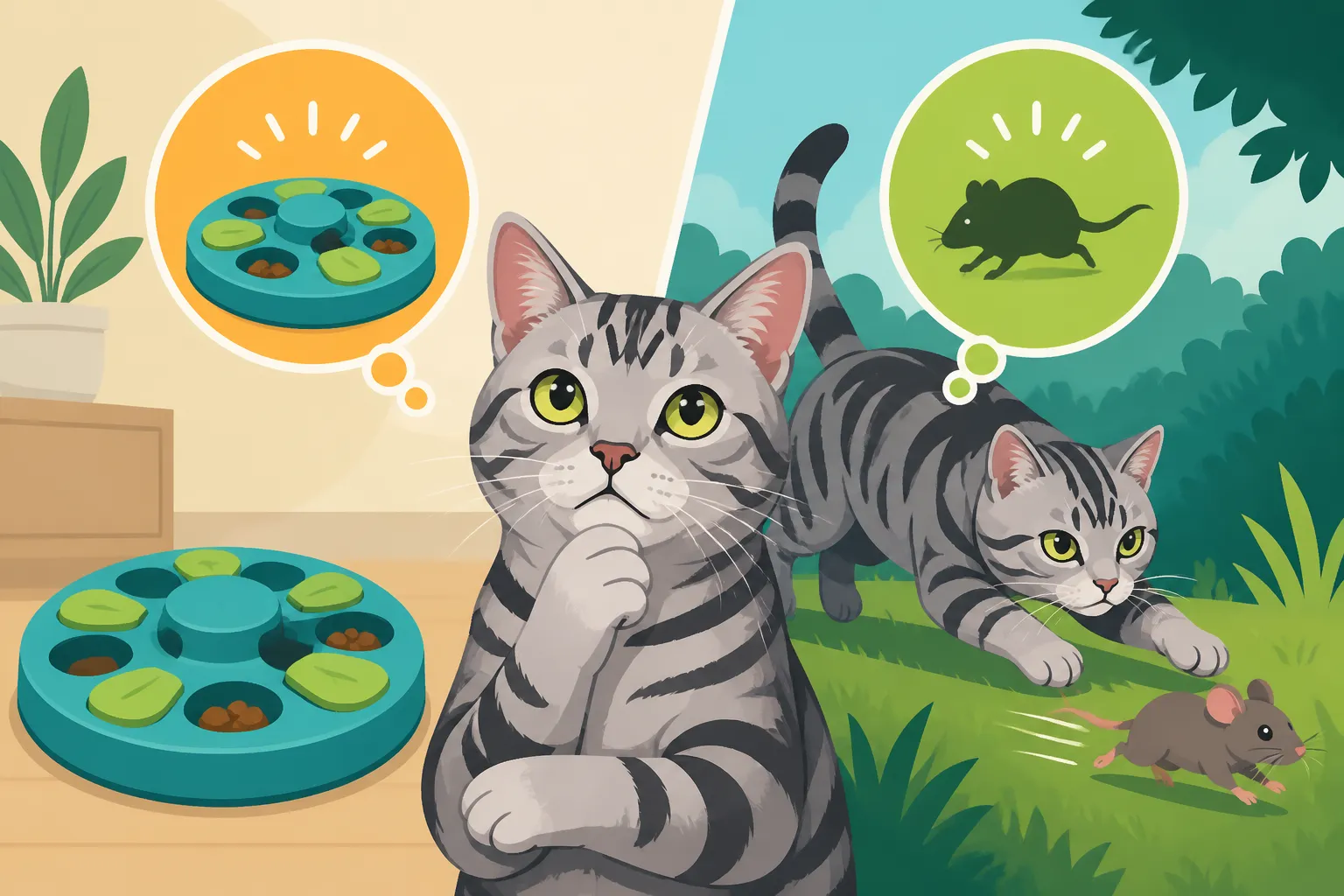
Puzzle feeders are designed specifically to challenge your cat, making them "work" for their food. Instead of simply scooping food from a bowl, your American Shorthair has to think, paw, nudge, or bat at the feeder to release kibble or treats. This process beautifully mimics several key aspects of the natural hunting sequence. Firstly, it encourages exploration and searching, similar to how a wild cat would patrol its territory looking for prey. Secondly, the manipulation of the feeder engages their natural dexterity and problem-solving skills, requiring them to figure out how to access the reward. This is a cognitive challenge that a simple bowl never provides.
By breaking down the feeding process into smaller, more frequent interactions, puzzle feeders align much more closely with a cat's natural rhythm of catching and consuming multiple small prey items throughout the day. Instead of one large meal, they get several mini-hunts, each with a small payoff. This satisfies their instinct to engage in repetitive hunting behaviors. The mental and physical effort involved provides a much-needed outlet for their intelligence and energy, preventing boredom and giving them a sense of accomplishment. It’s not just about eating; it’s about the journey to get to the food, which is just as important for their psychological well-being. Whether a Puzzle Feeder Satisfies an American Shorthair delves into this concept.
Benefits Beyond Just Feeding
The advantages of incorporating puzzle feeders into your American Shorthair's routine extend far beyond simply making them work for their dinner. One of the most significant benefits is in weight management. American Shorthairs are naturally sturdy and can be prone to weight gain, especially as indoor cats with less active lifestyles. When they eat from a puzzle feeder, they eat more slowly, which aids digestion and allows their brain time to register fullness. The physical activity involved in manipulating the feeder also burns a few extra calories, which, over time, can make a difference. This slower, more engaged eating can prevent the rapid ingestion that often leads to overeating and subsequent obesity. Why Indoor Life Made the American Shorthair Fat highlights the challenges of managing their weight in a domestic setting.
Beyond the physical, puzzle feeders are incredible stress reducers and enrichment tools. A bored cat can become a stressed cat, leading to behavioral issues. By providing a consistent, appropriate outlet for their hunting instincts, puzzle feeders help reduce anxiety and destructive behaviors. They give your cat a job, a purpose, making them feel more engaged and content within their environment. This mental engagement also contributes to enhanced cognitive function, keeping their minds sharp and agile, especially as they age. Think of it as brain games for your cat – challenging, rewarding, and deeply satisfying.
Navigating the World of Puzzle Feeders for Your American Shorthair
With the increasing understanding of feline enrichment, the market for puzzle feeders has exploded. This is great news for cat owners, but it can also feel overwhelming. Knowing where to start and what to look for is key.
Types of Puzzle Feeders: From Beginner to Expert
When you start looking at puzzle feeders, you'll find a fantastic range, catering to different personalities and skill levels. It's not a one-size-fits-all situation, and what works for one American Shorthair might not be ideal for another.
- Simple Stationary Feeders: These are excellent starting points for a cat new to the concept. They often look like bowls with intricate mazes, ridges, or compartments that require the cat to paw at or lick the food out. Brands like Catit offer popular lines designed to stimulate curiosity and slow down eating without being overly frustrating. They're usually stable and easy to clean.
- Dispensing Toys: These are often ball or cylinder-shaped toys that release kibble as your cat bats them around. The KONG Wobbler (designed for dogs but available in smaller sizes for cats) is a classic example, as are many smaller treat balls found on sites like Chewy. These encourage active play and movement, turning mealtime into a dynamic hunt. They are great for active, playful American Shorthairs who enjoy chasing and manipulating objects.
- Foraging Mats and Boards: These options involve hiding food within fabric folds, deep crevices, or under sliders and pegs on a board. They encourage your cat to sniff out and 'dig' for their food, tapping into their natural foraging behaviors. LickiMats, for example, can be smeared with wet food or treats, providing prolonged engagement, while various plastic or wooden boards feature moveable parts that hide kibble. These are particularly good for cats who enjoy using their paws and noses in a more deliberate, less high-energy way.
- DIY Options: Don't underestimate the power of a simple cardboard tube or an empty egg carton! You can poke holes in a toilet paper roll, stuff it with kibble, and fold the ends. An egg carton with kibble in each cup provides a simple, accessible puzzle. These are fantastic for experimenting with the concept without a significant investment.
The trick is to start simple and gradually increase the difficulty. An inquisitive American Shorthair might master a basic maze bowl in no time, so having a more complex dispensing toy ready for the next stage of challenge will keep them engaged and prevent boredom from setting in. Observe how your cat interacts with different types to gauge their preference and skill level.
Choosing the Right Puzzle Feeder Material and Design
Beyond the type, the physical attributes of a puzzle feeder are crucial for both your cat's safety and your convenience.
Firstly, material matters. Look for feeders made from durable, non-toxic, food-grade materials such as sturdy plastics, ceramics, or silicone. Cheap, flimsy plastic can break, creating sharp edges or small pieces that could be ingested. Ceramic options are often heavier and more stable, reducing the chances of tipping, though they can be fragile if dropped. Silicone is flexible and often dishwasher-safe. Always check product descriptions for safety certifications and materials used.
Secondly, consider the design elements specific to your American Shorthair.
- Stability: A feeder that easily tips over can be frustrating for your cat and messy for you. Look for wider bases or non-slip feet.
- Opening Size: The openings for food retrieval should be appropriate for the size of your cat's kibble or treats, as well as allowing comfortable paw access. If the holes are too small, they'll get frustrated; too large, and it's barely a challenge.
- Ease of Cleaning: This cannot be stressed enough. Food residue can quickly become a breeding ground for bacteria. Dishwasher-safe feeders are a dream, but if hand-washing is required, ensure it has smooth surfaces and no intricate crevices that are impossible to reach with a brush. Regular cleaning is non-negotiable for hygiene.
- Durability: American Shorthairs are strong and can be persistent. A feeder that stands up to enthusiastic pawing and nudging will save you money in the long run.
Finally, think about your individual cat's personality. Is your American Shorthair a bold explorer who enjoys knocking things around, or are they more delicate and precise with their paws? A robust dispensing ball might suit the former, while a foraging mat or a multi-chambered stationary feeder might be better for the latter. Some cats prefer to lick, others to bat. Understanding these nuances will help you make the best choice. You can find a vast array of options and read reviews for different designs and materials on online retailers like Amazon.
| Puzzle Feeder Type | Engagement Level | Best For | Pros | Cons |
|---|---|---|---|---|
| Simple Maze Bowl | Low to Medium | Beginners, Slow Eaters | Easy to clean, stable, encourages slower eating, reduces gulping | Limited challenge, quickly mastered by clever cats, less physical activity |
| Dispensing Ball/Roller | Medium | Active Cats, Solitary Play | Promotes physical activity, good for multiple small 'hunts', durable | Can be noisy, may roll under furniture, less ideal for wet food |
| Foraging Mat/Board | Medium to High | All Cats, Scent Work, Mental Focus | Encourages natural foraging, reduces stress, versatile for wet/dry food | Can be messy with wet food, requires manual hiding of food, harder to clean |
| Multi-Level Tower | High | Experienced Cats, Persistent Hunters | High mental stimulation, durable, vertical challenge | Can be complex to introduce, takes up space, potentially frustrating for beginners |
Integrating Puzzle Feeders into Your Cat's Daily Routine
Introducing something new to a cat, especially around their food, requires patience and a gentle touch. American Shorthairs, while generally adaptable, appreciate routine, so a smooth transition is key.
The Transition: From Bowl to Brainpower
Changing your cat's feeding method from a straightforward bowl to a puzzle feeder shouldn't be a sudden, cold-turkey affair. Imagine if someone suddenly made you solve a Rubik's Cube every time you wanted a snack – you'd likely get frustrated fast! The same goes for your American Shorthair.
Start slowly by simply introducing the puzzle feeder. Place a very small amount of their regular, delicious food in the easiest-to-access part of the feeder, right next to their usual food bowl. The goal here is to create a positive association and allow them to discover the feeder without any pressure. You might even leave a few pieces of kibble right on top or just barely visible.
Over the next few days or weeks, as your cat shows interest and successfully retrieves the easy morsels, gradually increase the portion of food inside the puzzle feeder while reducing the amount in their regular bowl. At first, ensure the puzzle is extremely easy – don't make them work too hard. Let them have quick, frequent successes. This builds their confidence and teaches them the reward of working for their food. Patience is truly a virtue here; some American Shorthairs will take to it instantly, while others may need more time to adjust. If they seem frustrated, go back a step or two and make it easier again. The aim is engagement, not stress.
Spreading the "Hunt" Throughout the Day
Once your American Shorthair has mastered the art of using a single puzzle feeder, the real fun begins: diversifying their "hunting grounds." Instead of serving their entire daily ration in one go, divide it into several small portions and distribute these across multiple puzzle feeders. This aligns much more closely with their natural instinct to catch several small prey items over the course of the day, rather than one large "kill."
Next, get creative with placement. Place feeders in different, interesting locations around the house. Some could be on the floor, others on a low cat tree platform, tucked under a chair, or even hidden behind a curtain. The idea is to encourage patrolling and searching, just like a wild cat would explore its territory for prey. This makes mealtime an adventure, providing both physical exercise as they move from one "kill site" to another, and mental stimulation as they remember or discover new locations. How to Hide an American Shorthair's Food Around the House offers more specific tips on this.
To keep things novel and prevent boredom, rotate the types of puzzle feeders you use and their locations regularly. Don't always put the same feeder in the same spot. A changing environment keeps their natural curiosity engaged and prevents the activity from becoming rote or uninteresting. This constant, varied engagement will keep your American Shorthair physically active and mentally sharp.
Cleaning and Maintenance for Longevity
Just like any other item that comes into contact with food, puzzle feeders require diligent cleaning to maintain hygiene and ensure your American Shorthair's health. Neglecting to clean them can lead to bacterial growth, which can cause digestive upset or other health issues.
Always make sure to follow the manufacturer's cleaning instructions. Many modern puzzle feeders are designed with convenience in mind and are dishwasher-safe, which is a huge bonus for busy pet parents. If hand-washing is required, use warm, soapy water and a bottle brush or sponge to get into all the nooks and crannies. Rinse thoroughly to remove all soap residue. Allow the feeder to air dry completely before refilling to prevent moisture buildup that could promote bacterial growth.
It’s also crucial to regularly inspect the puzzle feeders for any signs of wear and tear. Cracks, broken pieces, or sharp edges can pose a choking hazard or injury risk to your cat. Over time, parts might become loose or less effective. If a feeder is showing significant signs of damage, it's time to replace it. Investing in durable, high-quality feeders from reputable sources, like those available on Amazon, can prolong their lifespan and ensure your cat's safety. Regular maintenance not only keeps your cat healthy but also ensures your investment in their enrichment lasts as long as possible.
A Holistic Approach: Beyond Just Food Puzzles
While puzzle feeders are a phenomenal tool for engaging your American Shorthair's hunting instincts, they are just one piece of a larger puzzle when it comes to comprehensive feline enrichment. A truly fulfilled cat benefits from a multi-faceted approach that addresses all their natural behaviors.
The Importance of Interactive Play
Puzzle feeders provide excellent mental and some physical stimulation, but they don't fully replicate the dynamic, energetic thrill of a true hunt. This is where dedicated interactive play sessions with you come in. Think of interactive play as completing the final, exhilarating stages of the hunting sequence. Toys that mimic prey, like wand toys with feathers, small fuzzy mice, or even crinkle balls, are fantastic for this. The key is that you are the facilitator, making the toy dart, hide, and pounce like real prey.
Dedicate at least one or two 10-15 minute play sessions each day. Encourage stalking, chasing, and pouncing. Crucially, always allow your American Shorthair to "catch" the toy at the end of the session. That final, satisfying "kill" is vital for their psychological completion of the hunt. Letting them succeed prevents frustration and reinforces the positive association with playtime. Without this crucial element of success, chasing a laser pointer, for example, can actually be quite frustrating for a cat, as they never get to physically capture their "prey." Combining the problem-solving of puzzle feeders with the exhilarating physical and mental workout of interactive play creates a much more well-rounded and satisfied feline companion. Which Wand Toy Reads as Prey to an American Shorthair provides great ideas for effective toys, and How to End a Play Session With an American Shorthair offers tips on successful play.
Environmental Enrichment: Vertical Space and Viewpoints
American Shorthairs, despite their sturdy, grounded build, are still cats, and cats thrive on having vertical territory. This isn't just about climbing; it’s about providing elevated vantage points from which they can safely observe their surroundings. In the wild, high perches offer security from predators and an excellent view of potential prey. Translating this to an indoor environment means investing in sturdy cat trees, wall-mounted shelves, or even clear window perches.
These elevated spaces allow your American Shorthair to survey their "territory" – your home – from a position of perceived safety and control. A window perch, in particular, offers endless hours of entertainment as they watch birds, squirrels, and passersby. This external stimulation taps directly into their innate watchfulness and prey drive, providing mental engagement even when they're simply lounging. Why a Window Is a Hunting Post to an American Shorthair elaborates on how important this can be for their mental state. If you have the space and means, a securely enclosed outdoor "catio" can be a game-changer. It offers safe exposure to fresh air, natural sunlight, and all the sights, sounds, and smells of the outdoors without the inherent dangers of free-roaming. This provides a truly immersive experience that can significantly enhance their quality of life. Whether a Catio Satisfies an American Shorthair's Drive is a great resource if you're considering this option.
Tailoring Diet and Nutrition to Support Activity
When you introduce puzzle feeders and increase your American Shorthair's activity level, it’s a good time to review their diet to ensure it optimally supports their more engaged lifestyle. A high-quality, protein-rich diet is paramount for maintaining the robust muscle mass characteristic of the American Shorthair breed. Look for cat foods with real meat as the primary ingredient.
Consider incorporating more wet food into their diet. Wet food offers numerous benefits, not least of which is significantly increased hydration, which is crucial for overall health, especially kidney function in cats. Smaller portions of wet food can also be used effectively in certain types of puzzle feeders, adding another layer of texture and engagement. Fresh, human-grade food can be an excellent option for some puzzle feeders, providing high-quality nutrition. How Wet Food Helps an American Shorthair's Waistline further explains the benefits of this dietary choice.
Finally, consistent monitoring of your American Shorthair's weight and body condition is essential. While puzzle feeders help prevent obesity, every cat's metabolism is unique. Regularly feel for their ribs and spine – they should be palpable but not prominent. Adjust food intake and activity levels as needed to maintain their ideal, muscular physique. Your veterinarian can provide guidance on appropriate portion sizes and help you learn how to accurately score your cat's body condition. This holistic approach, combining appropriate diet with physical and mental enrichment, ensures your American Shorthair thrives. How to Judge an American Shorthair's Ideal Weight by Frame provides valuable insights into maintaining their healthy physique.
Disclaimer
This article is for general informational purposes only and does not constitute professional advice. Laws, prices and regulations vary by location and change over time. Consult a qualified professional for guidance on your specific situation.