Why an American Shorthair Almost Never Mats
There's nothing quite as frustrating, or frankly, heartbreaking, as finding a painful mat tangled in your beloved cat's fur. For owners of long-haired breeds, it can feel like a constant battle against knots and clumps. But if you're an American Shorthair parent, you likely find yourself wondering, "Why does my cat almost never get matted?" It's a valid question, and one we're going to dive into today, exploring the unique qualities of their coat and why it typically remains so wonderfully low-maintenance, even for the most hands-off owner.
The American Shorthair's Coat: A Masterpiece of Function, Not Fluff
When you look at an American Shorthair, you're not just seeing a pretty face; you're observing centuries of natural selection at work. Their coat isn't a product of fancy breeding for extreme aesthetics; it's a testament to practicality and resilience. This isn't a cat whose fur was designed to win beauty contests, but rather to protect, insulate, and remain free of burdensome tangles in demanding environments.
Built for the Elements, Not the Grooming Table
Think back to the origins of these incredible cats. The ancestors of today's American Shorthairs weren't pampered pets living on velvet cushions; they were working cats, earning their keep on ships and farms. Their lives demanded a coat that could withstand harsh weather, shed water, and repel debris, all while requiring minimal fuss from their human companions. Imagine a cat on a sailing ship, battling sea spray and wind, or a barn cat navigating hay and straw. A coat prone to matting would have been a significant liability, quickly becoming uncomfortable, heavy, and a trap for parasites. Nature, in its infinite wisdom, selected for coats that could handle it all.
This historical context is crucial. Unlike breeds specifically developed for their long, flowing, or ultra-soft coats, where human preference often overrides natural function, the American Shorthair's coat remained true to its working roots. It's a rugged, durable coat, designed to be self-sufficient. This isn't to say it's coarse or unpleasant to touch; quite the opposite, it's dense and springy, but its texture and length are perfectly calibrated for utility rather than elaborate grooming routines. It's truly a "wash and wear" kind of fur, if you will, perfectly adapted to a life of active independence.
The Guard Hairs and Undercoat: A Self-Maintaining System
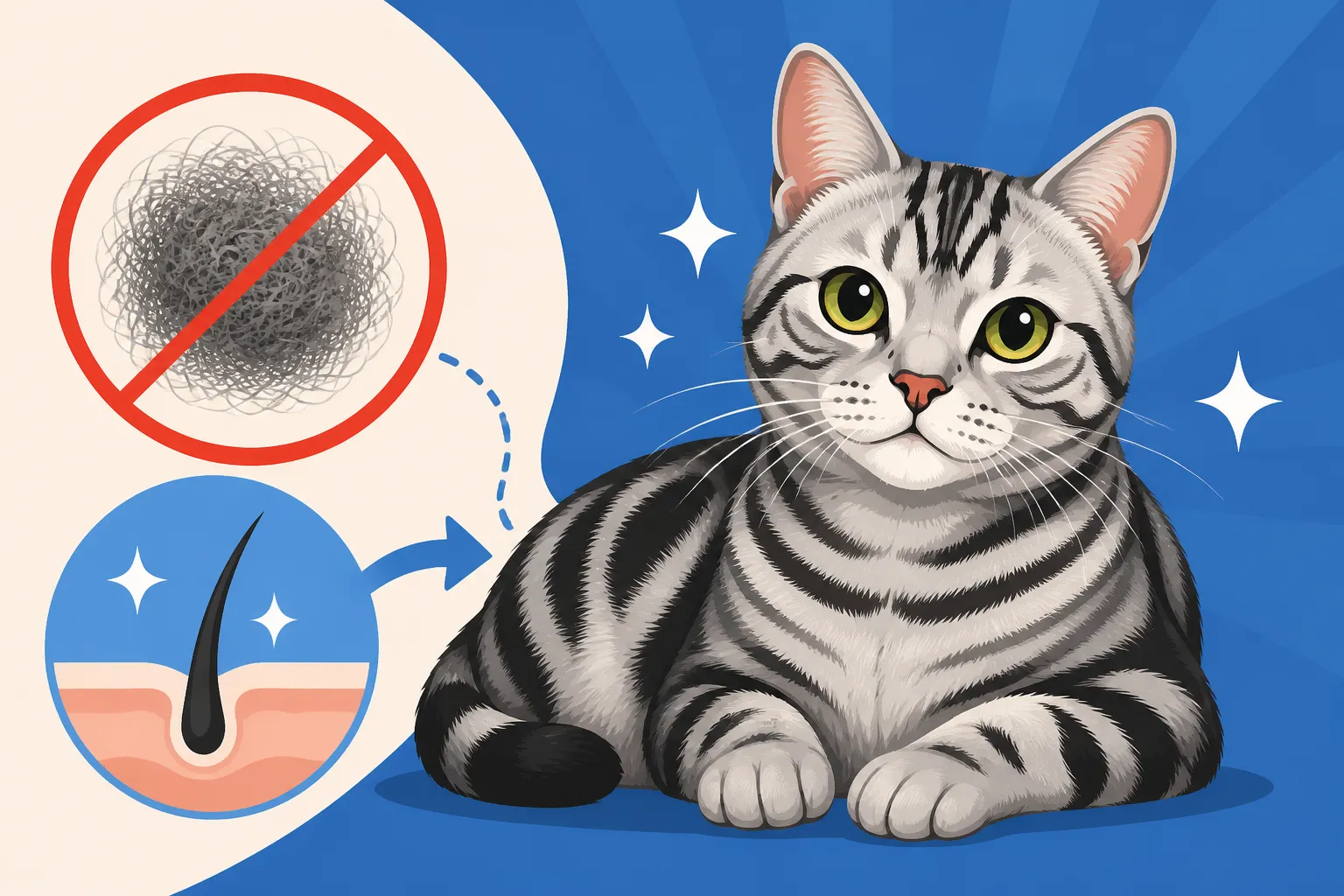
The secret to the American Shorthair's mat-resistant coat lies in its unique double-layer construction. They possess a short, dense, and relatively hard outer layer of guard hairs, which act like a protective shield. Beneath this, they have a softer, thicker undercoat that provides insulation. It's this intelligent combination that makes all the difference in preventing mats.
The guard hairs are stiff enough to prevent entanglement. They don't have the fine, silky texture that clings to itself and forms knots so easily in other breeds. Instead, they lie smoothly, repelling dirt and moisture. This outer layer is a marvel of natural engineering, ensuring that most debris simply falls away rather than getting trapped and woven into the fur. You might even notice that How Dense an American Shorthair's Coat Is makes it feel quite substantial to the touch, almost like a natural armor.
Furthermore, the undercoat, while dense, is also relatively short. In many long-haired breeds, the undercoat is exceedingly fine and long, creating a prime environment for matting when combined with the longer outer coat. The American Shorthair's undercoat sheds efficiently and cleanly, often coming out in small, manageable clumps during their seasonal shedding periods rather than creating persistent tangles. This natural shedding process prevents the buildup of dead hair that often forms the core of a mat.
Understanding What Causes Matting in Other Breeds
To truly appreciate the American Shorthair's low-maintenance coat, it helps to understand what makes other breeds so prone to matting. It's not just about aesthetics; it's about the fundamental structure and texture of their fur, combined with environmental and health factors.
The Perils of Fine, Long, or Silky Coats
Consider breeds like Persians, Himalayans, or some Maine Coons. Their magnificent, flowing coats are truly a sight to behold, but they come with a significant trade-off: an inherent predisposition to matting. The very qualities that make their coats beautiful — extreme length, fine texture, and often a very soft, cottony undercoat — are also their Achilles' heel when it comes to tangles.
These coats have a much larger surface area for individual hairs to intertwine and catch on each other. When you combine long, fine hairs with the natural oils of the skin, dust, dead skin cells, and any kind of friction (from playing, rubbing against furniture, or even just sleeping), you've got a recipe for disaster. The hairs literally felt together, forming tight, painful clumps that pull on the skin. A small knot can quickly grow into a large, solid mat, especially in areas of high movement or friction, like the armpits or behind the ears. For these breeds, daily, meticulous grooming is not a luxury; it's an absolute necessity to prevent discomfort and potential skin infections.
Factors Beyond Coat Type That Lead to Tangles
While coat type is the primary driver, other issues can turn even a normally mat-resistant coat into a tangled mess. These factors are important to recognize, as they often signal underlying health or care deficiencies. Cats, regardless of breed, are usually fastidious groomers. When they stop grooming themselves effectively, mats can form.
One of the most common culprits is obesity. An overweight cat simply cannot reach all parts of its body to groom. Imagine trying to wash your own back if you couldn't bend or twist properly; it's the same struggle for a chubby feline. Areas like the lower back, tail base, and hindquarters become neglected, allowing dead hair and dander to accumulate and form mats. Why an Overweight American Shorthair Cannot Reach Its Back touches on this specific challenge. Similarly, conditions like arthritis or other forms of joint pain can make bending, stretching, and twisting painful, severely limiting a cat's grooming capabilities. An older cat, even a spry American Shorthair, might develop these issues, leading to new grooming challenges. A sudden illness, dental problems (making grooming uncomfortable), or even extreme stress can also reduce a cat's dedication to its meticulous self-care.
The American Shorthair's Natural Grooming Prowess
Beyond their marvelously constructed coats, American Shorthairs are also incredibly adept at maintaining their own appearance. They come from a lineage of cats that had to be self-sufficient, and that extends to their personal hygiene. This innate drive for cleanliness is a huge factor in why mats are such a rarity.
Efficient Self-Grooming Habits
American Shorthairs are generally very flexible and robust cats. Their strong, muscular bodies and supple spines allow them to twist and reach almost every part of their anatomy with ease. This physical capability, combined with a strong instinct to keep themselves clean, means they are incredibly efficient self-groomers. They'll spend a considerable portion of their day meticulously licking, nibbling, and smoothing their fur. How Much Time an American Shorthair Spends Grooming Itself isn't just about vanity; it's a deeply ingrained behavioral need.
Their tongues, equipped with tiny, backward-facing barbs, act like natural combs, effectively removing loose hair, dirt, and debris before it has a chance to form tangles. They focus on common trouble spots for other breeds, like behind the ears, under the chin, and along their flanks. This consistent, thorough self-grooming routine is a powerful defense against mats. They don't just groom when they're dirty; it's a regular, almost ritualistic part of their day, keeping their coat in prime condition.
Minimal Shedding and the Seasonal Cycle
While all cats shed, the American Shorthair's shedding pattern is typically quite manageable and predictable, further contributing to their mat-resistant nature. They tend to have two primary shedding seasons: a heavier shed in the spring to lighten their coat for summer, and a lighter one in the fall to prepare for a thicker winter coat. Which Two Months an American Shorthair Sheds Hardest are usually these transition periods.
During these times, you might notice more hair on your furniture or clothes, but because their fur is short and not prone to clinging to itself, this shed hair usually comes out cleanly. It doesn't get trapped within the coat to create a dense, felted layer that causes mats. The cyclical nature of their shedding means that loose, dead hair is replaced regularly, preventing the buildup that forms the core of a mat. For the rest of the year, their shedding is usually minimal, making daily vacuuming a less frantic affair than with some other breeds. This contrasts sharply with breeds that shed long, fine hair year-round, requiring constant intervention to prevent mats.
When an American Shorthair Does Get Mats: What to Look For
While rare, it's not impossible for an American Shorthair to develop a mat. When it happens, it's usually a red flag, signaling that something has changed with your cat's health or environment. It's crucial to be vigilant and understand where to look and what these changes might indicate.
Identifying the Rare Trouble Spots
Even the most self-sufficient American Shorthair might, on very rare occasions, get a small tangle. These aren't usually the dense, solid mats seen in long-haired cats, but rather small, localized knots. The most common areas to check are those that are harder for even a flexible cat to reach, or areas of high friction.
Keep an eye on their "armpits" (the area between their front legs and chest), behind their ears, and sometimes along the inner thighs or at the very base of the tail where it meets the back. These spots can sometimes develop small tangles if the cat has been less diligent in grooming, or if they've been rubbing against something repeatedly. A particularly playful session in a dusty area, or a minor skin irritation causing them to scratch less effectively, could also contribute. When checking, be gentle and thorough, feeling for any small clumps or areas where the fur feels different. Remember, these are usually subtle and few, not widespread.
Underlying Issues That Affect Grooming
As mentioned, a mat on an American Shorthair is usually a symptom, not just a cosmetic issue. It's a signal that something is interfering with their natural ability to groom themselves. The most frequent causes are age-related or health-related. An older American Shorthair, even one that was a meticulous groomer in its youth, might start to struggle. When an Old American Shorthair Needs Help Grooming because of conditions like arthritis, making it painful or impossible to bend and stretch as effectively. You might notice Why an Old American Shorthair Stops Reaching Its Back long before you see a mat.
Sudden weight gain can also render parts of their body inaccessible for grooming, as can chronic illnesses that sap their energy or make them feel generally unwell. Dental issues, such as painful teeth, can make grooming uncomfortable, leading to neglect. Parasites, skin infections, or allergies can also cause localized irritation that discourages grooming in certain areas, leading to tangles. If you find a mat on your American Shorthair, your first step should always be a gentle examination of the area and a consideration of their overall health and recent behavior. A trip to the vet might be in order to rule out any underlying medical conditions.
Gentle Interventions and Preventative Care
While American Shorthairs are champions of self-grooming, a little help from their human companions can go a long way, especially as they age or if they're particularly prone to lounging. Preventative care focuses not just on their coat, but on their overall well-being, which directly impacts their ability to maintain themselves.
The Right Tools for the Job (If Needed)
For most American Shorthairs, a complex grooming toolkit is simply overkill. You won't need an arsenal of de-shedding rakes, dematting combs, or elaborate brushes designed for long, delicate coats. What you might find useful is a simple, good-quality comb or a rubber grooming mitt. Which Comb Suits an American Shorthair's Hard Coat is typically one with widely spaced, sturdy teeth that can gently run through their dense fur without snagging. A rubber curry brush or mitt is also excellent for massaging the skin and catching loose hairs, especially during shedding season.
These tools are not for daily use, but rather for occasional check-ups, maybe once a week or every other week, just to get familiar with their coat and identify any potential issues early. Brands like Chewy or Amazon offer a wide selection of these basic, effective grooming tools. The key is to make any grooming a positive experience – short sessions, gentle strokes, and perhaps a treat afterwards. Remember, the goal isn't to do the grooming for them, but to assist in those rare moments they might need it, or to simply bond with your cat.
Supporting Overall Health for Optimal Coat Condition
The best preventative care for an American Shorthair's coat isn't about fancy products; it's about supporting their overall health. A healthy cat is a well-groomed cat. This starts with a high-quality diet rich in protein and essential fatty acids. Fresh, balanced meals can contribute to a healthy skin and coat, making the fur more resilient and less prone to issues. Good nutrition provides the building blocks for strong, healthy hair follicles.
Maintaining a healthy weight is also paramount. As we discussed, obesity severely impacts a cat's ability to groom. Regular play and appropriate portion control are crucial for keeping your American Shorthair in prime physical condition. How Regularly a Healthy American Shorthair Still Needs Checking at the vet is another non-negotiable aspect of preventative care. These routine check-ups can catch early signs of arthritis, dental disease, or other health issues that might impact grooming before mats even have a chance to form. Hydration is also vital; ensuring your cat has access to fresh, clean water encourages healthy skin. You can even track How Much Water an American Shorthair Should Drink by ensuring water bowls are always topped up or by offering a pet drinking fountain.
What to Do If You Find a Mat
Even with the best preventative care and the most naturally resistant coat, life happens. If you discover a mat on your American Shorthair, don't panic. The approach to removal is critical for your cat's comfort and safety.
Safe Removal Techniques at Home
For a very small, loose mat on an American Shorthair, you might be able to gently work it out at home. The absolute golden rule is: never use scissors near your cat's skin. Cat skin is incredibly thin and easily cut, and mats often pull the skin up tightly underneath them, making it impossible to tell where the mat ends and the skin begins. A quick slip can result in a deep laceration that requires stitches. This is not a risk worth taking.
Instead, try to gently tease the mat apart with your fingers, starting from the outermost edges. You can apply a tiny amount of cornstarch or baby powder to the mat, which can help absorb oils and make the hairs less slippery, allowing them to separate more easily. Work slowly, patiently, and in very small sections. If your cat shows any signs of discomfort, stop immediately. A stressed or painful cat is more likely to lash out, and you don't want to create a negative association with grooming.
When to Call the Vet or a Professional Groomer
Knowing when to call in the professionals is a sign of a responsible pet owner. You should absolutely contact your veterinarian or a professional, cat-specific groomer if:
- The mat is large or tight: If it's more than an inch or two in diameter, or feels hard and dense, it's best left to someone with experience and specialized tools.
- The mat is close to the skin or causing pain: Mats pull on the skin, and if it's already tight, your cat is likely uncomfortable. Trying to pull it out will only exacerbate their pain.
- There are multiple mats: If your American Shorthair suddenly has several mats, it's a strong indicator of an underlying health issue, and a vet visit is paramount.
- The mat is in a sensitive area: Mats around the genitals, anus, or eyes should always be handled by a professional to avoid injury.
- Your cat is uncooperative: If your cat is struggling, hissing, or trying to bite, attempting to remove a mat yourself can be dangerous for both of you. A vet can provide sedation if necessary for a stress-free removal.
Professional groomers have specialized clippers and techniques to safely shave off mats without hurting the cat. Your vet can also assess for any skin irritation or infection that might be hiding beneath the mat and address any underlying health conditions contributing to the grooming issue. Remember, addressing the root cause is just as important as removing the mat itself.
| Feature | American Shorthair Coat | Long-Haired Breed Coat (e.g., Persian) | Matting Risk |
|---|---|---|---|
| Length | Short | Long to Very Long | Low vs. High |
| Texture | Dense, firm, somewhat hard/resilient | Fine, silky, soft, often cottony | Low vs. High |
| Undercoat | Dense, relatively short, sheds cleanly | Long, fine, prone to tangling | Low vs. High |
| Guard Hairs | Stiff, protective, lie smooth | Often fine, contribute to overall length | Low vs. High |
| Shedding Pattern | Seasonal, manageable | Often continuous, significant | Low vs. High |
| Self-Grooming Efficacy | High, excellent reach | Variable, often challenged by coat length | High vs. Low |
| Typical Grooming Needs | Minimal, occasional combing | Daily, thorough combing/brushing | Low vs. High |
Disclaimer
This article is for general informational purposes only and does not constitute professional advice. Laws, prices and regulations vary by location and change over time. Consult a qualified professional for guidance on your specific situation.