How an American Shorthair Finds Its Way Home
There is few things more heart-wrenching than looking out into your yard, calling your cat’s name, and hearing only silence in return. When a working-bred cat goes missing, owners often find themselves torn between panic and reliance on the breed’s legendary self-sufficiency. This guide breaks down the biological, spatial, and psychological mechanisms behind how an American Shorthair navigates back to its territory and provides actionable steps to safely guide them home.
The Sensory Mapping and Spatial Memory of the American Shorthair
To understand how an American Shorthair finds its way home, you have to look at the ancestral blueprint of a breed built for barnyards, cargo ships, and open fields. These cats were not bred simply for decorative plushness; their survival historically depended on navigating complex, multi-acre environments without getting lost. Their navigational ability relies on a biological toolkit that combines acute olfactory tracking, precise visual landmarking, and sophisticated auditory mapping.
When an American Shorthair explores a neighborhood, it is constantly constructing an invisible, high-resolution map in its brain. Unlike humans, who lean almost entirely on sight and digital directions, a cat uses every sensory organ in tandem to anchor itself to a central point—its core territory.
SENSORY MAPPING TOOLKIT IN THE AMERICAN SHORTHAIR
| Sensory System | Primary Navigational Function | Range / Field of Operation |
|---|---|---|
| Olfactory | Detects home scents, urine marks, | Up to several hundred |
| and familiar domestic smells | yards downwind | |
| Acoustic | Isolates known ambient sounds (garage | Several blocks in quiet |
| doors, voices, familiar traffic) | conditions | |
| Visual | Identifies high-contrast structural | Line-of-sight visual |
| landmarks and elevated vantage points | horizon | |
| Tactile/Paws | Recognizes substrate changes and | Immediate physical route |
| familiar pathways along fence lines | ground cover |
Olfactory Trails and Scent Marking
A cat’s world is primarily written in scent. The American Shorthair possesses roughly 200 million olfactory receptors in its nasal cavity, making its smell perception vastly superior to ours. As your cat moves through its environment, it leaves behind personal chemical signatures using the sebaceous glands located on its cheeks, paws, and tail base. These scent markers act like digital breadcrumbs scattered along a path.
When an outdoor or escaped American Shorthair finds itself outside its immediate boundary, it actively seeks out familiar scent plumes. These can include the smell of its own previous territory marks, the distinct scent of your home’s laundry vent, or even the aroma of familiar cooking. Why Letting an American Shorthair Outside Is a Real Decision often comes down to understanding how far these scent boundaries stretch before environmental factors like rain or heavy winds wash them away. If a sudden rainstorm occurs, those scent trails can be diluted, temporarily disorienting a cat that relies on its nose to track back to the front porch.
Visual Landmarks and Mental Topography
While scent provides the fine details of navigation, sight provides the macro-map. American Shorthairs have an exceptional memory for spatial geometry. They memorize the height of specific fence posts, the shape of garden sheds, the angle of a neighbor’s roofline, and the location of dense brush.
This spatial awareness means that an American Shorthair rarely wanders aimlessly. Instead, it travels along defined “highways”—usually elevated or covered routes such as the tops of retaining walls, behind overgrown bushes, or underneath alley decking. When attempting to find its way back, the cat will often backtrack from one known visual pillar to the next. If displaced into entirely unfamiliar territory, it will seek the highest accessible point to survey the landscape before committing to a direction.
Magnetic Orientation and Acoustic Cueing
Beyond sight and smell, research suggests that felines possess a degree of magnetoreception—the ability to detect the Earth’s magnetic field through iron deposits in their tissue and inner ear structures. This homing instinct allows them to maintain a general sense of direction even when visual and olfactory cues are sparse.
Acoustic cueing plays an equally critical role. An American Shorthair can pinpoint the exact frequency of a familiar garage door opening or the distinct rumble of an owner’s car engine from blocks away. Their ears, driven by 32 individual muscles each, rotate like directional antennas to capture these subtle cues. When displaced, a cat will often freeze during noisy daylight hours and rely on late-night acoustic cues to calibrate its walk back home.
Why an American Shorthair Wanders and How Their Working Drive Takes Over
Despite their sharp navigational instincts, American Shorthairs do go missing. Understanding why they leave their normal perimeter helps explain how they act while lost and how they eventually make their way back.
Because of their heavy working background, this breed retains an intense predatory drive and an unyielding territorial instinct. They are stoic, pragmatic animals that do not panic easily, but certain environmental triggers can push them far outside their comfort zone.
REASONS FOR DISPLACEMENT VS. RECOVERY BEHAVIOR
| Trigger Event | Immediate Cat Behavior | Primary Recovery Vector |
|---|---|---|
| Prey Pursuit | High speed, hyper-focused, | Backtracking along physical |
| ignores distance cues | boundaries after catch | |
| Territorial Rival | Chased out, running blind, | Late-night cautious movement |
| seeks immediate hiding hole | back to core area | |
| Sudden Fright | Bolt-and-hide in nearest cover | Remains motionless 24-48 hrs |
| within 150 feet | before breaking cover |
The Prey Pursuit Boundary Push
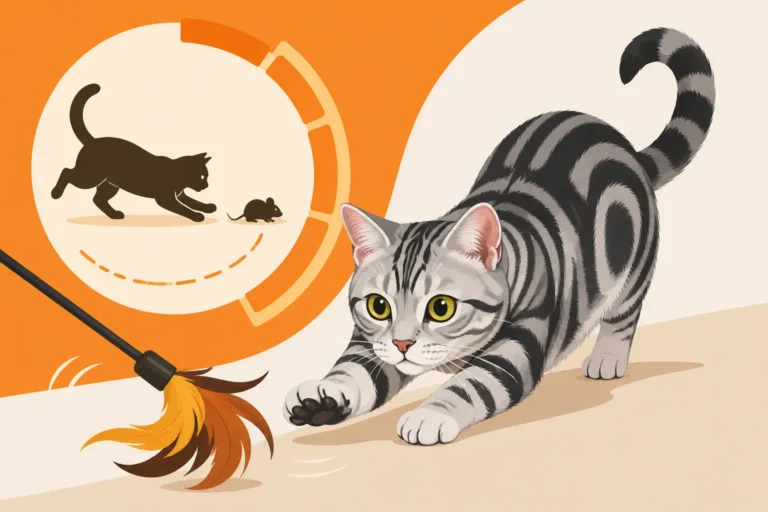
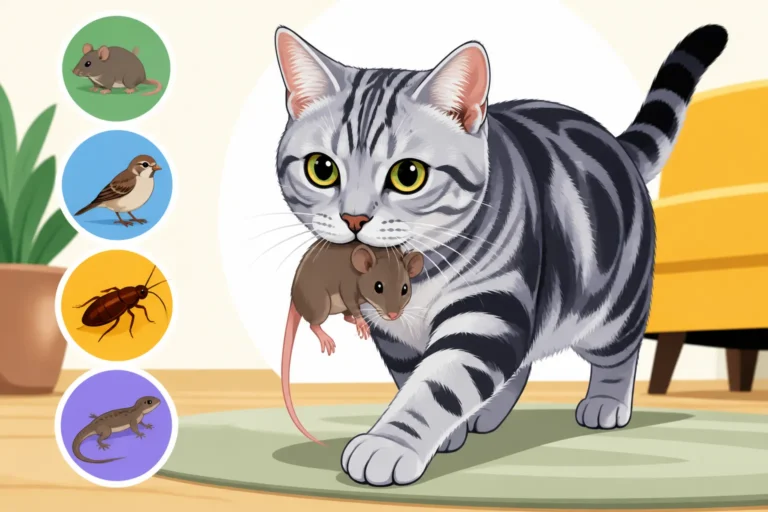
An American Shorthair is a hunter first and foremost. If a rodent or bird catches its attention, the cat’s focus narrows completely. During a high-intensity chase, the brain suppresses secondary environmental awareness. The cat might leap over three fences, dash through a drainage pipe, and navigate through unfamiliar yards without registering how far it has moved from home.
Once the hunt ends—whether successful or not—the cat’s adrenaline drops, and its territorial awareness boots back up. Knowing How Far an American Shorthair Roams under normal conditions gives owners a realistic baseline, but a prey-driven chase can easily double or triple that standard roaming radius in a matter of minutes.
Territorial Patrols vs. Getting Disoriented
Under normal circumstances, an indoor-outdoor American Shorthair maintains a strict routine, splitting its day into designated patrol windows and rest cycles. They check perimeter fences, inspect scent markers, and monitor rival cats. However, if a aggressive neighborhood cat pushes into their space, your American Shorthair may be chased out of its established zone.
During a territory dispute, a cat runs blindly to escape aggression. It may cross busy roads or jump into open garages, construction sites, or service vehicles. Once the immediate threat passes, How a Territorial American Shorthair Rebuilds a Patrol Route kicks in, but the cat must first figure out where it is relative to its home base. If trapped inside a garage or shed, its homing instinct is temporarily useless until it finds an exit.
Stress Responses and Hiding Behaviors
When an indoor-only American Shorthair accidentally escapes, or an outdoor cat is severely frightened, its immediate impulse is not to run home—it is to hide in absolute silence. This is known as the “displaced cat reaction.”
A frightened cat will squeeze into the tightest, darkest hole it can find within a 50-to-100-yard radius of the exit point. It will sit beneath decks, inside crawl spaces, or tucked behind stackable outdoor furniture. In this state, the cat’s survival instinct commands it to remain completely silent and still, even when its owner stands three feet away calling its name. An escaped cat may hold this hiding position for 24 to 72 hours before its adrenaline subsides enough to allow its homing instincts to guide it back out into the open.
Practical Steps to Assist an American Shorthair Returning Home
While your cat’s internal compass is powerful, you should not sit passively waiting for a miraculous return. You can actively assist your American Shorthair by strengthening scent signals, manipulating search times, and leveraging physical tools to make their path back as clear as possible.
ACTION PLAN: SEARCH TIMELINE AND SUCCESS PROBABILITIES
| Timeframe | Key Focus Area | Critical Action Item |
|---|---|---|
| 0–12 Hours | Immediate perimeter scan | Physical check under deck/porch with |
| (100-foot radius) | a high-lumen flashlight | |
| 12–48 Hours | Olfactory anchoring & late- | Set out unwashed bedding, conduct |
| night silent searches | quiet patrols between 2 AM & 4 AM | |
| 48+ Hours | Trapping, wider outreach, and | Deploy humane traps near exit point; |
| tech monitoring | check shelter databases daily |
Establishing Familiar Olfactory Anchors Outside
You can create a strong scent beacon that extends your home’s scent footprint further into the neighborhood. Place familiar items directly outside your front and back doors:
- Unwashed Bedding: Put out the pillowcase you slept on last night or the cat’s favorite fleece blanket.
- Used Litter Box: Placing a familiar litter box on your porch can broadcast a powerful, unique scent signature across several blocks on a gentle breeze.
- Owner’s Clothing: Hang worn sweatshirts or gym clothes near open windows or gate entrances.
Avoid putting out open bowls of cat food overnight, as this will attract raccoons, opossums, and stray cats that will actively intimidate your lost American Shorthair and prevent it from approaching your doorstep.
Conducting Targeted Search Patrols Based on Behavior
Because American Shorthairs are pragmatic, quiet observers, traditional searching methods often fail. Strolling down the street during midday shouting at the top of your lungs rarely yields results. Instead, alter your search strategy:
- Search During Low-Noise Hours: The optimal time to search for a lost cat is between 2:00 AM and 5:00 AM, when ambient city noise dies down.
- Pause and Listen: Walk slowly along fence lines. Call your cat’s name in a calm, soft voice, then stop and stay completely silent for 3 to 5 minutes. Listen closely for a faint scratch or soft meow.
- Check Low and Enclosed: Bring a strong flashlight and shine it horizontally under porches, beneath parked cars, inside window wells, and under dense shrubbery. Look for the distinct glow of eye reflection (tapetum lucidum).
- Check Open Garages and Sheds: Ask your immediate neighbors to open their sheds or garages so you can look inside. A cat will rarely come out if a stranger opens the door, so you must physically look behind stored lawnmowers and boxes yourself.
Modern Tracking and Recovery Tools
When manual searching needs a boost, technology offers vital assistance. If your cat is skittish or displaced, setting up night-vision trail cameras pointed at your porch or scent stations can confirm whether your cat is returning late at night when you are asleep. Motion-activated cameras available on Amazon can easily be mounted near entry points to monitor overnight activity without sitting in the cold for hours.
If you confirm the cat is visiting but too panicked to enter the house, setting a humane live trap baited with strong-smelling food (like sardines or mackerel) near the door is often the fastest way to secure them. Covers for these traps, or simple thick blankets, should be kept nearby to immediately throw over the cage once tripped, keeping the animal calm.
Long-Term Preventive Measures for Territorial Security
Once your American Shorthair is safely back inside—or better yet, before an escape ever happens—putting robust preventative measures in place ensures that a sudden escape does not turn into a permanent loss.
Microchipping and Physical Collar Tags
Visual identification remains your first line of defense, but working cats have a knack for losing standard breakaway collars while pushing through heavy brush. A breakaway collar equipped with an ID tag is essential for everyday visibility, but it must be backed up by a permanent microchip.
Why a Roaming American Shorthair Must Be Chipped cannot be overstated. A microchip is an unalterable form of identification inserted under the skin between the shoulder blades. If a neighbor or shelter scans a lost cat, that chip links directly to your current contact details. Remember that a microchip is only as good as the information attached to it; always update your phone number and address in the registry if you move or change numbers.
For owners who allow supervised outdoor access, tracking devices have become increasingly reliable. You can find lightweight GPS or Bluetooth tracking collar attachments on Amazon that sync directly with your smartphone, giving you real-time mapping of your cat’s favorite patrol spots and alerting you the moment they step outside their home boundary.
PERIMETER AND IDENTIFICATION SECURITY CHECKLIST
| Security Layer | Recommended Specification | Maintenance Schedule |
|---|---|---|
| Microchip | Universal ISO chip registered | Verify contact info in online |
| to national database | registry once per year | |
| Collar & ID Tag | Quick-release safety buckle | Check fit (two fingers space) |
| with engraved metal tag | monthly | |
| Door/Window Screens | Heavy-duty pet-resistant mesh | Inspect frame clips before |
| with locking latches | spring window opening | |
| Outdoor Enclosure | Fully enclosed catio or | Inspect wire mesh and base |
| fence-top rollers | anchors quarterly |
Securing the Perimeter and Environmental Enrichment
If your cat constantly attempts to slip through open doors, it usually indicates that their internal drive for exploration is under-stimulated indoors.
- Window Vantage Points: Install sturdy window perches overlooking bird feeders or high-traffic yards. This satisfies their visual patrol instincts without the risk of physical displacement.
- Enclosed Outdoor Spaces: Consider building or purchasing a catio. You can find modular outdoor cat enclosures on Amazon that attach directly to a window or sliding door, allowing your cat to smell the breeze, watch prey, and mark territory safely behind secure wire mesh. Whether a Catio Satisfies an American Shorthair’s Drive is a common question among owners, and for the vast majority of working-bred cats, an enclosed outdoor run completely eliminates their urge to door-dart.
- Perimeter Containment: If you have an enclosed yard, installing cat-proof fence toppers or oscillating fence rollers prevents your cat from climbing over the top to expand its territory into dangerous streets.
By honoring your American Shorthair’s instinctual drive to map its world while maintaining smart, layers of physical security, you ensure that their powerful home-finding capabilities are matched by a safe, secure domestic sanctuary.
When managing a breed with such deep working roots, keeping track of health challenges like Why an Outdoor American Shorthair Hides Heart Failure Longer and preventing physical injuries through proper care is essential. Understanding the physical demands of outdoor living—such as The Risks an Outdoor American Shorthair Takes That an Indoor One Does Not—allows you to make informed decisions about their freedom. Ensuring your pet receives adequate preventative care, including keeping up with Whether an Outdoor American Shorthair Needs FeLV Cover, helps keep them healthy no matter where their instincts take them. Finally, if you ever find yourself facing a move or significant lifestyle change, learning How an American Shorthair Handles Leaving Its Territory will ensure a smooth transition for both you and your cat.
Disclaimer
This article is for general informational purposes only and does not constitute professional advice. Laws, prices and regulations vary by location and change over time. Consult a qualified professional for guidance on your specific situation.