What an American Shorthair Catches Indoors
It’s a common misconception that because your American Shorthair lives a cozy indoor life, their primal hunting instincts somehow vanish. Oh, if only it were that simple! Many cat parents discover, often with a mix of amusement and a slight bit of frustration, that their seemingly placid indoor kitty is still a highly efficient, albeit miniaturized, predator. This guide is here to shed light on exactly what our beloved American Shorthairs "catch" within the four walls of our homes and how we can best support their ingrained need to hunt, even when the only wild thing around is a rogue dust bunny.
The Enduring Instinct: Why Indoor American Shorthairs Still Hunt
You might think that removing a cat from a barn or a ship's deck, where their ancestors once diligently cleared vermin, would somehow erase centuries of selective breeding for hunting prowess. But trust me, it doesn't. That deep-seated drive remains a core part of their being, ready to spring into action at the slightest provocation.
The Genetic Hardwiring of a Mouser
The American Shorthair's lineage is literally built on a foundation of hard work. Their ancestors were the ultimate working cats, valued for their ability to control rodent populations on farms, in homes, and on ships. They weren't bred for fancy coats or extreme features; they were bred for function, and that function was hunting. This means that every American Shorthair, regardless of whether they've ever seen a real mouse, carries that genetic blueprint. It's an instinct that tells them to stalk, chase, and pounce. It's why they might suddenly fixate on a shadow or twitch their tail at a distant sound. The drive is there, inherited from generations of effective hunters. Think of it like a human's innate desire for comfort or security; it's just there, even if the specific expression changes over time. This hardwiring is powerful, and it means that a calm, quiet demeanor doesn't signify a lack of prey drive, just a different outlet for it. How Strong an American Shorthair's Hunting Drive Is is something many owners wonder about, and the answer is, it's pretty strong!
The Difference Between Outdoor and Indoor Prey Drive Expression
Of course, an indoor American Shorthair doesn't have access to the same smorgasbord of wildlife that their outdoor counterparts do. This doesn't mean the prey drive disappears; it simply means it adapts. Instead of squirrels or voles, their world of huntable creatures shrinks to whatever moves within their domestic territory. The desire to hunt remains constant, but the opportunity is vastly different. Without actual outdoor prey, the cat's instincts will seek other targets, often leading to behaviors that might seem quirky or even frustrating to us, but are perfectly natural expressions of their inherent nature. They are constantly scanning their environment, assessing potential "threats" and "prey" items, even if those items are just a speck of dust dancing in a sunbeam. This is why even the most pampered American Shorthair will still exhibit stalking and pouncing behaviors. Why an American Shorthair Keeps the Instinct is a fascinating look into their genetic heritage.
Common "Prey" for the Indoor American Shorthair
So, if there are no mice or birds (hopefully!), what exactly does an indoor American Shorthair focus their formidable hunting skills on? You might be surprised by the sheer variety of things that can capture their attention and trigger a full-blown hunting sequence.
Insects: The Everyday Hunt
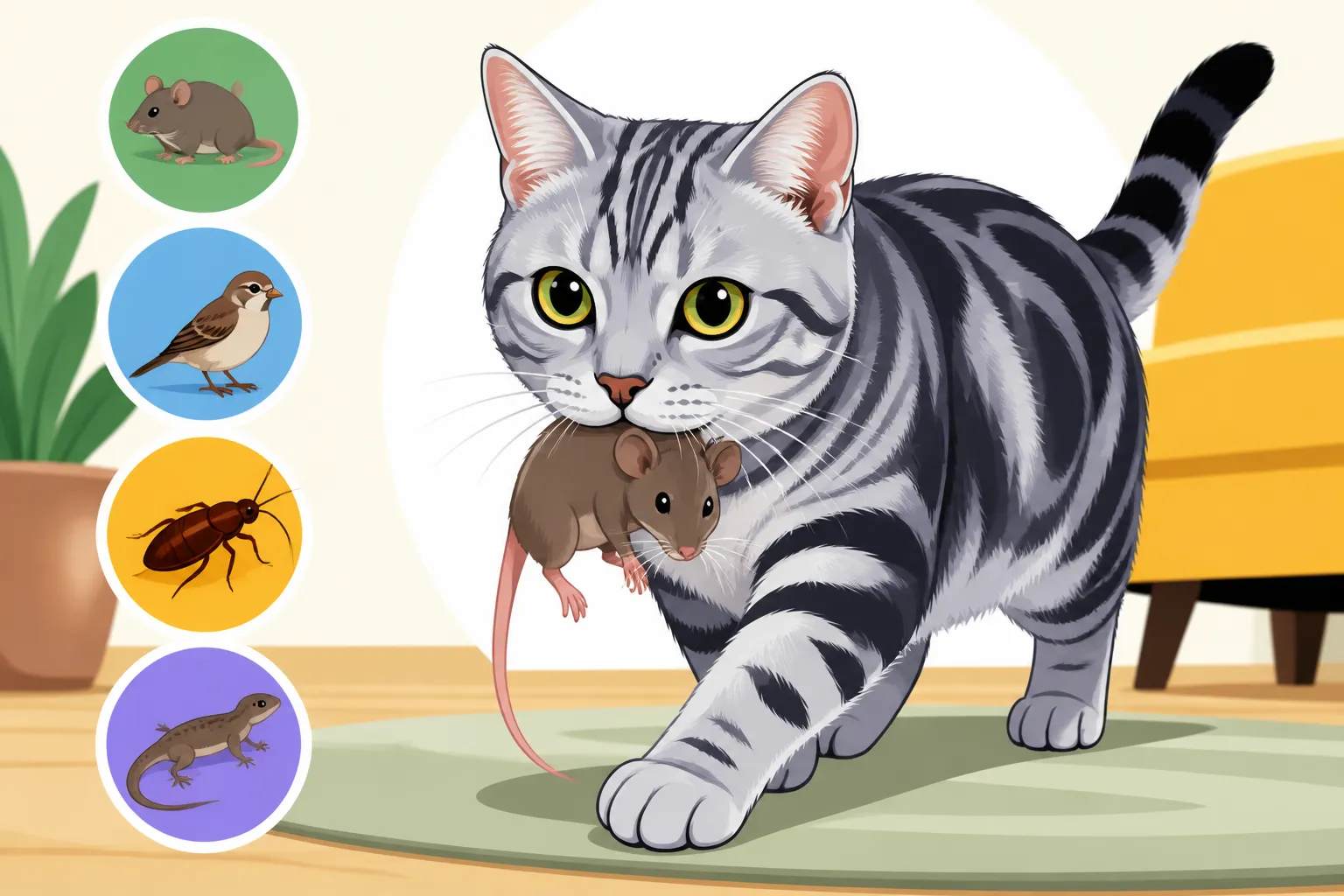
For many indoor American Shorthairs, insects are the most accessible and realistic form of live prey. A common house fly buzzing against a window, a spider scuttling across the floor, a moth fluttering around a lamp – these are prime targets. The movement is erratic and unpredictable, which perfectly mimics the behavior of real prey animals. Your cat will often exhibit the classic "hunter's crouch," followed by intense focus, tail twitching, and then an explosive pounce. They might bat at the insect, chew on it, or even consume it. It's a fantastic, albeit sometimes messy, way for them to practice and satisfy that deep hunting urge. I've watched my own American Shorthair, Charlie, spend twenty minutes stalking a single daddy longlegs, fully engrossed in the strategic chase. It might not be a wild rabbit, but to them, it's a thrilling challenge. How Often an American Shorthair Catches Flies can be quite frequently, depending on your local insect population!
Dust Bunnies and Small Debris: The Ersatz Rodents
Okay, so maybe not quite "rodents," but to a cat, a fast-moving dust bunny or a rogue piece of lint can certainly mimic the scurry of a small creature. These items offer a similar sensory experience: small, low to the ground, and often catching the slightest air current to "move" unpredictably. An American Shorthair might bat at it, chase it under furniture, and then proudly bring it back, dropping it at your feet like a prized trophy. While we might see it as just fluff, to them, it's a successful hunt. This behavior isn't just about catching; it's about the entire process of the hunt, from the initial detection to the final, satisfying pounce and "capture." It's a harmless way for them to express that ingrained instinct.
Household Items: Toys or Prey?
This is where the line between "toy" and "prey" gets wonderfully blurry. Many everyday household items, especially if they're small, lightweight, and capable of rolling or sliding, can become instant "prey" in the eyes of an American Shorthair. Think bottle caps, crumpled paper balls, hair ties, or even small, rogue socks. The key is their movement and size, which simulates a fleeing creature. My American Shorthair once spent an entire afternoon obsessively batting a dropped twist tie around the kitchen floor, clearly convinced it was something far more exciting than packaging. Many cat owners find themselves buying various small, inexpensive toys from places like Amazon to keep their feline hunters entertained, as these often closely resemble the size and movement of natural prey. Ensuring these items are cat-safe and not prone to being swallowed is important, of course.
The Hunting Sequence Indoors: Observe and Understand
Understanding the complete hunting sequence, even in its indoor iteration, helps us appreciate our cats' natural behavior. It's more than just a pounce; it's a complex set of actions that provides physical and mental stimulation.
Stalk, Chase, Pounce, and "Kill"
The hunting sequence is a ballet of instinct, typically involving several distinct phases. First, there's the stalk: low to the ground, silent, eyes fixed, ears swiveling to pinpoint the "prey." Then comes the chase, a burst of speed, often accompanied by playful nips and bats. Finally, the pounce, where they launch themselves, pinning the target with their paws. If it's a soft toy, they might engage in a "kill bite," raking it with their back claws in a bunny-kick motion. Even with a harmless feather wand, you'll see this full, dramatic performance play out. For an American Shorthair, this isn't just play; it's a crucial behavioral fulfillment. Without opportunities to complete this sequence, cats can become frustrated or even develop behavioral issues. That's why providing toys that allow for a satisfying "catch" at the end is so important. Which Wand Toy Reads as Prey to an American Shorthair can make a huge difference in their engagement.
Presenting the "Kill": What it Means
Ever had your cat drop a soaking wet toy mouse or a deceased bug at your feet, looking up at you expectantly? This isn't just them being gross; it's a deeply ingrained social behavior. In the wild, successful hunters might bring prey back to the den to share with their pride or kittens. For your American Shorthair, you are their family. Presenting their "kill" is often a sign of affection, a way to share their bounty, and sometimes, a bid for praise or recognition of their hunting prowess. It's their way of saying, "Look what I did! Aren't I a great hunter?" A simple "Good job!" and a gentle stroke can go a long way in validating their efforts. Sometimes, it might also be an invitation to play, as if they're saying, "Here, you catch it now!"
The Thrill of the "Uncatchable"
While laser pointers are incredibly popular and can certainly get an American Shorthair moving, they come with a crucial caveat: there's no physical catch. The dot moves, it excites, it engages the chase instinct, but the cat never gets the satisfying feeling of pinning and "killing" its prey. This can lead to frustration, where the cat is hyped up with hunting energy but has no outlet for the final, crucial part of the sequence. Imagine being perpetually almost-there but never quite reaching the goal. That's how a cat can feel with too much laser play and not enough tangible toys. It's essential to follow up laser play with a physical toy they can actually catch and "kill." This ensures the hunting cycle is completed, providing true satisfaction and reducing potential anxiety. Why a Laser Frustrates an American Shorthair That Needs the Catch explains this phenomenon in more detail.
Managing and Redirecting Indoor Hunting Behavior
Recognizing and understanding your American Shorthair's hunting instincts is the first step. The next is actively managing and redirecting this powerful drive into safe, enriching, and appropriate outlets. We want to fulfill their needs, not suppress them.
Providing Appropriate Hunting Outlets
The best way to manage an American Shorthair's prey drive indoors is to give them plenty of opportunities to express it safely. Interactive play is key here. Think wand toys with feathers, crinkle balls, and toy mice that mimic the movement and feel of actual prey. Spend at least 15-20 minutes a day, perhaps twice a day, engaging them in focused play sessions. Make the toy "scurry" and "hide" like real prey, allowing your cat to stalk, chase, and finally pounce. Always let them "catch" the toy at the end of the session to complete the hunting sequence. When choosing toys, look for durable, cat-safe options. Amazon offers a wide selection of wand toys, interactive plush toys, and rolling balls specifically designed to stimulate a cat's hunting instincts. Vary the toys you use to keep things interesting and prevent boredom. Which Toys Finish an American Shorthair's Hunt are crucial for their well-being.
Puzzle Feeders and Foraging Toys
Another excellent way to tap into their hunting and foraging instincts is through puzzle feeders. These clever devices require your cat to manipulate them in some way to get their food or treats. Instead of simply eating from a bowl, your American Shorthair has to "work" for their meal, simulating the effort an outdoor cat would put into hunting. This not only slows down their eating, which can be beneficial for weight management, but also provides valuable mental stimulation. You can hide portions of their daily kibble in various puzzle feeders or even scatter it around the house for them to "forage" for. This taps into their natural seeking behavior and provides a wonderful outlet for their energy. You can find a vast array of puzzle feeders on Amazon, ranging from simple treat-dispensing balls to more complex mazes. Whether a Puzzle Feeder Satisfies an American Shorthair is a question many owners have, and the answer is usually a resounding yes!
Environmental Enrichment: Vertical Space and Observation
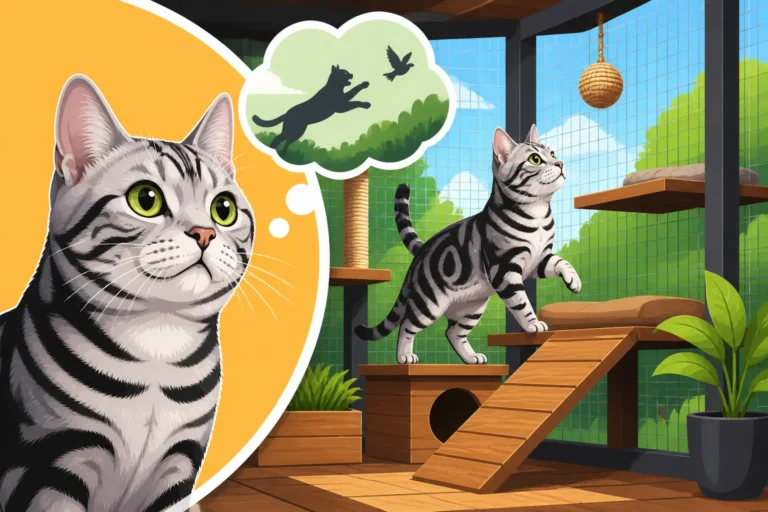
American Shorthairs, like all cats, love to climb and observe their territory from a high vantage point. This isn't just about curiosity; it's a fundamental part of their hunting strategy. From an elevated position, they can survey their domain, spot any "prey" (be it a fly or a dust bunny), and plan their attack. Providing ample vertical space through cat trees, wall-mounted shelves, or even just clearing off a sturdy bookshelf, allows them to fulfill this important instinct. Place these climbing structures near windows so they can watch the "outside world," which provides immense mental enrichment, even if they aren't directly hunting anything. This also gives them a sense of security and control over their environment, crucial for a former working breed. How Much Vertical Space an American Shorthair Needs is often more than we initially think!
Safety Considerations for Indoor Hunting
While it's important to allow your American Shorthair to express their hunting instincts, it's equally crucial to ensure their safety. This means being mindful of what small items they might be tempted to "hunt" and potentially swallow. Avoid leaving out small, easily ingestible items like rubber bands, hair ties, string, dental floss, small plastic pieces, or anything that could cause an intestinal blockage. Also, be aware of house plants that might be toxic if chewed on. Regularly inspect your cat's toys for damage and replace them when necessary to prevent choking hazards. By providing safe and appropriate outlets for their hunting drive, you can keep your American Shorthair happy, healthy, and endlessly entertained without putting them at risk.
Beyond the Hunt: Other Instinctual Behaviors
While hunting is certainly a primary driver, an American Shorthair's indoor life also calls upon other deep-seated instincts that shaped their ancestors. Understanding these helps create a truly enriching home environment.
Exploration and Territory Patrol
Even within the confines of a home, an American Shorthair still feels a strong need to patrol and monitor their territory. This isn't just aimless wandering; it's a strategic survey of their domain. They'll walk the perimeter, check under furniture, perhaps investigate a new scent. This behavior stems from their ancestry as independent working cats who needed to know every inch of their environment to be effective mousers and to feel secure. This patrol helps them mark their territory with their scent glands (rubbing their cheeks on furniture or doorframes) and maintain a mental map of their domain. Allowing them safe access to all areas of your home, and not confining them to a single room, helps fulfill this deep-seated need for territorial mastery. How an American Shorthair Splits Its Day Between Patrol and Sleep reveals just how much these activities define their daily rhythm.
Scratching and Claw Conditioning
Scratching is often misunderstood as destructive behavior, but for an American Shorthair, it's a vital instinct. Their strong, sturdy claws, developed for gripping and climbing, need regular maintenance. Scratching helps remove the outer, dead layers of their claws, keeping them sharp and healthy. Beyond that, it's a powerful way for them to mark their territory, both visually (leaving claw marks) and chemically (depositing scent from glands in their paws). Providing a variety of scratching posts – vertical, horizontal, made of sisal, cardboard, or wood – is crucial. Place them in prominent areas where your cat likes to stretch or near entryways. A tall, sturdy post that allows them to stretch their full body length is often a favorite. If they don't have appropriate outlets, they will use your furniture, and it's not out of spite, but instinct. Which Post Lets an American Shorthair Condition Its Claws can guide you to the perfect choice.
Resting and Observation
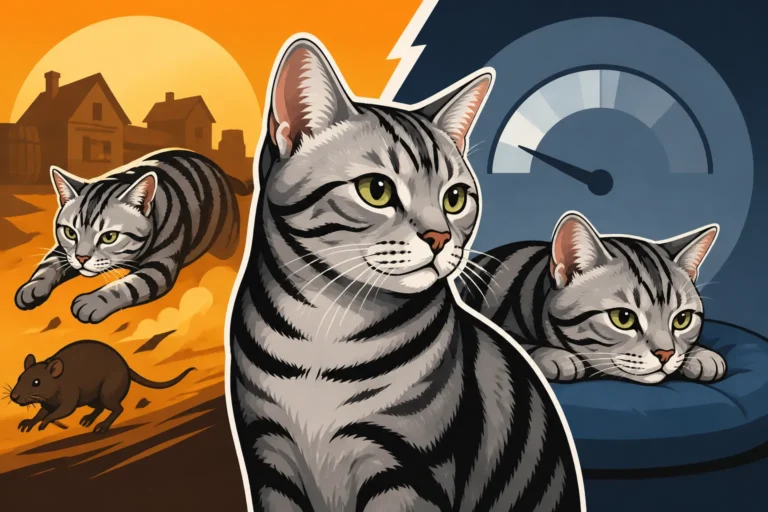
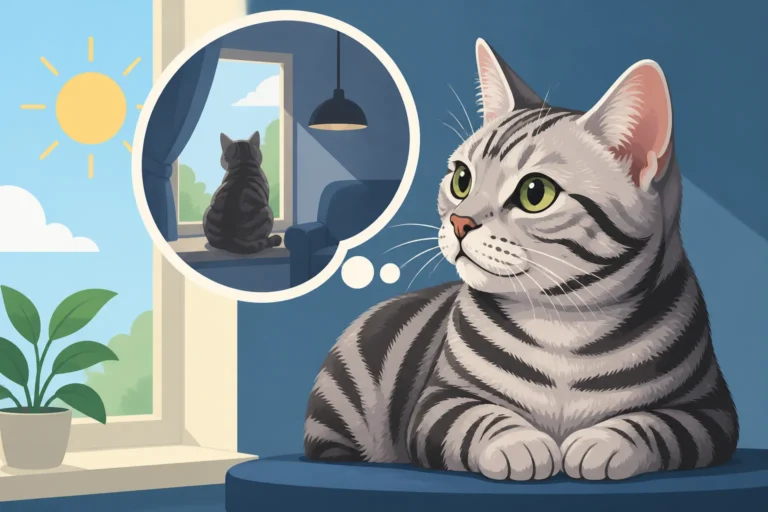
Despite their active hunting instincts and need to patrol, American Shorthairs are also masters of rest and observation. They'll spend significant portions of their day napping, but even their naps are often strategically chosen. You'll find them perched on a comfy cat bed on a shelf, curled up in a sunbeam near a window, or tucked away in a quiet corner that still offers a view of the room. These resting spots often double as observation posts, allowing them to survey their territory even while dozing. They're never truly "off duty." This balance between activity and rest, between active hunting and passive observation, is typical of a cat who once had to conserve energy for opportunistic hunts. Providing comfortable, secure, and strategically located resting spots is as important as providing toys, allowing them to process their environment and recharge. How Much an American Shorthair Sleeps might surprise you, but it's often a prelude to their next burst of activity.
Disclaimer
This article is for general informational purposes only and does not constitute professional advice. Laws, prices and regulations vary by location and change over time. Consult a qualified professional for guidance on your specific situation.