Why an American Shorthair Loses Interest in a Laser
You got that laser pointer, picturing your American Shorthair leaping and pouncing like the graceful hunter they are. You probably saw some initial flashes of excitement, a flick of the tail, intense focus, maybe even a few spectacular jumps. But then, to your dismay, that fiery passion slowly dwindled, replaced by a half-hearted bat or, worse, complete indifference. It's incredibly frustrating when a toy that promised so much fun just gathers dust. This guide dives deep into why your American Shorthair might be losing interest in the laser pointer and, more importantly, how you can reignite their natural hunting spirit safely and satisfyingly.
The American Shorthair's Innate Hunting Drive
Let's be clear: the American Shorthair is a cat built for purpose. Their ancestors were the ultimate working cats, earning their keep as mousers on ships and farms. This isn't just a cute quirk; it's a deeply ingrained instinct that shapes their very being. When we talk about play with an American Shorthair, we're really talking about simulating a hunt, and that hunt has a very specific, hardwired sequence.
The Full Hunting Sequence: From Stalk to Satisfying "Kill"
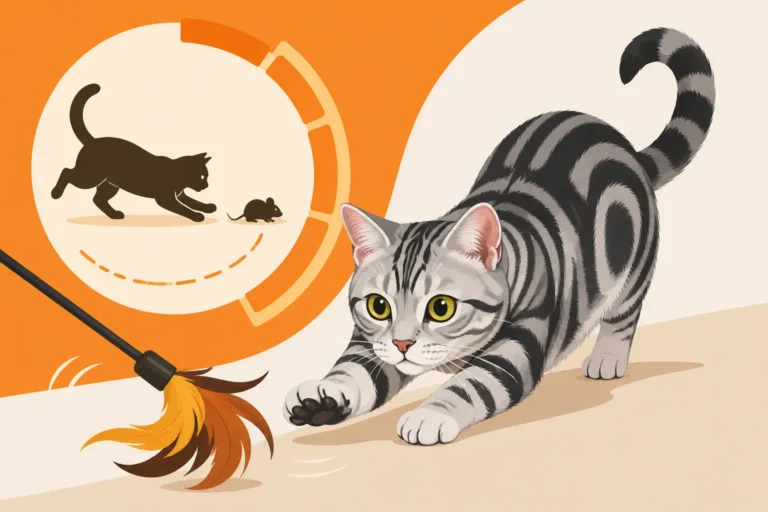
For an American Shorthair, the thrill of the chase isn't just about the movement; it's about the entire, elaborate process. It begins with the stalk – low to the ground, eyes fixed, body coiled, every muscle tensed for action. Then comes the explosive chase, often involving incredible speed and agility over short bursts. Finally, there's the pounce, the moment of physical contact with the "prey."
But here's the critical part: for a cat, especially one with such a strong The American Shorthair Still Hunts, Whether You Want It To or Not instinct, the hunt isn't complete without the "kill" or capture phase. This involves grabbing the prey, often biting, shaking, and ultimately "disabling" it. It's about feeling the texture, tasting it (even if it's just a toy), and exerting that final, powerful action. This entire sequence, from the initial sighting to the final victorious chomp, releases a cocktail of feel-good hormones that provide immense satisfaction. A laser pointer, by its very nature, can only provide the first few stages of this ancient ritual.
Why the Lack of a Catch is Deeply Frustrating
Imagine you're running a marathon. You train for months, you push your body to its limits, you see the finish line… and then, just as you're about to cross it, someone snatches it away. Every single time. How long would you keep running? Not long, I'd wager. This is precisely what happens to your American Shorthair when they play with a laser pointer.
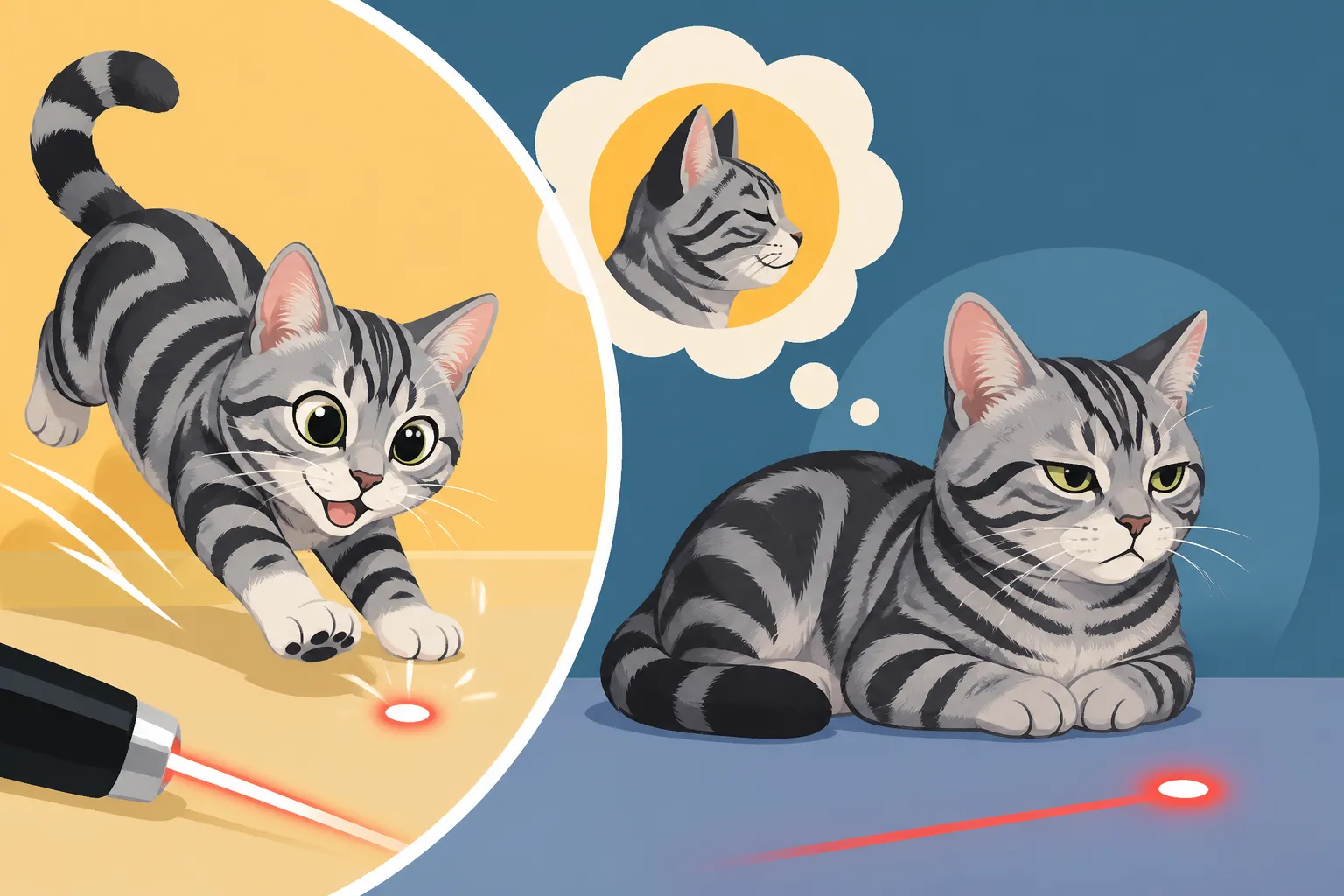
They see the red dot, their hunting instincts kick in with full force. Their pupils dilate, their tail begins to twitch, they stalk, they chase, they pounce with all their might, expecting to feel the soft fur or feathers of their "prey" under their paws. But there's nothing there. Just light. Their paws close on empty air. This happens again and again, and that build-up of hunting energy, that primal drive to capture, is never truly released. This isn't just "no fun" for them; it’s genuinely frustrating. The lack of tactile feedback, the inability to grasp, bite, and ultimately "win" the hunt, leaves them feeling confused and unfulfilled. Over time, this repeated frustration can lead to them simply giving up, deciding that the effort isn't worth the emotional letdown. It’s a classic example of Why an American Shorthair Needs to Catch the Toy to truly enjoy the game.
Recognizing the Fading Interest in Your American Shorthair
American Shorthairs are known for their calm, adaptable, and sometimes stoic nature. They aren't always vocal or overtly dramatic when they're unhappy or frustrated. This means you might miss the subtle cues that indicate they're losing interest in the laser pointer, or that it’s actually causing them stress.
Subtle Changes in Play Behavior
When an American Shorthair first encounters a laser pointer, their prey drive is often immediate and intense. You'll see focused eyes, a low crouch, and an immediate burst of speed. But as the frustration of never catching the dot sets in, their behavior will start to shift.
Initially, their enthusiasm might just wane a little. Instead of a full-throttle chase, they might only follow the dot with their eyes, perhaps a lazy paw swat. They might still move, but the intensity is gone – no more desperate leaps or rapid changes in direction. You might notice them looking at you more than the dot, as if to say, "What's the point of this, human?" Or they might just sit down mid-chase, watching the dot without engaging. This isn't laziness; it's a quiet resignation. An American Shorthair is a smart cat, and they quickly learn that this particular game has no satisfying payoff. This subtle disengagement is often their quiet way of saying, "I'm not getting what I need from this."
Active Disengagement and Avoidance
If the unfulfilling laser play continues, your American Shorthair might move beyond subtle disinterest to active avoidance. This is when it becomes really clear that the toy is no longer bringing them joy.
You might pull out the laser pointer, and instead of even a casual glance, your cat simply turns their head, yawns, or walks away entirely. They might retreat to a favorite napping spot, or even leave the room when they see you pick up the familiar red device. This isn't defiant behavior; it's a clear signal that they associate the laser pointer with frustration, not fun. They've learned that participating in this game means expending energy without the critical reward of a successful hunt. For a cat whose ancestors relied on successful hunts for survival, an unrewarding "hunt" is a waste of precious energy. They are choosing to conserve that energy rather than invest it in a game that offers no return. This strong How Strong an American Shorthair's Hunting Drive Is means they prioritize activities that fulfill their natural instincts.
The Psychological Toll of Unfulfilling Play
While a laser pointer might seem like harmless fun, relying on it too heavily, or using it incorrectly, can have genuine negative consequences for your American Shorthair's mental and emotional well-being. Their hunting drive isn't just about physical exercise; it's a complex behavioral need that requires proper fulfillment.
Frustration and Stress in a Prey-Driven Cat
When an American Shorthair's instinct to hunt is repeatedly triggered but never fully satisfied, it creates a build-up of frustration and stress. Think of it as a constant state of "almost." This can manifest in several ways:
- Redirected Aggression: The unreleased hunting energy has to go somewhere. Your cat might start pouncing on your ankles or hands, attacking other pets, or even becoming more agitated with inanimate objects in the house. This isn't because they're mean; it's because they're trying to complete the hunting sequence on something tangible.
- Anxiety: Some cats become visibly anxious or agitated, pacing, excessive grooming, or showing signs of nervousness. They might not understand why they feel this way, but the underlying cause can be the chronic frustration of the laser pointer.
- Obsessive Behavior: Some cats might become fixated on light reflections, shadows, or even bugs, frantically chasing them in an attempt to finally catch something. This can become an unhealthy obsession.
It's vital to remember that the American Shorthair is an intelligent breed. They need mental stimulation just as much as physical exercise. Constantly denying them the satisfaction of a catch can chip away at their overall sense of well-being, leading to chronic stress that can impact their health and happiness.
Boredom and Apathy
On the other side of frustration lies boredom and apathy. If the laser pointer is the only form of interactive play, and it consistently disappoints, your American Shorthair might simply become less interested in any play.
This can look like a generally less playful cat, one who sleeps more, is less responsive to attempts at interaction, or simply seems "meh" about everything. This isn't necessarily a sign of a lazy cat; it's a cat who has learned that engaging in play often leads to a dissatisfying conclusion. A cat who is bored can also become destructive, engaging in behaviors like scratching furniture (even if they have scratch posts) or exploring areas they shouldn't, simply because they're seeking any form of stimulation. They might also start overeating out of boredom, leading to weight gain. This is why What an American Shorthair Hunts When You Give It Nothing can sometimes be less than ideal behaviors you'd prefer to see.
Re-engaging Your American Shorthair: Completing the Hunt
The good news is that you can absolutely reignite your American Shorthair's love for play! The key is to understand and fulfill their natural hunting sequence. It’s all about providing that satisfying "kill" at the end.
Incorporating a "Kill" at the End of Play
If you still want to use a laser pointer (and it can be a good way to get them moving!), the trick is to always end the session with a tangible "catch."
Here's how:
- Warm-up with the laser: Let your American Shorthair chase the dot for a few minutes. Get them running, pouncing, and engaged.
- Transition to a physical toy: Before they get too frustrated, guide the laser dot directly onto a physical toy – a feathered wand, a stuffed mouse, a crinkle ball, or a fuzzy kicker toy. Let the dot "land" on the toy, and then immediately remove the laser.
- Allow the catch and "kill": Let your cat pounce on, bite, kick, and "kill" that physical toy. Encourage them to really get their claws and teeth into it. This is where the real satisfaction comes from.
- Reward and repeat (with different toys): After they've had a good "kill" session, maybe even offer a small treat. Rotate which "kill" toy you use to keep things exciting and unpredictable. This teaches them that the laser leads to a real, satisfying catch. You can find a fantastic array of these interactive toys on platforms like Amazon, offering everything from feathered wands to crinkle balls that mimic the sounds of scurrying prey.
Alternative Play That Satisfies Instincts
Beyond the laser pointer, there are so many fantastic toys and games that naturally complete your American Shorthair's hunting sequence. These are often far more fulfilling for their instincts.
Consider:
- Wand Toys: These are gold! Feathered wands, toys with ribbons, or even a simple piece of string (under supervision) allow you to mimic the erratic movements of prey. You can make it skitter, hide, and then present it for a glorious catch. Make sure to let them catch and "kill" the toy at the end of each play session. Which Wand Toy Reads as Prey to an American Shorthair can help you choose the best ones.
- Kicker Toys: These long, cylindrical toys are perfect for your American Shorthair to "bunny kick" with their back legs, simulating the struggle with prey. Fill them with catnip for extra excitement.
- Puzzle Feeders: These ingenious toys make your cat "work" for their food, tapping into their innate foraging and problem-solving skills. They have to bat, push, or manipulate the feeder to get treats or kibble to fall out, mimicking the effort involved in hunting for a meal. This is a great way to provide mental enrichment and slow down fast eaters. Whether a Puzzle Feeder Satisfies an American Shorthair is a resounding yes for many American Shorthairs.
- Crinkle Balls and Small Stuffed Toys: These are great for solo play, allowing your cat to stalk, pounce, and carry their "prey." The crinkle sound mimics scurrying, adding to the realism.
Aim for a few short play sessions throughout the day, mimicking their natural dawn and dusk hunting times. How Many Hunts a Day an Indoor American Shorthair Needs can give you a better idea of frequency.
Environmental Enrichment for the Hunter Within
Remember, your American Shorthair is descended from cats who patrolled vast territories. Even an indoor cat needs to feel like they have a varied and interesting environment to "hunt" and explore.
- Vertical Spaces: American Shorthairs love to climb and observe from high vantage points. Cat trees, wall-mounted shelves, and sturdy window perches give them a sense of territory and security. This allows them to survey their "domain" from above, a natural behavior for a predator. How Much an American Shorthair Climbs a Cat Tree can be surprising!
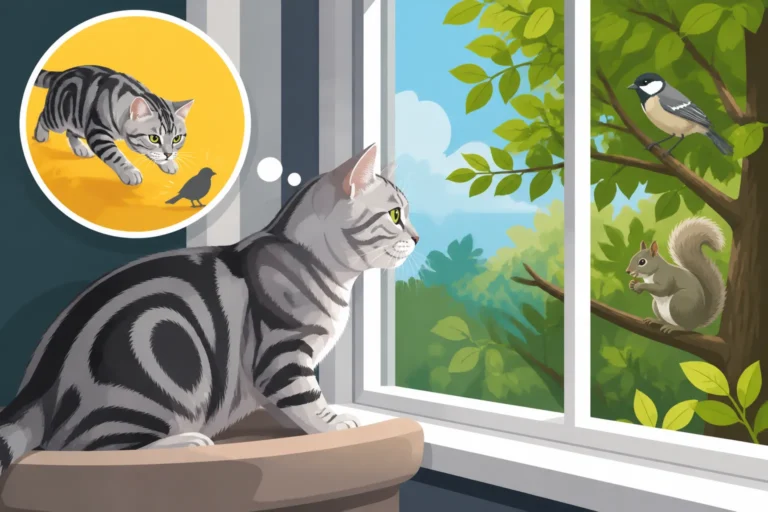
- Window Perches: A window perch offering a view of birds or squirrels outside can provide hours of passive entertainment, stimulating their hunting instincts even if they can't physically engage.
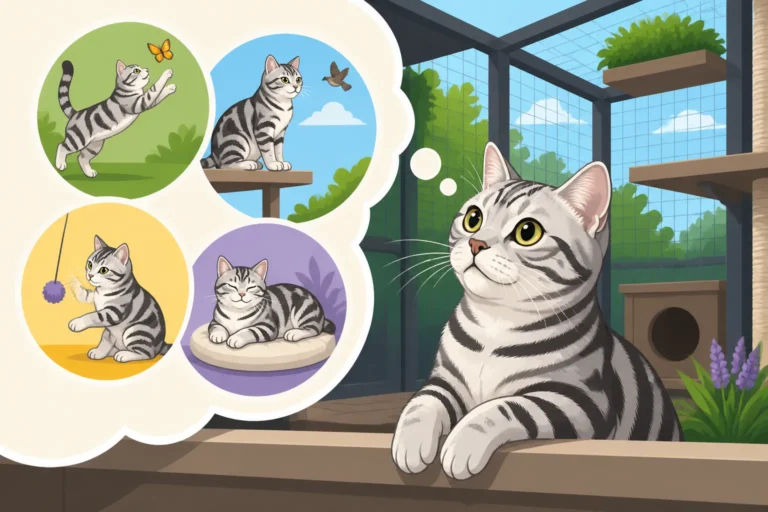
- Catios: If you can provide a safe, enclosed outdoor space like a "catio," it offers a fantastic extension of their territory, allowing them to experience fresh air, sun, and the sounds and smells of the outdoors without the dangers of free-roaming.
- Hiding Spots: Boxes, paper bags (handles removed for safety), and tunnels provide excellent places for stalking and ambushing. This satisfies their need for cover and helps them practice their stealth skills.
Providing a rich, stimulating environment prevents boredom and gives your American Shorthair opportunities to express their natural behaviors, even when you're not actively playing with them. This is an essential part of understanding What an Indoor American Shorthair Does With a Mouser's Instinct.
| Aspect | Laser Pointer Play (Alone) | Interactive Toy Play (Wand, Kicker, Puzzle) |
|---|---|---|
| Instincts Engaged | Stalk, Chase, Pounce (partial) | Stalk, Chase, Pounce, Catch/Kill, Consume (simulated) |
| Satisfaction Level | Low (frustration builds) | High (instincts fully satisfied) |
| Mental Stimulation | Moderate (focus, problem-solving: where did it go?) | High (strategy, problem-solving, physical engagement) |
| Physical Exercise | High (lots of running/jumping) | High (running, jumping, wrestling with toy) |
| Common Outcome | Disinterest, frustration, redirected aggression | Happy, engaged, calm after play |
| Owner Involvement | Low to moderate | High (active engagement required) |
When to Reintroduce the Laser Pointer (Carefully!)
Now, this isn't to say laser pointers are inherently evil. When used correctly, they can still be a valuable tool in your American Shorthair's play routine. The key is how you use them.
Using the Laser as a Warm-Up Tool
Think of the laser pointer as the opening act, not the main event. It's fantastic for getting a sleepy or less active American Shorthair energized and ready for a more fulfilling play session.
Start by flashing the laser around to grab their attention. Once they're engaged and chasing, direct the dot towards a physical toy – a feathered wand, a soft mouse, or a crinkle ball. Let the dot land directly on the toy, then turn the laser off immediately. Now, animate the physical toy, allowing your cat to pounce on it, grab it, and "kill" it. This way, the laser serves its purpose of initiating movement without leaving your cat in that frustrating "catch-me-if-you-can" limbo. Always, always ensure that the game ends with a tangible object in their paws. This ensures Play That Finishes the Hunting Sequence for an American Shorthair.
Observing Your Cat's Cues
Even with careful use, not every American Shorthair will enjoy the laser pointer, and some might never fully re-engage. It's crucial to be a keen observer of your cat's body language.
- Signs of Frustration: Are their ears flattened? Is their tail lashing aggressively (not just flicking playfully)? Are they staring intensely but not moving, or batting half-heartedly? Do they seem stressed or agitated after a session? These are all signs that the laser isn't working for them.
- Signs of Enjoyment: Are their pupils dilated (a sign of excitement)? Is their tail held high or gently swaying? Are they actively chasing, pouncing, and looking to you for more? Do they seem calm and content after a session that ended with a catch? These are good indicators.
If your American Shorthair consistently shows signs of frustration or disinterest, it's perfectly fine to retire the laser pointer altogether. There are plenty of other enriching games out there! Remember, the goal is to make play enjoyable and fulfilling for them, not just entertaining for you. An American Shorthair is generally quite placid, and if they start to show signs of stress, it's a clear signal to change tactics. You want to avoid situations where Why an American Shorthair Retreats Before It Scratches due to frustration.
Varying Play Routines
Cats, like people, can get bored with the same old routine. To keep your American Shorthair engaged and excited about playtime, mix things up!
- Rotate Toys: Don't leave all toys out all the time. Introduce a few at a time, then put them away and bring out different ones a few days later. This keeps toys "new" and exciting.
- Vary Play Times: Try playing at different times of the day. Cats are crepuscular, meaning they're most active at dawn and dusk, so these can be prime hunting times. But a mid-day session can also break up boredom.
- Change Locations: Play in different rooms, or even different areas of the same room. Hide behind furniture, use different levels. This makes the "hunting ground" feel fresh and keeps your American Shorthair on their paws.
- Combine Toy Types: Use a laser briefly, then switch to a wand toy, then a kicker toy. This variety keeps them guessing and engaged.
- Enrichment Activities: Supplement active play with puzzle feeders, scent work (hiding treats), and opportunities for them to explore new safe spaces. How Much Simulated Hunting an American Shorthair Needs isn't just about physical activity, but also mental engagement.
By understanding your American Shorthair's inherent hunting nature and providing play that truly fulfills their instincts, you'll find they remain much more engaged and content. It's about respecting their wild side, even within the comfort of your home.
Disclaimer
This article is for general informational purposes only and does not constitute professional advice. Laws, prices and regulations vary by location and change over time. Consult a qualified professional for guidance on your specific situation.