How an American Shorthair Opens Doors
It's a familiar sound for many American Shorthair owners: that distinct rattle, followed by a soft click, and then the unmistakable creak of a door swinging open, often revealing a smug feline who's just accomplished a minor engineering feat. If your American Shorthair has seemingly mastered the art of escaping rooms or gaining access to forbidden areas, you're not alone in your bewilderment and occasional frustration. This guide will delve into the remarkable intelligence and physical prowess that allow these clever cats to become door-opening maestros and provide practical, realistic strategies to reclaim your household's privacy and peace of mind.
The American Shorthair's Innate Intelligence and Problem-Solving Skills
American Shorthairs are renowned for their calm demeanor and robust health, but beneath that placid exterior lies a keen intellect and a strong problem-solving drive. They aren't just pretty faces; they're thinkers, strategists, and natural investigators, traits that served their ancestors well in their original roles. This mental acuity is precisely what enables them to decode the mechanics of a door handle and turn it into their personal gateway.
Why Curiosity is a Driving Force
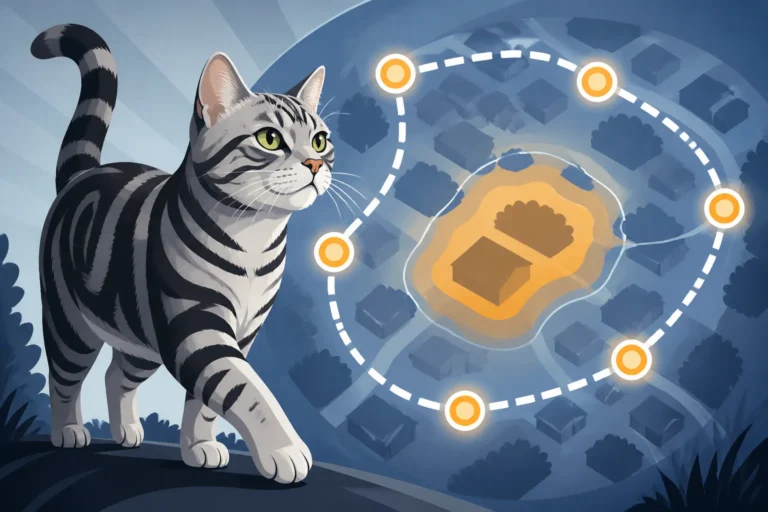
Centuries ago, the ancestors of our beloved American Shorthairs weren't pampered house pets; they were working cats, earning their keep as master mousers on ships and farms across the burgeoning American colonies. This history instilled in them a profound sense of curiosity and a relentless drive to explore their environment. A new nook, a hidden cranny, or an unexplored room isn't just a place to them; it's a potential hunting ground, a new vantage point, or simply a novel territory to be surveyed and claimed.
This innate drive means that a closed door isn't a barrier; it's an intriguing puzzle. Their minds are constantly processing, observing, and testing boundaries. They operate with a "why not?" mentality when it comes to exploring the unknown. If there's an interesting smell, a faint sound, or simply the allure of the "other side," their natural instinct kicks in, compelling them to figure out how to access it. This isn't naughtiness; it's just who they are, driven by generations of independent self-reliance and territorial patrolling. How an American Shorthair Splits Its Day Between Patrol and Sleep
Learning Through Observation and Repetition
One of the most impressive aspects of an American Shorthair's intelligence is its capacity for observational learning. They are masters of watching, absorbing, and then replicating. Think about how often you've heard the advice to hide treats from smart dogs because they'll watch you. Cats, especially American Shorthairs, are no different. They observe how you open a door, noting the motion of your hand, the way the handle turns, and the sound it makes. They might not understand the why of the mechanism, but they certainly grasp the how.
Once they've observed, they move to experimentation. They'll bat at the handle, jump up and test its stability, or try to mimic the pulling or pushing motion they've seen you perform. This isn't a one-off attempt; it's a persistent, trial-and-error process. If one method doesn't work, they'll try another, remembering what failed and what showed promise. They'll repeat successful actions, reinforcing the connection between their action and the desired outcome – an open door. This repetition, combined with their sharp memory and unwavering focus, transforms a complex human invention into a simple, solvable challenge for a determined feline.
Common Door-Opening Techniques Employed by American Shorthairs
It's truly something to behold when your American Shorthair figures out how to open a door. They employ a surprising range of techniques, often adapted to the specific type of handle or hinge. Their athleticism and strong build, honed over centuries of active hunting, play a significant role in their success. It's not just brain; it's brawn too.
The Lever Handle Lunge
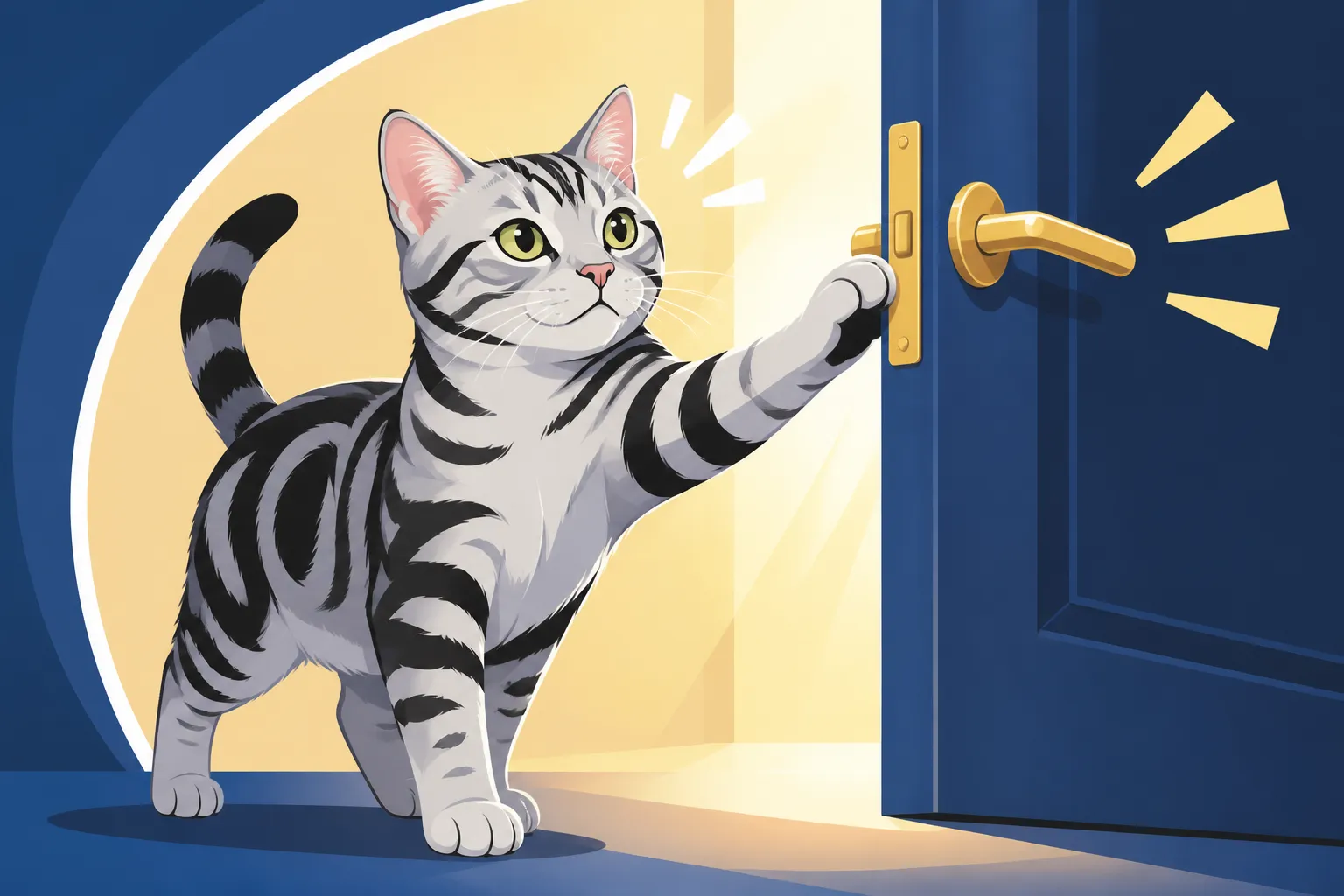
Lever handles are by far the easiest for an American Shorthair to master, and they know it. These cats, with their robust, muscular bodies and strong hindquarters, can launch themselves with surprising agility. They'll often jump up, planting their back paws firmly on the door frame or a nearby wall for leverage, while extending a front paw to hook over the lever handle. Then, with a calculated downward push using their weight and powerful shoulder muscles, they effectively depress the handle, unlocking the latch.
The key to their success with lever handles lies in their ability to use their full body weight and leverage. An American Shorthair is a relatively substantial cat, known for its solid, square build and dense muscle mass. Why the American Shorthair Kept a Broad Chest This makes them incredibly effective at applying the necessary force. Some particularly adept felines will even hang from the handle for a moment, letting gravity do the work. It’s a remarkable display of feline engineering, and once they've had a taste of that success, they'll replicate it every chance they get. They quickly learn that a lever handle is merely a suggestion, not a barrier.
The Push and Pull of Round Knobs
Round doorknobs present a greater challenge, but don't underestimate a truly determined American Shorthair. While less common, some particularly persistent and intelligent individuals can figure these out. This usually requires a combination of jumping, bracing, and a twisting motion. A cat might jump onto the doorknob, attempting to grasp it with both paws, then try to twist it while simultaneously pushing or pulling the door open.
Success often depends on factors like the knob's stiffness, whether it's slightly loose, or if the door itself has a tendency to stick or swing open easily once the latch is disengaged. A cat might also try to bat the knob rapidly, hoping to jiggle it enough to disengage the latch, especially if it's already a bit wobbly. While certainly more of an advanced maneuver, it's not entirely unheard of for a clever American Shorthair to eventually figure out the mechanics through sheer persistence and a lot of observed human action. If your cat is consistently trying to manipulate a round knob, you've likely got a feline genius on your hands!
The Paw Under the Gap and Claw Hook
Not all doors have perfect seals. Many, especially older internal doors, have a small gap at the bottom. An American Shorthair with a desire to enter (or exit) will exploit this vulnerability. They might lie down, extend a paw into the gap, and use their sharp claws to hook onto anything they can find on the other side – a rug, a floorboard, or even the bottom edge of the door itself. Then, with a powerful pull, they can create enough friction or momentum to slide the door open, especially if it's not tightly latched.
For doors that swing inward, they might push their paws into the gap and use their powerful legs to wedge or shoulder the door open. For outward-swinging doors, they might hook a claw under and pull themselves backward, using their body weight to drag the door open. This technique is less about unlocking a mechanism and more about brute force and clever manipulation of existing gaps. It really highlights their problem-solving nature and their willingness to use whatever tools they have at their disposal, including their strong claws and muscular build, to achieve their objective.
Strategies to Prevent Your American Shorthair From Opening Doors
Okay, so you've got a feline Houdini on your hands. The good news is that while American Shorthairs are smart, there are effective ways to outsmart them when it comes to keeping doors closed. It's usually a matter of understanding their methods and installing simple, cat-proof deterrents.
Securing Lever Handles
Since lever handles are the primary culprits for feline escapades, tackling them is usually the first line of defense. Standard child-proofing solutions often work wonders here. Look for child safety locks that encase the lever or require a specific pinch-and-turn motion that's impossible for paws to replicate. You can find many options on sites like Amazon that are designed for toddlers but are equally effective against clever cats.
Another common strategy, if feasible, is to reorient the lever handle. Some lever handles can be installed vertically instead of horizontally. This makes it much harder for a cat to jump up and apply downward pressure with their weight. Instead, they'd have to push up on the lever, which is a far more awkward and less effective motion for their body mechanics. If changing the handle orientation isn't an option, consider adding a simple hook-and-eye latch higher up on the door, out of your cat's jumping reach. This provides an additional, secure barrier without being overly complicated.
Addressing Round Door Knobs
While round doorknobs are less commonly breached, if your American Shorthair is particularly adept, you'll want to secure these too. The easiest solution is often a child-proof doorknob cover. These typically consist of two plastic halves that fit over the existing knob, allowing it to spin freely while preventing a small hand (or paw) from getting a grip to twist the actual knob. Again, a quick search on Amazon will show you many options.
For doors you don't use often, a simple elastic band or a hair tie wrapped tightly around both doorknobs (on either side of the door) can also prevent the mechanism from turning. Just ensure it's tight enough that the cat can't slip it off. The goal here is to remove their ability to grip and twist. If the knob is still a problem, especially if it's a bit loose, consider tightening the screws or replacing the mechanism entirely if it's old and prone to accidental opening.
Physical Barriers and Diversions
Sometimes, the simplest solutions are the most effective. A sturdy door wedge placed firmly under the door can prevent it from opening, regardless of whether the latch is engaged. For doors that you want to keep slightly ajar but still prevent full access (like to a bedroom for air circulation), consider a robust pet gate. Look for tall gates that your American Shorthair cannot easily jump over, as these cats can be surprisingly athletic when motivated. How Much an American Shorthair Climbs a Cat Tree
Beyond physical barriers, consider the power of diversion. If your American Shorthair is constantly trying to open doors, it might be a sign they need more mental or physical stimulation. Are they getting enough playtime that mimics their natural hunting instincts? What an Indoor American Shorthair Does With a Mouser's Instinct Engaging them with interactive toys, regular wand play sessions, and even puzzle feeders can redirect their intelligent energy away from door-opening projects. A bored American Shorthair is a resourceful American Shorthair, so keeping them engaged can often curb unwanted behaviors. Providing adequate vertical space through cat trees and shelves can also help satisfy their need for territory and exploration, making closed doors less appealing. How Much Vertical Space an American Shorthair Needs
Understanding the Motivation Behind the Door-Opening Behavior
It’s easy to get annoyed when your cat keeps opening doors, but understanding why they do it can help you address the root cause and implement more effective solutions. For American Shorthairs, their ancestral programming plays a huge role in their modern-day behaviors. They aren't trying to be mischievous; they're simply being cats.
The Desire for Exploration and Territory Expansion
As we've touched upon, American Shorthairs come from a long line of independent working cats. Their brains are wired to survey, patrol, and claim territory. In a domestic setting, a closed door represents an uncharted segment of their perceived territory. They see it as a challenge to their right to explore every inch of their domain. For them, it's not just "getting into the pantry"; it's "assessing the food stores and ensuring security."
This isn't just about curiosity; it's deeply ingrained instinct. They want to know what's on the other side, whether it's another room, a closet, or the great outdoors. They need to ensure that their territory is safe and that no intruders (real or imagined) are lurking. This constant need to patrol and understand their environment means a closed door is an affront to their very nature. They believe they have a right to access, and they will use their intelligence and physical capabilities to assert that right. Providing them with ample "territory" within the home through vertical spaces and varied environments can help satisfy this urge.
Seeking Attention or Food
Cats are smart enough to learn cause and effect, especially when positive reinforcement is involved. If your American Shorthair opens a door and it leads to you rushing in to scold them (which is still attention in their eyes), or if it gives them access to a food cupboard, they're going to repeat that behavior. They quickly associate the act of opening the door with a desired outcome.
Consider the scenario: your cat opens the bedroom door at 3 AM. You get up, frustrated, and put them out. They got your attention, and you've just reinforced the behavior. To break this cycle, you need to remove the reward. If it's attention they're after, try to ignore the door-opening attempts. If it's food, secure the pantry thoroughly and make sure their regular meal times are consistent, perhaps even using a puzzle feeder to make them "work" for their meals. Making an American Shorthair Work for Its Dinner Again Sometimes, a cat who feels ignored might resort to door-opening simply because it's a guaranteed way to get you to react.
Boredom and Lack of Stimulation
A healthy, intelligent American Shorthair needs mental and physical stimulation to thrive. If they're not getting enough enrichment in their daily lives, they will find ways to entertain themselves, and often, that means exploring boundaries – like closed doors. A bored cat can quickly become a destructive or mischievous one, channeling their natural hunting and problem-solving instincts into less desirable activities.
Ensure your American Shorthair has plenty of opportunities for play, especially interactive play that mimics hunting. Wand toys, laser pointers (used carefully so they get a "catch" at the end), and a variety of small, movable toys can keep their minds and bodies active. Puzzle feeders, as mentioned before, are excellent for mental stimulation, forcing them to think to get their food. Whether a Puzzle Feeder Satisfies an American Shorthair A cat that spends its day "hunting" its kibble or chasing a feather wand is much less likely to be focused on mastering the intricacies of your doorknobs. Remember, American Shorthairs were never bred to be demanding, but they do require engagement to prevent boredom from leading to undesirable behaviors. Why an American Shorthair Was Never Bred to Need You
| Door Handle Type | Why American Shorthairs Can Open It | Effective Prevention Strategy |
|---|---|---|
| Lever Handle | Easy to hook with paw, leverage body weight to pull down. | Install child-proof lever locks; reorient handle vertically if possible; install high hook-and-eye latch. |
| Round Knob | Can grip with paws and twist (rare, usually if loose). | Install child-proof knob covers; use strong elastic bands to immobilize; tighten/replace loose knobs. |
| Door Gap | Use claws to hook and pull/push door open through gaps. | Use door wedges; ensure doors latch securely; install sturdy pet gates for temporary access denial. |
Disclaimer
This article is for general informational purposes only and does not constitute professional advice. Laws, prices and regulations vary by location and change over time. Consult a qualified professional for guidance on your specific situation.