Whether Outcrossing Is Still Allowed in the American Shorthair
A breeder may describe a kitten as an American Shorthair cross and still suggest it can be registered as a purebred. That can be confusing, especially because the breed began with working cats and has a long history of mixed ancestry. This guide explains what outcrossing means today, how registry rules affect registration, and what to check before choosing a kitten.
What outcrossing means for American Shorthairs
The difference between historical ancestry and a modern cross
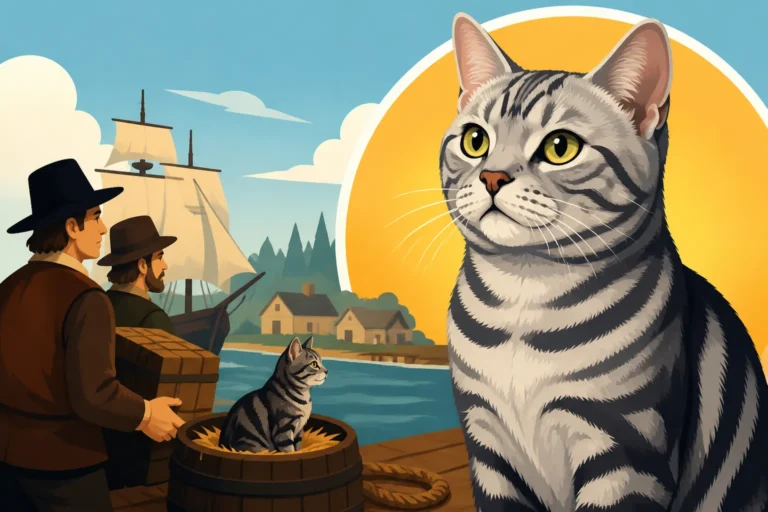
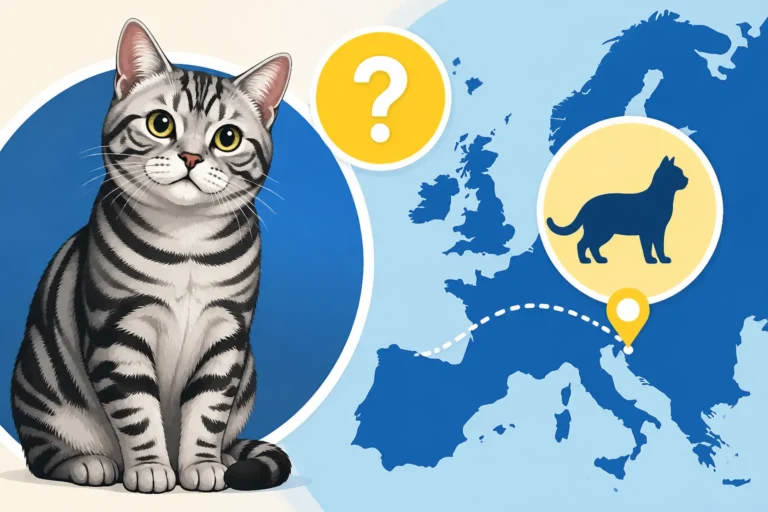
The American Shorthair developed from domestic cats that worked as hunters and companions. Over time, breeders selected cats for consistent features and recorded pedigrees, helping establish a recognized breed. The breed’s early history therefore includes a broader population than a modern pedigree litter.
That history does not automatically mean a registered American Shorthair can now be crossed freely with any domestic cat. Historical foundation stock and a present-day mating are different things: the first describes how a breed formed; the second is governed by the rules of the registry where the kittens are to be registered.
It can help to read Which Breeds the American Shorthair Was Outcrossed To alongside How the First American Shorthair Standard Read. Those topics explain how the breed’s history and standards developed, but past practices do not necessarily establish what a breeder may do under current registration rules.
How an outcross differs from a mix
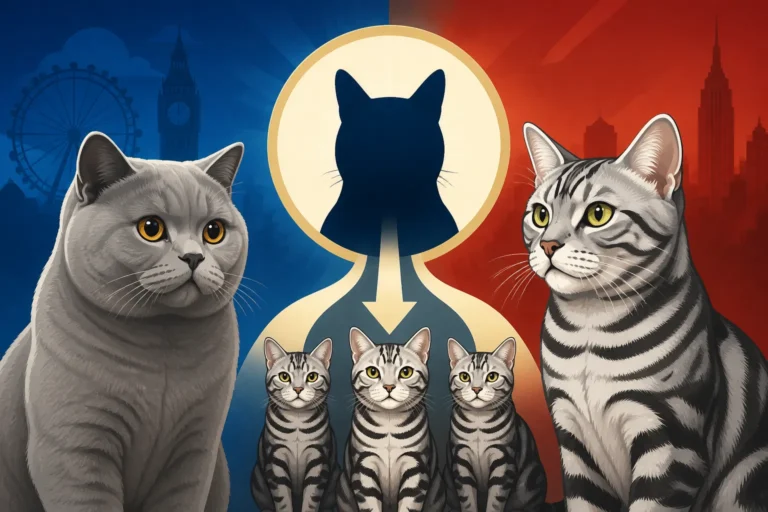
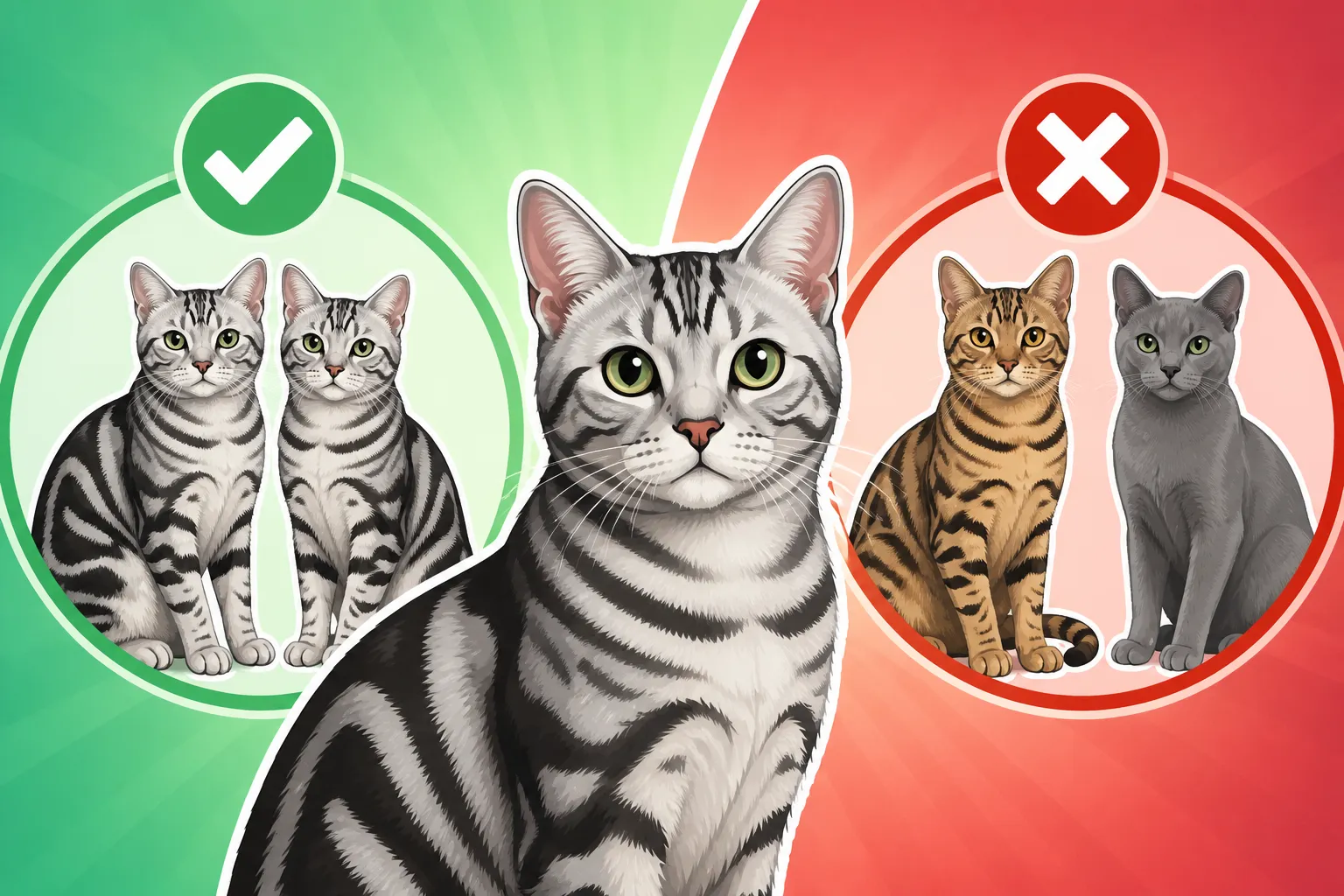
An outcross is a mating between a cat of one recognized breed and a cat outside that breed, or between breeds where a registry specifically permits the pairing. A mixed-breed cat may resemble an American Shorthair closely, but resemblance alone does not make it a registered American Shorthair.
For example, a silver tabby from a shelter might have a round face, sturdy body, and short coat similar to the breed. Those traits are not proof of a documented pedigree. Conversely, a kitten from registered parents might not have the markings or appearance someone expects from a show-quality American Shorthair. Breed identity and visual similarity are related, but they are not interchangeable.
A pedigree records ancestry; a registry’s rules determine whether that ancestry qualifies for registration. For more on the limits of appearance and paperwork, see What an American Shorthair Pedigree Guarantees, Whether a DNA Test Confirms an American Shorthair, and Whether an American Shorthair Mix Keeps the Type.
Is outcrossing allowed in registered American Shorthairs
The practical answer for prospective owners
For an ordinary litter to be registered as American Shorthairs, do not assume that an unrelated cat or a different breed can be used as an approved outcross. Mainstream pedigree registries generally require breeders to follow their specific breed rules, and an unapproved cross can affect whether the kittens qualify for registration as American Shorthairs.
The important detail is that “allowed” can mean several different things. A mating might be permitted by a particular registry, permitted only under a controlled program, or possible without the resulting kittens qualifying for standard American Shorthair registration. Those are not the same outcome. A breeder should be able to explain which rule applies and provide the registry’s written policy, rather than relying on a vague claim that “outcrosses are allowed.”
Registry rules can differ, and policies can be revised. Before paying a deposit, ask which registry will record the litter and confirm the rule directly with that organization. Which Registries Recognize the American Shorthair is useful background when comparing registry names, but the registry that will issue the kitten’s papers is the one whose rules matter for that purchase.
Why an exception is not the same as open outcrossing
A registry or breeding program may have a narrowly defined process for approving particular cats, preserving a breed population, or addressing a specific genetic concern. Such an exception is not blanket permission to mate an American Shorthair with any cat and register the kittens as purebred.
If a breeder says a cross is approved, ask for the exact program name, the registry’s written authorization, and an explanation of how the offspring will be recorded. Find out whether the kittens receive full registration, limited registration, foundation status, or no American Shorthair registration at all. The wording matters, and it should appear in the documents—not only in a conversation or advertisement.
Also ask whether the mating is being described as an outcross, a foundation registration, or a cross intended to produce pets without pedigree registration. These terms can get blurred in casual conversation, but they describe different situations. Whether the American Shorthair Gene Pool Is Still Open and How Wide the American Shorthair's Gene Pool Really Is offer related context on genetic diversity without treating every cross as registration-approved.
| What the breeder says | What to ask next | Why it matters |
|---|---|---|
| “Outcrossing is allowed” | Which registry allows this specific mating, and where is that rule written? | Rules may differ by registry or program |
| “The kittens will have papers” | Which registry issues the papers, and what registration status will they show? | “Papers” alone does not explain breed status |
| “The parent looks purebred” | Can you see the registered pedigree for both parents? | Appearance does not establish recorded ancestry |
| “The cross improves diversity” | Is this part of a documented, approved program? | A stated goal does not itself authorize registration |
| “You can register them later” | Who is eligible to register them, and what records are required? | Registration may not be available to a later owner |
How to verify a breeder’s claim
Ask for the registry and the litter’s exact status
Start by asking for the full name of the registry and the registered names or identification details of both parents. Then ask what registration status the kittens will have. A responsible breeder should be comfortable explaining the process and showing relevant documents, while protecting private information that is not needed to verify the litter.
Do not treat the phrase “registered parents” as a complete answer. The parents’ status may be genuine, but the proposed mating could still fall outside the registry’s permitted rules. Ask whether the litter itself has been registered, whether an application is pending, or whether the breeder is only saying the kittens could be registered in the future.
Check the registry’s own guidance rather than relying only on a breeder’s website, a social media post, or a sales listing. If a policy is difficult to interpret, contact the registry and describe the proposed mating in plain terms. Ask what status the kittens would receive if the cross were made. A clear written answer is more useful than an assurance that the breeder has “done this before.”
Read the documents as a set
A pedigree, registration certificate, sales contract, and health paperwork serve different purposes. A pedigree traces recorded ancestry, a registration certificate identifies a cat’s registry status, a contract sets out the sale terms, and health documents describe examinations or testing. One document does not automatically substitute for the others.
Review the names and details consistently across the paperwork. If a breeder says a parent is an American Shorthair, but the documents identify a different breed or an unregistered cat, ask for an explanation before proceeding. If the breeder says kittens will be registered after purchase, ask what paperwork you will receive, when the application can be made, and what happens if registration is declined.
A DNA test may help answer particular ancestry or health questions, depending on the test, but it does not replace the registry’s pedigree and registration requirements. See Whether Papers Are the Only Proof of an American Shorthair for more on how records, appearance, and other evidence fit together. A retailer such as Chewy can be useful for routine supplies, but a product page or breed-related shopping suggestion is not proof of ancestry. Keep Chewy receipts separate from the kitten’s pedigree and registration documents.
Choosing a kitten when the answer is unclear
Decide whether you need a registered pedigree
If your priority is a cat with a documented American Shorthair pedigree, make registration status part of your decision before you pay a deposit. Ask whether the kitten is being sold as a registered American Shorthair, as a pet from American Shorthair parents, or as a mixed-breed cat with a similar appearance. Those descriptions can point to very different expectations.
If you mainly want a friendly companion and do not need a pedigree, a mixed-breed cat may be a wonderful choice. The key is honest labeling. A seller should not present a cat as a registered purebred when its ancestry or registration status does not support that claim. For a closer look at that distinction, read Whether an American Shorthair Cross Is Sold as Pedigree.
Chewy may be useful once you are preparing for a cat’s arrival—for example, when comparing food, litter, or carriers—but buying supplies does not settle questions about breed or registration. Ask the breeder or adoption organization for records directly. If a seller encourages you to treat a shopping listing, DNA result, or resemblance to the breed as a substitute for registry paperwork, pause and verify the claim independently.
Watch for explanations that do not answer the question
Be cautious if a breeder uses the breed’s early history as the only reason a present-day cross should qualify. “The breed started as barn cats” may be historically relevant, but it does not establish that a particular registry accepts a particular mating now. Likewise, claims about improving health or broadening the gene pool should be supported by a specific, documented program.
A seller may also say that papers are unnecessary because the kitten “looks exactly like” an American Shorthair. That may be a reasonable way to describe appearance, but it does not establish pedigree registration. If registration matters to you, ask for the documentation before committing. If it does not matter, make sure the kitten’s description and price reflect what is actually being offered.
Finally, don’t let uncertainty push you into a rushed decision. A careful breeder should welcome reasonable questions about parentage, registration, health, and contracts. If you cannot confirm the rules or the kitten’s status, you can wait, contact the registry, or consider another breeder or an adoption organization. Chewy can support the practical side of getting ready for a cat, but breed verification belongs with the breeder and the registry—not a retailer.
Disclaimer
This article is for general informational purposes only and does not constitute professional advice. Laws, prices and regulations vary by location and change over time. Consult a qualified professional for guidance on your specific situation.