Whether American Shorthair Popularity Is Rising
When people search for an American Shorthair, they may find plenty of photos and care advice but far fewer kittens than they expected. That mismatch makes it hard to tell whether the breed is becoming more popular or simply more visible online. The answer depends on what “popularity” means: registrations, search interest, breeder availability, or the number of cats people see in shelters.
Is American Shorthair popularity actually rising
There isn’t one measure that can answer this cleanly. A breed can attract more online attention without producing a noticeable increase in registered kittens, and it can be familiar to many people while remaining relatively uncommon in pedigreed form.
For a useful answer, separate the different signs of popularity rather than treating social-media posts, search results, and registry figures as if they measured the same thing.
Popularity depends on what you count
Registry figures are one of the clearest ways to track interest in pedigreed American Shorthairs. Organizations such as the Cat Fanciers’ Association and The International Cat Association record cats registered under recognized breed names. A rise in registrations over time could suggest greater breeder activity or buyer interest, though registrations alone don’t reveal how many people wanted a kitten and couldn’t find one.
Search activity measures something different. More searches for “American Shorthair” may reflect curiosity, viral photos, or people trying to identify a shelter cat. Search interest can rise without a corresponding change in the number of registered litters. A person who sees a silver tabby online and searches the breed name has shown interest, but they haven’t necessarily decided to buy or adopt one.
Availability is another imperfect clue. If breeders in a particular region have waiting lists, that may indicate demand locally, but it doesn’t establish a nationwide trend. A shopper in a large metropolitan area may encounter several breeders, while someone elsewhere may find few nearby. For a closer look at how rankings and registrations are interpreted, see Where the American Shorthair Ranks Among Cat Breeds and How Many American Shorthairs Are Registered a Year.
Visibility can rise without the breed becoming common
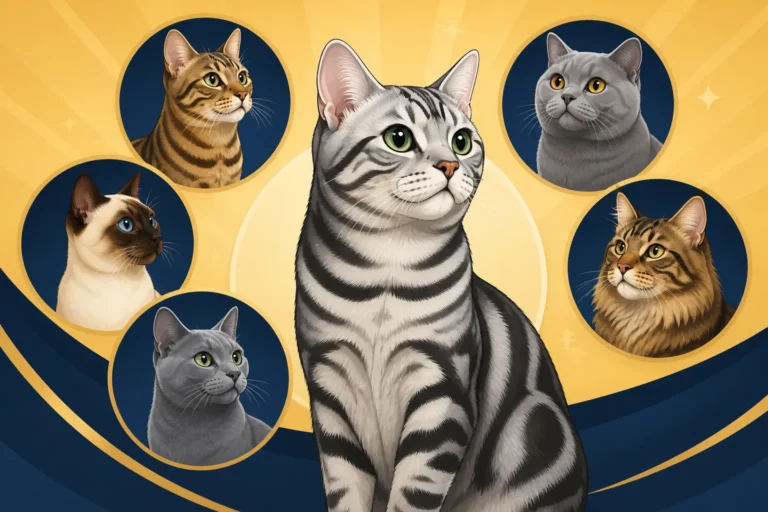
The American Shorthair has a look that is easy to recognize in photos, especially when the cat has the familiar silver tabby coat. Images of that pattern are often used to represent the breed, which can make the cat seem more prevalent than registered-breed numbers alone would suggest. The visual association is powerful: people may know the face before they know the breed name.
Retail and search experiences can also make a breed feel more popular than it is. For example, browsing cat food, litter, or toys on Chewy reflects a broad market of cat owners; it doesn’t tell you how many American Shorthairs are registered. Product availability is useful when planning for a cat’s care, but it is not a reliable breed popularity count.
There is a similar problem with online photos and breed-identification posts. A shorthaired silver tabby may look like an American Shorthair, but coat color and general appearance cannot establish pedigree. The widely shared image of the breed can therefore blur the line between public recognition and actual numbers of registered cats.
Why the American Shorthair may feel more popular than it is
The breed’s image and its everyday availability don’t always match. Many people recognize a sturdy, shorthaired tabby as “an American Shorthair,” even when the cat is a domestic shorthair with no documented pedigree. That familiarity can create a strong impression of abundance.
The silver tabby is a powerful calling card
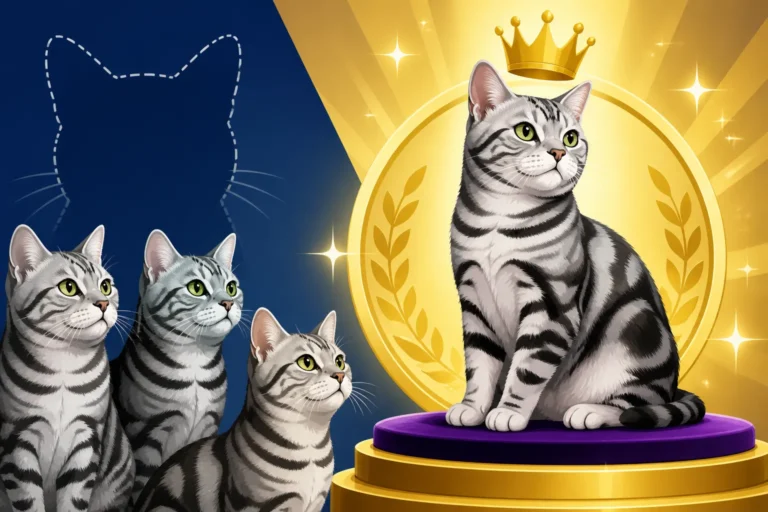
The silver tabby is closely associated with the American Shorthair’s public image. Its bold pattern photographs well, and it is often the coat people picture when they hear the breed name. This visibility can draw new interest, especially among people who are just beginning to compare cat breeds.
But being the best-known pattern doesn’t mean every silver tabby is an American Shorthair, or that silver tabbies make up most cats in homes and shelters. A distinctive coat can help the breed stand out in a search or advertisement, while the actual pedigree remains a separate question. The history behind that familiar image is explored in Why the Silver Tabby Became the American Shorthair's Face.
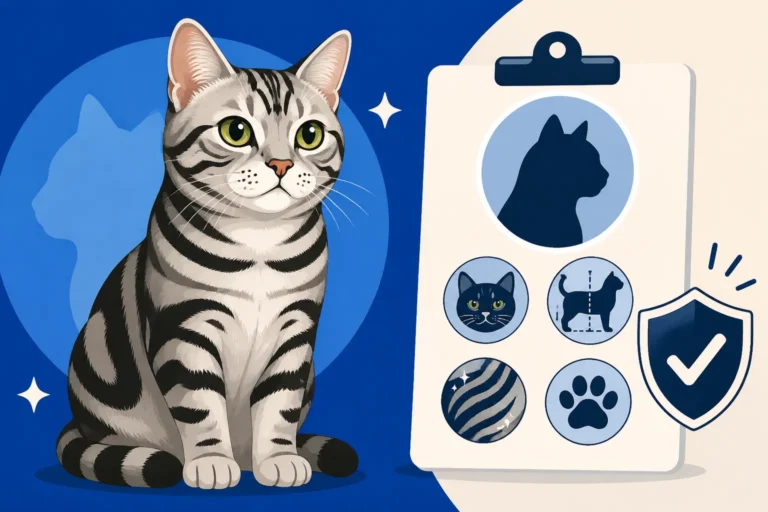
A shopper who sees a silver tabby kitten advertised as an American Shorthair should look beyond the photograph. Registration information and a documented pedigree are what distinguish a registered purebred from a cat that simply resembles the breed. If the distinction is unclear, How an American Shorthair Differs From a Domestic Shorthair explains why appearance alone can be misleading.
Shelter cats are often mistaken for the breed
Shelters and rescue groups have many shorthaired cats with tabby markings, including cats that resemble American Shorthairs. That doesn’t make them less appealing companions. It just means “looks like an American Shorthair” and “is a registered American Shorthair” are different claims.
This matters when someone tries to judge popularity by what they see at a local shelter. The number of tabby cats available for adoption is not the same as the number of pedigreed American Shorthairs being surrendered or adopted. Shelter descriptions may use familiar breed labels to communicate appearance, but those labels do not necessarily confirm ancestry. More on that distinction appears in Whether a Shelter Tabby Can Be Registered as an American Shorthair.
The same confusion can affect conversations among friends, posts on community groups, and online listings. A person may say they have seen “lots of American Shorthairs” when they mean that they’ve seen lots of cats with a similar build and coat. That everyday usage can increase the breed name’s visibility while making genuine population trends harder to measure.
How to tell whether interest is growing
If you want to assess whether American Shorthair popularity is rising, compare measures that track different parts of the picture. Look for a pattern over time rather than relying on one busy breeder’s page, a viral post, or a quick search.
| Measure | What it can tell you | What it cannot tell you |
|---|---|---|
| Breed registry figures | Whether recorded registrations are increasing or decreasing within that registry | How many people are interested but do not register a cat |
| Search interest | Whether more people are looking up the breed name | Whether searches lead to adoption, purchase, or ownership |
| Breeder availability | Whether kittens appear accessible in a particular area | Whether national demand or registrations are rising |
| Shelter listings | Whether cats described as American Shorthairs are available locally | Whether those cats have verified pedigrees |
| Social-media visibility | Whether the breed is being discussed or shared more often | How many cats exist or how many people intend to acquire one |
| Pet retailer activity | General interest in cat supplies and ownership | Breed-specific popularity or registration trends |
Compare like with like
When looking at registry information, compare the same registry across multiple periods. Different organizations may have different registration practices, and their totals should not automatically be combined as if they represented one complete census. A change in one registry’s figures can be informative, but it needs context.
It also helps to compare the American Shorthair with other breeds under the same conditions. If the breed’s registrations increase but its position among other breeds stays similar, that suggests a different story from a sudden rise in both registrations and relative rank. For context, Where the American Shorthair Ranks in Registrations is a useful companion topic.
Retail platforms are less helpful for this specific question. Chewy may be a practical place to explore general cat-care supplies, but the presence of products suitable for any shorthaired cat does not show that American Shorthairs are gaining ground. Even a sudden increase in online discussions or shopping activity could reflect broad interest in cats rather than a change in demand for this particular pedigree.
Watch for regional differences
Popularity can vary widely by place. A breeder may have a strong local following in one part of the United States while the breed remains less visible in another. Local access can also depend on how many breeders are active, how often they have litters, and whether prospective owners are willing to travel or wait.
International interest may follow a different pattern again. Recognition by cat organizations, local breeding communities, and the availability of other familiar shorthaired breeds can all affect how often people encounter the American Shorthair. For a broader geographic perspective, see Whether the American Shorthair Is Popular Outside America.
Anecdotes are still useful, just not conclusive. If several breeders say they receive more inquiries, that may signal growing interest in their area. It doesn’t prove registrations are rising everywhere, but it can point to a trend worth checking against registry data and broader availability.
What could shape the breed’s popularity
Popularity isn’t only about appearance. People choosing a cat often weigh temperament, care needs, health information, cost, and whether they can find a responsible breeder or a suitable rescue cat. Changes in any of these can affect demand, but not always in a simple or predictable way.
Familiar looks can attract interest, while access limits it
The American Shorthair’s traditional, sturdy appearance may appeal to people who want a cat that looks recognizably feline rather than highly specialized. The breed’s short coat may also seem manageable to prospective owners, although every cat still sheds and needs routine care.
At the same time, a breed can be appealing without being easy to find. If a prospective owner can’t locate a responsible breeder nearby, or doesn’t want to wait for a litter, they may choose another breed or adopt a domestic shorthair. That choice doesn’t necessarily mean interest in American Shorthairs is falling; it may simply reflect access, timing, or personal preference.
People should also avoid assuming that a breed’s general reputation guarantees a particular temperament. Individual cats vary, and a pedigree can offer background about ancestry without promising that every kitten will behave in exactly the same way. Someone choosing a cat should think about the individual animal and household fit, not just the breed’s popularity.
Responsible breeding affects supply as well as trust
Responsible breeding takes planning. Breeders need to consider the health and welfare of their cats, select suitable breeding animals, and provide prospective owners with clear information. Those responsibilities can limit how many litters are available at any one time, even if interest is strong.
That is one reason a surge in attention does not necessarily produce an immediate rise in kitten availability. A breeder may receive more inquiries but still have only a small number of kittens to place. Buyers may also need to wait while a breeder carefully plans a litter rather than choosing from a steady supply.
For prospective owners, popularity should never be the only reason to choose a cat. Ask about health history, registration, living conditions, and the breeder’s approach to matching kittens with homes. A careful search is more useful than assuming that a well-known breed name automatically means a kitten is easy to find or that every seller is reputable.
What a careful conclusion looks like
The most responsible answer is that American Shorthair popularity can’t be judged from visibility alone. The breed is recognizable, and its best-known appearance can attract attention, but familiarity with the look is not the same thing as a rise in registered cats.
To make a stronger claim that popularity is increasing, look for a sustained change in comparable registry figures, supported by signs such as growing breeder inquiries or wider availability. Treat search trends, social-media attention, shelter descriptions, and retail activity as clues about interest, not as direct counts of pedigreed cats.
For readers deciding whether to bring one home, the practical question may be less “Is the breed trending?” and more “Can I find a healthy, well-documented cat that fits my home?” Chewy can help with general supplies once a cat is coming home, but it won’t answer whether the breed is gaining popularity. For that, registry trends and carefully interpreted availability are more useful.
Disclaimer
This article is for general informational purposes only and does not constitute professional advice. Laws, prices and regulations vary by location and change over time. Consult a qualified professional for guidance on your specific situation.