Whether an American Shorthair Mix Keeps the Type
An American Shorthair mix can have the broad face, sturdy body, and classic tabby coat people associate with the breed, yet still be a mixed-breed cat. That resemblance is real, but it does not guarantee a predictable adult appearance, temperament, or health profile. This guide explains what “keeps the type” can mean, what ancestry can and cannot tell you, and how to care for the cat in front of you.
What people mean when they say a mix keeps the type
Looking like an American Shorthair is not the same as being one
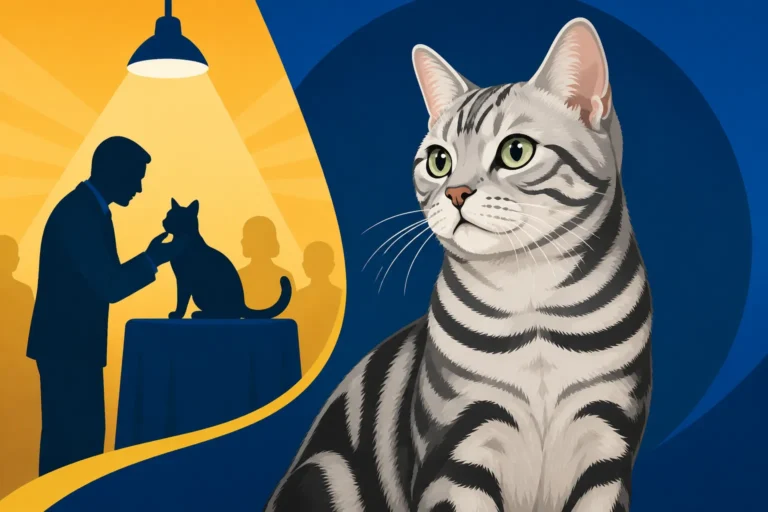
When someone says an American Shorthair mix “keeps the type,” they may mean the cat resembles the breed in one or more ways: a solid, muscular build, a rounded face, a dense short coat, or a familiar tabby pattern. Those traits can make a cat look convincingly American Shorthair-like, especially in a photograph.
But appearance alone cannot confirm a particular cat’s ancestry. Many domestic shorthairs have similar features, and common coat patterns such as tabby occur across a wide range of cats. A broad head or stocky body may be part of an individual cat’s natural variation rather than evidence that it has a documented American Shorthair parent.
It helps to separate three ideas that are often blurred together: resemblance, ancestry, and registration. A cat may resemble the breed without having known American Shorthair ancestry. It may have a known American Shorthair parent and still look quite different from the breed standard. And a cat’s registration status depends on the applicable registry’s rules and documented pedigree, not simply on how closely it matches a picture of the breed. For a closer look at what the breed standard describes, see What an American Shorthair Looks Like by the Standard.
Why a mix may look more like one side of the family
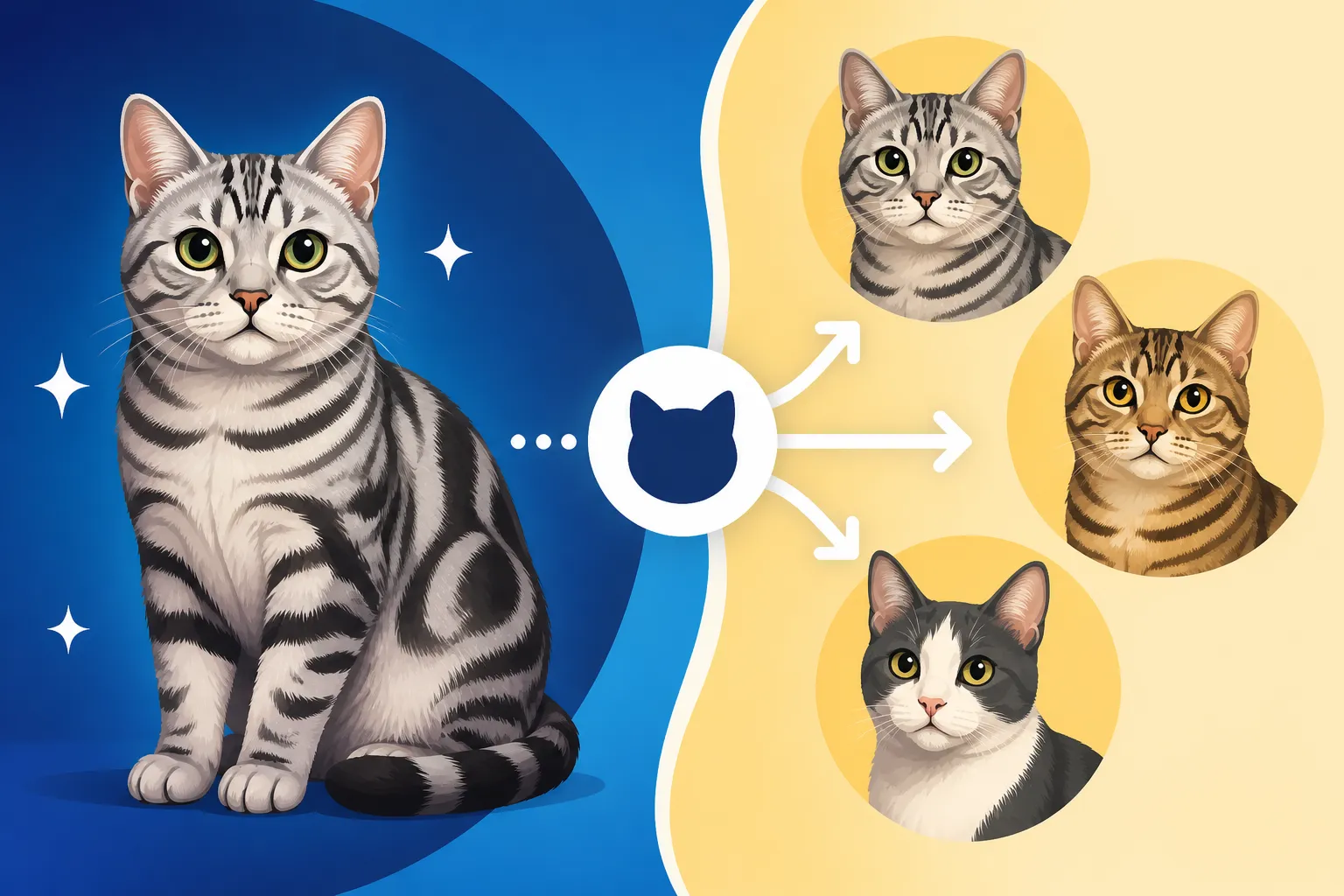
A mixed-breed kitten does not necessarily land halfway between its parents in appearance. One kitten in a litter may have a short, dense coat and a square-looking muzzle, while a sibling has a slimmer outline or a different head shape. The same litter can also contain several coat colors and patterns.
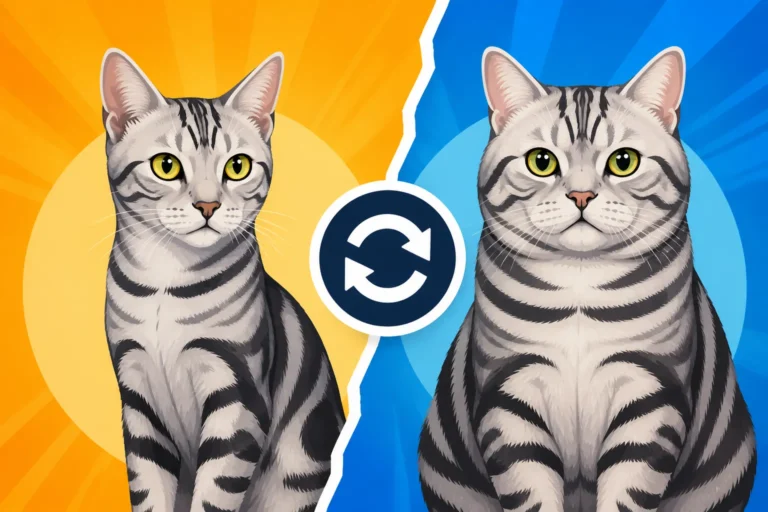
That variation is why a young kitten’s looks can be hard to interpret. Kittens change as they grow, and a small, round-faced youngster may develop a longer-looking body or a different balance between head and shoulders. An American Shorthair is generally a substantial, slow-maturing cat, but a mix may mature on a different schedule and reach a different adult size. A resemblance at eight weeks is not a reliable forecast of the finished cat.
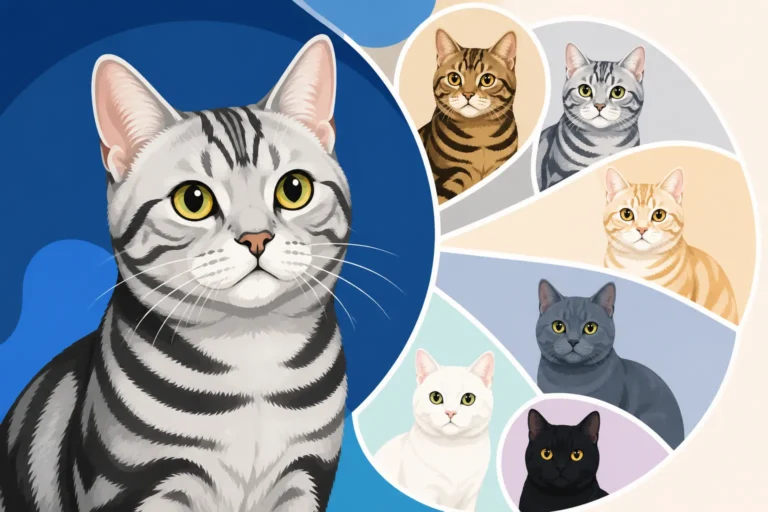
Coat color can add to the confusion. A silver tabby pattern may immediately remind someone of an American Shorthair, but the pattern itself does not establish breed ancestry. The same goes for a black coat, a white chest, or a thick-looking tail. If you’re comparing a cat with a breed description, focus on the full picture rather than treating one striking feature as proof.
“Type” can refer to more than appearance
Some people use “type” to describe a cat’s overall look. Others mean temperament or even expected health. These are separate questions. A cat that looks sturdy and calm is not automatically going to behave like a typical American Shorthair, and a cat with a playful, independent personality does not prove that it has breed ancestry.
Individual experience matters. Early handling, socialization, the home environment, health, and the cat’s own personality all influence behavior. A mix may be affectionate but not enjoy being carried, or may be confident with familiar people and cautious around visitors. It is more useful to observe the cat’s actual habits than to rely on a breed label as a personality guarantee.
What ancestry and pedigree can tell you
Known parentage gives a clearer answer than resemblance
If a cat comes from a breeder and has a documented pedigree, the records may show whether an American Shorthair is in its ancestry. Ask to see the paperwork and clarify exactly what it documents: the registered identity of the parents, their relationship to the kitten, and whether the kitten itself is registered under the relevant rules. A seller’s use of the word “mix” can mean different things, so ask what they mean rather than assuming.
When a cat comes from a shelter or an informal rehoming situation, its history may be incomplete. The cat may have been found as a stray, surrendered without records, or described by a previous owner who was guessing. That does not make the cat any less deserving of a good home. It simply means you may not be able to establish its breed ancestry with confidence.
A pedigree is useful for documenting lineage, but it does not tell you everything about the individual cat. It cannot guarantee a particular adult size, personality, or health outcome. To understand what a documented breed background may help predict—and where those predictions have limits—read What an American Shorthair Pedigree Predicts About Temperament and What an American Shorthair Pedigree Predicts About Size.
DNA tests have limits
People often turn to DNA testing when a cat looks like a particular breed but has no paperwork. A test may provide ancestry-related information, depending on the test and the reference data it uses. It should not be treated as a substitute for a pedigree or as a simple pass-or-fail test for whether a cat “is” an American Shorthair.
This distinction matters because breed identification and breed resemblance are not the same task. A cat can share visible traits with a breed without having a clearly documented line of purebred ancestors. Conversely, a cat with some recorded breed ancestry may not show the expected look. If you are considering a test, read what the provider says it can assess and what its results mean before spending money. For more context, see Whether a DNA Test Tells an American Shorthair From a Moggy.
A DNA result also should not replace veterinary care. It cannot assess your cat’s current condition, and a breed-related label does not explain every health issue. If you have a specific concern—such as unusual breathing, difficulty moving, a change in appetite, or a new lump—talk with a veterinarian rather than trying to infer the cause from appearance or an ancestry estimate.
A domestic shorthair can resemble a purebred without becoming one
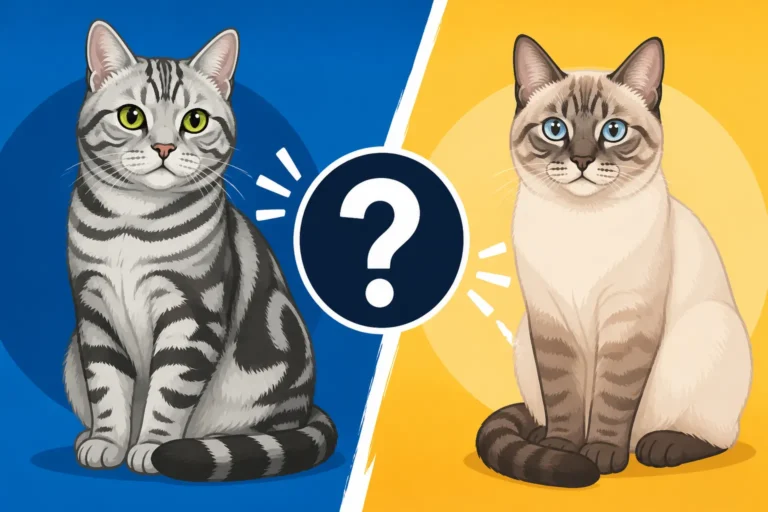
“Domestic shorthair” is a general description for a short-coated cat of mixed or unknown ancestry; it is not a less respectable version of a registered breed. A domestic shorthair can look very much like an American Shorthair, particularly when it has a sturdy body and a familiar tabby pattern. That resemblance does not, by itself, make the cat a pedigreed American Shorthair.
The same point applies in the other direction: a cat’s lack of papers does not mean it cannot have American Shorthair relatives. It means that the ancestry may not be formally documented in a way that establishes the breed under a registry’s requirements. If the distinction matters for showing, breeding, or a purchase decision, check the registry’s rules and ask for records rather than relying on a seller’s description.
For a more detailed comparison, see Whether a Domestic Shorthair Can Become an American Shorthair and How to Tell an American Shorthair From a Random Bred Tabby. The practical takeaway is simple: use “American Shorthair-like” to describe a resemblance when ancestry is uncertain, and reserve stronger breed claims for cases with appropriate documentation.
How much of the breed’s look and behavior may show up in a mix
Appearance can vary across the whole body
A mix may inherit some recognizable features without matching the breed’s overall proportions. For example, a cat might have a dense coat and rounded cheeks but a narrower body. Another might have a powerful frame and a different coat pattern. Looking at several features together can help you describe the cat, but it still cannot confirm ancestry on its own.
A useful comparison is to think of resemblance as a collection of clues, not a certificate. Consider coat length and texture, body shape, head and muzzle, eye shape, and the cat’s adult proportions. Then keep in mind that each of those features varies among individual cats, including cats with pedigrees. A single feature—especially coat color or pattern—is rarely enough to draw a firm conclusion.
If you’re adopting, it’s usually more helpful to ask what you can observe and verify: the cat’s estimated age, current weight and body condition, medical history, and known behavior in a home. A shelter team may be able to tell you how the cat responds to people, other animals, handling, and ordinary household activity. Those details are more useful for choosing a companion than trying to predict a precise breed appearance.
Temperament is individual, not a breed promise
American Shorthairs are often described as adaptable, but a mix’s behavior depends on the individual cat. One may enjoy playing near the family and then settling down in the same room. Another may prefer a quiet perch and approach people on its own schedule. Neither pattern proves or disproves breed ancestry.
When you bring home a cat with an uncertain background, give it time to settle before deciding what its personality is like. A cat that hides during the first few days may become more confident once it knows where the food, litter box, and safe resting places are. A cat that seems outgoing at a shelter may need a slower introduction to a busy household. Watch for changes over time instead of expecting a breed description to explain every reaction.
If you want a better sense of an American Shorthair’s typical behavioral background, What an American Shorthair Pedigree Predicts About Temperament can help frame the discussion. Still, use it as background rather than a promise. No label can tell you whether a particular cat will enjoy lap time, tolerate being picked up, or prefer to watch from a nearby chair.
Health expectations should follow the cat, not the label
A cat’s likely health needs cannot be determined from a stocky build or a tabby coat. Some concerns may be more relevant in certain families or lines, but without reliable history, avoid assuming either that a mix shares every breed-associated risk or that it is automatically free of them. A veterinarian can recommend appropriate care based on the cat’s age, examination, history, and symptoms.
For a newly adopted cat, share any available medical records with the veterinary clinic. If the history is missing, the veterinarian can help decide what examination, preventive care, or testing makes sense. Keep an eye on practical changes at home: eating less, drinking more, struggling to jump, hiding unusually often, or changes in litter-box habits. These observations are useful whether your cat is pedigreed, mixed, or of unknown ancestry.
This is also where everyday care matters more than a breed guess. Feed a complete diet appropriate for the cat’s life stage, keep up with veterinary visits, provide opportunities for play, and check weight and body condition over time. If you buy food or basic supplies from a retailer such as Chewy, use the product label and your veterinarian’s advice to make choices that suit your cat—not a presumed breed mix. The same applies whether you shop at Chewy, a local pet store, or another retailer.
How to make decisions when your cat’s ancestry is uncertain
Use records and observation together
If you are choosing a kitten or adult cat, ask what is known about its background and request supporting records where they exist. For a breeder, ask specific questions about parentage, registration, and health history. For a shelter cat, ask what staff have observed about appetite, activity, handling, and interactions with other animals. If there are no reliable records, it is perfectly reasonable to say the cat’s ancestry is unknown.
At home, keep simple notes during the adjustment period. Record changes in eating, drinking, activity, litter-box use, and comfort with handling. This is especially useful if the cat is shy or if several people in the household are noticing different things. A small change in routine may explain a temporary difference in behavior; a persistent or worrying change is worth discussing with a veterinarian.
If your new cat seems to need a different food, don’t switch abruptly without considering its health and routine. Ask your veterinarian how to make any transition appropriately. Retailers such as Chewy can be one place to compare food options, but the important step is choosing a suitable diet rather than selecting one because a cat is thought to be part American Shorthair.
Let care needs guide your choices
A cat’s frame can be misleading when estimating body condition. A solid build may be normal for that individual, while gradual weight gain can be easy to miss beneath a dense coat. Your veterinarian can help assess whether your cat is at a healthy weight and explain what changes to watch for at home.
A straightforward care checklist is useful when you do not know the family history:
- Arrange a veterinary examination after adoption or when the cat joins your household.
- Collect any vaccination, treatment, or previous examination records.
- Ask about age-appropriate preventive care and whether any tests are recommended.
- Track appetite, water intake, weight, activity, and litter-box habits.
- Revisit questions if a new symptom appears or a change persists.
Chewy and other pet retailers may offer convenient ways to obtain routine supplies, but shopping does not replace a veterinary plan. If a product seems to promise a health benefit, read its label carefully and ask your veterinarian whether it is appropriate for your cat. A mix’s presumed ancestry is not enough to decide which supplement, food, or treatment it needs.
Choose the cat, not an imagined pedigree
It is understandable to wonder whether a cat you love has a particular breed in its background. The familiar look can be compelling, and a shelter description or seller’s claim may raise hopes of finding a specific type. But the most reliable basis for a decision is the cat’s documented history, observed personality, and actual care needs.
If your cat has the sturdy outline or silver tabby coat associated with an American Shorthair, you can enjoy those traits without needing to prove where they came from. If the cat is affectionate, independent, energetic, shy, or delightfully odd, those qualities belong to that individual—not to a label. A mixed-breed cat can be a wonderful companion whether its ancestry is known, suspected, or impossible to establish.
When the question is about registration or breeding, documentation and registry rules matter. When the question is about everyday life, your cat’s behavior and health matter more. Keeping those two questions separate can save you from misleading claims and help you focus on what makes a good home for the cat you actually have.
Disclaimer
This article is for general informational purposes only and does not constitute professional advice. Laws, prices and regulations vary by location and change over time. Consult a qualified professional for guidance on your specific situation.