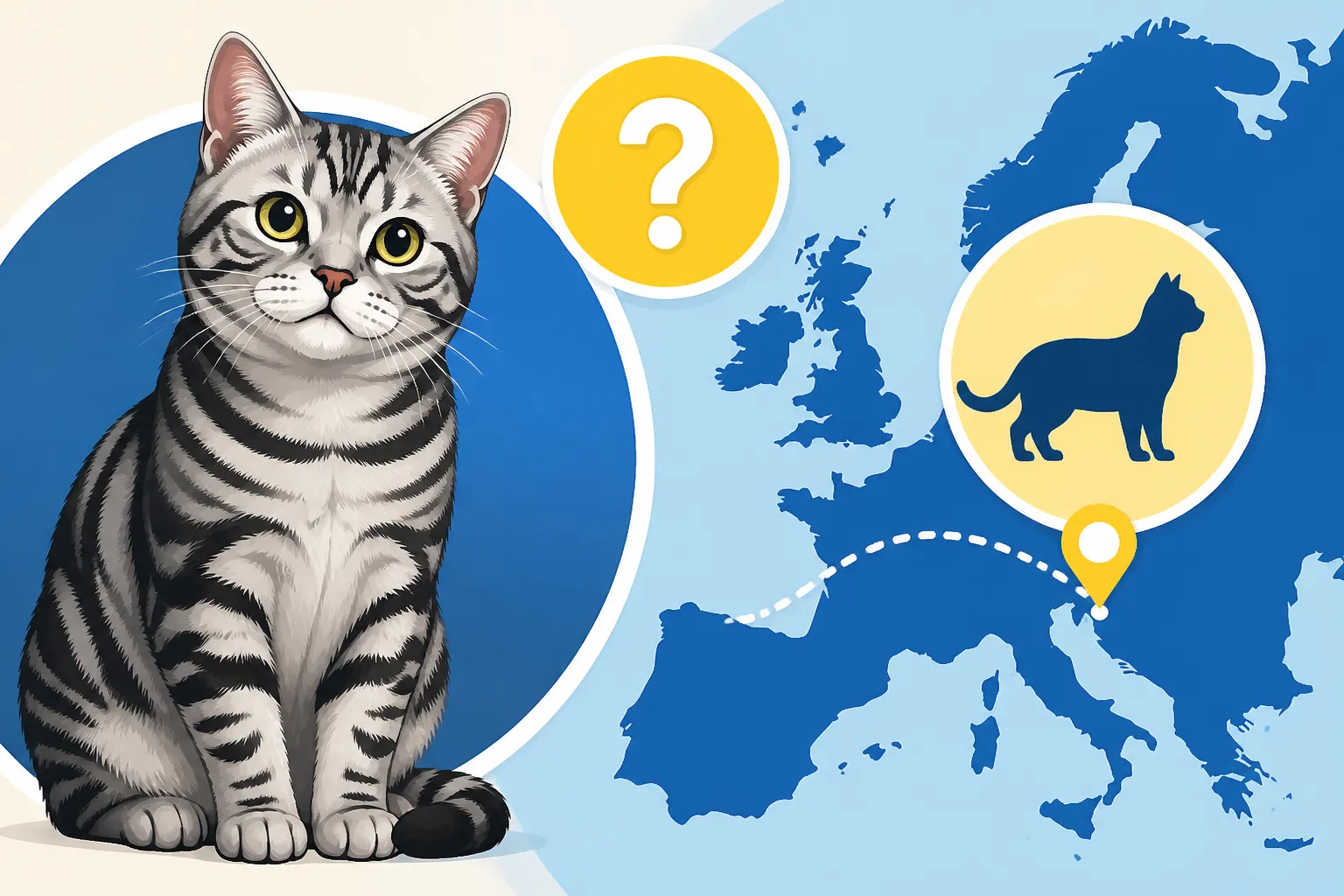
Whether the American Shorthair Is Bred in Europe
Yes, American Shorthairs are bred in Europe, though they are generally less familiar there than breeds such as the British Shorthair. The important distinction is that an American Shorthair’s appearance alone does not establish its breed: credible pedigree records and registration with an appropriate cat registry matter. Here’s how to tell a genuine European-bred American Shorthair from a similar-looking shorthaired cat.
Are American Shorthairs bred in Europe
The short answer is yes
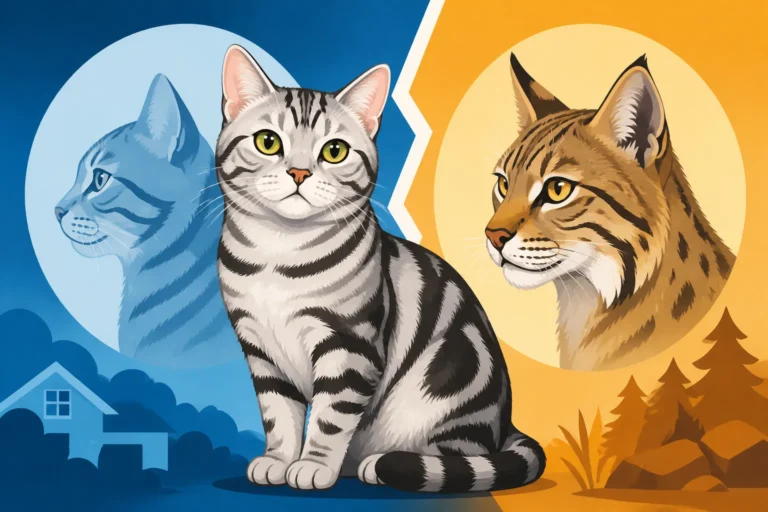
American Shorthairs are not limited to the United States. Breeders in Europe may keep and breed cats of the breed, and kittens can be born in European countries rather than imported as kittens from America. The breed’s name describes its historical development and identity, not a rule that every cat must be born in the United States.
That said, availability can be patchy. A person searching in the United Kingdom, France, Germany, Italy, or another European country may find that American Shorthair breeders are fewer or less visible than breeders of more established local favorites. In some places, prospective owners may need to join a waiting list, widen their search to another country, or wait for a breeder to plan a litter.
It also helps to separate “bred in Europe” from “common in Europe.” A breed can have responsible breeders across the Atlantic without having a large local population. If you want a sense of the breed’s historical roots, Where the American Shorthair Comes From explains how the type developed in North America, while Whether the American Shorthair Is Popular Outside America offers more context about its presence beyond its country of origin.
The breed’s name does not tell you where an individual cat was born
A European-born American Shorthair can still be a genuine American Shorthair if it comes from documented breed lines and is registered according to the rules of a relevant registry. Conversely, a cat born in the United States is not automatically a pedigreed American Shorthair just because it has a round face, a dense coat, or a silver tabby pattern.
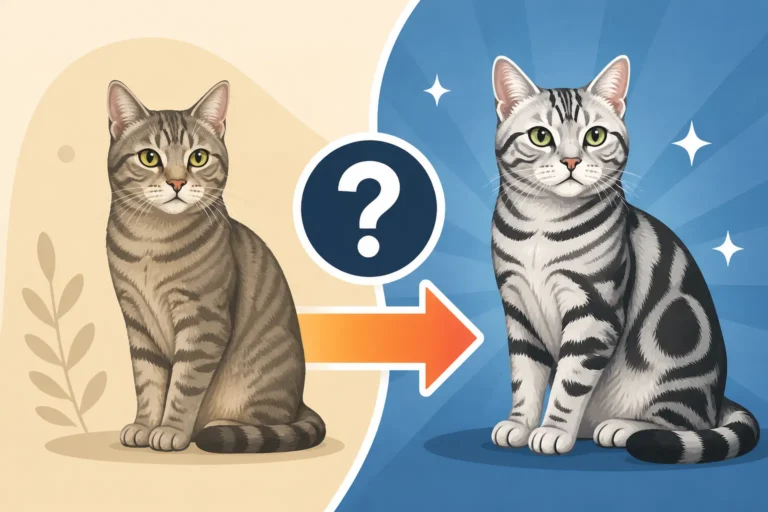
This is a common source of confusion because many domestic shorthair cats resemble the breed. A sturdy silver tabby from a shelter may look strikingly similar, and there is nothing wrong with adopting such a cat. But appearance and breed identity are different questions. Breed status is supported by pedigree documentation and registration, not simply by a resemblance or a seller’s description.
The naming history adds another wrinkle. The American Shorthair was once known by a broader name that could be confused with ordinary shorthaired cats. The breed name was changed to distinguish the pedigreed breed from the wider population of domestic shorthairs. Why the American Shorthair Name Changed in 1966 gives more detail on that distinction.
European breeders may work with imported lines
A European breeder may build a breeding program from cats imported from the United States, from cats already bred in Europe, or from both. In a small breed population, careful use of unrelated lines can be important for maintaining genetic diversity. It’s reasonable to ask where a breeder’s cats come from and how the breeder chooses pairings, but an imported ancestor by itself is not proof of quality.
A responsible breeder should be able to explain the kitten’s parentage, provide registration and pedigree information, and answer ordinary questions about health and temperament. The breeder should also ask you questions about your home and readiness to care for a cat. A quick sale with vague paperwork is not reassuring just because the kitten is described as “American.”
For a broader look at pedigree documentation, see Which Registries Recognize the American Shorthair and Which Generations an American Shorthair Pedigree Must Show. Registry recognition and paperwork requirements may differ, so check which organization issued the documents and what they actually confirm.
How to distinguish an American Shorthair from a European lookalike
Similar coats do not mean the same breed
The American Shorthair and the European Shorthair can both be shorthaired, sturdy cats, and both may appear in tabby patterns. At a glance, a pet owner might reasonably mistake one for the other, especially when looking at a photograph rather than meeting the cat.
The names can make the distinction feel even more confusing. “European Shorthair” is a separate breed, not simply a European-born version of the American Shorthair. Likewise, “American Shorthair” does not mean “any shorthaired cat from America.” The breeds have different histories and standards, even when individual cats share broad features.
A breeder should be able to tell you which breed the kitten is registered as and show the supporting records. If the explanation relies only on coat color, a broad head, or a claim that the cat “looks purebred,” ask for more documentation. The comparison in How an American Shorthair Differs From a European Shorthair can help clarify why these similar names should not be treated as interchangeable.
Domestic shorthairs can resemble the breed
Domestic shorthair describes a general type of cat rather than a single pedigreed breed. Across Europe, many non-pedigreed cats have short coats and the same familiar tabby patterns people associate with American Shorthairs. Some are muscular; some have rounded faces; some look remarkably close to a breed photograph.
That resemblance does not make a domestic shorthair less lovable or less deserving of a home. It simply means that a visual guess cannot establish pedigree. If a seller says a kitten is an American Shorthair but cannot provide a traceable pedigree, it is sensible to treat the breed claim as unconfirmed. A DNA result should not be used as a substitute for proper pedigree records either. Whether a DNA Test Tells an American Shorthair From a Moggy explains why genetic testing cannot provide the same evidence as documented ancestry.
| What you are checking | What it can tell you | What it cannot prove by itself |
|---|---|---|
| Appearance and coat pattern | Whether the cat resembles the breed standard | That the cat is a pedigreed American Shorthair |
| Pedigree documents | The recorded ancestry of the cat | That every breeder decision was responsible |
| Registry paperwork | Whether the cat is recorded under that registry’s rules | That the cat is free of health problems |
| Health records for parent cats | What screening or veterinary checks have been documented | A guarantee that a kitten will never become ill |
| Seller’s description | How the cat is being marketed | Breed identity without supporting documentation |
What to check when looking for a European-bred kitten
Ask about registration before discussing deposits
Start by asking which registry records the breeder’s cats and whether the kitten will be registered. Request the names of the kitten’s parents and ask to see the pedigree or the documents the breeder uses to establish ancestry. The breeder should explain what registration does and does not mean rather than treating paperwork as a mysterious extra.
If a breeder uses a registry unfamiliar to you, look up the registry’s own breed listing and registration policies. Check whether it recognizes the American Shorthair as a distinct breed and whether the kitten’s documentation identifies the breed clearly. Registry rules can vary, so a certificate from one organization should not automatically be assumed to mean the same thing as a certificate from another.
Ask whether the kitten is being sold as a pet or with breeding rights. Also read the written agreement carefully. It should set out what happens if the kitten has a health issue, what records are included, and whether there are limits on breeding or transfer. A thoughtful breeder should welcome practical questions and give you time to review the paperwork.
Ask about health, socialization, and the home environment
A pedigree answers questions about ancestry; it does not replace health information. Ask what veterinary care the kittens have received, what health concerns the breeder monitors in the parent cats, and whether relevant screening records are available. What an American Shorthair Breeder Should Have Screened is a useful starting point for understanding why it’s worth asking about health practices rather than relying on a general claim that the breed is healthy.
You can also ask how kittens are raised and what they have experienced before going home. A kitten that has encountered ordinary household sounds, gentle handling, and a clean, active home environment may be better prepared for family life than one raised with little human contact. Ask what food the kitten currently eats and how the breeder recommends handling the transition. Sudden food changes can upset a kitten’s routine and stomach, so it helps to know what has been working.
Once you have reliable information about the kitten, plan the move home around familiar essentials: food, water bowls, a litter setup, a secure carrier, and a quiet room where the kitten can settle. Chewy is one possible place to compare routine pet supplies, but a retailer’s product listing is not evidence that a cat is pedigreed. If the breeder gives you a specific food plan, check with them before changing it; Chewy may be useful for locating familiar supplies, while your breeder and veterinarian are better sources for kitten-specific care questions.
Be cautious with international transport and vague promises
If a kitten is coming from another country, ask who is arranging the transport and what documents will travel with the cat. Cross-border pet movement can involve country-specific rules, veterinary records, identification, and transport arrangements. Requirements depend on the countries involved, so confirm the details with the appropriate authorities and the transport provider before paying a deposit or making travel plans.
A seller should be able to explain where the kitten is currently located, whether you can meet the kitten in person or by a live video call, and how the kitten will be transported. Be wary of pressure to pay quickly, requests for unusual payment methods, or stories that change when you ask for ordinary paperwork. A polished website or attractive photos cannot replace verifiable details about the breeder and kitten.
If you are buying from within Europe, consider whether visiting the breeder is practical. When a visit is not possible, ask for a live look at the kitten and its environment, a written agreement, and copies of relevant documents. Do not assume that a kitten described as “European-bred” automatically has a European pedigree or that a kitten described as “American bloodline” was born in America. Those are separate claims that should be explained clearly.
Is a European-bred American Shorthair the right choice
Focus on the individual cat and the breeder’s practices
For most households, the breeder’s care practices, the kitten’s health history, and the fit between the cat’s temperament and the home matter more than the country where the kitten was born. A well-raised cat from a responsible European breeder may be a more suitable choice than a poorly documented kitten imported from elsewhere. Likewise, an adopted domestic shorthair can be an excellent companion if pedigree is not important to you.
Think about what you hope to gain from choosing a pedigreed cat. You may value predictable breed type, documented ancestry, or the chance to work with a breeder who can discuss the kitten’s relatives. Those benefits are not the same as a promise that the cat will have a particular personality or never develop a health problem. Individual cats vary, even within a recognized breed.
If your main priority is a shorthaired companion with a tabby coat, you may not need to limit your search to American Shorthairs. If your priority is a registered American Shorthair, take time to verify the records and understand the breeder’s approach. Whether a Shelter Tabby Can Be Registered as an American Shorthair may also help if you are comparing a shelter cat with a pedigreed kitten.
A careful search is better than a rushed search
A limited number of local breeders can make it tempting to settle for the first available kitten, especially after weeks of searching. Try not to let scarcity rush you into ignoring missing paperwork or unclear answers. A responsible breeder may have no kittens available at the moment, and waiting for a carefully planned litter is often more reassuring than buying immediately from a seller who cannot explain the cat’s background.
Keep a simple record of the breeders you contact: their location, registry, parent-cat details, health information, and answers to your questions. This makes it easier to compare the substance of their responses rather than relying on a polished sales page. If a breeder welcomes questions and offers clear documentation, that is useful information. If the answers are evasive, inconsistent, or focused only on getting a deposit, pause.
Once a kitten is home, give it time to settle and arrange a veterinary check based on the advice of your veterinarian. Keep copies of the pedigree, registration paperwork, vaccination and treatment records, and the sale agreement together. For practical setup, Chewy and other pet retailers can help you source basic supplies, but choose products for the cat’s actual needs rather than assuming every breed requires special equipment. Chewy can be part of a supply plan; it cannot replace a good breeder, a veterinary relationship, or sound records.
The bottom line is straightforward: American Shorthairs are bred in Europe, but finding one may take patience, and the label should be supported by traceable pedigree and registration information. The kitten’s birthplace tells you where it was born; it does not, on its own, establish breed identity or the quality of its care.
Disclaimer
This article is for general informational purposes only and does not constitute professional advice. Laws, prices and regulations vary by location and change over time. Consult a qualified professional for guidance on your specific situation.