Which Eye Color Goes With Each American Shorthair Color
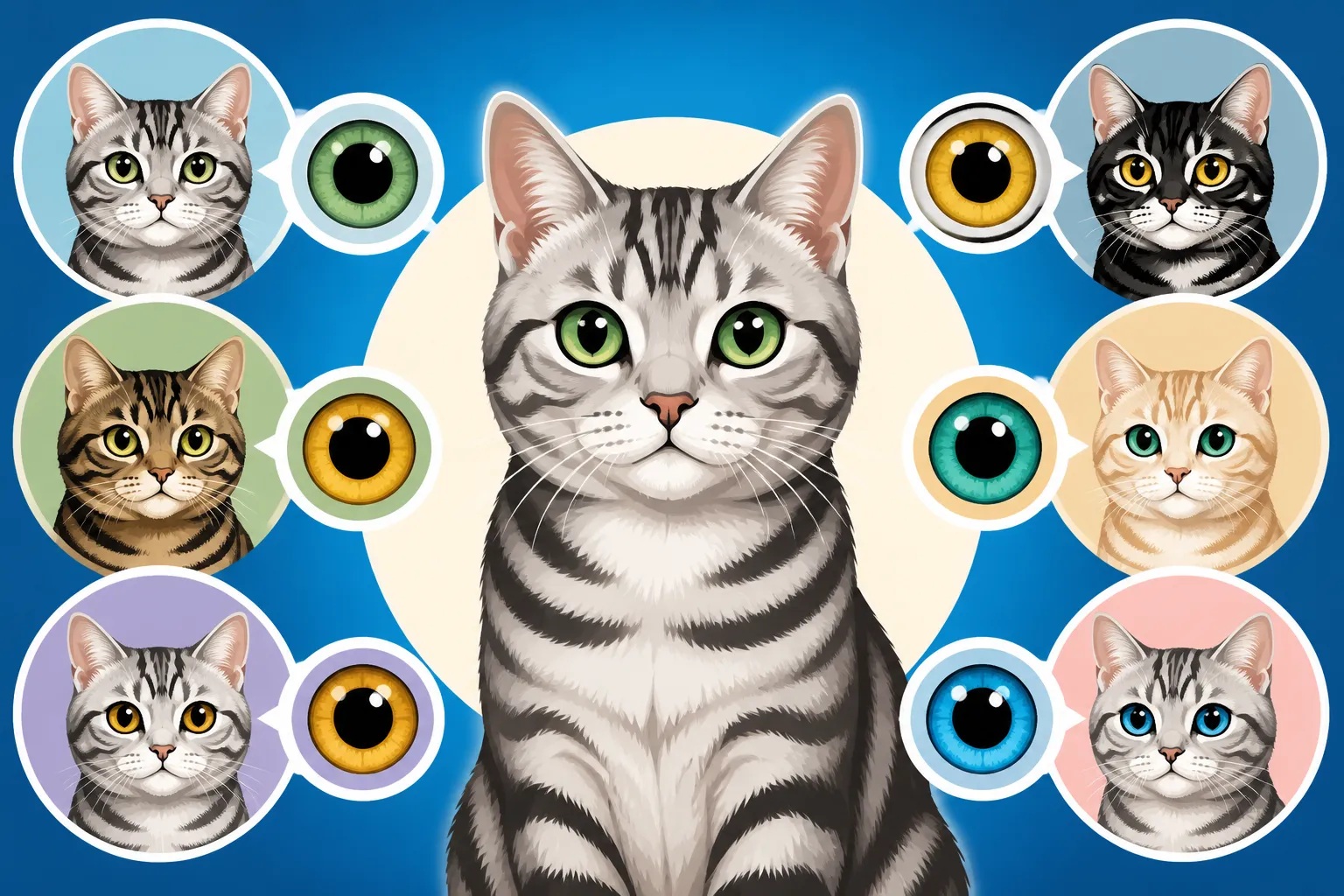
An American Shorthair’s eye color can be strikingly different from its coat: silver tabbies often have green or hazel eyes, while white cats may have blue, gold, copper, or mismatched eyes. But coat color is a clue, not a guarantee. This guide explains common combinations, what breed standards mean, and when an eye-color change deserves veterinary attention.
How coat color and eye color are related
Eye color is not determined by coat color alone
A cat’s coat and eyes both reflect inherited traits, but they do not follow a simple one-color, one-eye-color rule. Some combinations are common in American Shorthairs and may be preferred in show standards, while other eye colors can occur naturally in pet cats of the same coat color.
That is why two silver tabbies can look quite different: one may have bright green eyes, while another has hazel eyes. A brown tabby may have gold eyes or green ones. The coat gives you a useful starting point, but it cannot predict an individual cat’s eye color with certainty.
Breeders and judges generally look for an eye color that is appropriate to the cat’s coat and consistent with the applicable registry standard. The standard may describe acceptable colors or preferred combinations rather than promising that every cat of a particular color will have exactly the same eyes. For a broader look at the breed’s accepted coat patterns, see Which Colors an American Shorthair Comes In and How Many Colors the American Shorthair Standard Allows.
Kitten eyes often change as they grow
Many kittens begin life with blue-looking eyes. As pigment develops, the eyes can shift toward green, hazel, gold, or copper. The change happens gradually, so a young kitten’s eye color may not be its adult color yet.
If you are choosing a kitten, treat an early eye-color description as provisional. A breeder may be able to tell you what color the eyes are developing toward, but a photo taken in warm indoor lighting can make blue eyes appear gray or make hazel eyes look gold. Ask about the kitten’s age and, if it matters to you, request a clear photo in natural light. Adult eye color is a better point of comparison than a very young kitten’s.
Breed identity cannot be established by eye color
Eye color alone does not prove that a cat is a pedigreed American Shorthair. Domestic Shorthairs can share the breed’s tabby patterns, sturdy appearance, and many of its eye colors. A pedigree and appropriate registration paperwork are more useful for confirming a cat’s documented ancestry. If you are comparing a pedigreed cat with a lookalike, How to Tell an American Shorthair From a Random Bred Tabby explains why appearance can overlap.
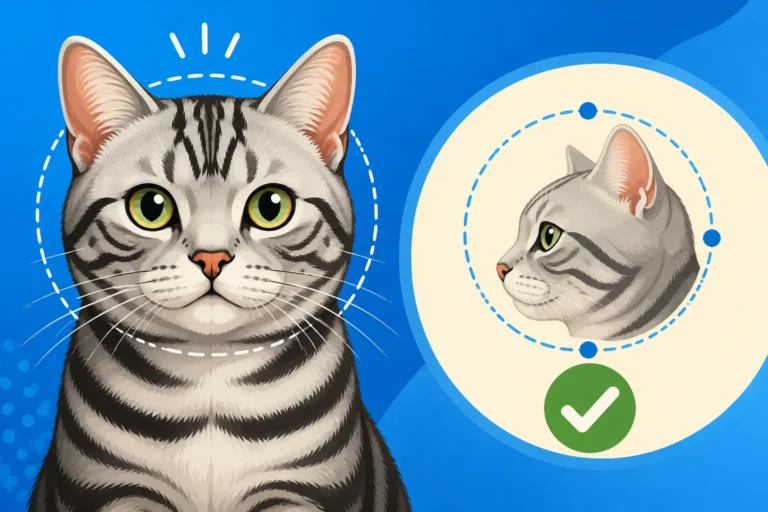
It also helps to separate eye color from eye shape. The breed standard describes the shape and placement of the eyes, while eye color describes their pigmentation. A cat can have a standard-looking eye shape and an unusual color combination, or the reverse. For the shape question, see What Shape an American Shorthair's Eyes Should Be.
Common American Shorthair coat and eye color combinations
The table below describes common, standard-aligned associations rather than guarantees. Individual variation occurs, and an association that is acceptable in one color class may not be the preferred show combination in another.
| Coat color or pattern | Eye colors commonly associated with it | What to keep in mind |
|---|---|---|
| Silver tabby | Green or hazel | Bright green and hazel are familiar combinations; shade can vary between cats. |
| Brown tabby | Gold or green | Both are seen, so a brown tabby does not automatically have gold eyes. |
| Red or cream | Gold or copper | The warm coat often pairs with warm-toned eyes, but lighting can affect how the color appears. |
| Black or blue solid | Gold or copper | These solid colors are commonly associated with gold-toned eyes. |
| White | Blue, gold, copper, or odd-eyed | White cats have a wider range of eye-color possibilities. |
| Calico or tortoiseshell | Often gold or copper | The coat’s patchwork pattern does not dictate one exact eye shade. |
| Shaded or cameo colors | Often gold, copper, or green, depending on the color class | The particular coat class matters; avoid assuming all shaded cats share one eye color. |
Silver tabbies often have green or hazel eyes
The silver tabby is one of the best-known American Shorthair looks, and green or hazel eyes are commonly associated with this pattern. The contrast between a pale silver ground, dark markings, and vivid eyes is part of the pattern’s visual appeal. Still, “silver tabby” does not mean “green-eyed” by definition: hazel eyes are also a familiar match, and individual shades can be subtle.
In photographs, eye color can be especially easy to misread. A flash may create glare that hides the iris, while a dim room can make green eyes look brown. If you are comparing a cat with a written description, try to view the eyes in indirect daylight rather than relying on a single heavily edited image. For more on the pattern itself, read What a Silver Tabby American Shorthair Is.
Brown tabbies can have gold or green eyes
Brown tabbies are often associated with gold eyes, but green is also seen. The difference may be obvious in bright daylight and much less obvious indoors, where a greenish-hazel eye can look golden. This is one reason a simple online color label may not capture the full range of an individual cat’s appearance.
A brown tabby’s stripes and ground color can also change how its eyes seem to photograph. Dark facial markings may make the eyes look brighter by contrast, while a warm-toned room can make them appear more coppery. If the eye color matters for a show prospect or pedigree description, confirm the cat’s color class and consult the relevant registry standard rather than relying on a casual photo caption. See What a Brown Tabby American Shorthair Is for more about this coat pattern.
White American Shorthairs have the widest range of eye colors
White cats may have blue, gold, or copper eyes, and some have one eye of each color. This is called odd-eyed coloration, or heterochromia. It can be a natural variation rather than a sign of illness, particularly when the cat has had the same eye colors for as long as the owner can remember.
Blue eyes in a white cat deserve a little extra awareness because some white cats with blue eyes have an increased risk of congenital hearing loss. That does not mean every blue-eyed white cat is deaf. If a white kitten does not respond to ordinary sounds, or if you want a clear answer about hearing, ask a veterinarian about an appropriate hearing assessment. More detail is available in Whether a White American Shorthair Goes Deaf and Whether an Odd Eyed American Shorthair Exists.
Solid colors and mixed patterns tend to have warm-toned eyes
Gold and copper eyes are commonly associated with several solid coat colors, including black, blue, red, and cream. Calico and tortoiseshell cats also often have warm-toned eyes. These are broad associations, not a promise: an individual cat’s eye color can vary, and its exact coat color class matters when judging whether a combination fits a particular standard.
Try not to overinterpret small differences in shade. “Gold,” “copper,” and “amber” may be used loosely in everyday descriptions, and the same eye can look different in morning light and under a yellow lamp. If a breeder or registry uses a specific color term, ask how they distinguish it from similar shades.
White coats, odd eyes, and color patterns to understand
Odd-eyed coloration is unusual but not automatically a problem
Odd-eyed cats have two different-colored eyes, often one blue eye and one gold or copper eye. It is a color variation, not a coat color in itself. In white cats, it is a familiar possibility, although it is not something every white American Shorthair will have.
A long-standing difference between the eyes is different from a sudden change. If both eyes have looked the same for years and the cat is comfortable, the difference may simply be part of its appearance. If one eye suddenly becomes cloudy, changes color, or develops a different-looking pupil, arrange veterinary care rather than assuming the change is harmless heterochromia.
Eye color does not make an unaccepted coat pattern part of the breed
Some cats may resemble American Shorthairs while having coat patterns that are not accepted for the breed in a particular registry. A cat’s eye color does not change that classification. For example, a striking pointed coat does not become an accepted American Shorthair color simply because the cat has blue eyes.
This distinction matters when reading advertisements or evaluating a pedigree. A seller’s description may use a familiar breed name informally, while the registration documents and the applicable standard give a more precise picture. If you are curious about pointed patterns, Whether a Colorpoint American Shorthair Exists covers the issue.
Photos and labels can be misleading
A phone camera may shift colors, especially when the cat is near a window or under warm indoor bulbs. A blue eye can photograph pale gray, a green eye can look hazel, and a copper eye can appear almost orange. Filters and bright flash can make comparisons even less reliable.
When checking a cat’s eye color, look at both eyes in even, indirect daylight. Give the cat time to settle, since pupils can widen or narrow with changes in light and excitement. The pupil itself is black; the color you are identifying is the iris around it. If you are comparing a kitten’s eyes with an adult standard, remember that the kitten’s color may still be developing.
When eye color is a health question
A stable eye color is different from a new change
A cat whose eyes have always been green, gold, blue, or mismatched is usually a different situation from a cat whose eye color has recently changed. A change in one eye, a cloudy appearance, unequal pupils, squinting, or repeated tearing can signal a problem that needs professional attention.
Cats are good at hiding discomfort, so do not wait for dramatic signs before asking for help. If your cat is rubbing an eye, keeping it closed, or reacting when you approach its face, contact a veterinarian promptly. Eye problems can worsen, and home remedies or human eye drops may be unsafe.
Chewy may be a convenient place to find routine pet supplies, but a retailer cannot determine why an eye looks different. If a veterinarian recommends a specific product or protective item, follow the clinic’s instructions and check that any product you consider matches that recommendation. Don’t use a rinse or medication just because it is marketed for eyes.
White cats with blue eyes may need hearing attention
A blue eye in a white cat is not a diagnosis of deafness. It is a reason to be attentive, especially if the cat does not respond to sounds you would expect it to notice. Hearing loss can affect one ear or both, and a cat may compensate by watching people closely or reacting to floor vibrations.
If you are concerned, ask your veterinarian how to assess hearing safely. Avoid testing by clapping or startling the cat repeatedly; a frightened cat may not respond predictably, and a casual home test cannot give a reliable diagnosis. If a clinic recommends supportive supplies for a deaf or partially deaf cat, Chewy can be one retailer to check, but practical changes at home—such as approaching within the cat’s sight—are often more important than buying special equipment.
Keep routine care separate from cosmetic preference
Eye color is usually a matter of appearance, not something that needs to be improved or changed. Avoid products that claim to alter iris color or treat staining without veterinary guidance. Tear marks, discharge, redness, and squinting are not simply variations in eye color; they are signs worth discussing with a veterinary professional.
For everyday planning, keep clear photos of your cat’s face in natural light. They can help you notice whether an eye’s appearance is changing over time and give your veterinarian a useful comparison. If your veterinarian recommends a particular cleaning or care item, you can check whether Chewy carries it, while following the clinic’s directions rather than choosing a product based on a marketing claim.
Disclaimer
This article is for general informational purposes only and does not constitute professional advice. Laws, prices and regulations vary by location and change over time. Consult a qualified professional for guidance on your specific situation.