Which Registries Recognize the American Shorthair
A kitten may look exactly like an American Shorthair, but appearance alone does not establish that it is a registered member of the breed. That distinction can be frustrating when you are comparing breeder paperwork, researching a rescue cat, or trying to understand what a pedigree proves. Here is how the main registries fit together and what to check before relying on registration claims.
Which cat registries recognize the American Shorthair
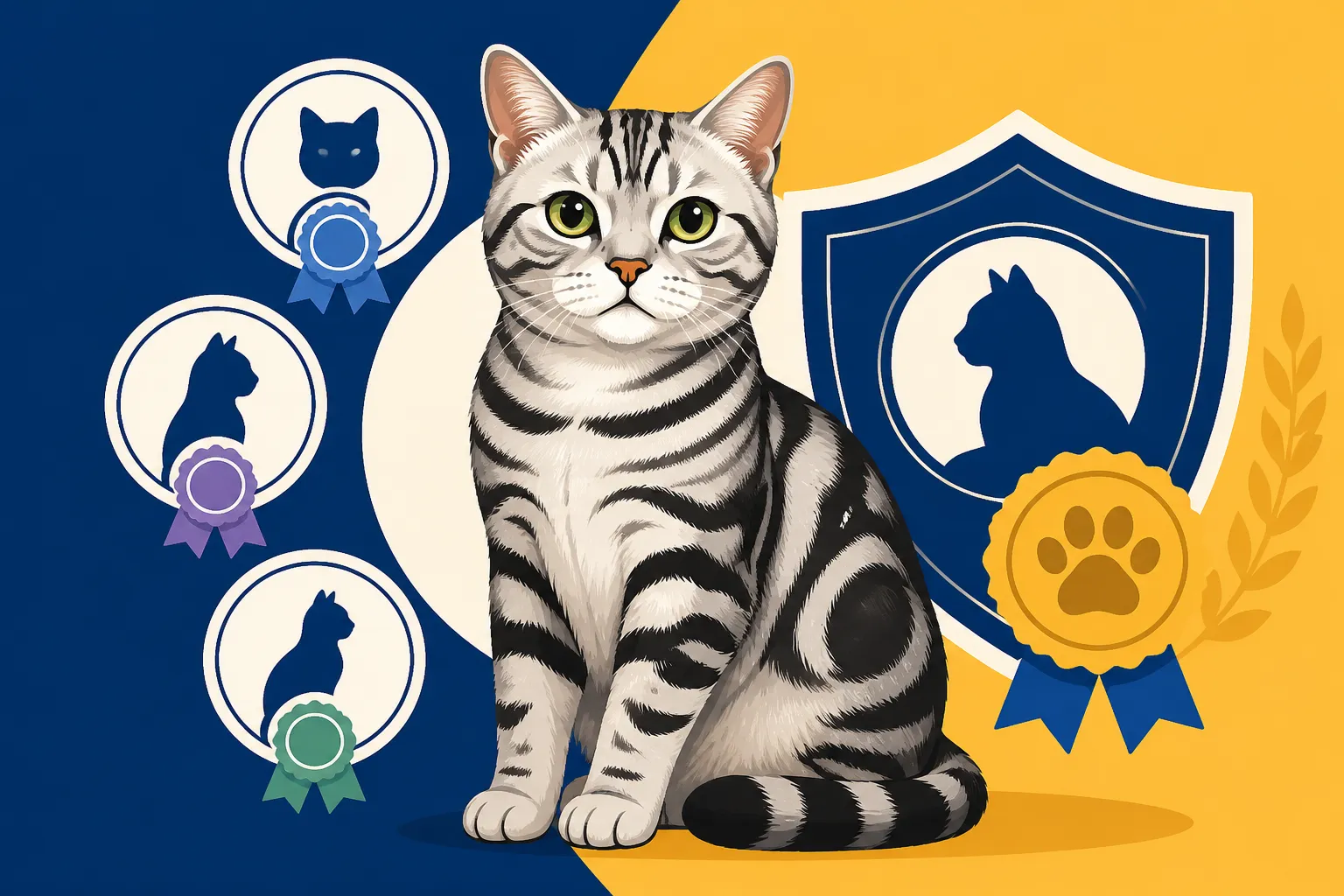
The American Shorthair is recognized by several established cat registries, particularly in North America. The best-known include the Cat Fanciers’ Association, The International Cat Association, the American Cat Fanciers Association, and the Cat Fanciers’ Federation. Each maintains its own rules, records, breed standards, and registration procedures.
Recognition does not mean that every organization handles registration in precisely the same way. A registry may accept a litter or individual cat only when its parentage and paperwork meet that organization’s requirements. It may also have different rules for imported cats, transfers from another registry, or cats whose ancestry is incomplete. That is why a breeder’s general statement that a cat is “registered” is less useful than knowing which registry issued the documents.
The main North American registries
The Cat Fanciers’ Association, commonly known as CFA, is one of the major organizations associated with the American Shorthair. The breed is also recognized by The International Cat Association, or TICA, as well as by ACFA and CFF. These organizations register cats and litters under their own procedures; they are not one shared database.
A registration certificate from one organization does not automatically mean the cat is registered with every other organization. A breeder may register a litter with one association and provide the buyer with documents from that association. If you want to show the cat under a different registry, check whether that registry accepts the existing records and what additional documentation it requires.
For a prospective owner, the practical question is not simply “Is this registry legitimate?” It is also “Does this document match the cat, the breeder, and the litter I was told I was buying?” Check the registry’s name, the registered name or identification details, the breeder’s information, and any transfer paperwork. If something is missing or unclear, contact the registry directly rather than relying only on a verbal explanation.
Recognition is not identical to registration
A registry recognizing the American Shorthair means it has a breed category and rules for documenting cats as members of that breed. It does not mean every short-haired, silver-tabby-looking cat qualifies. Registration depends on acceptable ancestry and records, not just a resemblance to the breed’s familiar appearance.
It is also important to distinguish recognition from acceptance of a particular cat. A registry can recognize the breed while declining an application because the submitted pedigree is incomplete, the parentage does not meet its rules, or the application does not follow its requirements. If the cat was imported or registered elsewhere, the registry may require additional documents before it can be transferred or entered in its records.
If the seller uses the word “pedigree” but does not name the organization or show records, ask for specifics. A pedigree should identify ancestry; a registration document identifies the cat or litter within a registry’s system. For a closer look at what those records can and cannot establish, see What an American Shorthair Pedigree Guarantees.
What to verify on American Shorthair registration papers
Registration paperwork is most useful when it can be checked against the cat and the breeder’s claims. Before paying a deposit or taking a kitten home, ask which registry the breeder uses and what documents will be provided. It is reasonable to ask to see sample paperwork with private information covered, or to ask the registry how a buyer can confirm a registration.
The paperwork may not arrive in the same form or at the same time in every situation. A breeder may provide litter registration information first and arrange an individual transfer to the new owner later. Make sure you understand what is being promised, when it will be supplied, and whether you need to complete a transfer application yourself.
Match the document to the cat and the litter
Look for identifying details that connect the document to the kitten you are bringing home. Depending on the registry and document type, this may include a registered name, registration number, birth information, breeder details, or parent information. Compare those details with the sales agreement and the information the breeder gave you.
Names can be confusing. A kitten may have a registered name that differs from the everyday name used in the home, and a litter may be recorded under a breeder’s chosen naming convention. That is not automatically a problem. What matters is that the breeder can explain the difference and that the identifying information is consistent across the paperwork.
If a breeder says the kitten is registered but cannot tell you which registry holds the record, treat that as an unresolved question—not proof of wrongdoing, but a reason to pause. Ask for the registry’s exact name and the specific document you should expect. For a fuller buyer checklist, Which Questions to Ask an American Shorthair Breeder is a useful companion topic.
Ask what “papers included” means
“Papers included” can refer to more than one thing. It might mean a pedigree, litter registration information, an individual registration certificate, a transfer form, or a contract describing registration conditions. Ask which documents are included and whether you will need to submit anything after taking the kitten home.
Also ask whether the kitten is being sold with breeding rights or as a pet. Some breeders place conditions on registration or breeding, and those conditions should be clear in the written agreement. If the contract says the kitten is not eligible for breeding or has a limited registration status, ask the breeder to explain what that means with the relevant registry’s terminology.
Keep copies of the contract, vaccination and veterinary records, microchip details if applicable, and registry paperwork together. A registration certificate is not a substitute for health records, and health paperwork does not prove registry status. The distinction is especially helpful when comparing listings: a shop such as Chewy is a retailer, not a cat registry, so a product page or breed description there cannot confirm a kitten’s pedigree.
| What you are checking | What it can tell you | What it does not establish by itself |
|---|---|---|
| Registry name | Which organization maintains the record | That every other registry will accept the record |
| Registration certificate | That a cat or litter has been recorded under that registry’s rules | That the cat has no health problems |
| Pedigree | Recorded ancestry over the generations shown | That the cat’s identity matches the document unless details are checked |
| Veterinary records | Documented care, tests, or treatment | Breed registration or pedigree status |
| Sales contract | The terms agreed between buyer and seller | That a registry has independently verified every claim in the contract |
How registry recognition differs from a cat’s appearance
American Shorthairs are often confused with domestic shorthairs, especially when both have sturdy bodies and tabby coats. The confusion is understandable: the breed was developed from cats with practical working origins, and many non-pedigreed cats share a similar look. But a visual resemblance does not establish documented ancestry.
This matters for buyers, adopters, and current owners for different reasons. A buyer may want a predictable pedigree and documented lineage. A rescue adopter may simply want to describe a cat accurately without claiming a registration it does not have. In either case, separating appearance from paperwork prevents misunderstandings.
A tabby pattern is not a registration certificate
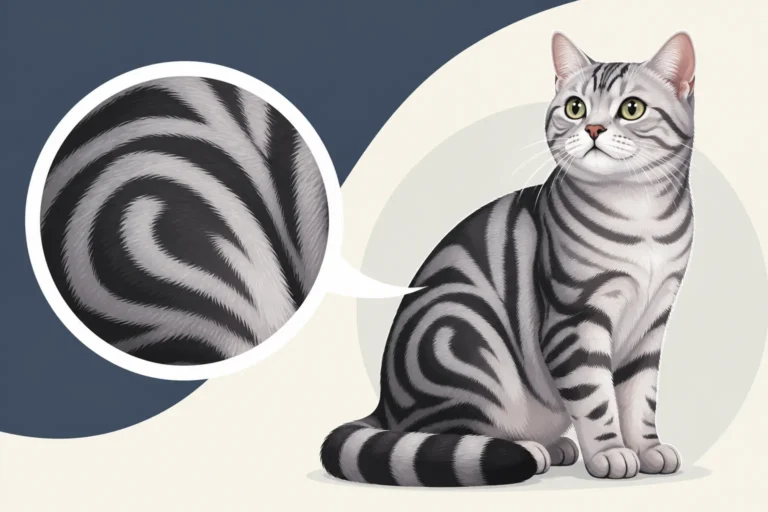
A silver tabby pattern is strongly associated with the American Shorthair, but it is not exclusive to registered American Shorthairs. Brown tabbies, silver tabbies, and other short-haired cats can appear in domestic cat populations without having a documented American Shorthair pedigree.
A DNA test may provide information about genetic ancestry, but it does not replace a registry’s registration process. Registries rely on their own rules and accepted records; genetic results do not automatically create a pedigree or register a cat as a particular breed. If this is the point of confusion, read Whether a DNA Test Tells an American Shorthair From a Moggy.
The same distinction applies to a cat that looks like the breed in photographs or resembles one in a shelter listing. A cat may be a wonderful companion and look very much like an American Shorthair without being registered as one. For the visual and documented differences, see How to Tell an American Shorthair From a Random Bred Tabby and What a Domestic Shorthair Is Next to an American Shorthair.
Rescue cats and unregistered cats
A shelter or rescue may describe a cat as an American Shorthair type, particularly when the cat has the breed’s general build or coat pattern. That wording can be a helpful description of appearance, but it is not the same thing as a registry-confirmed pedigree. Many rescue cats arrive without known parentage or breeder records, so there may be no way to establish formal registration.
A shelter cat does not become registered simply because it resembles the breed or because a DNA result suggests a relationship to a breed group. Registration generally depends on documented lineage and the relevant organization’s rules. If you are considering adopting a cat with an American Shorthair description, ask what the rescue knows about its history, while keeping the focus on the cat’s health and personality. See Whether a Shelter Tabby Can Be Registered as an American Shorthair for that specific question.
Retail descriptions can add to the confusion. For example, Chewy may be useful when you are shopping for food, litter, or other cat supplies, but shopping at Chewy does not verify breed identity. The important distinction is simple: a retailer sells pet products, while a breed registry maintains registration records.
Choosing the right registry information for your situation
The registry that matters most depends on what you are trying to do. If you are buying a kitten, you want to know which organization recorded the litter and what paperwork you will receive. If you hope to show a cat, you need to check the rules of the organization hosting the event. If you are simply trying to understand a rescue cat’s background, formal registration may not be available or necessary.
Recognition can also vary across countries and organizations. A registry that recognizes the breed in one region may have different procedures from an association elsewhere, and not every registry accepts transfers in the same way. Before making plans based on an overseas breeder’s documents, ask the destination registry whether it accepts the source registry’s paperwork and what it requires for transfer.
If you are buying from a breeder
Ask the breeder to identify the registry by its full name, then ask what documents you will receive and whether the kitten’s registration will be transferred into your name. Request clear answers in writing, particularly if registration is part of the purchase price or the reason you chose a pedigree kitten.
You can also ask for the parents’ registered names or numbers, where applicable, and ask how the litter is recorded. A responsible breeder should be able to explain the documents without making you feel unreasonable for asking. You do not need to be an expert in registry rules; you do need enough information to verify the claim.
A useful checklist is:
- Which registry recorded the litter?
- What exact paperwork will I receive?
- Will the kitten have individual registration, or will I need to apply for it?
- Are there limits or contract conditions attached to registration?
- How can I confirm the paperwork with the registry?
If the seller answers vaguely, pressures you to pay before explaining the documents, or treats registration as a substitute for health information, slow down and clarify. You can also review Whether Papers Are the Only Proof of an American Shorthair to understand why documentation is important but not the only thing to consider.
If you are researching a cat you already own
If you have an adult cat with no papers, start by asking the person or organization you got the cat from whether any pedigree or registration information exists. If the records cannot be found, the cat may simply need to be described as an American Shorthair-looking domestic shorthair rather than as a registered American Shorthair.
That wording does not diminish the cat. Registration is a record of lineage, not a measure of affection, health, or value as a companion. If your cat was adopted, focus on keeping useful veterinary records and giving the clinic accurate information about the cat’s known history. Breed assumptions should not take the place of an examination or appropriate care.
When you are checking breed background, avoid relying on a single online listing or photo. A retailer such as Chewy can help with practical shopping, but breed claims should be checked against the breeder’s paperwork or the registry itself. For a kitten, you may also want to review What an American Shorthair Kitten Arrives With Health Paperwork so that breed records and medical documents do not get mixed together.
If you want to show or transfer a cat
Before entering a cat in a show or transferring records, contact the specific registry involved. Ask whether it recognizes the American Shorthair, whether it accepts the cat’s existing registration, and what documents it needs. Do not assume that recognition by one organization guarantees eligibility under another organization’s rules.
If the cat is registered elsewhere, keep the original records and ask about the formal transfer process. If the cat has no registration paperwork, ask the organization whether any route exists for the cat’s particular circumstances. The answer may depend on documented ancestry, the cat’s source, and the association’s rules.
In short, the main North American registries to know are CFA, TICA, ACFA, and CFF. The right paperwork is the paperwork issued or accepted by the organization relevant to your plans, and it should be checked directly rather than inferred from appearance, a seller’s wording, or a retail listing. A final mention of Chewy is useful only in this limited sense: it is a place to shop for pet essentials, not a source of pedigree verification.
Disclaimer
This article is for general informational purposes only and does not constitute professional advice. Laws, prices and regulations vary by location and change over time. Consult a qualified professional for guidance on your specific situation.