Whether a Microchip Feeder Works in a Two American Shorthair House
The struggle is real when you have two beloved American Shorthairs, both with their own charming personalities and, let's be honest, often very different appetites! You're trying your best to ensure each cat gets exactly what they need, especially if one is a hearty eater and the other a dainty diner, or if they have specific dietary requirements. This guide will dive deep into whether a microchip feeder can truly be the peaceful solution to your multi-cat feeding dilemmas, ensuring harmony at meal times and safeguarding your furbabies' health.
The Challenge of Multi-Cat Feeding in American Shorthair Households
Anyone who shares their home with more than one cat knows that mealtime can quickly turn into a competitive sport. It’s not just about setting out two bowls; it’s about managing individual needs, preventing food theft, and ensuring everyone feels secure and well-fed. With American Shorthairs, these challenges can be particularly pronounced due to their robust nature and historical background.
The American Shorthair's Unique Eating Habits
American Shorthairs, with their solid build and working-cat ancestry, often come with a healthy appetite. These cats were historically bred for their ability to hunt and keep rodents in check, meaning their bodies were designed for activity and their instincts often drive them to eat when food is available. This isn't a bad thing at all; it's just part of who they are. However, in a modern home where food is readily supplied, this strong drive to eat can sometimes lead to overconsumption if not managed carefully. You might find one American Shorthair consistently hovering around the food bowl, even if it's not "their" mealtime. Understanding Why an American Shorthair's Appetite Outlasted Its Job is key to managing their feeding. They don't necessarily know when they're "full" in the same way a cat with less of a survival instinct might.
This instinct can manifest in different ways. Some American Shorthairs are grazers, taking a few kibbles here and there throughout the day, while others are "gobblers," finishing their portion in minutes. When you have two cats, these differing styles can clash dramatically. One cat might feel rushed or intimidated, leading to anxiety around food, or even the development of unhealthy eating habits. Plus, if you're trying to manage weight or introduce a special diet, these inherent tendencies can make things incredibly difficult. You’re not just feeding two cats; you're often managing two distinct feeding strategies.
When One American Shorthair's Appetite Outstrips Another's
It’s a tale as old as time in multi-cat homes: one cat is a chowhound, and the other is a slow, methodical eater, or perhaps even a bit finicky. You put down two bowls, turn your back for a moment, and poof – one bowl is empty, and the other cat is looking forlornly at an empty space where their meal used to be. This scenario is incredibly common, and it’s not just annoying; it can lead to significant health issues for both cats.
The larger, more dominant eater might quickly become overweight, especially if they're also getting an extra portion from their housemate's bowl. How to Spot Weight Gain on a Square Built American Shorthair can be tricky, but it's crucial for their long-term health. Over time, extra weight puts a strain on their joints, heart, and can even lead to conditions like diabetes. On the flip side, the more timid eater might not get enough nutrition. They may lose weight, become lethargic, or develop anxiety around feeding times, which can lead to other behavioral problems. If one cat is on a prescription diet, perhaps for kidney issues or a sensitive stomach, and the other cat is sneaking bites of it, it completely undermines your vet's recommendations and could be detrimental to their health. This is why simply leaving a bowl down, even if you think you’ve portioned it correctly, can be problematic in a two-cat home. Why a Bowl Left Down Undoes an American Shorthair becomes strikingly clear in such situations.
How Microchip Feeders Work and Their Benefits for American Shorthairs
Enter the microchip feeder: a piece of modern pet tech designed to bring peace and portion control back to your feeding routine. It sounds futuristic, but the concept is beautifully simple and incredibly effective, especially for managing distinct feeding needs in a multi-cat household.
The Technology Behind Microchip Recognition
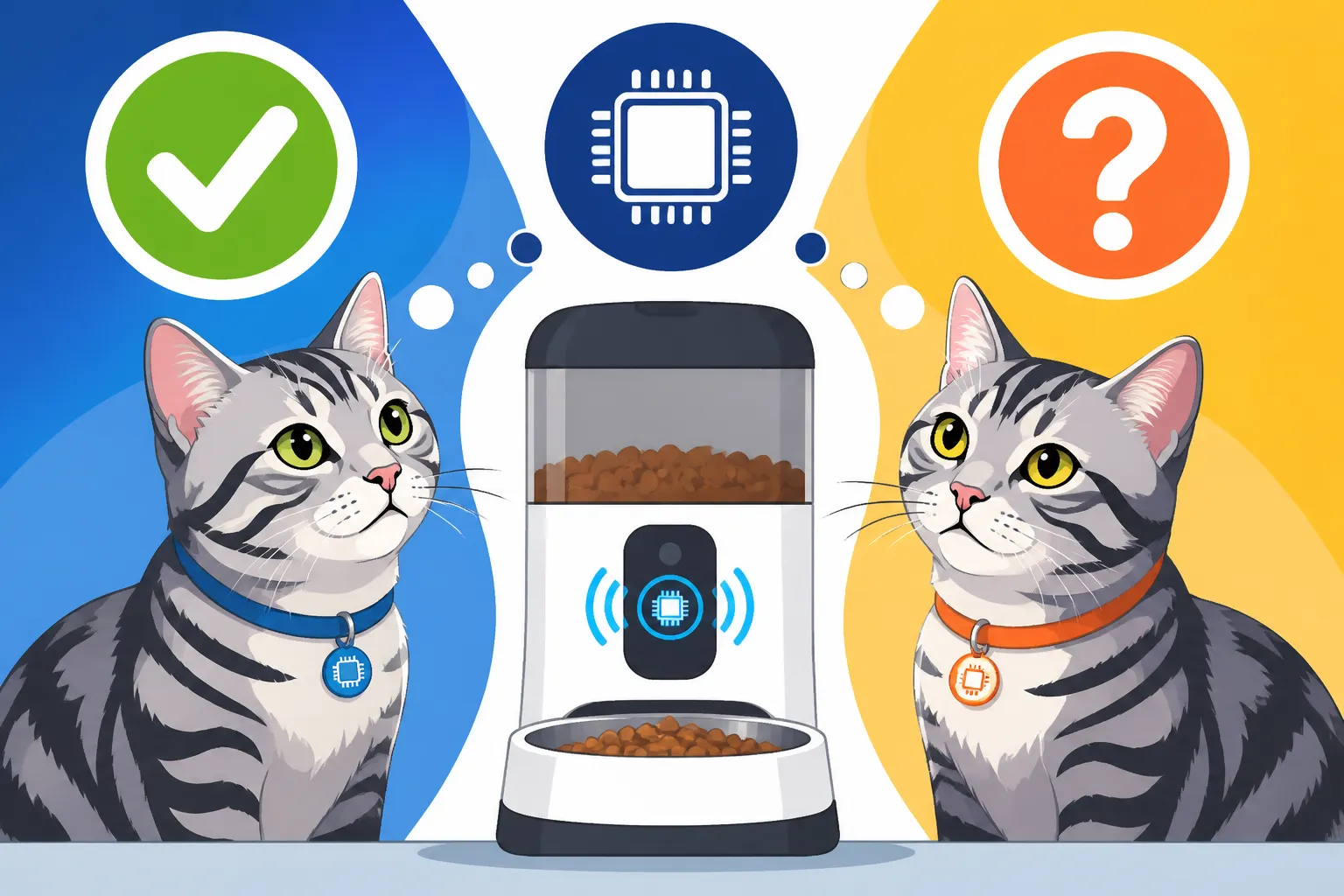
At its core, a microchip feeder operates on a very clever principle: recognizing your pet's unique identity. Most modern pets, including American Shorthairs, are microchipped – a tiny, harmless chip implanted under their skin that carries a unique identification number. The microchip feeder utilizes a sensor, usually located near the bowl or archway, that reads this microchip as your cat approaches. Think of it like a personalized key for their dinner.
Here’s how it typically works:
- Programming: You "train" the feeder to recognize your cat's microchip. You simply place your cat near the feeder, and it scans and stores their unique chip ID. If your cat isn't microchipped, many feeders also come with a lightweight RFID collar tag that serves the same purpose.
- Detection: When your programmed American Shorthair approaches the feeder, the sensor reads their chip or tag.
- Access: If the chip/tag is recognized and authorized, a lid automatically opens, granting access to the food inside.
- Closure: When your cat walks away, the lid closes, sealing the food and preventing any other unauthorized pets (or even curious toddlers!) from getting to it.
This ingenious system ensures that only the designated cat can access the food, creating a truly personalized dining experience. It's a game-changer for those frustrating multi-cat mealtime dynamics.
Ensuring Each American Shorthair Gets Their Proper Portion
The beauty of a microchip feeder lies in its ability to enforce portion control and specific meal schedules for each individual cat. No more worrying about the stealthy food thief or the pushed-aside timid eater. With these feeders, you can meticulously manage how much each of your American Shorthairs eats, and when.
For instance, if one of your American Shorthairs is a bit on the heavy side, you can program their feeder with a precise, veterinarian-recommended portion size. This prevents them from raiding their slimmer housemate’s bowl and helps them stick to their weight management plan. Meanwhile, your other American Shorthair, perhaps one who grazes or needs more frequent small meals, can have their own feeder set up to open only for them, ensuring they get their full allowance without competition. This level of control is invaluable, as How Much a Working Framed American Shorthair Should Eat can vary widely depending on their activity level and individual metabolism. You're not guessing anymore; you're providing a tailored nutritional plan.
This controlled environment reduces stress for both cats. The timid eater no longer feels pressured to gorge their food before it's stolen, and the more robust eater doesn't have the opportunity to overindulge. This leads to a calmer household and, most importantly, healthier cats who are receiving appropriate nutrition.
Addressing Specific Dietary Needs
This is where microchip feeders truly shine, especially for American Shorthairs with diverse health requirements. It's a nightmare for any pet parent when one cat needs a special diet – maybe a low-calorie food for weight loss, a prescription diet for urinary health, or a hydrolyzed protein diet for allergies – and their housemate keeps sneaking bites. Not only does it waste expensive specialized food, but it can actively harm the cat on the special diet or put the healthy cat at risk of developing issues from eating inappropriate food.
Imagine you have an American Shorthair on a strict urinary diet (a common concern, especially for males, as Why a Male American Shorthair's Urethra Blocks First is a serious risk). Their buddy, however, is perfectly healthy and doesn't need that specific formulation. Without a microchip feeder, you'd be constantly supervising, separating them during meals, or risking cross-contamination of food. With a microchip feeder, you simply program one feeder for the urinary diet, accessible only to that specific cat, and the other feeder with regular food for your healthy cat. This completely eliminates the risk of them swapping bowls or stealing each other's kibble.
This also extends to medication mixed into food, or even just offering Which Food Suits an American Shorthair Built for Muscle to one, and a lighter option to another. How a Vet Builds an American Shorthair's Weight Loss Plan often includes strict portion control and specific food types. A microchip feeder directly supports this, allowing you to implement your vet's advice with confidence, knowing each cat's dietary needs are met precisely and without interference. It’s an invaluable tool for preventative health and managing existing conditions.
Setting Up and Troubleshooting Your Microchip Feeder System
Bringing a new piece of technology into your home, especially one that impacts your pets' daily routines, can feel a little daunting. However, microchip feeders are designed to be user-friendly, and with a bit of patience, your American Shorthairs will likely adapt quickly.
Introducing the Feeder to Your American Shorthairs
Cats, including American Shorthairs, thrive on routine and can be cautious of new things. A microchip feeder is no exception. The key to a successful introduction is gradual acclimation and positive reinforcement.
Here's a step-by-step approach:
- Uncovered First: Initially, introduce the feeder without its lid, allowing your cats to get used to its presence in their feeding area. Let them eat from it like a regular bowl for a few days, getting comfortable with its shape and smell.
- Lid in Open Position: Once they're comfortable, attach the lid but keep it permanently open (most feeders have a setting for this or you can prop it). This allows them to see how it works without the closing motion startling them.
- Gradual Closure: Start with the lid set to close after a longer delay, or in "training mode." This allows them to eat, and then the lid slowly closes, getting them used to the movement. Offer treats or praise when they eat from it.
- Full Functionality: Once they're unfazed by the lid's movement, activate the full microchip setting. Ensure only the designated cat can open it. If a cat is hesitant, try placing high-value treats (like small pieces of cooked chicken or tuna) inside the bowl to encourage them. You might even have to manually open the lid for them a few times to show them it's safe.
Patience is truly paramount here. Never force your cat into the feeder. It might take a few days, or even a couple of weeks, for them to fully embrace it. But the investment in time will pay off in a harmonious feeding environment.
Common Challenges and Solutions in a Two-Cat Home
While microchip feeders are fantastic, no system is entirely without its potential hiccups. In a two American Shorthair household, you might encounter a few specific challenges:
- Feeder Aggression: Sometimes the "unauthorized" cat might try to bully the authorized one away from their feeder. They know food is in there, and their hunting instinct, as discussed earlier, is strong!
- Solution: Ensure you have multiple feeding stations in different, quiet locations. This reduces competition and gives each cat their own safe space. Also, keep consistency with meal times, so cats know exactly when to expect their food.
- Microchip Not Reading: Occasionally, a cat's microchip might be positioned in a way that the feeder struggles to read it consistently, or the RFID tag might be lost or damaged.
- Solution: Try adjusting the feeder's position. If using an RFID collar tag, ensure it's securely attached. If the problem persists, consult your vet about your cat's microchip or contact the feeder manufacturer for troubleshooting.
- "Shoulder Surfing": This is when the unauthorized cat attempts to sneak a bite of food while the authorized cat is still eating and the lid is open. They're often very quick and clever!
- Solution: Position the feeders so they are facing a wall or corner, making it harder for another cat to approach from the side. You can also use a barrier or place the feeders in separate rooms to completely prevent this. Some feeders also have a "snack mode" or adjustable closing delay to minimize the window of opportunity.
- Battery Life: These are electronic devices, and batteries will need replacing.
- Solution: Keep spare batteries on hand and check the feeder's battery indicator regularly. Most models give ample warning before running critically low.
| Challenge | Description | Solution |
|---|---|---|
| Food Theft/Bullying | One cat consistently tries to eat from the other's feeder. | Place feeders in separate, quiet areas. Supervise initially. Consider visual barriers. |
| Microchip Read Error | Feeder fails to recognize the authorized cat's chip/tag. | Adjust feeder position. Check RFID tag. Consult vet for microchip issues. |
| Shoulder Surfing | Unauthorized cat sneaks food while the lid is open for the other cat. | Face feeders against a wall. Use physical barriers. Choose feeders with faster closing lids. |
| Hesitancy to Use | Cat is scared of the new feeder or the opening/closing lid. | Introduce gradually (lid off, then propped). Use treats and positive reinforcement. Be patient. |
| Battery Depletion | Feeder stops working due to low batteries. | Regularly check battery indicator. Keep spare batteries. |
By understanding these potential challenges and having solutions ready, you can ensure a smooth transition to microchip feeding for your American Shorthairs.
Choosing the Right Microchip Feeder for Your Home
Not all microchip feeders are created equal, and what works for one household might not be ideal for another. When you're looking for the perfect fit for your American Shorthairs, there are a few key features and considerations to keep in mind.
First, power source is important. Most operate on batteries, offering flexibility in placement, but you'll want a model with good battery life and a clear indicator. Some might offer an optional AC adapter, which can be useful if you have a convenient power outlet and prefer not to deal with battery changes.
Next, consider the bowl size and material. American Shorthairs are typically well-built cats, so ensure the bowl is wide enough for them to eat comfortably without their whiskers touching the sides, which some cats find irritating. Stainless steel inserts are often preferred for hygiene and ease of cleaning, and many are dishwasher safe.
Think about feeder capacity. How much food does it hold? If you feed wet food, you'll want a smaller capacity that you refill daily. For dry kibble, a larger hopper might be convenient. Some feeders, like those from Sure Petcare, are well-regarded for their reliability and user-friendly design. You can often find a wide selection and read reviews from other cat parents on major online retailers like Chewy or Amazon.
Finally, evaluate any additional features that might benefit your lifestyle. Does it integrate with a companion app for monitoring feeding habits? Does it have a slow-feed mode to prevent your speedy eater from scarfing down their meal too quickly? Some advanced models might offer programmable meal times, which can further enhance your feeding strategy beyond just identity recognition. Brands like SureFeed by Sure Petcare are popular choices that offer many of these features. Remember to read product descriptions carefully and perhaps browse reviews on sites like Amazon to see how other multi-cat households have fared.
Beyond the Feeder: Holistic Feeding Strategies for American Shorthairs
While microchip feeders are an incredibly powerful tool, they are part of a larger picture when it comes to ensuring the health and happiness of your American Shorthairs. Combining this technology with thoughtful, holistic feeding strategies will yield the best results.
Creating a Harmonious Mealtime Environment
Even with the best microchip feeders, the environment in which your American Shorthairs eat plays a huge role in their overall well-being. Cats are naturally territorial, and while American Shorthairs are generally placid, food resources can still be a point of contention.
One of the most crucial steps is establishing separate feeding zones. This doesn't necessarily mean separate rooms all the time, but distinct areas where each cat can eat without feeling watched or threatened. Placing feeders in different corners of a room, or even on different levels (one on a low shelf, one on the floor), can create a sense of personal space. This is especially important for the more timid cat, who needs to feel secure enough to eat at their own pace.
Secondly, maintaining a consistent feeding routine is vital. Cats are creatures of habit, and knowing when to expect their meals reduces anxiety. Even if the microchip feeder allows for free feeding, having set times when you put fresh food down or check the bowls can instill a sense of predictability. This prevents either cat from constantly guarding the food source, as they learn it will always be available at certain times. Consider Whether a Timed Feeder Suits an American Shorthair in conjunction with a microchip feeder for ultimate control. Providing fresh water near each feeding station is also important; sometimes cats simply need to drink more, and having easy access can prevent issues like Why an American Shorthair Tom Blocks.
Finally, enrich their environment. Foraging toys or puzzle feeders can be a fantastic way to engage their natural hunting instincts and make them "work" for some of their food. This mental and physical stimulation can also reduce boredom, which sometimes contributes to overeating. These strategies, combined with microchip feeders, create a comprehensive and stress-free feeding experience.
Monitoring Your American Shorthairs' Health and Weight
Even with perfect portion control, continuous monitoring of your American Shorthairs' health and weight is non-negotiable. Their needs can change over time, and early detection of any issues is key to a long and healthy life.
Regularly weigh your cats. This might sound obvious, but it’s easy to miss subtle weight changes in a stocky American Shorthair. A consistent weekly or monthly weigh-in can help you catch creeping weight gain or concerning weight loss before it becomes a serious problem. Knowing What an American Shorthair Should Weigh at Its Frame is essential, and your vet can help you determine their ideal body condition score. Weight changes are often the first sign of an underlying health issue, even if they don't seem like much. What Extra Weight Does to an American Shorthair's Working Frame can lead to severe health consequences, so vigilance is important.
Observe their eating habits and behavior. Are they finishing their allotted portion? Are they still begging for food even after eating? Any sudden changes in appetite, increased thirst (which could be a sign of Why a Thirsty American Shorthair Should Be Tested), or changes in their litter box habits warrant a call to your veterinarian. American Shorthairs are known for being stoic, and they can often hide discomfort until a condition is quite advanced. This is why paying close attention to these small changes is so important.
Finally, routine veterinary check-ups are crucial. Even seemingly healthy American Shorthairs benefit from yearly vet visits, which allow for a thorough physical examination, dental checks (as Why an American Shorthair Loses Teeth Nobody Noticed is a silent problem), and discussions about their diet and lifestyle. Your vet can provide specific recommendations for How Many Calories a Working Framed American Shorthair Needs a Day based on their age, activity level, and health status. They can also offer guidance on Whether an American Shorthair Needs Wet Food or other dietary adjustments. By being proactive and combining smart feeding technology with diligent observation and professional care, you're setting your American Shorthairs up for the happiest, healthiest lives possible.
Disclaimer
This article is for general informational purposes only and does not constitute professional advice. Laws, prices and regulations vary by location and change over time. Consult a qualified professional for guidance on your specific situation.