How Many Calories a Working Framed American Shorthair Needs a Day
It's a question many American Shorthair owners grapple with: how many calories does my sturdy, yet often sedentary, cat truly need in a day? These wonderful felines, descendants of tireless working cats, often carry an appetite and a metabolism built for a life of active hunting, which can unfortunately lead to weight challenges when they transition to a cozy, indoor existence. This guide will delve into the nuances of calculating and managing your American Shorthair's daily caloric intake, ensuring they stay healthy and happy.
Understanding the American Shorthair's Unique Metabolism and History
When we talk about an American Shorthair's caloric needs, we first have to appreciate their incredible background. These aren't dainty lap cats bred for looks alone; their very genetic makeup is a testament to centuries of hard work and self-sufficiency. This heritage plays a huge role in how we approach their diet today.
The Legacy of a Working Cat
Imagine the cats that sailed on the Mayflower, or those that patrolled early American barns and homesteads. These were the ancestors of our beloved American Shorthairs – tough, resilient, and utterly indispensable mousers. Their lives were a constant cycle of hunting, exploring, and defending their territory. This demanding lifestyle required a robust metabolism, designed to fuel significant physical exertion. Their bodies were efficient machines, built to convert food into energy for active pursuits, not to store excess fat in abundance. They had to be quick, strong, and agile, constantly expending calories to survive and thrive. This is why you often hear about their solid, muscular build, which is a direct reflection of their past. How Farm Work Shaped the American Shorthair
Their digestive systems also adapted to a varied diet of fresh prey, which was naturally high in protein and moisture. They weren't sitting around with bowls of kibble; they were earning every meal. This innate drive to hunt is still very much present in modern American Shorthairs, even if the "prey" now comes from a can or a bag. Understanding this inherent wiring helps us realize that simply putting down a bowl of food whenever they meow might not be the best approach for their historical dietary needs.
The Impact of Modern Indoor Living
Fast forward to today, and most American Shorthairs live vastly different lives. They are cherished family members, often residing indoors, protected from the elements and the rigors of hunting for survival. While this provides a safe and loving environment, it dramatically alters their energy expenditure. The daily calorie burn of a cat chasing mice in a barn is fundamentally different from one napping on a sun-drenched windowsill for most of the day.
This disparity between their historical metabolic programming and their current sedentary reality is a primary reason why obesity is a common problem for the breed. Their bodies are still primed to handle an active, calorie-burning existence, but without that outlet, those calories quickly turn into stored fat. It’s not their fault; it’s a consequence of their genetics meeting a modern lifestyle they weren't evolved for. This means we, as their caregivers, have to be extra vigilant about their food intake and ensure they get enough Play That Finishes the Hunting Sequence for an American Shorthair to keep them mentally and physically stimulated. Ignoring this can lead to a host of health issues, turning a naturally robust breed into one burdened by preventable conditions.
Calculating Basal Metabolic Rate and Daily Calorie Needs
So, with this historical context in mind, how do we figure out the actual number of calories your American Shorthair needs? It's not an exact science, but we can get a very good estimate using some established formulas.
The Basic Equation
The starting point for calculating your cat's calorie needs is what we call the Resting Energy Requirement (RER). This is the number of calories a cat needs just to keep its body functioning at rest – think breathing, circulation, and basic organ function. It doesn't account for activity, but it gives us a baseline.
A common formula for RER is:
RER (kcal/day) = 70 x (body weight in kg)^0.75
Now, before you reach for your calculator and get overwhelmed, most vets and reputable online resources simplify this. For an average adult cat, a common approximation is around 20-25 calories per pound of ideal body weight. So, if your American Shorthair ideally weighs 10 pounds, they'd need roughly 200-250 calories as their RER. However, this is just the beginning. The RER doesn't consider anything else, and your cat isn't just resting all day.
Activity Levels and Life Stages
Once you have the RER, you need to apply a "multiplier" based on your cat's life stage and activity level. This is where things get a bit more personalized.
Here's a general guide for multipliers:
- Kittens (up to 4 months): These little bundles of energy are growing rapidly and burn a lot more calories. Their multiplier can be as high as 2.5-3.0 x RER. What an American Shorthair Kitten Should Eat
- Kittens (4 months to 1 year): Still growing, but at a slightly slower pace, they might need 2.0 x RER.
- Active Adult Cats: If your American Shorthair is quite playful, chasing toys, climbing cat trees, and generally zooming around, they might need 1.2-1.4 x RER. This could include cats that enjoy interactive play or have access to a secure catio.
- Inactive/Neutered Adult Cats: Most indoor American Shorthairs fall into this category. After being spayed or neutered, cats' metabolic rates drop, and their activity levels are often lower than their wild ancestors. They typically need 1.0 x RER or even slightly less (0.8-1.0 x RER) to prevent weight gain. Why a Neutered American Shorthair Puts On Weight Faster This is a crucial point for managing their weight.
- Senior Cats (over 7-10 years): As cats age, their activity often decreases, but their bodies may also become less efficient at absorbing nutrients. Some senior cats need slightly fewer calories (0.8-1.0 x RER) due to decreased activity, while others, particularly those losing muscle mass or with certain health conditions, might need a bit more. It's best to consult your vet for senior cat specific needs. Caring for an American Shorthair Past Twelve
- Pregnant/Lactating Cats: These queens have significantly increased energy demands to support their growing kittens and milk production. Their multiplier can range from 2.0-4.0 x RER, depending on the stage of pregnancy and litter size.
Let's use an example: a 10-pound (approx. 4.5 kg) neutered adult American Shorthair.
- RER Calculation (simplified): 10 lbs * 20-25 kcal/lb = 200-250 kcal/day.
- Applying Multiplier: For an inactive, neutered adult, let's use 0.9 x RER.
- If RER is 225 kcal, then 225 * 0.9 = 202.5 kcal/day.
This is a general guideline, and every cat is an individual. Always observe your cat's body condition and consult your veterinarian for the most accurate assessment and tailored recommendations.
Factors Influencing Calorie Requirements Beyond the Basic Formula
While the RER and multiplier provide a solid starting point, an American Shorthair's calorie needs aren't static. Several other factors can significantly impact how much food they truly require to maintain optimal health. It's about constant observation and adjustment.
Weight Management: Losing, Gaining, or Maintaining
One of the most common reasons owners adjust their American Shorthair's diet is weight management. These cats are prone to obesity due to their genetic predisposition and often sedentary indoor lifestyles.
- Weight Loss: If your American Shorthair is overweight, your vet will likely recommend a reduced calorie intake, often aiming for a gradual loss of 0.5-2% of their body weight per week. This means feeding significantly fewer calories than their current maintenance needs, often around 0.8 x RER of their ideal weight, not their current overweight one. Drastic calorie restriction can be dangerous, leading to hepatic lipidosis (fatty liver disease), so slow and steady is key. Your vet might also suggest a prescription weight-loss diet, which is designed to be lower in calories but still provide essential nutrients.
- Weight Gain: Conversely, if your American Shorthair is underweight due to illness, recovery, or being a particularly active individual, they will need more calories. This often involves feeding 1.4-1.6 x RER, or even higher, under veterinary guidance. The goal is to safely increase their intake with nutrient-dense foods to help them reach a healthy weight.
- Maintaining Weight: For cats at their ideal weight, the goal is to keep them there. This means consistency in feeding the calculated maintenance calories, regularly monitoring their body condition score, and adjusting as their activity level or age changes. What an American Shorthair Should Weigh at Its Frame
Remember, successful weight management isn't just about calories; it's also about the quality of the food, ensuring they get adequate protein for muscle maintenance, especially for their strong, working frame.
Environmental and Health Considerations
Beyond basic weight goals, your cat's environment and underlying health status can also alter their caloric demands.
- Temperature: Cats burn more calories to stay warm in cold environments. While most indoor American Shorthairs live in climate-controlled homes, a cat with significant outdoor access in winter would naturally have higher energy needs. Conversely, in very hot weather, some cats might be less active and have slightly reduced appetites, though this usually doesn't dramatically alter their baseline needs.
- Stress: Chronic stress can sometimes lead to changes in appetite and metabolism. Some cats might eat less when stressed, while others might overeat as a coping mechanism. A change in appetite due to stress should always be investigated, as it can be a sign of deeper issues.
- Underlying Health Conditions: This is a big one. Many common feline diseases directly impact calorie requirements:
- Hyperthyroidism: An overactive thyroid gland causes the metabolism to go into overdrive, leading to weight loss despite a ravenous appetite. These cats need significantly more calories until the condition is managed. Why Hyperthyroidism Catches a Long Lived American Shorthair
- Diabetes: Diabetic cats, especially when unregulated, can lose weight due to their bodies' inability to properly use glucose for energy. Their diet often requires careful calorie control and specific nutrient ratios.
- Kidney Disease: Cats with kidney disease often have a reduced appetite and require special diets that are lower in protein and phosphorus, which can also be less calorie-dense. The focus here is on kidney health, which might influence caloric strategy. How Kidney Disease Creeps Up on an Old American Shorthair
- Gastrointestinal Issues: Conditions like inflammatory bowel disease (IBD) or chronic vomiting/diarrhea can lead to malabsorption and weight loss, necessitating easily digestible, nutrient-rich foods with carefully managed calories to ensure absorption.
- Cancer: Cancer can cause cachexia (wasting) due to the disease itself and its treatments. These cats often need highly palatable, calorie-dense diets to combat weight loss.
It’s clear that any significant health change necessitates a vet visit. They can provide an accurate diagnosis and tailor a feeding plan that accounts for these complex variables, ensuring your American Shorthair's diet supports their overall well-being.
Choosing the Right Food and Monitoring Intake
Now that we understand how many calories your American Shorthair needs, let's talk about where those calories come from and how to keep track. It’s not just about the number; it’s about the delivery system.
Wet vs. Dry Food and Calorie Density
The age-old debate: wet food or dry food? For an American Shorthair, both can be part of a healthy diet, but understanding their calorie density is key.
- Dry Kibble: Dry food is typically much more calorie-dense than wet food. A small scoop can pack a significant caloric punch. This makes it easy to overfeed, especially if you're just "topping up the bowl." The lower moisture content also means your cat needs to drink more water separately, which some cats aren't great at. For cats prone to urinary issues, which male American Shorthairs can be, higher moisture intake is beneficial. How Much Water an American Shorthair Should Drink When purchasing kibble, reputable brands available on platforms like Chewy or Amazon will clearly label calorie content (kcal/cup or kcal/kg). Always check this, as it varies wildly between brands and formulas. For example, a "light" kibble can still be quite calorie-dense if your cat eats a lot of it.
- Wet Food: Wet food, due to its high moisture content (often 70-80%), is much less calorie-dense. This means your cat can eat a larger volume of food and feel fuller on fewer calories. This can be a huge advantage for weight management, as it helps satisfy their natural drive to eat while keeping calories in check. It also contributes significantly to their hydration, which is excellent for kidney and urinary tract health. Again, check the labels for calorie content (kcal/can or kcal/pouch). Fresh food delivery services can also be a high-moisture option, but always review their nutritional breakdown.
- Combination Feeding: Many owners opt for a mix of wet and dry food. This can provide the best of both worlds: the convenience of dry food and the hydration benefits of wet food. If you're doing this, you must accurately account for the calories from both sources to avoid overfeeding. For instance, if your cat needs 200 calories a day, and you give them 100 calories of wet food, you then calculate the remaining 100 calories from their dry food.
The Role of Treats and Supplements
This is where many well-intentioned owners unknowingly sabotage their cat's diet. Treats and caloric supplements, while seemingly small, can add up incredibly fast.
- Treats: A few small treats throughout the day might not seem like much, but if each treat is 2-5 calories, and your cat gets 10-20 of them, that's 20-100 extra calories! For a cat needing only 200 calories a day, that can represent a huge percentage of their daily intake. As a general rule, treats should make up no more than 10% of your cat's total daily calories. This means if your cat needs 200 calories, only 20 of those should come from treats. Opt for low-calorie treats or even pieces of their regular kibble or freeze-dried meat as "treats."
- Supplements: While often beneficial for specific health needs, some supplements (like certain joint support chews or high-calorie recovery pastes) contain calories that need to be factored into the daily total. Always read the nutritional information on any supplement.
Practical Tips for Portion Control
Accurate portion control is paramount to successfully managing your American Shorthair's weight.
- Use a Kitchen Scale: This is by far the most accurate method. Don't rely on measuring cups for kibble; they are notoriously inaccurate due to variations in kibble size and density. Weigh out your cat's daily portion in grams. This is especially important for Feeding an American Shorthair That No Longer Hunts Its Food because their natural drive to eat can make them seem perpetually hungry.
- Measure Wet Food: For wet food, you can measure by weight or by clearly marked portions on the can/pouch if provided. If using a can, divide it accurately. For example, if a can has 85 kcal and your cat needs 42.5 kcal for a meal, give them exactly half the can.
- Avoid Free-Feeding: Leaving a bowl of kibble down all day for an American Shorthair is almost a guaranteed path to obesity. Their ancestors grazed on small, frequent meals of prey, but they also worked for every one. A bowl that's always full encourages constant snacking, far beyond their actual caloric needs. Why a Bowl Left Down Undoes an American Shorthair Instead, divide their daily caloric allowance into 2-3 distinct meals, given at set times. This allows you to monitor intake and prevents overeating.
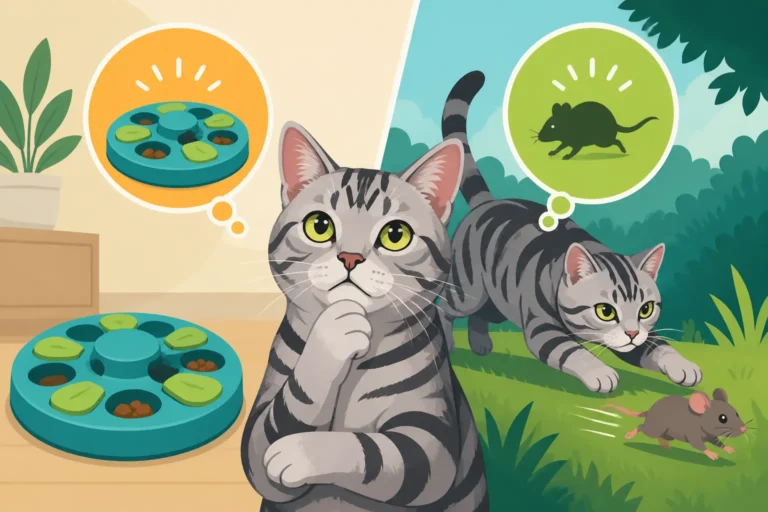
- Puzzle Feeders: To tap into their natural hunting instincts and make them "work" for their food, consider using puzzle feeders. These dispense small amounts of food as your cat interacts with them, slowing down eating and providing mental enrichment. This can also help burn a few extra calories! Whether a Puzzle Feeder Replaces an American Shorthair's Hunt You can find a wide variety of these on Amazon or other pet supply retailers.
By meticulously monitoring what goes into their bowl and making informed choices about food types and treats, you'll be well on your way to keeping your American Shorthair at a healthy weight.
Signs You Might Be Feeding Too Much or Too Little
Even with careful calculations, every cat is an individual. It's crucial to regularly assess your American Shorthair to see if your feeding plan is actually working for them. Their body and behavior will give you the best clues.
Recognizing Weight Gain and Loss
The most obvious signs are visual and tactile. You need to become familiar with what a healthy American Shorthair looks and feels like.
- Body Condition Scoring (BCS): This is a system vets use, typically on a 1-to-9 scale (with 5 being ideal). You can learn to do a simplified version at home.
- Ideal Weight (BCS 5/9): You should be able to easily feel your cat's ribs without seeing them. There should be a noticeable waist tuck when viewed from above, and an abdominal tuck when viewed from the side. Their strong, muscular frame should still be evident. How to Score a Square Built American Shorthair's Body Condition
- Overweight (BCS 6-7/9): You'll find it harder to feel the ribs without pressing. The waist tuck will be less obvious or absent, and you might start to see a slight roundedness or fat pad on the belly. How to Spot Weight Gain on a Square Built American Shorthair
- Obese (BCS 8-9/9): The ribs will be difficult to feel under a thick layer of fat. There will be no discernible waist or abdominal tuck, and a prominent pendulous belly will likely be present.
- Underweight (BCS 1-3/9): The ribs, spine, and hip bones will be easily visible and prominent. There will be a severe waist and abdominal tuck, and very little muscle mass.
- Changes in Weight: Invest in a small pet scale if you're seriously managing weight. Weighing your American Shorthair weekly or bi-weekly can provide objective data. Keep a log. This is especially helpful if you're trying to achieve a specific weight loss or gain goal. Consistent tracking removes the guesswork.
Remember, the American Shorthair has a naturally sturdy, stocky build. Don't confuse their powerful frame with being overweight. It's about feeling the ribs and assessing the waist, not just a number on the scale.
Behavioral Indicators
Beyond their physical appearance, your cat's behavior can also signal that their caloric intake isn't quite right.
- Energy Levels:
- Too Few Calories: A cat receiving insufficient calories will likely be lethargic, less playful, and generally low energy. They might sleep more or just seem less enthusiastic about their usual activities. Their natural hunting instincts won't have the fuel to express themselves.
- Too Many Calories: An overweight cat will also often exhibit reduced energy simply because carrying extra weight makes movement more difficult and uncomfortable. They might struggle to jump to their favorite high spots or become winded quickly during play.
- Appetite Changes:
- Constant Hunger (Too Few Calories): If your cat is constantly begging for food, stealing food, or seems insatiably hungry despite eating their full portion, they might not be getting enough calories, or the food isn't satisfying them. Sometimes, increasing the volume of food (by switching to more wet food) can help them feel fuller even if the calorie count remains the same.
- Lack of Interest in Food (Too Many Calories or Illness): While less common in an American Shorthair if they are used to a routine, a consistent lack of interest in food could indicate they are being overfed, or it could be a sign of illness, so it's worth investigating.
- Coat Quality: A dull, greasy, or flaky coat can sometimes be a sign of nutritional deficiencies, indicating too few calories or a poor quality diet. Conversely, an overweight cat may struggle to groom themselves properly, leading to a matted or unkempt coat, especially around their back and hindquarters. Why an Overweight American Shorthair Cannot Reach Its Back
- Litter Box Habits: Changes in stool consistency or frequency can sometimes relate to diet. Diarrhea or constipation can both be indicative of an inappropriate diet or amount of food. Increased urination and thirst can be signs of underlying health conditions like diabetes or kidney disease, which directly impact metabolic needs. Why a Thirsty American Shorthair Should Be Tested
Observing these subtle changes in your American Shorthair is just as important as measuring their food. Trust your instincts, and when in doubt, always consult your veterinarian. They can help rule out any health issues and refine your feeding strategy to keep your furry friend thriving.
Calorie Guidelines for an Adult American Shorthair (Approximate)
Please note these are general guidelines for ideal body weight. Always consult your veterinarian for a personalized plan.
| Ideal Body Weight (lbs) | Ideal Body Weight (kg) | Inactive/Neutered (kcal/day) | Active (kcal/day) | Weight Loss (kcal/day) |
|---|---|---|---|---|
| 8 | 3.6 | 180-200 | 210-240 | 150-170 |
| 10 | 4.5 | 200-225 | 230-270 | 170-190 |
| 12 | 5.4 | 220-250 | 250-300 | 190-210 |
| 14 | 6.4 | 240-275 | 270-330 | 210-230 |
| 16 | 7.3 | 260-300 | 290-360 | 230-250 |
Note: These ranges are estimates. Individual metabolic rates and activity levels vary widely. "Weight Loss" calories are typically 70-80% of ideal maintenance calories.
Disclaimer
This article is for general informational purposes only and does not constitute professional advice. Laws, prices and regulations vary by location and change over time. Consult a qualified professional for guidance on your specific situation.