How Much Comes Off an American Shorthair in Fall
If you're an American Shorthair owner, you've probably noticed that sometimes, it feels like your beloved furball is trying to redecorate your entire home with their luxurious coat. It's a common, if slightly frustrating, experience, especially as the seasons change. When fall rolls around, many of us start to wonder just how much hair is really supposed to come off our American Shorthairs, and what's normal for this famously low-maintenance breed. This guide will help you understand the dynamics of their fall shedding cycle, what to expect, and how best to manage it.
Understanding the American Shorthair's Seasonal Shedding Cycle
It’s easy to look at an American Shorthair and assume their short, dense coat means less shedding than, say, a fluffy Persian. And while that's generally true on a day-to-day basis, these cats still have deeply ingrained biological responses to the changing seasons, a leftover from their ancestors' lives as working cats. These weren't pets pampered indoors; they were hardy, functional creatures that needed a coat capable of withstanding various weather conditions.
Why Fall Triggers a Heavier Shed
The increased shedding you observe in the fall isn't just random; it's a perfectly natural, evolutionary response. As the days shorten and the temperatures begin to drop, your American Shorthair's body is already preparing for the colder months ahead. Their instincts, honed over centuries as barn cats and ship's mousers, tell them winter is coming. This means shedding off the lighter summer coat to make way for a thicker, denser winter coat.
Think of it this way: their summer coat, while still robust, is designed for optimal air circulation to keep them cool. As autumn breezes turn crisp, that coat becomes less efficient. To build up a new, insulating layer, the old hair has to go. This typically involves shedding a significant amount of the undercoat, those finer hairs closer to the skin that provide insulation. The guard hairs, which are tougher and provide waterproofing, are also shed, but often less dramatically. Even if your American Shorthair lives entirely indoors in a temperature-controlled environment, these ancient biological triggers still largely dictate their hormonal and follicular cycles. It’s truly fascinating how Centuries of Ratting Left the American Shorthair Its Drive and their physical traits are still tied to their historical purpose.
The Difference Between Spring and Fall Sheds
While both spring and fall are peak shedding seasons for the American Shorthair, there are subtle differences in what you might notice. In spring, your cat is shedding the heavy winter coat to prepare for warmer weather. This can feel like an absolute explosion of fur, especially if they had a particularly dense winter undercoat. You're likely to find tufts of light, fluffy undercoat everywhere.
The fall shed, on the other hand, is about transitioning to a denser coat. While it might not always feel quite as overwhelming as the spring "coat blast," it can still be substantial. The hair coming off is often the old, less insulating hair that's being replaced. Many owners find the fall shedding to be a bit more gradual but persistent, whereas the spring shed can feel like a sudden, intense event. For some American Shorthairs, especially those with very thick coats, the fall shed can indeed feel just as significant, if not more so, than their spring counterpart, as they prepare to lay down a completely new, extra-insulating layer. Understanding this cycle helps appreciate Why an American Shorthair's Coat Thickens for Winter and how their bodies are perfectly adapted.
What to Expect: Quantity and Quality of Fall Shed
Let's be real, when your cat is shedding, it feels like there's an endless supply of hair. It can be a never-ending battle against tumbleweeds of fur rolling across your floors and clinging to your favorite black sweater. For American Shorthair owners, it's about managing expectations and understanding what constitutes a normal amount of hair.
Visualizing the Amount of Hair
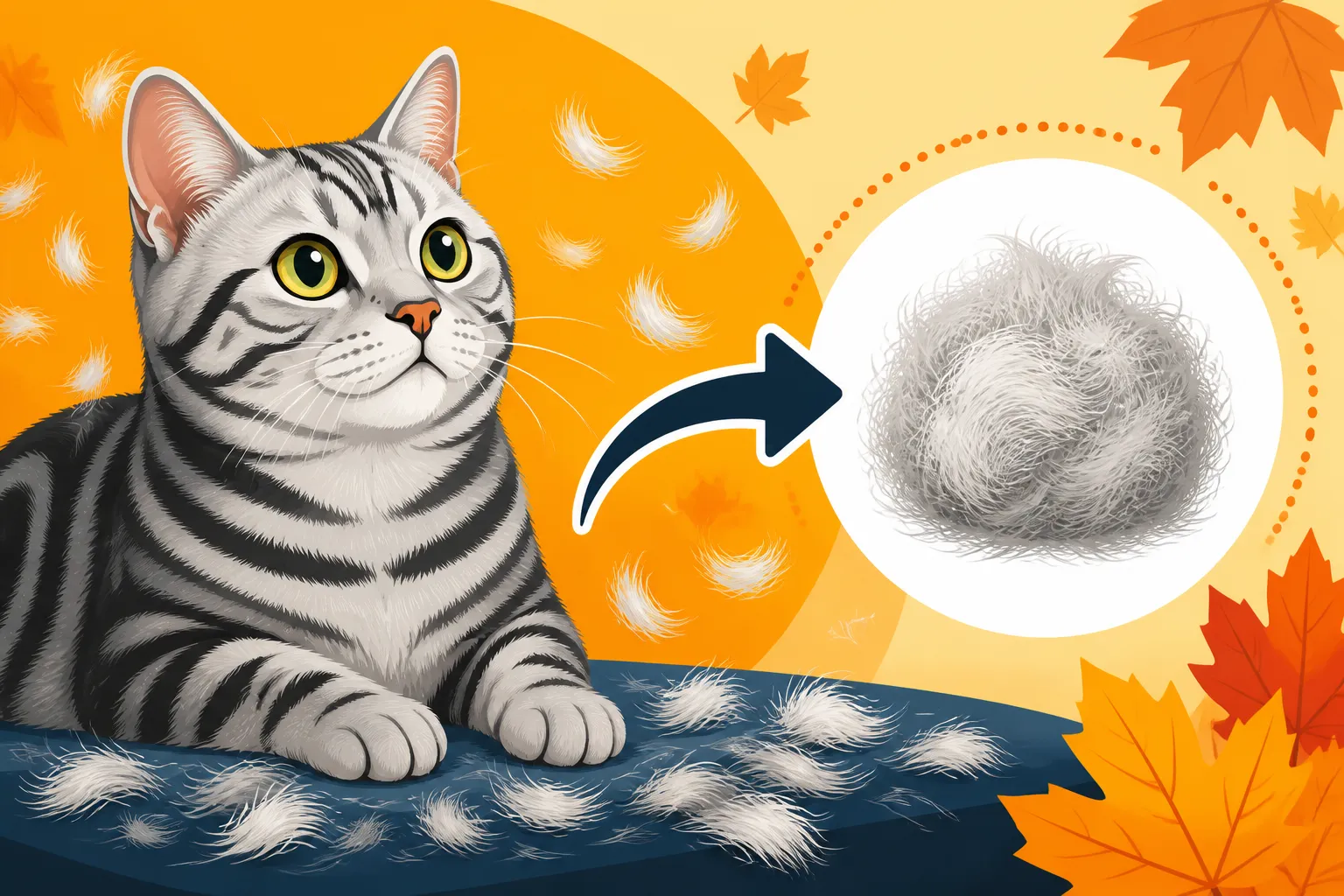
During the peak fall shedding period, it's not uncommon to brush your American Shorthair and come away with a small cat-shaped mound of fur. You might find loose hairs on their favorite sleeping spots, in their litter box, and yes, even on your dinner plate if you're not careful! If you have multiple American Shorthairs, this effect can be magnified. Don't be surprised if your sofa suddenly looks like it's growing a new, furry upholstery.
It's a persistent, daily phenomenon during these weeks. You'll likely see a fine layer of fur accumulating on surfaces shortly after you've cleaned. This is simply the reality of sharing your home with a cat whose coat is actively turning over. While they are often considered low-shedders compared to some long-haired breeds, during these seasonal changes, their contribution to the household lint trap definitely ramps up. It's a clear sign that An American Shorthair Sheds Twice a Year and Asks Nothing Else is a bit of a simplification during these intense periods!
The Type of Hair Being Shed
During the fall shed, you'll predominantly be seeing a mix of their undercoat and some guard hairs. The undercoat is typically softer, finer, and provides the bulk of the insulation. These are the hairs that can really create those floating "dust bunnies" that seem to appear out of nowhere. Guard hairs are coarser, thicker, and give the coat its protective, somewhat hard texture that feels robust to the touch. The texture of an American Shorthair's coat is actually quite specific, What Makes an American Shorthair's Coat Hard Rather Than Soft, and this contributes to the type of hair that comes off.
You might notice that the hair coming off in the fall seems slightly coarser than the soft, fine hairs of the deepest undercoat shed in spring. This is because the fall shed is clearing out the old, less efficient hairs to make way for the new, thick coat. The old guard hairs, which have been exposed to the elements all summer, might feel a bit more brittle as they are replaced. It’s all part of the natural renewal process that ensures your American Shorthair is perfectly equipped, naturally, for whatever the weather throws at them. This hardy coat is a direct link to The American Shorthair's Coat Was Built for Weather, Not a Judge.
Managing the Fall Shed: Practical Tips and Tools
Dealing with seasonal shedding can feel like an uphill battle, but with the right approach and tools, you can keep the fur under control and make your American Shorthair more comfortable. It's all about consistency and choosing what works best for your cat and your lifestyle.
Effective Grooming Techniques
Regular grooming is your best friend during the fall shedding season. Daily brushing, or at least every other day, can make a huge difference in managing the amount of loose hair floating around your home.
- Choose the Right Tools: For an American Shorthair's dense, hard coat, not all brushes are created equal. A sturdy metal comb with both wide and fine teeth can work wonders for getting into the undercoat. Many owners also swear by a deshedding tool, which is designed to remove loose undercoat without damaging the topcoat. Brands like FURminator are popular for this, and you can often find them on sites like Chewy or Amazon. A simple rubber curry brush can also be effective for general daily maintenance and for massaging the skin. Remember, Which Comb Suits an American Shorthair's Hard Coat is key to effective grooming.
- Establish a Routine: Try to brush your cat at the same time each day, perhaps when they're relaxed after a meal or a nap. Short, frequent sessions are often more effective and less stressful than long, infrequent ones. Many American Shorthairs are quite amenable to being brushed, especially if introduced early in life. This also gives you a chance to bond and check them over for any skin issues or parasites. How Much an American Shorthair Enjoys Being Combed can vary, but consistency helps.
- Technique Matters: Brush in the direction of hair growth, using gentle but firm strokes. Pay particular attention to areas where hair tends to gather, such as around their haunches, tail, and underneath their chin. For sensitive cats, start with short strokes and gradually increase the duration. If your cat tolerates it, a quick pass with a damp cloth afterward can help pick up any remaining loose hairs and leave their coat looking shiny.
Supporting Your Cat's Coat Health
Beyond brushing, a healthy coat starts from the inside out. What your American Shorthair eats and how well they're hydrated plays a significant role in the overall health and integrity of their fur, and consequently, how much they shed.
- Nutrition: A high-quality diet rich in essential fatty acids (like Omega-3 and Omega-6) can greatly benefit skin and coat health. Look for cat foods that list real meat as the first ingredient and contain these beneficial oils. Some brands focus on coat health formulas, and while I can't recommend specific products or prices, reading ingredient lists carefully is always a good idea. A well-nourished American Shorthair generally has a healthier coat, which might shed less excessively or shed healthier hair. Understanding Which Protein Level Keeps an American Shorthair Muscular can guide your food choices.
- Hydration: Ensuring your American Shorthair drinks enough water is crucial for their overall health, including their skin and coat. Dehydrated skin can lead to a dry, brittle coat that may shed more or be more prone to breakage. Consider offering multiple water bowls around the house, using ceramic or stainless steel bowls, or even investing in a pet water fountain. Many cats prefer the fresh, circulating water a fountain provides, encouraging them to drink more. This is particularly important because How Much Water an American Shorthair Should Drink impacts many aspects of their health.
- Environmental Factors: While we can't control everything, keeping your home's humidity at a reasonable level can also help. Extremely dry indoor air, especially during colder months when heating is on constantly, can dry out your cat's skin and coat. Regular vacuuming and cleaning also removes shed hair from the environment, reducing the amount that sticks to you or your furniture.
When to Worry: Distinguishing Normal Shedding from Concerns
Seasonal shedding, even heavy fall shedding, is a natural process for your American Shorthair. However, sometimes excessive hair loss can be a symptom of an underlying health issue. It’s important to know the difference so you can seek veterinary advice if needed.
Signs of Abnormal Hair Loss
While a lot of hair coming off during the fall is normal, there are specific signs that indicate something might be amiss. Pay close attention to your cat's coat and skin in conjunction with their overall behavior.
- Bald Patches or Thinning: If you notice areas where your American Shorthair's fur is completely missing, or if their coat appears significantly thinner in certain spots rather than a uniform shedding, this is a red flag. This could indicate skin infections, parasites (like fleas or mites), allergies, or even hormonal imbalances.
- Skin Irritation: Look for redness, flakiness, scabs, bumps, or excessive licking/scratching. If your cat is constantly scratching, biting, or grooming excessively in one area, it's a sign of discomfort, not just normal shedding. These behaviors can also lead to secondary skin infections.
- Changes in Coat Quality: Beyond just shedding, if your cat's coat becomes dull, greasy, matted (which is rare for American Shorthairs due to Why an American Shorthair Almost Never Mats), or unusually coarse, it could point to nutritional deficiencies or other health problems.
- Other Symptoms: Excessive shedding accompanied by other changes like lethargy, loss of appetite, increased thirst, weight loss or gain, vomiting, or diarrhea warrants immediate veterinary attention. These could be signs of more serious systemic diseases. Understanding How to Check an American Shorthair for Lumps during grooming is also a good practice.
The Role of Your Veterinarian
If you observe any of the above signs of abnormal hair loss or are simply concerned about the amount of hair your American Shorthair is shedding, don't hesitate to consult your veterinarian. They can perform a thorough examination to rule out any underlying medical conditions.
Your vet might recommend various diagnostic tests, such as skin scrapings to check for parasites, blood tests to evaluate for hormonal imbalances or other systemic diseases, or allergy testing. Early detection and treatment of any health issues can prevent more serious problems down the line and get your cat back to feeling their best. Remember, even a stoic cat like the American Shorthair can hide pain and illness, so being proactive is always the best approach. A vet check-up also ensures that How Regularly a Healthy American Shorthair Still Needs Checking is maintained, regardless of shedding concerns.
Here’s a quick overview of fall shedding expectations:
| Feature | Normal Fall Shed | Concerning Fall Shed |
|---|---|---|
| Amount of Hair | Noticeable increase, fills brushes, found on surfaces | Excessive to the point of bald patches, patchy loss |
| Type of Hair | Mix of undercoat and guard hairs, uniform texture | Brittle, dull, greasy, or matted sections |
| Skin Appearance | Healthy, clear, no irritation | Redness, scabs, flakiness, bumps, excessive licking/scratching |
| Cat's Behavior | Normal activity, appetite, and grooming habits | Lethargy, changes in appetite, increased thirst, weight changes, excessive self-grooming |
| Overall Coat Condition | Remains dense, just losing old hairs | Becomes noticeably thinner in areas, poor quality |
This table helps differentiate between what's typically a normal part of their seasonal cycle and what might be a sign that your American Shorthair needs a little extra help. Keeping an eye on these details allows you to be an informed and responsive cat parent, ensuring your sturdy American Shorthair stays healthy and happy through every season.
Disclaimer
This article is for general informational purposes only and does not constitute professional advice. Laws, prices and regulations vary by location and change over time. Consult a qualified professional for guidance on your specific situation.