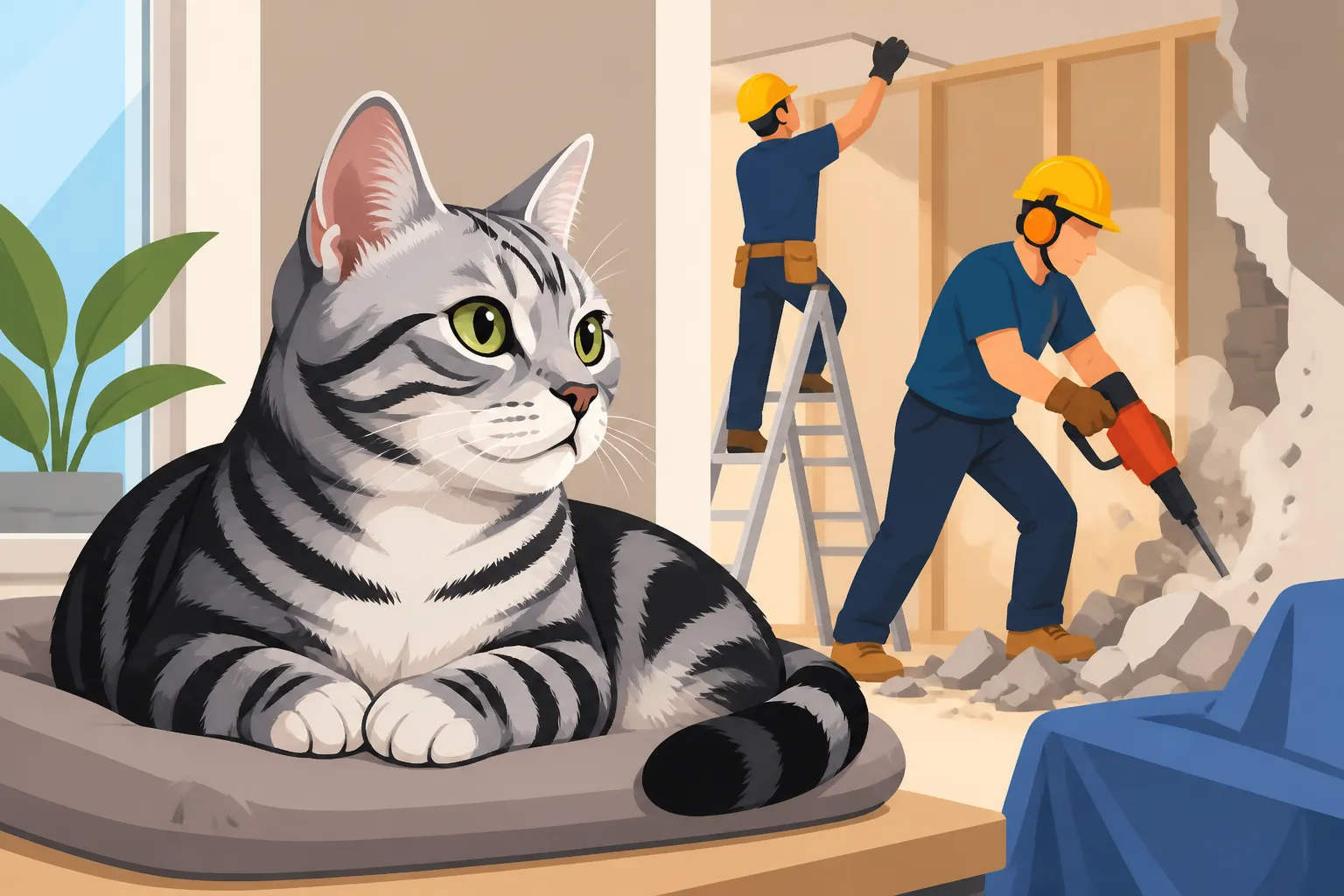
How an American Shorthair Handles Building Work
Home renovations bring overwhelming noise, strange smells, shifting furniture, and a constant stream of unfamiliar contractors marching through your front door. For a feline who relies on routine and territorial control, a construction project can feel like an absolute invasion. Understanding how your American Shorthair interprets building work helps you safeguard their well-being, protect them from real physical hazards, and keep their legendary composure intact throughout the project.
The Working Breed Temperament Under Renovation Stress
The American Shorthair carries a deep heritage as a working cat, originally valued on farms and ships for its self-reliance and emotional stability. Because of this background, when heavy machinery starts up or drywall is torn out, these cats rarely dissolve into hysterical panic. Instead, they apply a measured approach to unpredictable events. However, moderate adaptability should never be mistaken for complete indifference to high-stress environmental changes.
Pragmatism Versus Panic: How the American Shorthair Assesses Noise
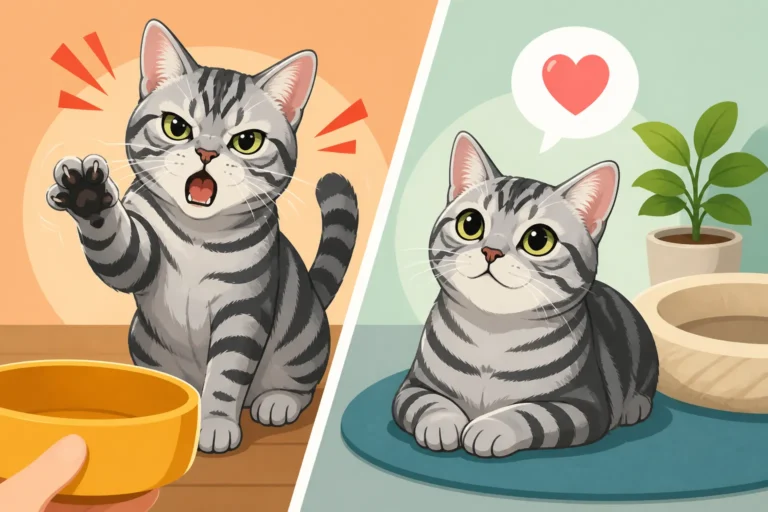
When a power tool screeches or a sledgehammer hits a framing wall, a flighty breed might blindly bolt into an unsafe location, like an open wall cavity or out an unmonitored back door. An American Shorthair handles sudden loud sounds differently. Rather than panicking instantly, you will usually see them pause, flatten their ears slightly, widen their eyes, and observe the source of the noise from a distance.
This behavioral trait is rooted in their lineage; Why an American Shorthair Assesses Before It Approaches explains how their natural instinct is to calculate risk before taking physical action. During heavy building work, your cat will evaluate whether the noise represents a direct threat to their personal space. If the sound remains contained behind a closed door or at the far end of the house, they will often choose to retreat to a elevated perch or under a quiet bed to wait things out. Because Why a Self Reliant American Shorthair Rarely Panics Alone, they can manage moderate ambient disruption better than high-anxiety breeds, provided they have an accessible escape route to a safe zone.
Territorial Disruption and the Urge to Patrol
The real stress for an American Shorthair during a home remodel is not just the physical noise; it is the loss of territory and the disruption of daily routines. American Shorthairs are methodical creatures that establish strict patrol routes around the house. They walk these paths daily, marking perimeters with scent glands on their cheeks and paws to maintain a sense of ownership.
When contractors erect plastic dust barriers, seal off hallways, or move familiar furniture into storage, the cat’s territorial map is effectively wiped clean. A kitchen teardown or bathroom remodel locks them out of spaces they once surveyed daily. You might observe your cat pacing along plastic sheeting, pawing at temporary barriers, or sitting quietly nearby watching workers move back and forth. This behavior reflects their internal need to monitor changes within their domain. When How an American Shorthair Handles Household Noise becomes a factor alongside shifting physical boundaries, the cumulative stress can manifest in subtle behavioral shifts, such as altered sleep cycles or temporary changes in appetite.
Preparing Your American Shorthair Before the First Hammer Falls
Successful management of an American Shorthair during building work depends entirely on preparation. Waiting until demotion day to restrict your cat’s movement creates unnecessary panic. By establishing safety protocols and controlled environments days before workers arrive, you eliminate the shock of sudden confinement.
Creating a Secure Sanctuary Room Away From Dust and Workers
Before any demo work begins, you must designate a sanctuary room far removed from the primary work zone. A back bedroom or quiet home office with a solid door is ideal. This room must be stocked with all essential resources: a litter box, fresh water, food bowls, a scratching post, and their favorite bedding.
To help your cat adjust, set up this room a week in advance and leave the door open so they can explore it naturally. Put their regular meals inside this space so they form a positive association with it. On construction days, this room becomes an absolute safe zone where the door stays shut, complete with a clear sign posted on the outside warning tradespeople: “DO NOT ENTER – CAT INSIDE.”
To keep your cat comfortable during long hours of confinement, ordering elevated cat beds, quiet activity mats, or interactive puzzle toys on Amazon can provide mental stimulation while keeping their mind off the noise down the hall.
Scent Preservation and Environmental Stabilization
Cats rely on scent cues to feel secure in their environment. A construction site strips away familiar home smells, replacing them with harsh paint fumes, fresh lumber, dry-wall dust, and the scent of strangers. In your cat’s sanctuary room, scent preservation is critical.
Avoid washing their favorite blankets or bedding right before or during the renovation. Leave a few worn items of your clothing, such as hoodies or unwashed t-shirts, inside their resting spots to keep your comforting scent present. Additionally, using synthetic feline pheromone diffusers can help settle a stressed cat. Plugging a diffuser into the wall of their safe room a few days prior to demolition helps maintain a soothing atmosphere. You can easily order these diffusers on Amazon alongside extra refill bottles to ensure continuous coverage throughout a multi-week project.
To further buffer construction noise, consider playing low-frequency ambient sounds or white noise inside the room. Running a dedicated air purifier helps keep fine construction dust from seeping under the door while providing a constant background hum that dampens sudden hammering sounds.
| Hazard Type | Specific Renovation Risk | American Shorthair Mitigation Strategy |
|---|---|---|
| Open Access Points | Unattended exterior doors/windows | Sanctuary room lockup & posted signs |
| Airborne Toxins | Drywall dust, paint fumes, sawdust | High-efficiency air purifier & towels |
| Microscopic Debris | Screws, glass, nails, staple wire | Daily sweeping/vacuuming of work paths |
| Physical Entrapment | Open floorboards, wall voids | Visual room checks before wall sealing |
| Stress-Induced Ailments | Inappetence, urinary blockage | Daily food, water, & litter tracking |
Managing Daily Construction Routines and Safety Risks
Once active construction begins, your daily routine must adapt to guard against physical hazards. Even a grounded, sensible American Shorthair can make a catastrophic mistake if exposed to an active construction zone.
Door Security, Open Walls, and Escaping Workers
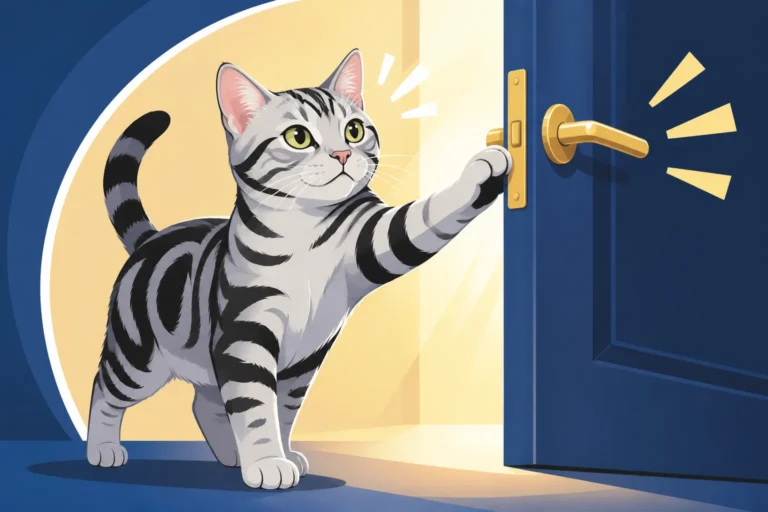
Contractors frequently carry heavy materials back and forth through main entry doors, often leaving them propped open for extended periods. This represents the single highest risk for a cat during a remodel. Even an indoor cat that normally shows little interest in escaping may dash through an open door if startled by a sudden falling object or loud power tool.
Keep your cat secured in their sanctuary room before the first worker arrives in the morning, and do not release them until all workers have departed and exterior doors are firmly shut. If you need to enter the sanctuary room during the day, do so carefully, ensuring your cat does not slip past your legs into the hallway.
Another hidden danger is the creation of open wall voids, drop ceilings, and exposed flooring sub-structures. American Shorthairs are curious inspectors by nature. If given access to a work site after hours, they may slide into open drywall gaps or floor openings to investigate. If a worker seals those openings the next morning without checking, the cat can easily become trapped inside the walls. Always inspect open construction areas thoroughly before workers frame or close up any cavities.
Air Quality, Toxic Dust, and Debris Management
The respiratory and digestive systems of a cat are uniquely sensitive to environmental construction hazards. Drywall dust contains calcium sulfate and silica, which irritate delicate nasal passages and lungs. Sawdust, paint fumes, varnish off-gassing, and chemical adhesives add toxic burdens to the air.
Furthermore, when fine dust settles on a cat’s coat, their immediate instinct is to groom themselves, ingesting toxic particles directly into their digestive tract. To minimize these risks:
- Seal the bottom gap of the sanctuary room door with a rolled damp towel or draught stopper.
- Keep all HVAC vents in the active work area closed or covered with plastic sheeting to prevent dust from circulating into quiet zones.
- Keep an adequate supply of pet-safe grooming wipes on hand. Picking up a pack of gentle grooming wipes on Amazon allows you to wipe down your cat’s coat if any stray dust settles on them.
- Clean up the main living spaces thoroughly every evening. Sweep up sharp stray items like drywall screws, carpet staples, exposed wire fragments, and glass shards that could puncture a cat’s paw pad during evening exploration.
If your renovation requires moving large furniture items or setting up heavy temporary equipment, ensure that heavy tools or unanchored drywall sheets are secured flat against walls so they cannot tip over if a cat rubs against them.
Post-Renovation Re-Entry and Territory Re-Mapping
When the final contractor leaves and the tools are packed away, the process is not quite over. Returning your American Shorthair to their normal routine requires patience and deliberate steps to prevent late-stage territorial anxiety.
Re-Establishing Patrol Routes in Newly Altered Spaces
Once the home is cleaned, ventilated, and cleared of danger, resist the urge to immediately open every door and give your cat free rein over the remodeled space. To a territorial cat, a drastically altered room smells completely foreign and looks unrecognizable.
Introduce your cat to the new space slowly:
- Allow them to explore one newly finished room at a time, ideally during a quiet evening when no sudden noises will startle them.
- Accompany them into the room and let them move at their own pace. You will likely notice them walking slowly with a lowered posture, sniffing baseboards, doorframes, and new furniture meticulously.
- Let them rub their cheeks against low surfaces. This chin-rubbing deposits facial pheromones, officially marking the new construction as safe, familiar territory.
- Over the course of a few days, How a Territorial American Shorthair Rebuilds a Patrol Route will unfold naturally as they integrate the updated spaces back into their daily routine.
Spotting Subtle Stress Signals in a Stoic Breed
Because this breed is notoriously stoic, they rarely express stress through overt, dramatic behaviors. They are far more likely to internalize their discomfort. Owners must look closely for subtle physical or behavioral red flags during and after building work.
Watch for changes in their litter box habits. Straining, frequent visits to the box, or urinating outside the box are clear signals of stress-induced urinary inflammation. Keep a close eye on their daily food intake and grooming habits. If an American Shorthair stops eating or hides in dark closets for extended periods, their emotional threshold has been crossed.
Understanding that Why a Stoic American Shorthair Hides Pain the Longest is a core characteristic of the breed helps you catch issues early. If you notice persistent lethargy, digestive upset, or complete withdrawal from family interactions, consult your veterinarian promptly. In some cases, Why a Withdrawn American Shorthair Should See a Vet becomes an urgent directive if stress triggers an underlying medical condition.
If you ever need to transport your cat to the vet during a noisy construction day, review best practices on How to Get a Patrol Minded American Shorthair Into a Carrier so that the transport process itself does not stack additional stress onto an already overwhelmed animal.
By recognizing the American Shorthair’s practical, observant nature, respecting their territorial needs, and enforcing strict physical safety measures, you can guide your cat through major home building work safely and smoothly. With thoughtful preparation, your resilient companion will handle the chaos with steady, quiet confidence, ready to reclaim their position as master of the house the moment the work is complete.
Disclaimer
This article is for general informational purposes only and does not constitute professional advice. Laws, prices and regulations vary by location and change over time. Consult a qualified professional for guidance on your specific situation.