What an Indoor American Shorthair Hunts Instead
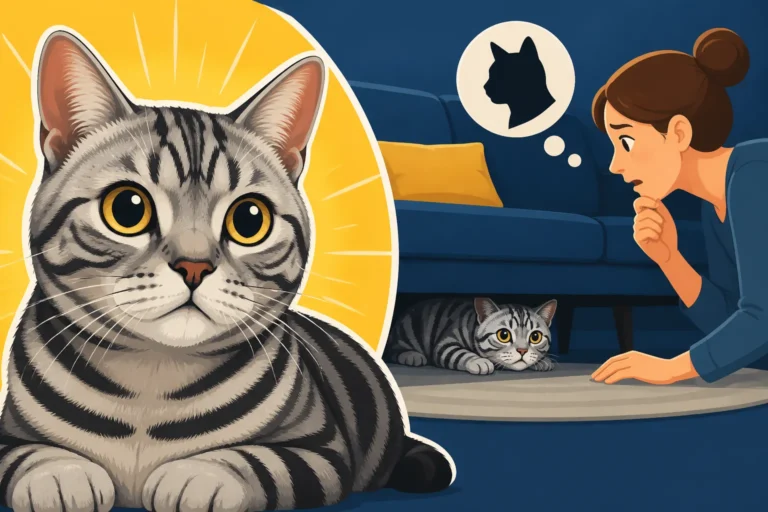
It can be incredibly confusing and sometimes downright frustrating when your calm, quiet American Shorthair, seemingly content with its indoor life, suddenly starts "hunting" your ankles, batting at shadows, or terrorizing innocent dust bunnies. You brought them indoors for safety and comfort, yet that ancient hunting instinct still buzzes just under their soft fur. This guide is here to help you understand why your indoor American Shorthair still feels that primal urge to hunt and, more importantly, how to safely and constructively redirect that energy into fulfilling activities that benefit both of you.
Understanding the Innate Hunter in Your American Shorthair
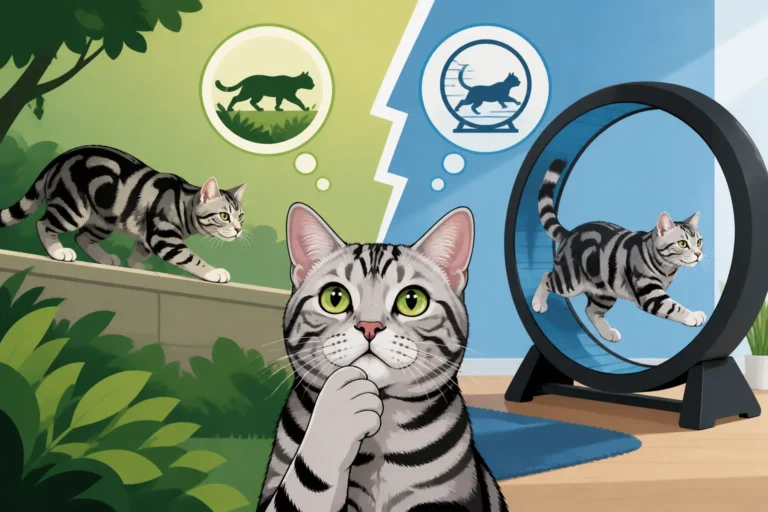
Even though your American Shorthair might live a life of luxury on your sofa, enjoying regular meals and endless cuddles, their DNA holds a rich history of being formidable hunters. These aren't just pretty faces; they are descendants of working cats, brought to new lands to keep vermin at bay. That deep-seated instinct doesn't just vanish because they've retired from barn duties.
The Unchanged Instinct: Centuries of Evolution
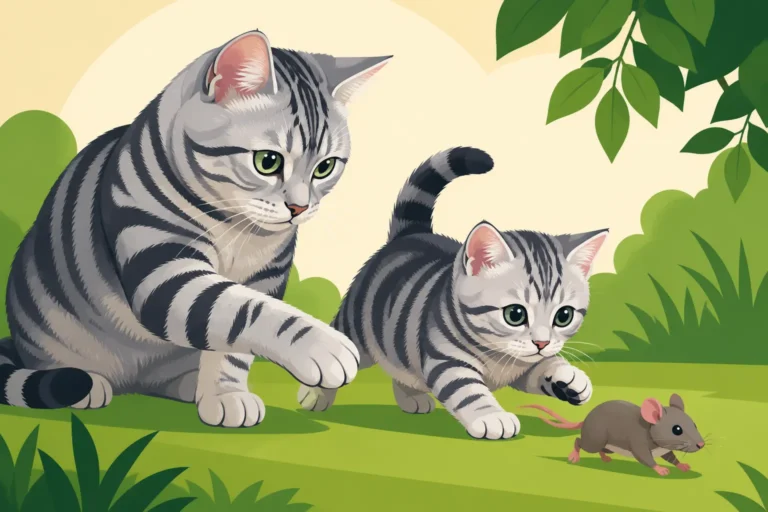
Imagine your American Shorthair's ancestors on a ship, or in a bustling colonial barn. Their survival depended entirely on their ability to stalk, chase, capture, and "kill" prey. This wasn't a hobby; it was a way of life. For centuries, these cats honed their skills, passing down the genetics for sharp senses, lightning-fast reflexes, and an insatiable drive to hunt. Why Centuries of Ratting Left the American Shorthair Its Drive is a big part of understanding your cat today. While we've bred out some of the more extreme physical traits seen in other pedigrees, the core operating system of the American Shorthair remains very much that of a predator.
This means that even without a single mouse in sight, your indoor American Shorthair experiences a strong, inherent need to express these behaviors. It's not boredom alone, although boredom can certainly exacerbate it; it's a fundamental part of who they are. Suppressing this instinct entirely is not only difficult but can lead to stress and behavioral issues for your beloved companion. Instead, our goal as responsible owners is to provide acceptable outlets for this powerful, ancient drive.
Signs Your Indoor Cat Is "Hunting"
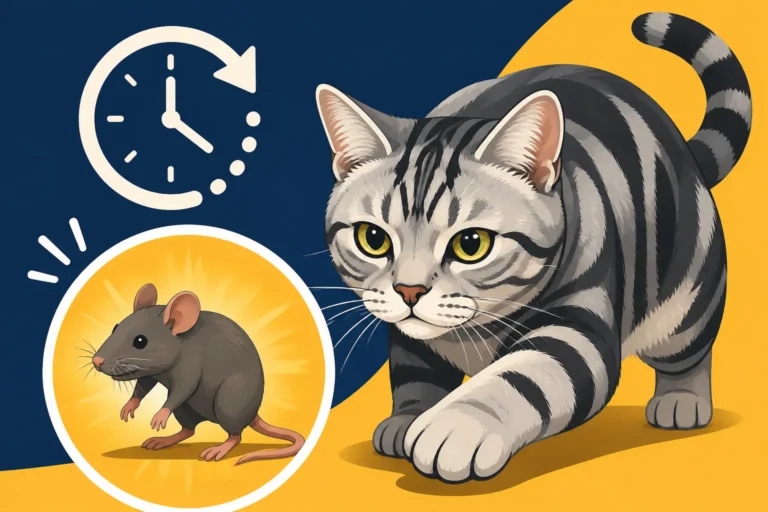
How can you tell if your cat is indulging its inner predator? It's often subtle, but once you know what to look for, you'll see it everywhere. The classic signs begin with stalking. Your cat might flatten itself to the ground, eyes fixed, tail twitching slightly, before launching itself. How an American Shorthair Stalks involves a low crouch, often with a slow, deliberate approach, using any available cover. This could be your coffee table leg, a potted plant, or even the corner of a rug.
Beyond stalking, you'll notice pouncing, batting, and carrying. They might spring onto a crumpled piece of paper, mimicking a kill, or bat at a curtain tassel with intense focus. Some American Shorthairs will proudly carry their "prey" – a favorite toy or perhaps a sock – to you, much like their ancestors would present a catch. These are all natural expressions of their hunting sequence, and acknowledging them helps us provide appropriate alternatives. Without proper outlets, these behaviors might be directed at things you’d rather they didn’t, like your bare feet or delicate home decor.
Common Household "Prey" Objects for the Indoor American Shorthair
Since there aren't usually live mice or birds scampering through your living room (thank goodness!), your indoor American Shorthair will naturally seek out substitutes for their hunting pleasure. These can range from purpose-designed toys to everyday household items that just happen to fit the bill. Understanding what captures their attention is the first step to redirecting their instincts constructively.
Toys as Proxies
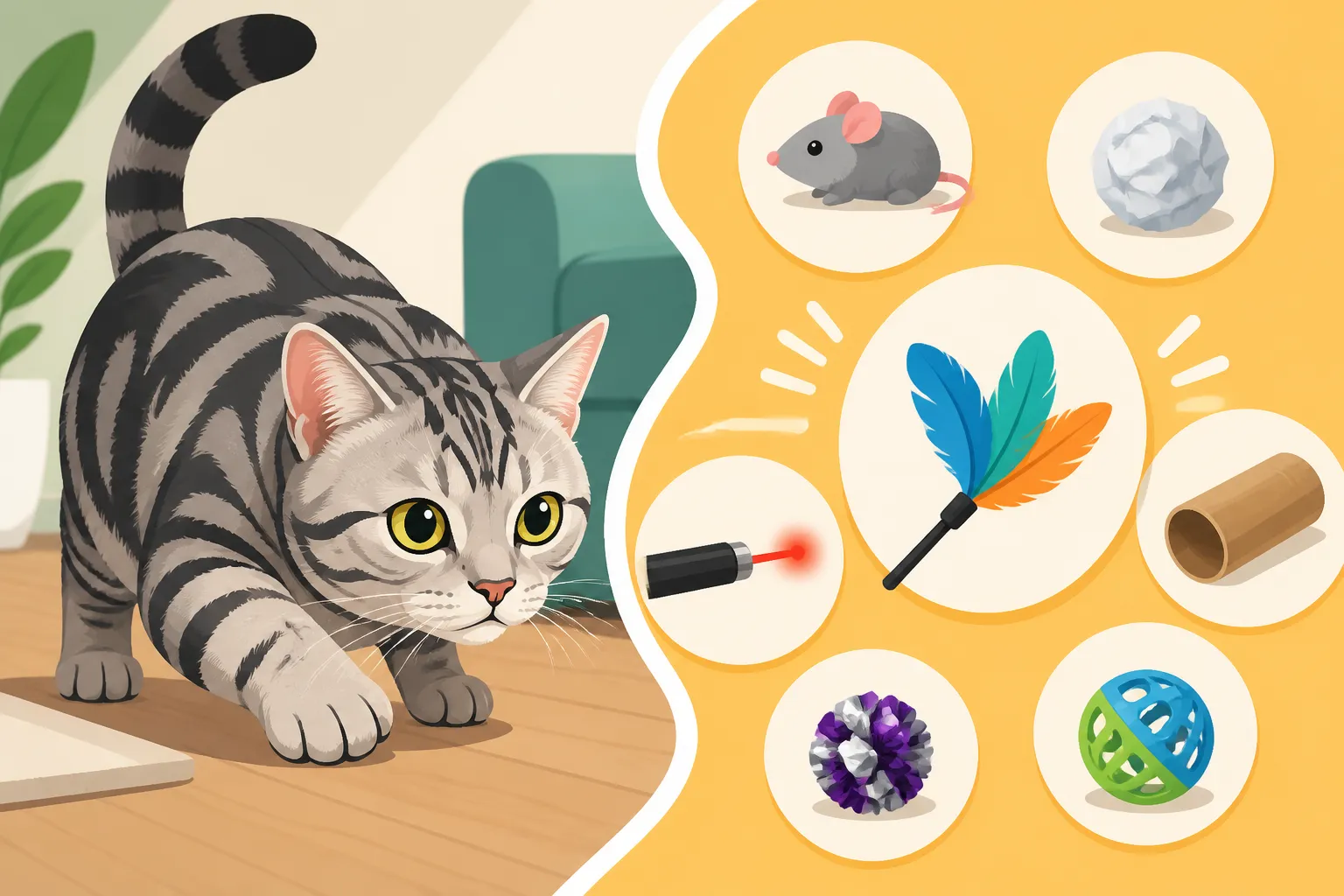
The world of cat toys is vast, but not all toys are created equal when it comes to satisfying a hunter's drive. The best toys mimic real prey in some way: movement, texture, or even sound. Wand toys with feathers or small, furry attachments are often a huge hit. They allow you to control the "prey," making it dart, hide, and pounce in unpredictable ways, engaging your cat's natural chase instinct. Which Wand Toy Reads as Prey to an American Shorthair is often one that has erratic movement and mimics a bird or a small rodent. You can find an incredible variety of durable wand toys on Amazon, offering different "lures" to keep things interesting.
Small, lightweight balls, crinkle toys, or even plush mice can also serve as excellent proxies for smaller prey. The key is variety and rotation. If your cat sees the same toys day in and day out, they'll quickly lose interest. Think of it like a hunter always encountering the same, slow-moving squirrel – it gets boring! Regularly swapping out toys or introducing new ones (many excellent subscription boxes for cats include a rotating selection of toys) keeps their interest piqued and their hunting instincts sharp.
Unintended Targets: Dust Bunnies, Insects, Even Your Feet
This is where the frustration often comes in for owners. When appropriate outlets aren't sufficient, your American Shorthair will improvise. What an Indoor American Shorthair Hunts Instead can be quite a long list of things you might not expect. That fleeting dust bunny rolling across the floor becomes a tiny, furry target. A housefly buzzing near the window isn't just an annoyance; it's a thrilling aerial challenge. Shadows dancing on the wall from a car driving by can initiate a full-blown stalking sequence.
And then there are your feet. Oh, the irresistible wiggling toes under the blanket, or the swift movement of your ankles as you walk across the room. To a cat, these are perfect, unpredictable targets, especially when they're kittens still learning their hunting skills. While it might seem cute initially, habitual ankle-grabbing or toe-biting can become painful and problematic. Understanding that this behavior stems from a natural drive, not malice, is crucial. It means we need to provide better, more appropriate targets for their predatory focus, so your feet can remain safely out of the "prey zone."
Channeling the Hunter: Safe and Engaging Alternatives
Since we know the hunting drive is here to stay, the best approach is to channel it into activities that are safe, enriching, and enjoyable for both you and your American Shorthair. This isn't about stopping them from hunting; it's about giving them appropriate "prey" and scenarios.
Interactive Play Sessions: The Importance of the "Kill"
One of the most vital ways to satisfy your American Shorthair's hunting instinct is through interactive play. This means playing with them using toys, not just leaving toys out. A wand toy is your best friend here. Make the toy dart, hide, and scurry like real prey. Mimic a mouse scurrying under a rug or a bird fluttering past a window. The key is to make it unpredictable and challenging. Don't just dangle it in front of them; make them work for it.
Crucially, every play session needs a "kill" to complete the hunting sequence. Play That Finishes the Hunting Sequence for an American Shorthair involves letting them catch the toy repeatedly throughout the session, and then at the very end, allowing them to capture it and "win" by holding onto it for a moment, perhaps even carrying it off. This provides immense satisfaction and a sense of accomplishment. Without that successful "capture," your cat can become frustrated, leading them to seek out other, less desirable "prey" to satisfy that unresolved tension. Aim for at least two 10-15 minute interactive play sessions a day, ideally at dawn and dusk, when their natural hunting instincts are strongest. How Many Hunts a Day an Indoor American Shorthair Needs can vary, but these structured sessions are essential. When you're ready to How to End a Play Session With an American Shorthair, gradually slow down the toy until they make that final triumphant capture.
Puzzle Feeders and Foraging: Making Them Work for Food
In the wild, cats don't just get a bowl of food delivered to them. They hunt, work, and forage for every meal. For our indoor American Shorthairs, free-feeding from a bowl deprives them of this natural engagement. Puzzle feeders are a fantastic solution, turning mealtime into a mental and physical challenge. These feeders require your cat to manipulate them in various ways to extract their kibble, mimicking the effort required to get food in the wild.
You can find a wide range of puzzle feeders on Amazon, from simple treat balls to more complex mazes. Start with easy ones and gradually increase the difficulty as your cat gets the hang of it. Another great technique is "foraging feeding," where you hide small portions of their daily kibble allowance around the house in different spots – on cat trees, under furniture, or even in an empty paper towel roll. This encourages them to "hunt" for their food throughout the day, stimulating their minds and bodies. Whether a Puzzle Feeder Satisfies an American Shorthair is a resounding yes, as it taps directly into their instinct to work for their meals. This also helps slow down their eating, which can be beneficial for digestion and weight management, especially for a breed prone to gaining weight if not kept active.
Creating an Enriched Environment for the Indoor Hunter
Beyond direct play, the overall environment you provide plays a huge role in how well your American Shorthair's hunting instincts are met. A stimulating environment can prevent boredom and reduce the likelihood of your cat targeting inappropriate objects.
Vertical Space and Observation Points: Simulating Vantage Points
Just like their wild cousins, American Shorthairs love to survey their territory from a height. Vertical space provides them with a sense of security and an excellent vantage point from which to "hunt" visually, even if it's just watching a bird outside the window. This allows them to patrol their domain from above, a crucial aspect of their natural behavior. How Much Vertical Space an American Shorthair Needs is often more than you might initially think.
Invest in sturdy cat trees, wall-mounted shelves, or even clear a spot on a tall bookshelf that your cat can safely access. Placing these near windows is ideal, turning an ordinary window into a "cat TV" filled with birds, squirrels, and passing cars – all potential "prey" for their watchful eyes. Make sure the platforms are wide and stable enough for your solidly built American Shorthair to feel secure. Even simple things like leaving a chair pulled out next to a high surface can offer a temporary new lookout spot.
Safe Outdoor Access: Catios and Harnesses
While this article focuses on the indoor American Shorthair, acknowledging their natural drive means considering how to safely introduce some elements of the outdoors. An American Shorthair that spends all its time indoors will often have a stronger drive to seek out simulated prey. True outdoor access carries significant risks (traffic, predators, illness), but there are fantastic compromises.
A catio, or enclosed outdoor patio, offers the sights, sounds, and smells of the outdoors without the dangers. It allows your cat to feel the sun, watch birds, and even chase real insects within a safe, contained space. Many catio designs are available, from window boxes to elaborate multi-level enclosures. Whether a Catio Satisfies an American Shorthair's Drive is generally positive, as it provides a rich sensory experience that can be highly stimulating. Alternatively, harness training can allow supervised excursions into a safe garden space. Start slow and make it a positive experience with treats. Just remember, even with these options, your cat’s hunting drive will still need to be met indoors with interactive play. And for the safety of small pets in the home, remember Why an American Shorthair Cannot Live With a Bird or Hamster if they are allowed to roam freely.
Addressing Problematic Hunting Behaviors
Sometimes, despite our best efforts, our American Shorthairs might still engage in "hunting" behaviors we'd prefer they didn't, like attacking our feet or household items. It's important to address these kindly but firmly, always redirecting rather than punishing.
Redirecting Unwanted "Attacks"
If your American Shorthair pounces on your feet, resist the urge to yell or physically deter them with your hands, as this can be perceived as play or a challenge. Instead, immediately redirect their attention. Keep a small, appropriate toy, like a kick stick or a crinkle ball, within reach. As soon as they target your feet, toss the toy away from you, engaging them in a game with the toy instead. This teaches them that feet are not toys, but this toy is. Consistency is key here.
Another approach is to simply get up and walk away, ending the "play" session immediately. Your American Shorthair will quickly learn that aggressive play towards you results in the fun stopping. Many American Shorthairs learn very quickly, as they are intelligent and observant creatures. They want to engage, and if attacking your feet doesn't lead to engagement (or leads to negative consequences from their perspective, like you leaving), they will eventually seek more productive outlets.
Securing Household Items
If your American Shorthair is routinely "hunting" fragile decorations, expensive electronics, or other items you'd rather not see batted off shelves, the solution is often quite simple: remove them or secure them. Remember, to your cat, these items are just potential "prey" if they move or can be knocked over. Heavy, stable items are less likely to be targeted, but anything light and movable is fair game.
Consider placing valuable items inside display cabinets or on shelves that are too high or too narrow for your cat to safely access. Toys, especially engaging ones, should be strategically placed to provide more enticing alternatives. Regularly engaging your cat with interactive play and providing plenty of appropriate enrichment, such as puzzle feeders and scratching posts, can also reduce their motivation to What an American Shorthair Hunts When You Give It Nothing but your belongings. It's all about providing better options before they find their own.
| Enrichment Type | Description | Benefits | Considerations |
|---|---|---|---|
| Wand Toys | Long stick with feathers, fabric, or other lures on a string. | Mimics natural prey movement, provides interactive "hunt" and "kill" sequence. | Requires owner participation, rotate lures to maintain interest. |
| Puzzle Feeders | Devices requiring manipulation to dispense food. | Satisfies foraging instinct, slows eating, mental stimulation, prevents boredom. | Can be messy, some cats learn quickly and need more challenging versions. |
| Cat Trees/Shelves | Vertical structures for climbing, perching, and observing. | Provides safe vantage points, territory patrolling, exercise, mental stimulation. | Needs to be sturdy and stable, consider placement near windows. |
| Small Prey Toys | Plush mice, crinkle balls, lightweight plastic balls. | Allows solo hunting and carrying, satisfies batting and pouncing instincts. | Can get lost easily, some cats lose interest without interaction. |
| Catio (Enclosed Patio) | Safe, contained outdoor enclosure. | Sensory enrichment from fresh air, sun, bird watching, safe insect chasing. | Requires space and construction, may not be practical for all living situations. |
| Foraging Feeding | Hiding small portions of food around the house. | Encourages natural hunting for food, mental engagement, physical activity. | Can be missed by cat, requires owner effort, not suitable for all food types. |
Conclusion
Understanding that your indoor American Shorthair still has a deeply ingrained hunting instinct isn't a burden; it's an opportunity. It allows us to provide them with a more fulfilling and natural life, even within the confines of our homes. By acknowledging their past as efficient, self-sufficient hunters, we can set up their environment and routines to honor that heritage. Through regular, interactive play that culminates in a satisfying "kill," by making them work for their meals with puzzle feeders and foraging games, and by enriching their environment with vertical spaces and safe outdoor access, we can ensure that our American Shorthairs thrive. You're not just preventing unwanted behaviors; you're nurturing their very essence and strengthening your bond with a truly magnificent feline companion.
Disclaimer
This article is for general informational purposes only and does not constitute professional advice. Laws, prices and regulations vary by location and change over time. Consult a qualified professional for guidance on your specific situation.