Which Toys Finish an American Shorthair’s Hunt
It’s a common scenario for American Shorthair owners: you adore your placid, affectionate feline friend, but sometimes, their inner predator shines through in ways you might not expect. They might be stalking your feet under a blanket, ambushing you from behind the sofa, or perhaps they’ve presented you with a freshly caught, albeit sadly deceased, housefly. This isn't naughtiness; it's a deeply ingrained instinct that needs a proper outlet. This guide is all about helping you understand that powerful drive and, more importantly, finding the right toys to give your American Shorthair the complete, satisfying "hunt" they crave, even when living a pampered indoor life.
The Unignorable Hunting Instinct of the American Shorthair
Let's be real, the American Shorthair isn't just a pretty face. Beneath that calm, sweet exterior lies the heart of a skilled hunter. For centuries, these cats earned their keep, and that history shapes who they are today. Ignoring this part of their heritage isn't an option; understanding it is key to a happy cat and a peaceful home.
Why Centuries of Ratting Left the American Shorthair Its Drive
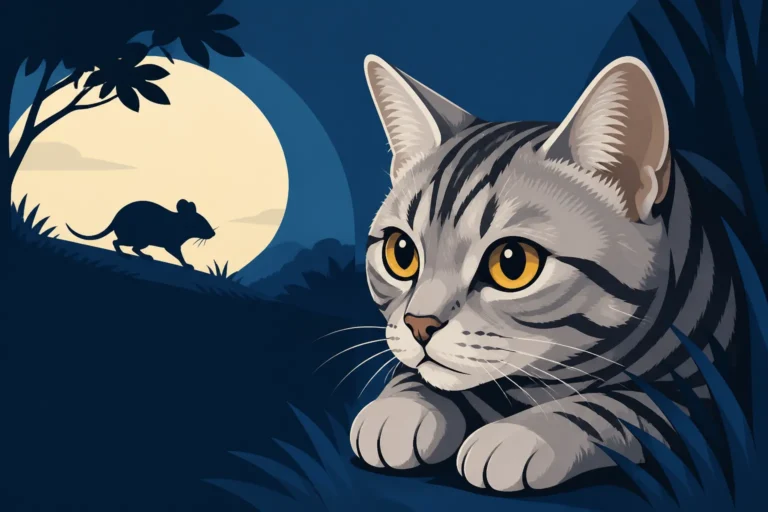
Our beloved American Shorthairs trace their lineage back to the working cats brought over on ships by early European settlers. These were not ornamental pets; they were essential crew members, tasked with keeping rodents at bay on long voyages and later on farms across the continent. This wasn't just a job; it was a matter of survival for both the cats and the humans. Cats that were good at hunting survived, reproduced, and passed those superior hunting genes down through generations.
Think about it: every dart, every pounce, every silent stalk was honed by natural selection. This isn't just a quaint historical fact; it’s stamped into their DNA. Even if your American Shorthair has never seen a mouse outside of a cartoon, the urge to hunt, to observe, to chase, and to catch is profoundly ingrained. It's not something they can simply turn off. It's as fundamental to their being as breathing, and denying that instinct can lead to real frustration for them. This deep-seated drive is why The American Shorthair Still Hunts, Whether You Want It To or Not.
This heritage is what makes them such robust and adaptable companions, but it also means we, as their guardians, have a responsibility to provide outlets for these natural behaviors. They aren't trying to be difficult when they bat at your ankles; they're trying to activate that internal program that tells them, "hunt!" If we don't give them appropriate targets, they'll make their own, and trust me, your toes or the antique vase on the shelf might become unwitting prey.
What Happens When the Instinct Isn't Satisfied
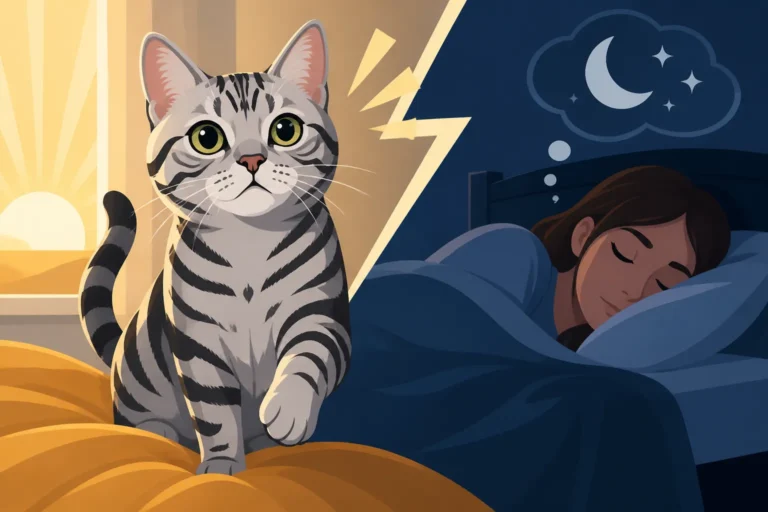
When an American Shorthair's hunting instinct isn't given a proper, satisfying release, things can get a little… chaotic. It's like having a high-performance sports car stuck in rush hour traffic – all that power and no place to go. You might notice your cat becoming restless, especially around dawn and dusk, which are prime hunting times in the wild. They might vocalize more, pace, or even develop destructive habits.
One of the most common manifestations of an unsatisfied hunter is redirecting that energy onto inappropriate targets. This could mean aggressive play towards you, where what started as a gentle nip escalates to a full-on attack because they can’t "finish the job" with your hand. It might also manifest as shredding furniture, knocking items off shelves (a common way to "flush out" imaginary prey), or even compulsive grooming. Their body is telling them to hunt, and when there's no suitable prey, that energy has to go somewhere. This is often What an Indoor American Shorthair Does With a Mouser's Instinct.
Beyond the behavioral issues, there's also the mental and physical health component. A cat that isn't engaging its hunting instincts isn't getting enough mental stimulation or physical exercise. This can contribute to boredom, stress, and even weight gain, especially in a breed like the American Shorthair that can be prone to putting on a few extra pounds if not properly managed. Providing satisfying hunting play is a holistic approach to their well-being.
Deconstructing the American Shorthair's Hunting Sequence
To truly satisfy your American Shorthair's inner hunter, you first need to understand the full hunting sequence. It’s not just about a quick pounce; it’s a detailed, multi-step process that, when completed, provides immense satisfaction. If we only address one or two steps, we leave our cats feeling unfulfilled, much like watching a movie that suddenly ends before the climax.
From Stalk to Pounce: The Natural Progression
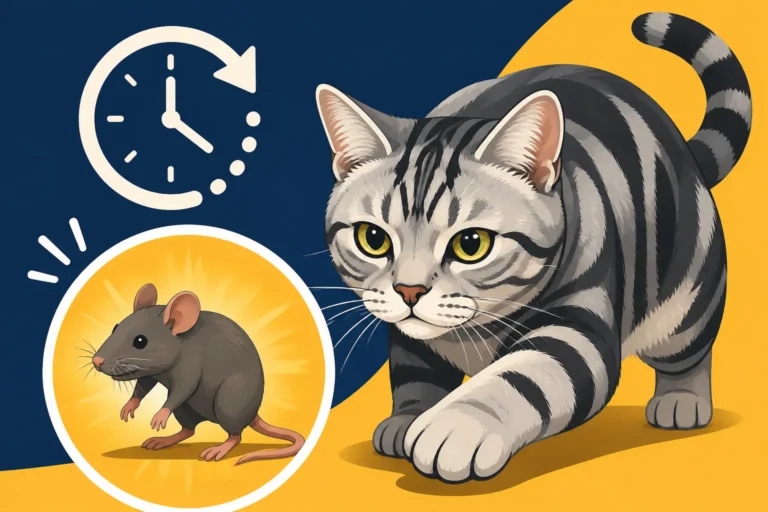
A cat's hunting isn't random. It’s a deliberate, calculated series of movements. It usually begins with observation: the cat spots potential prey, perhaps a dust bunny skittering across the floor or a fly buzzing near a window. Then comes the stalk, a low, slow, deliberate approach, often utilizing cover and pausing frequently to assess the situation. You'll see their body flatten, eyes fixed, ears swiveling to pinpoint every sound.
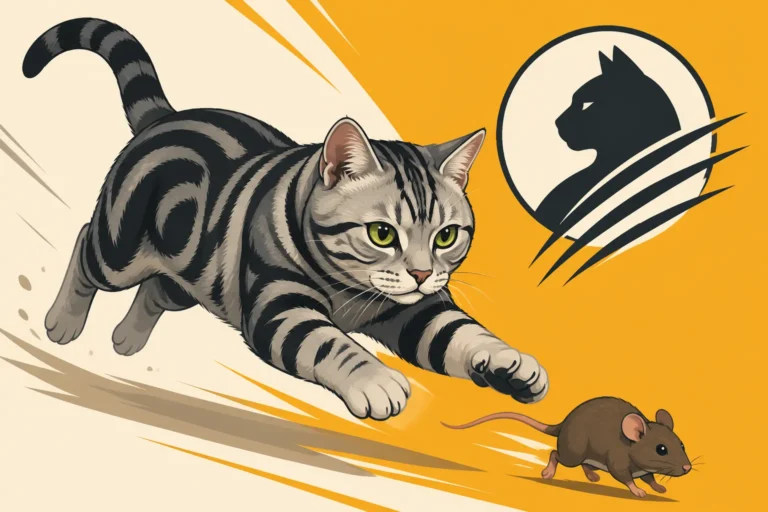
Next is the chase, a sudden burst of speed to close the distance. This is followed by the pounce, an explosive leap onto the prey. For an American Shorthair, this might be a powerful spring from a crouch, designed to incapacitate quickly. If the prey is caught, there's the critical "kill" bite, usually to the neck, followed by manipulating the prey. Finally, if it’s edible, there's the consumption. Each step is important, building tension and providing a release. How an American Shorthair Hunts is a masterclass in efficiency and focus.
Think of playing with your cat as an improv theater session where you're both performing a hunting scene. If you only ever play the "chase" part, darting a toy around, but never allow the "pounce" or "catch," your cat is left hanging, with all that built-up adrenaline and no resolution. It's frustrating for them because their instincts are screaming for closure. The goal is to let them perform the entire play, from opening act to curtain call.
The Critical "Catch" and "Kill" Phases
This is where many well-meaning owners fall short, often without even realizing it. The laser pointer, while a fantastic tool for engaging the "observe," "stalk," and "chase" phases, completely fails on the "catch" and "kill" parts. Imagine endlessly chasing something you can never quite grasp, never truly conquer. It’s maddening! For a cat, especially a breed with such a strong hunting drive as the American Shorthair, this can lead to deep frustration and even obsessive behaviors. They might continue "hunting" the red dot after it’s turned off, searching frantically for the elusive prey.
The physical act of catching the toy, grasping it with their paws, and then performing the "kill" bite and "bunny kicks" (using their hind legs to disembowel the prey) is absolutely essential for completing the hunting sequence. This is the payoff, the grand finale of their instinctual performance. It’s during these moments of intense physical interaction that they truly release pent-up energy, satisfy their predatory urges, and feel successful. Without this, the hunt is incomplete, leaving them with an emotional and physical void. This is precisely Why an American Shorthair Needs to Catch the Toy.
So, when you're playing, always ensure there’s a tangible object for them to ultimately "catch." The play session shouldn’t just end with the toy disappearing. It should conclude with your cat triumphant, holding their "prey." This provides a vital psychological closure that mere chasing cannot offer. It reinforces their natural abilities and gives them a sense of accomplishment, which is crucial for their confidence and overall well-being.
Toys That Deliver a Full Hunting Experience
Now that we understand the intricate dance of the hunting sequence, let's talk about the stars of the show: the toys. Not all toys are created equal, and for the American Shorthair, we need ones that encourage a full-spectrum hunting experience.
Interactive Wand Toys for Stalk and Chase
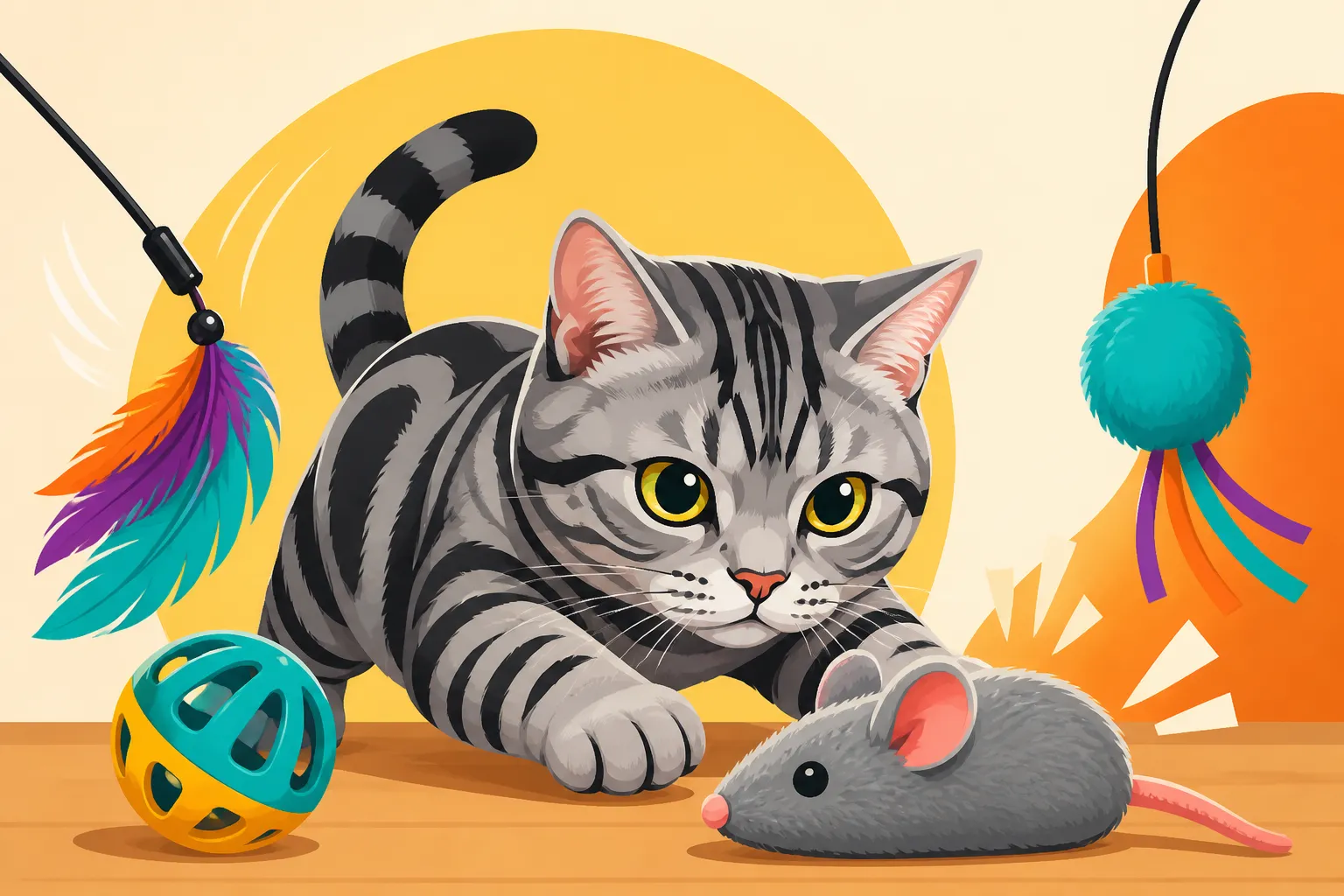
Wand toys are arguably one of the most effective tools for engaging an American Shorthair's hunting instincts. These aren't just strings with feathers; they are extensions of your hand, allowing you to mimic the erratic, unpredictable movements of real prey. Look for wand toys with various attachments – feathers, fuzzy worms, ribbons, or small plush animals – as different textures and movements will appeal to different cats, and novelty is key to maintaining interest.
When using a wand toy, don’t just dangle it in front of your cat. Think like a mouse! Hide the toy behind furniture, make it dart quickly, then freeze. Let it peek out from under a rug or from behind a doorway. Encourage your cat to stalk, crouch low, and then pounce. Make the prey "escape" sometimes, leading to a thrilling chase. Vary the speed and direction. This strategic play not only physically exhausts your cat but also mentally stimulates them, engaging their problem-solving skills and patience. You can find a huge variety of durable, engaging wand toys on platforms like Amazon, offering everything from simple feather teasers to more elaborate bird-like attachments.
Remember, the goal is to make the toy behave like prey, not just a random object. Drag it along the floor, pull it upwards as if it's trying to fly away, or let it disappear briefly, only to reappear in a new spot. This mimics the unpredictability of a real hunt and keeps your American Shorthair completely absorbed. For an American Shorthair, a good wand toy truly reads as prey, as explored in Which Wand Toy Reads as Prey to an American Shorthair.
Achieving the "Catch" with Appropriate Toys
The "catch" is the moment of truth. After all that stalking and chasing, your American Shorthair needs to physically get their paws on the "prey." This means the toy attached to your wand, or a standalone toy, must be something they can grip, bat, and ultimately subdue. Small, lightweight plush mice, crinkle balls, or even tightly wadded pieces of paper can work wonders. The key is that they are tangible.
When your cat makes that final pounce, let them catch it. Don't pull the toy away at the last second, as this leads to immense frustration. Allow them to pin it, chew on it gently, and feel the satisfaction of having captured their "prey." This might mean you release the wand for a moment, or gently guide the toy towards them so they can grab it. This physical connection to the object is crucial for their mental well-being and signals the successful completion of a major part of the hunting sequence.
Consider toys that are sized appropriately for your American Shorthair's strong build. They need something robust enough to withstand a good pounce and a few playful chomps without falling apart immediately. Some cats love toys with different textures – a fuzzy mouse, a crinkly ball, or a toy with a feathery tail. Offering a variety allows them to choose what feels most like a successful catch to them.
Simulating the "Kill" with Kicker Toys and Bite Toys
Once the prey is caught, the instinctual sequence moves to the "kill." For an American Shorthair, this often involves the classic "bunny kick" – where they flip onto their side or back, holding the toy with their front paws, and vigorously kick it with their powerful hind legs. This action is not only physically demanding but also a vital release of their predatory energy. Kicker toys are designed specifically for this purpose.
Kicker toys are typically elongated, cylindrical cushions often filled with catnip or silvervine, designed for your cat to grab with their front paws and kick with their back feet. They allow for a safe and appropriate outlet for this intense physical activity. Look for durable fabrics and secure stitching, as an American Shorthair can be quite strong during these moments of play. Again, Amazon is an excellent place to find robust kicker toys that can withstand an American Shorthair's strong hind legs, with many options made from tough canvas or plush materials.
Beyond kicker toys, smaller, durable bite toys can also satisfy the "kill" urge. These are often made of dense rubber or sturdy fabric, designed for chewing and carrying. Some cats prefer to carry their "kill" around the house, proudly displaying their prowess before settling down for a final mock-mutilation. Providing these types of toys ensures that your American Shorthair can fully complete their hunting ritual, leaving them tired, satisfied, and less likely to hunt your houseplants or furniture.
Enriching the "Consume" Phase with Food-Based Play
After the hunt and the kill comes the consumption. While our pampered American Shorthairs don't need to eat their toy "prey," we can brilliantly simulate this final, satisfying phase through food-based enrichment. This taps into their natural foraging instincts and provides prolonged mental engagement.
Puzzle Feeders as the Ultimate Hunt Finisher
Puzzle feeders are brilliant tools for the "consume" phase of the hunt. Instead of simply placing food in a bowl, a puzzle feeder requires your American Shorthair to work for their meal or treat, mimicking the effort and problem-solving involved in finding and processing food in the wild. This isn't just about slowing down their eating; it's about engaging their minds and bodies in a productive, satisfying way.
There's a vast array of puzzle feeders available, from simple treat-dispensing balls that require batting to more complex mazes and towers where cats have to use their paws to extract kibble. Some American Shorthairs love the challenge of an intricate feeder, while others prefer simpler designs. Start with something easy and gradually introduce more complex puzzles as your cat masters them. This not only provides mental stimulation but also encourages physical activity as they manipulate the feeder. Whether a Puzzle Feeder Satisfies an American Shorthair is a resounding yes for many, as it directly taps into their inherent drive to work for rewards.
Introducing a puzzle feeder can transform mealtime from a mundane gulp-fest into an engaging activity. It slows down their eating, which can be beneficial for digestion and preventing scarf-and-barf situations. More importantly, it provides a crucial sense of accomplishment, reinforcing the idea that their efforts lead to a reward, much like a successful hunt.
Hiding Food for a "Foraging Hunt"
Taking the "consume" phase a step further, consider turning your entire home into a subtle foraging ground. Instead of putting all your cat's dry food in one bowl, measure out their daily portion and hide small amounts in various safe spots around the house. Tuck a few kibble pieces under a rug, inside a cardboard box, on a low shelf, or scattered in different rooms.
This "foraging hunt" encourages your American Shorthair to explore, sniff, and actively search for their food, tapping into their natural scavenging behaviors. It breaks up the monotony of routine and provides prolonged mental and physical engagement throughout the day. For an American Shorthair who might otherwise be bored, this activity can be incredibly enriching and satisfying.
Imagine your cat padding silently from room to room, nose twitching, eyes scanning, finally discovering a small cache of kibble. This small "win" throughout the day helps fulfill that low-level hunting and foraging drive that's always simmering. Just ensure all hiding spots are safe, easily accessible for your cat, and won't lead to your food being contaminated or overlooked for too long.
Rotating Toys and Treat Dispensers
Just like humans get bored with the same old routine, cats, especially intelligent breeds like the American Shorthair, thrive on novelty. If you leave the same toys out all the time, they quickly lose their appeal. A vital part of keeping the "hunt" exciting and satisfying is regularly rotating toys and introducing new challenges.
Consider having a "toy box" and rotating a selection of toys every few days or once a week. This makes old toys feel new again when they reappear. Similarly, invest in a few different types of puzzle feeders or interactive treat dispensers. One week your cat might enjoy a treat ball, the next a maze feeder. This keeps them on their toes and prevents boredom, ensuring that their hunting and foraging instincts remain sharp and engaged. How Many Hunts a Day an Indoor American Shorthair Needs will vary, but consistent, novel engagement is always beneficial.
You don't have to break the bank buying new toys every month. Even repurposing cardboard boxes or crinkling up a fresh piece of paper can offer temporary novelty. The key is the change itself. Platforms like Amazon are great for browsing new interactive feeders and toy sets, allowing you to easily refresh your cat's playtime repertoire without a huge hassle.
Practical Strategies for Playtime Success
Knowing which toys to use is only half the battle; how you use them and how you structure playtime is equally important for ensuring your American Shorthair gets the most out of their simulated hunts. Consistency, observation, and an understanding of your cat's unique personality will lead to the greatest success.
Establishing a Consistent Hunting Schedule
Cats are creatures of habit, and establishing a consistent playtime schedule can work wonders in fulfilling their hunting instincts and managing their energy. Just like in the wild, felines are crepuscular, meaning they are most active at dawn and dusk. These are typically the best times to initiate interactive play sessions, as their natural predatory urges are at their peak.
Aim for two to three dedicated play sessions per day, each lasting about 10-15 minutes, or until your cat starts to lose interest or shows signs of fatigue. Regularity helps your American Shorthair anticipate these "hunting expeditions," which can reduce anxious or frustrated behaviors at other times. They learn that their hunting needs will be met, just at specific times. After a vigorous play session, ending with a substantial meal can further reinforce the complete hunting sequence: hunt, kill, then consume. This often helps How to End a Play Session With an American Shorthair on a positive, satiated note.
However, consistency doesn't mean rigidity. Life happens! If you miss a session, don't fret. Just get back on track the next day. The idea is to provide a reliable outlet for their instincts, not to create a stressful obligation. Observe your cat's natural rhythms; some might prefer a mid-day burst of energy, while others are strictly dawn and dusk warriors. Adjust your schedule to what works best for them and you.
Reading Your American Shorthair's Cues
Every cat is an individual, and learning to read your American Shorthair's body language during playtime is crucial for effective engagement. Look for signs of enthusiastic participation: dilated pupils, a low, wiggling rear (the classic "prey drive shimmy"), focused attention on the toy, and ears swiveling forward. These are all indicators that your cat is deeply engaged in the hunt.
Conversely, pay attention to signs of disinterest or overstimulation. If they start to walk away, lie down and watch without engaging, or if their tail begins to lash aggressively, it might be time to take a break or end the session. Over-excitement can sometimes lead to redirected aggression or frustration. Always try to end a play session on a high note, with your cat making a successful "kill" and feeling triumphant. This positive reinforcement encourages them to look forward to the next play session.
By observing their cues, you can tailor the pace and intensity of the play. Some American Shorthairs might prefer a slow, methodical stalk, while others enjoy a frantic chase. Adapting your play style to their preferences makes the experience far more rewarding for both of you. It's a dialogue, not a monologue, and your cat is always communicating.
Incorporating Training into Play
Believe it or not, playtime is also an excellent opportunity to incorporate some basic training, further enriching your American Shorthair's mental landscape. Because these cats are so driven by prey instinct, you can use interactive toys as powerful motivators for learning simple commands or tricks.
For example, you can teach them to "sit" or "stay" for a moment before you release the wand toy for the chase. You might teach them to "come" by shaking a favorite crinkle ball. The reward isn't just a treat; it's the satisfaction of the hunt itself. This kind of positive reinforcement, where the natural reward of play is linked to a desired behavior, is incredibly effective. How to Clicker Train an American Shorthair That Works for Prey, Not Praise often involves using the play itself as the ultimate reward.
Think of it as adding a layer of cognitive challenge to their physical activity. Not only are they running and jumping, but they're also thinking and making choices to earn their "prey." This deepens their bond with you and builds their confidence. Even simple routines like putting the toys away in a "toy box" after play can be turned into a game, encouraging their participation and creating a sense of order.
Common Playtime Mistakes to Avoid
Even with the best intentions, it's easy to fall into certain traps that, while seemingly harmless, can actually detract from your American Shorthair's play satisfaction and even lead to behavioral issues. Being aware of these pitfalls can help you ensure playtime is always a positive and fulfilling experience.
The Pitfalls of Exclusive Laser Pointer Play
The laser pointer is a captivating toy, no doubt about it. Cats go absolutely wild for that elusive red dot, darting and pouncing with incredible agility. However, relying solely on a laser pointer for playtime is a disservice to your American Shorthair's hunting instinct. As we discussed, the laser pointer only fulfills the "observe," "stalk," and "chase" phases. There is no physical object to catch, no "kill" to be made, and certainly no "consume" phase.
This can lead to immense frustration for your cat. They are hardwired to complete the hunting sequence, and when that completion is perpetually denied, all that built-up predatory energy has no satisfying release. They might become obsessed with the red dot, frantically searching for it long after it's turned off, or they might redirect their frustration onto other things, like attacking your ankles or tearing up furniture. Why an American Shorthair Loses Interest in a Laser often comes down to this lack of closure.
If you enjoy using a laser pointer, make sure it’s always followed by a tangible toy that your cat can catch. End the laser session by sweeping the dot onto a physical toy (like a feather wand or plush mouse) and allowing your cat to pounce on and "kill" that toy. This provides the necessary closure and prevents the frustration associated with an endless, uncatchable chase.
Using Hands and Feet as "Prey"
It's a common, and often adorable, habit for kittens to playfully pounce on their human's hands and feet. However, as your American Shorthair grows into a strong, muscular adult, this seemingly innocent play can quickly become painful and problematic. Encouraging them to view your body parts as legitimate prey is a mistake that can lead to unwanted nips, scratches, and a cat that doesn't understand boundaries.
When your American Shorthair pounces on your bare feet or tries to wrestle your hand, they are simply acting on their instinct. The problem isn't their intention; it's the misdirection of that powerful drive. Instead of scolding them, which can be counterproductive, immediately redirect their attention to an appropriate toy. Have a wand toy or kicker toy readily available to divert their predatory focus. If they persist in attacking your hands, calmly withdraw your hand and end the play session for a few minutes.
Teaching your cat that hands and feet are for petting, not for pouncing, is crucial for a harmonious relationship. Provide plenty of appropriate toys and engage in interactive play that keeps your body out of the "prey zone." This ensures their hunting needs are met without you needing a bandage. This also ties into What an American Shorthair Hunts When You Give It Nothing – if you don't give them proper outlets, they'll find their own, and it might be you!
Overlooking the Need for Variety and Challenge
Imagine eating the same meal, watching the same movie, or playing the same video game every single day, year after year. You'd get bored, right? The same goes for your American Shorthair. While they appreciate routine, they also thrive on novelty and challenge, especially when it comes to satisfying their hunting instincts. Leaving the same static collection of toys scattered around the house day in and day out is a recipe for boredom and disengagement.
A lack of variety and challenge can lead to your cat becoming uninterested in playtime, which in turn can lead to an accumulation of unspent energy and potential behavioral issues. They might ignore their toys and instead find other, less desirable outlets for their instincts. This is why toy rotation, as discussed earlier, is so important. Bringing out "new" old toys, or introducing truly new types of interactive or puzzle toys, keeps their minds sharp and their bodies active.
Challenge is also key. Once your American Shorthair masters a puzzle feeder, for instance, consider getting a slightly more complex one. If they're easily catching the wand toy, try making the "prey" movements a bit more challenging or unpredictable. Constantly stimulating their natural intelligence and agility prevents stagnation. Remember, you can easily find new and exciting toys to keep things fresh on Amazon, with countless options to explore and keep your American Shorthair engaged for years to come.
Toy Types and Their Hunting Stages
Here's a quick overview of different toy types and how they contribute to your American Shorthair's full hunting experience:
| Toy Type | Hunting Stage(s) Satisfied | Key Benefits | Example Product (Generic) |
|---|---|---|---|
| Wand Toys | Stalk, Chase, Pounce, Catch | Mimics live prey, interactive, high engagement | Feather teaser, bird on string |
| Plush/Kicker Toys | Catch, Kill/Bite, Bunny Kick | Allows for physical interaction, wrestling, biting | Catnip-filled mouse, fish kicker |
| Puzzle Feeders | Consume, Forage, Mental Stimulation | Slows eating, mental challenge, rewards effort | Treat dispenser ball, maze feeder |
| Crinkle Balls/Mice | Chase, Pounce, Catch | Lightweight, auditory stimulation, easy to bat | Crinkle ball pack, fuzzy mice |
| Interactive Tracks | Observe, Chase, Pounce | Engages curiosity, independent play, movement | Ball track toy, roller circuit |
Finding the right combination and using them creatively will make a world of difference.
Bringing it all together, understanding and providing for your American Shorthair's deep-seated hunting instincts isn't just about fun and games; it's about honoring their true nature. By offering a range of toys that allow them to stalk, chase, pounce, catch, "kill," and even "consume" their prey in a safe, appropriate manner, you're not just preventing behavioral issues—you're enriching their lives. A well-hunted cat is a happy, healthy, and harmonious companion, content in the knowledge that their inner predator is both acknowledged and satisfied. So go forth, be the best "prey handler" you can be, and enjoy watching your American Shorthair thrive!
Disclaimer
This article is for general informational purposes only and does not constitute professional advice. Laws, prices and regulations vary by location and change over time. Consult a qualified professional for guidance on your specific situation.