How to Clicker Train an American Shorthair That Works for Prey, Not Praise
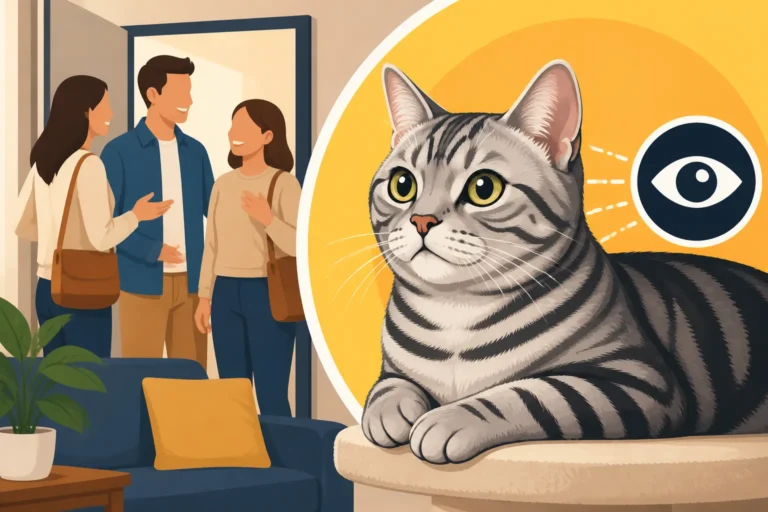
It can be incredibly frustrating when you try to teach your beloved American Shorthair something new, only to be met with a blank stare or a casual stroll away. You’re doling out praise, maybe even a head scratch, but your furry friend seems utterly indifferent. It's not that they're unintelligent or aloof; it's simply that traditional "good job!" enthusiasm often doesn't resonate with a cat whose very ancestors were bred for a far more practical purpose. This guide will dive deep into how to leverage your American Shorthair's powerful, innate prey drive to make clicker training not just possible, but highly effective, turning your seemingly indifferent cat into an engaged, responsive learner.
Understanding Your American Shorthair's Primal Drive
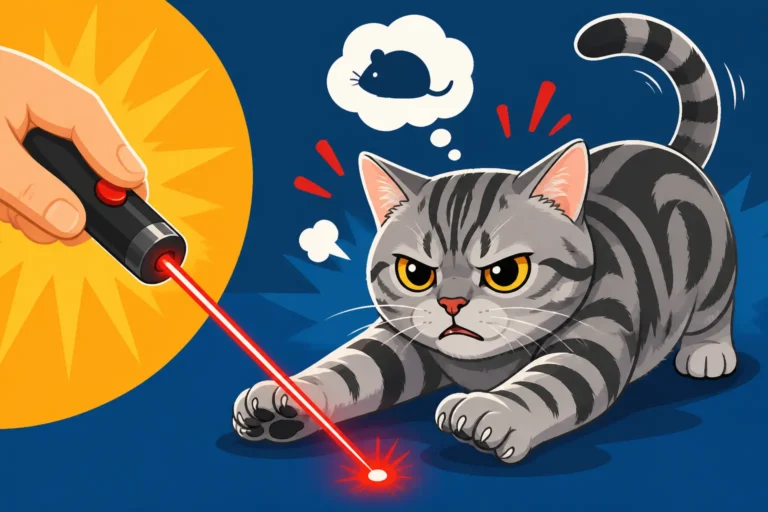
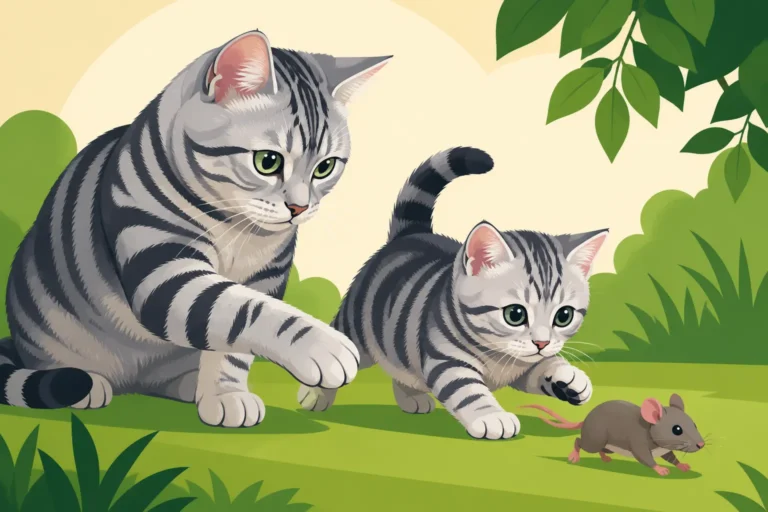
When we talk about American Shorthairs, we're not just discussing a pretty face with a lovely tabby coat. We're looking at a breed steeped in history, a lineage shaped by centuries of self-sufficiency and a very clear job description: hunting. This isn't a cat bred solely for companionship or looks; it's a working cat through and through, and that deep-seated instinct profoundly influences how they learn and what motivates them.
Why Praise Alone Might Not Cut It
Many cat owners, understandably, approach training with the same methods they might use for a dog – verbal praise, enthusiastic pets, and a general air of adoration. And while your American Shorthair certainly appreciates your affection on their own terms, it's often not the primary motivator for learning a new behavior. Their internal reward system is wired for something far more tangible: the hunt and the catch.
Think about it from their perspective. For generations, their survival depended on their ability to stalk, capture, and consume prey. A "good kitty!" from you, while sweet, doesn't offer the same primal satisfaction as a successful hunt. This isn't to say they don't value your attention, but when it comes to motivation for performing a specific action, it's often secondary to what their instincts tell them is truly rewarding. If you've ever tried to get your American Shorthair excited about a new trick using just your voice, and found them wandering off mid-sentence, you're not alone. It can feel like they just don't care, but in reality, they're simply not seeing the "payoff" in human praise. This strong, inherent drive is a direct result of Why Centuries of Ratting Left the American Shorthair Its Drive, making them less reliant on human validation for their sense of accomplishment.
The Clicker as a Precision Marker
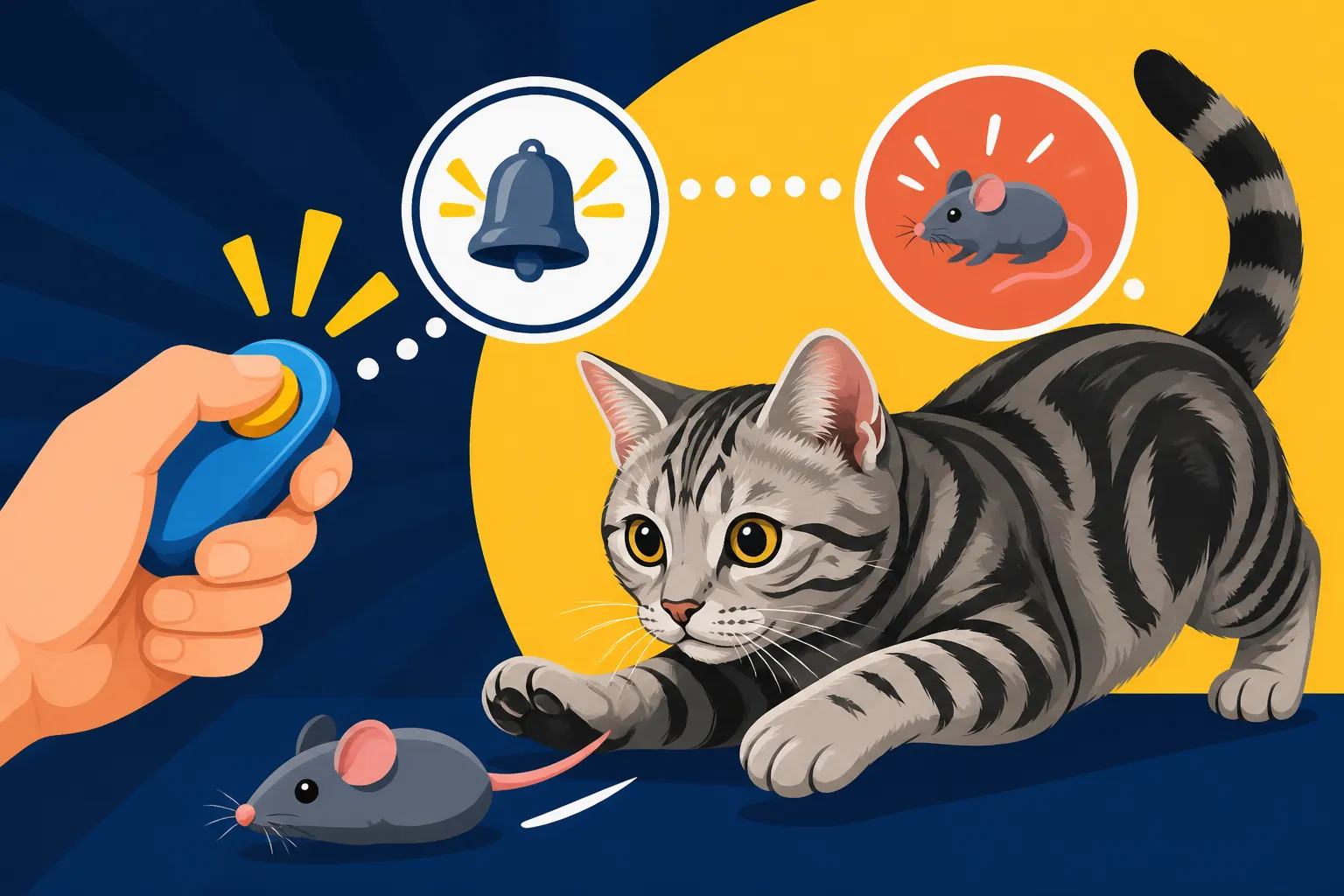
So, if praise isn't cutting it, how do we communicate precisely what we want? Enter the clicker. The beauty of the clicker lies in its absolute neutrality and consistency. Unlike your voice, which can vary in tone, volume, and emotion, a clicker always sounds the same. More importantly, it provides an immediate and exact marker for the desired behavior.
Imagine your American Shorthair is learning to touch a target stick. When their nose touches the stick, the click happens at that exact microsecond. This precision is vital for a prey-driven cat. In the wild, success (the catch) is immediately followed by a reward (the meal). The click mimics this immediate feedback loop. It's a bridge, telling your cat, "YES! That exact thing you just did is what earned you the reward." Without the click, by the time you've fumbled for a treat, your cat might have turned its head, blinked, or taken a step, associating the reward with an entirely different action. The click cuts through the ambiguity, making the learning process crystal clear and incredibly efficient for a cat that values clear cause-and-effect.
Identifying High-Value "Prey" Rewards
This is perhaps the most crucial element when clicker training an American Shorthair. What truly constitutes a "prey" reward for them? It's not just any old kibble, especially not if they have free access to food bowls all day. For a cat whose ancestors hunted for every meal, the reward needs to feel significant, a tangible prize.
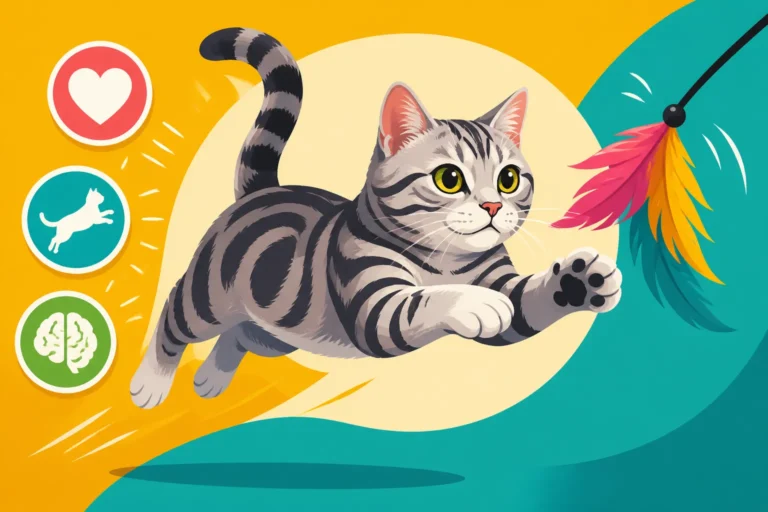
High-value food rewards often include freeze-dried chicken or salmon, small pieces of cooked unseasoned meat, or premium, palatable soft treats. Think about what your cat goes absolutely wild for – that's your gold standard. For some American Shorthairs, especially if they're more toy-motivated, the "reward" might be a short, intense play session with their favorite wand toy, ending with a satisfying "catch" of the toy. This fulfills their natural Play That Finishes the Hunting Sequence for an American Shorthair. You might even find a great selection of high-quality freeze-dried treats or irresistible wand toys on Amazon. Experiment to find their absolute favorites. These aren't everyday snacks; they're training currency. Varying your rewards and sometimes offering a "jackpot" (several treats in quick succession, or a longer play session) can keep motivation high. The key is that the reward must be perceived by them as valuable and directly linked to their innate desires, much like the successful outcome of a hunt.
Setting Up for Success: Your Training Environment and Tools
Successfully clicker training an American Shorthair, especially one primarily motivated by prey, isn't just about the clicker and the treat. It's also about creating the right conditions and having the right tools to set both you and your cat up for success. Remember, these are intelligent, observant animals, and their environment plays a huge role in their focus.
Creating a Distraction-Free Training Zone
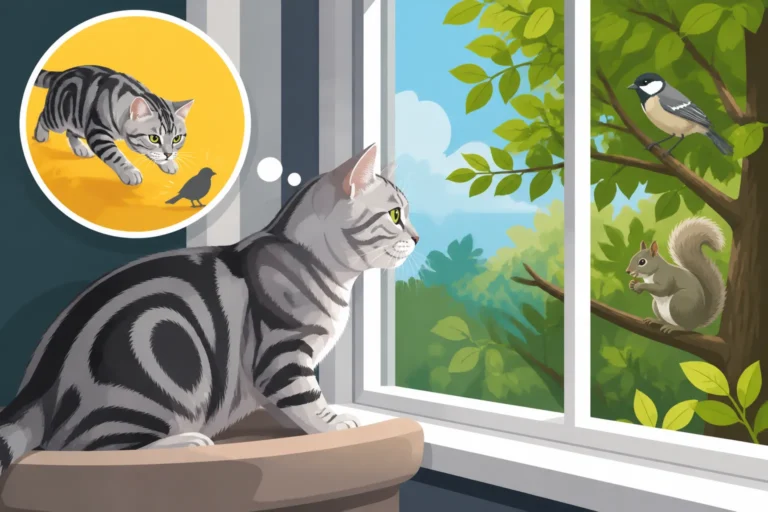
Your American Shorthair, with its sharp senses honed for hunting, is acutely aware of its surroundings. A fluttering curtain, a bird outside the window, the faint sound of the washing machine – any of these can be far more captivating than your attempts to teach them a new trick. To maximize your chances of success, you need to minimize competition for their attention.
Choose a quiet room where you can close the door. Turn off the TV or any distracting music. If there are other pets in the house, make sure they are safely secured elsewhere, out of sight and sound. Even a playful dog or another cat can instantly derail a training session. For an American Shorthair, this quiet focus helps them engage fully, allowing their natural curiosity and drive to kick in without external interference. Keep sessions short, especially when starting out – five to ten minutes, a few times a day, is often more effective than one long, frustrating session. It’s about quality, not quantity, allowing them to truly absorb the connection between their actions, the click, and the highly anticipated reward.
Essential Clicker Training Gear
You don't need a huge arsenal of equipment to start, but having the right basic tools at hand is crucial for seamless training.
First, you'll need a clicker. There are various types: box clickers, button clickers, and even target sticks with built-in clickers. Some cats, particularly those who are more sensitive, might prefer a softer-sounding clicker, which you can often find by searching for quiet cat clickers on Amazon. The specific type matters less than its consistent sound. The key is that it's easy for you to operate quickly and reliably.
Second, and equally important, are your high-value rewards. Keep them pre-portioned and readily accessible. A small pouch around your waist or a bowl right beside you can make a huge difference in delivery speed. Remember, that split-second between the click and the reward is critical for linking the two effectively in your American Shorthair's mind. For toy-motivated cats, have their favorite Which Wand Toy Reads as Prey to an American Shorthair ready for a brief, rewarding chase and "kill." This immediate gratification reinforces the desired behavior in a way that resonates with their innate hunting instincts. Don't forget, you can also explore a variety of cat training clickers and high-value treats on platforms like Amazon to see what works best for your specific cat.
Understanding Their Natural Rhythms
Your American Shorthair's internal clock is largely governed by instinctual patterns, particularly their hunting cycles. These cats are crepuscular, meaning they are most active during dawn and dusk. Attempting to train a cat that's just woken up from a deep nap, or one that's winding down for the night, might lead to less engagement.
Instead, try to schedule your training sessions around their natural bursts of energy and alertness. Observe your cat: when are they most playful, most attentive, most inclined to "patrol" their territory or stare intently out the window? These are often the prime times for clicker training. For many American Shorthairs, this means early mornings or late afternoons/evenings. Recognizing Why an American Shorthair Hunts at Dusk and Why an American Shorthair Wakes at Dawn can give you a significant advantage. Training when their natural drive is already peaking means they'll be more receptive, more energetic, and ultimately, more willing to engage with the "hunt" of the training session. It's about working with their nature, not against it, to make learning a rewarding and instinct-fulfilling experience for them.
The Step-by-Step Guide to Clicker Training for Prey Drive
Now that we understand the American Shorthair's motivation and how to set up the environment, let's get into the practical steps of clicker training. This isn't just about teaching tricks; it's about building a language of clear communication that resonates with your cat's natural instincts.
Charging the Clicker: Making the Connection
Before you ask your American Shorthair to do anything, you need to "charge" the clicker. This means creating a strong, positive association between the sound of the click and the arrival of a high-value reward. Without this foundation, the clicker is just a meaningless noise.
Here's how to do it:
- Preparation: Get your clicker and a handful of those irresistible high-value treats ready. Sit in your designated distraction-free training zone.
- Click and Treat: Click the clicker, and immediately (within one second!) offer your cat a treat. Don't ask for any behavior. Just click, then treat.
- Repeat: Do this 10-20 times in a short session. Don't worry if your cat is looking at the clicker or you; the goal is simply for them to hear the sound and then receive the treat.
- Test the Association: After a few sessions, test if the clicker is "charged." When your cat is not looking at you or the treats, click the clicker. If your cat's head immediately snaps towards you, expecting a treat, then congratulations! The clicker now has meaning. It predicts good things.
It's crucial that you click before the treat is delivered, not during or after. The click signals the exact moment of the desired action, and the treat is the payment. This simple conditioning creates a powerful tool for communication, laying the groundwork for all future training. Your cat needs to understand that the click means a reward is coming, much like a hunter learns that a specific scent or sound predicts prey.
Luring and Shaping Behaviors: Tapping into Instinct
Once the clicker is charged, you can start using it to teach specific behaviors. The methods of luring and shaping are excellent ways to guide your American Shorthair, especially by tapping into their natural movements and curiosity, much like How an American Shorthair Hunts.
-
Luring: This involves using a treat to guide your cat into the desired position or action.
- Choose a simple behavior: "Sit" is a great start.
- Lure: Hold a high-value treat near your cat's nose. Slowly move the treat over their head and towards their tail. As their nose follows the treat, their rear end will naturally lower into a sit.
- Click and Treat: The instant their bottom touches the ground, click, and then give them the treat.
- Repeat: Practice this several times. Once your cat is reliably sitting with the lure, you can start adding a verbal cue (like "sit") just before you lure. Eventually, you'll phase out the treat lure, and your cat will sit on command for the click and treat.
-
Shaping: This is about rewarding successive approximations of a behavior. It's fantastic for teaching more complex actions or for cats who aren't easily lured.
- Define your goal: Let's say you want your cat to touch a specific object with their paw.
- Reward small steps: Start by clicking and treating for any glance towards the object. Then, only click and treat when they take a step towards it. Next, only when they get close. Then, when they touch it with their nose, and finally, when they touch it with their paw.
- Break it down: This method breaks down a complex behavior into many tiny, achievable steps, building confidence and understanding with each click. For an independent American Shorthair, this methodical approach often works better than trying to force an action.
Remember to keep sessions positive and end on a high note. If your cat gets frustrated or distracted, take a break.
Advanced Fun: From Tricks to Puzzle Solving
Once your American Shorthair understands the basic clicker mechanics, a whole world of advanced training and enrichment opens up. This is where you can truly channel their intelligence and hunting instinct (What an Indoor American Shorthair Does With a Mouser's Instinct) into productive, engaging activities.
- Target Training for Agility: Teach your cat to follow a target stick (you can find these with built-in clickers on Amazon). You can use this to guide them over obstacles, through hoops, or onto specific perches. It's a fantastic way to engage their physical prowess and problem-solving skills, allowing them to "patrol" and navigate a simulated environment.
- Retrieving "Prey": Many American Shorthairs can be taught to retrieve small toys. Start by clicking and treating when they simply pick up a toy. Then, when they bring it closer to you. Finally, when they drop it in your hand. This taps directly into their instinct to bring prey back to the "den" (or their human).
- Puzzle Feeders: These are not just for mealtime; they're excellent for mental enrichment and can be integrated into training. Teach your cat to manipulate a puzzle feeder to get a treat, clicking when they succeed. This gives them a "job" to do, mirroring the mental effort required to Whether a Puzzle Feeder Satisfies an American Shorthair in the wild. You can find various types of puzzle feeders suitable for American Shorthairs, from simple treat balls to more complex mazes, often available on Amazon.
- Sequencing and Chains: Combine multiple learned behaviors into a sequence. For example, "sit, then paw target, then come." This offers a higher level of challenge and mental stimulation, keeping your clever American Shorthair engaged and satisfied.
- Harness Training: If you're considering supervised outdoor adventures (like a safe, enclosed yard or a catio), clicker training can make harness introduction much smoother. Click and treat for accepting the harness, then wearing it, then walking in it. This gives them a sense of purpose during walks, like a patrol, rather than just being led.
These advanced exercises provide essential How Much Simulated Hunting an American Shorthair Needs, preventing boredom and channeling their abundant energy and intelligence into positive outlets. The more you engage their minds and instincts, the more fulfilled and well-behaved your American Shorthair will be.
Troubleshooting and Maintaining Motivation
Even with the best intentions and the perfect plan, training sessions don't always go smoothly. American Shorthairs are individuals, and sometimes they'll decide a nap is more appealing than a training session. Understanding how to troubleshoot and maintain their motivation is key to long-term success.
When Your American Shorthair Loses Interest
It's going to happen. You're enthusiastically clicking, your treats are ready, and your American Shorthair just… walks away. Don't take it personally! There are several common reasons for this, and recognizing them allows you to adjust your approach.
- Distractions: Did you forget to close the blinds? Is there a new, intriguing smell from dinner cooking? Their hunting senses are sharp, and external stimuli can easily override your training efforts. Revisit your distraction-free zone.
- Low-Value Rewards: Perhaps the treats you're using today just aren't cutting it. Cats can be fickle! Rotate your high-value rewards, or try something entirely new. Maybe they're tired of freeze-dried chicken and crave a small piece of cooked shrimp.
- Session Length: Cats have shorter attention spans than many dogs. If your session is dragging on, they'll disengage. Keep it brief, five to ten minutes at most, and end on a positive note before they lose interest.
- Fatigue or Discomfort: Is your cat genuinely tired, or perhaps not feeling 100%? Cats are masters at hiding discomfort, but a lack of engagement could be a subtle sign. If it's a persistent issue, a vet check-up might be in order.
- Over-repetition: Doing the same trick repeatedly can become boring. Introduce variety. Mix up the tricks, or change the location.
If your American Shorthair loses interest, simply end the session gracefully. Don't force it. Try again later, or the next day, with a fresh perspective and perhaps a new "prey" reward. Remember, the goal is always a positive experience.
Fading the Lure and Reinforcing on Schedule
Once your American Shorthair reliably performs a behavior with a lure, the next step is to phase out that lure. You want them to perform the action based on your verbal cue or hand signal, not because you're leading them with a treat.
- Miniaturize the Lure: Gradually make the lure smaller and less obvious. Instead of a full treat, use just your finger in the same motion.
- Add the Cue: Start saying the verbal cue (e.g., "sit") before you even start to lure. Your cat will begin to associate the sound with the action.
- Fade the Visual: Eventually, try the verbal cue or hand signal without any lure. If they perform the action, click and reward enthusiastically. If not, go back a step.
- Intermittent Reinforcement: Once a behavior is learned and reliable, you don't need to click and treat every single time. This is called intermittent reinforcement, and it actually makes the behavior stronger and more resistant to extinction (much like a slot machine keeps people pulling the lever, even if they don't win every time). Start by rewarding every other time, then every third time, and so on. Always ensure the click is followed by a treat when you do decide to reward. You can also vary the type of reward – sometimes a treat, sometimes a short burst of play with a wand toy.
The clicker still serves its purpose as a precise marker, but the cat learns that the reward isn't always immediate, mimicking the unpredictable nature of a successful hunt. This keeps them motivated and guessing, strengthening the behavior.
The Long-Term Benefits of Prey-Based Training
Beyond teaching your American Shorthair a few cool tricks, clicker training, especially when focused on their innate prey drive, offers a wealth of long-term benefits for both your cat and your relationship.
- Mental Enrichment: An American Shorthair is an intelligent cat. Giving them a "job" to do, even if it's just a daily training session, provides crucial mental stimulation, preventing boredom and potential behavioral issues like destructive scratching or excessive meowing. It fulfills their need for cognitive engagement that their ancestors found in the hunt.
- Stronger Bond: When you engage with your cat in a way that truly resonates with their nature, you build a deeper connection. They learn to trust you as a source of positive, predictable interactions and fulfilling "hunts." It’s a partnership where you both understand and respect each other's roles.
- Confidence Building: Mastering new skills, even small ones, builds your cat's confidence. This can be particularly beneficial for shy or anxious cats, as it gives them a sense of control and accomplishment.
- Channeling Natural Instincts: For an indoor American Shorthair, clicker training provides a safe, constructive outlet for their powerful hunting instincts. Instead of stalking your ankles or furniture, they can channel that energy into a "hunt" for a specific toy or a treat from a puzzle, fulfilling that instinct in a controlled environment.
- Improved Communication: You learn to read your cat's body language better, and they learn to understand your cues. This clear, positive communication extends beyond training sessions, making daily life together smoother and more harmonious.
By understanding and working with your American Shorthair's primal drives, clicker training becomes a powerful tool for enrichment, behavior management, and forging an even stronger, more respectful bond with your amazing feline companion.
| Reward Type | Best For | American Shorthair Appeal | Notes |
|---|---|---|---|
| Freeze-Dried Meats | High-value, immediate gratification | Very high, mimics natural prey texture and flavor | Excellent for charging the clicker and new behaviors |
| Cooked Meat Pieces | Special "jackpot" rewards, strong motivation | High, especially unseasoned chicken, tuna, or salmon | Use sparingly due to potential for digestive upset and calories |
| Premium Soft Treats | Varied flavors, easy to break into small bits | Moderate to high, depending on flavor and texture | Good for general training, ensure small sizes |
| Favorite Wand Toy | Toy-motivated cats, finishing the hunt | High, directly fulfills chase and capture instincts | Must end with a satisfying "catch" by the cat |
| Puzzle Feeder | Mental enrichment, sustained engagement | High, taps into problem-solving and foraging instincts | Best for extending training or independent play, not instant rewards |
| Kibble | Everyday maintenance, if cat is food-motivated | Low, unless very hungry or for maintenance | Generally not high-value enough for initial training or new behaviors |
Disclaimer
This article is for general informational purposes only and does not constitute professional advice. Laws, prices and regulations vary by location and change over time. Consult a qualified professional for guidance on your specific situation.