How Well an American Shorthair Walks on a Harness
Many American Shorthair owners dream of taking their beloved feline companions on adventures, whether it's a stroll in the backyard or a brave trip to the vet without the typical carrier drama. But let's be real, the idea of getting a cat into a harness and actually walking it on a leash often feels like trying to herd a group of independent-minded squirrels. You might wonder if your placid, yet inherently self-sufficient American Shorthair will tolerate such a thing, or if you're setting yourself up for a wrestling match ending in shredded sleeves and a very offended cat. This guide is here to walk you through the realistic expectations and practical steps for harness training your American Shorthair, helping you navigate their unique personality to achieve some leashed success.
Understanding the American Shorthair's Nature and Its Impact on Harness Training
Before you even think about clipping on a leash, it's crucial to understand the inherent traits of your American Shorthair. These aren't just any house cats; they come from a long, proud lineage of working felines, and those instincts run deep, even if their most strenuous activity now is chasing a feather wand across the living room. Their history directly influences how they might respond to something as seemingly restrictive as a harness.
The Roots of Independence: From Ship to Sofa
The American Shorthair's ancestors were not pampered pets; they were integral members of ships' crews and farmsteads, earning their keep by expertly controlling rodent populations. This historical role bred a cat that is intelligent, resourceful, and decidedly self-reliant. They're not typically "velcro cats" who constantly demand attention or seek endless physical affection. Instead, they often prefer to be with you rather than on you, observing their territory and enjoying their own space. This inherent independence can be a double-edged sword when it comes to harness training. On one hand, their calm and adaptable nature might make them less prone to panic than some more high-strung breeds. On the other hand, their strong sense of autonomy means they might question why on earth they should submit to being "led" by you, especially if they perceive it as an infringement on their personal freedom. You might find that Why a Working Bred American Shorthair Sits Beside You Rather Than On You because they value their own agency. This isn't defiance; it's just who they are, a cat with a clear idea of what they want (and don't want) to do.
They're not bred to be subservient, but rather to be partners in a task, and walking on a leash might not immediately register as a mutually beneficial partnership. Expecting instant compliance or treating them like a dog on a leash is a recipe for frustration. Instead, approach it with patience and respect for their independent streak, understanding that success will come from convincing them it's their idea, or at least a highly rewarding one.
Instinctive Drives: What Motivates an American Shorthair to Explore
Even as pampered indoor companions, American Shorthairs retain a strong prey drive and a profound curiosity about their environment. They were literally born to patrol and explore. While an indoor American Shorthair still fulfills this instinct by "hunting" toys or surveying their domain from a Why a Window Is a Hunting Post to an American Shorthair, the great outdoors offers a sensory explosion that can be incredibly stimulating. This intrinsic desire to explore can be a powerful motivator for harness training. The promise of new sights, sounds, and smells might just be the incentive your cat needs to tolerate the harness.
However, this same drive can also present challenges. An American Shorthair on a leash outdoors isn't merely going for a walk; they're on a patrol, a hunt, an investigation. This means they might suddenly bolt after a rustling leaf, freeze at the sight of a bird, or become overwhelmed by unfamiliar noises. Their instinct to stalk and observe means they're likely to take their time, sniffing every blade of grass, and certainly not walking in a straight line like a dog. Understanding How Strong an American Shorthair's Hunting Drive Is will help you manage expectations. You're not aiming for a brisk walk around the block, but rather supervised outdoor exploration where your cat sets the pace. This exploration needs to be on their terms, making the harness a tool for safe adventure rather than a constraint.
Selecting the Perfect Harness for Your American Shorthair
Okay, so you're ready to embrace the challenge. The first, and arguably most critical, step is choosing the right harness. A poorly fitting or uncomfortable harness won't just be rejected; it can create a lasting negative association that derails your entire training effort. Remember, your American Shorthair is a sturdy, well-muscled cat, so a flimsy harness designed for a tiny kitten or a very delicate breed simply won't do.
Deciphering Harness Types: From H-Style to Vest
When you start looking at cat harnesses, you'll quickly realize there's a surprising variety. The main types you'll encounter are:
- H-style Harnesses: These consist of straps that form an "H" shape, typically going around the neck and behind the front legs, connected by a strap along the back. They are lightweight and allow for a good range of motion. For an American Shorthair, a well-made H-style harness with sturdy straps can be effective, but ensure the straps are wide enough not to dig in and that there's enough adjustability.
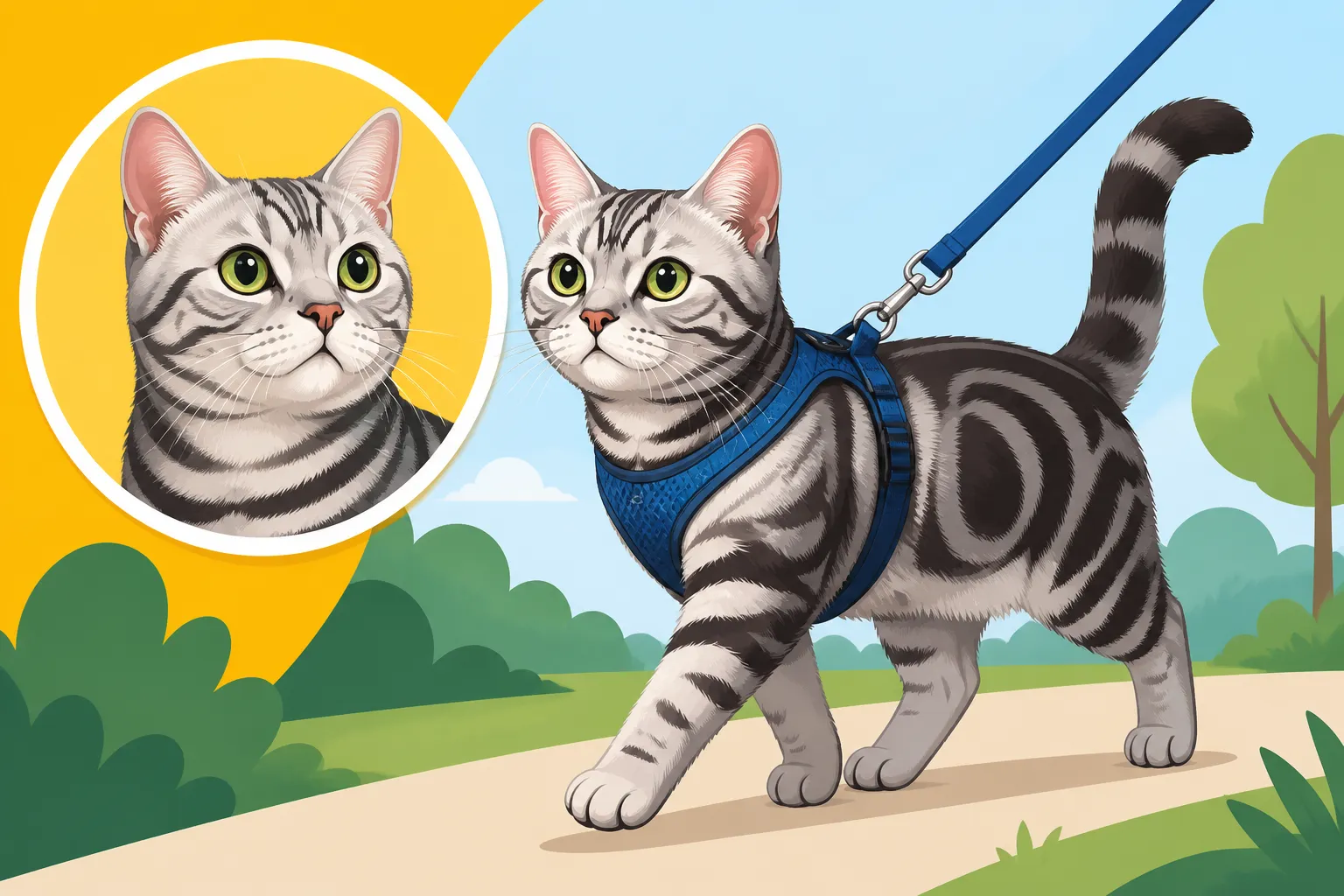
- Vest Harnesses: These are wider, often padded pieces of fabric that cover a larger portion of the cat's torso, distributing pressure more evenly. Many owners find these to be more secure and comfortable for their cats, as they feel less like individual straps. They can be a great option for a strong, square-built American Shorthair, as they are harder to wiggle out of.
- Step-in Harnesses: These are designed for the cat to step their front paws into two loops, and then the harness is pulled up and fastened over their back. They can be easier to put on for some cats who dislike things going over their head.
Each type has its pros and cons, and what works for one American Shorthair might not work for another. The key is to prioritize comfort and security above all else. You'll find a massive selection of all these types from various brands and price points on platforms like Amazon, which allows you to compare features and read reviews from other cat owners. Don't be afraid to order a couple of different styles to try out at home.
| Harness Type | Description | Pros | Cons | Ideal for American Shorthair? |
|---|---|---|---|---|
| H-Style | Thin straps forming an "H" over neck and chest. | Lightweight, good range of motion, often affordable. | Can be easier to escape, straps might dig if not wide enough. | Good for adaptable cats, but needs precise fit to prevent escapes. |
| Vest Harness | Wider fabric, covers more torso, often padded. | Very secure, harder to escape, pressure distributed evenly. | Can be bulkier, some cats dislike the full coverage. | Often a great choice for their muscular build and security. |
| Step-In | Cat steps paws into loops, fastens on back. | Easy to put on without going over the head, less restrictive. | Can be less secure than a vest if not perfectly fitted. | Good for cats who hate things over their head, but check security. |
The Critical Fit: Ensuring Comfort and Escape-Proof Security
Once you've chosen a type, getting the fit absolutely right is non-negotiable. An ill-fitting harness is uncomfortable, unsafe, and will guarantee your American Shorthair hates the experience. Here's what to look for:
- Measure Carefully: Always measure your cat's neck and girth (the widest part of their chest, just behind the front legs) before purchasing. Most harness brands provide sizing charts. Do not guess! Your American Shorthair, with its sturdy build, might require a different size than you'd expect.
- The Two-Finger Rule: Once the harness is on, you should be able to comfortably slip two fingers between the harness and your cat's body at any point. If you can fit more, it's too loose. If you can't fit two, it's too tight. It needs to be snug enough that they can't back out of it, but not so tight that it restricts breathing or movement.
- Check for Chafing: Pay close attention to the areas around their armpits and neck. The material should not rub or irritate their skin. Take it off after a short trial and check for any redness or flattened fur.
- Security Features: Look for sturdy buckles and D-rings for leash attachment. Some harnesses also include additional security features like a double closure system or elastic loops that help keep the fit snug. This is especially important for an American Shorthair who might decide to test the limits of the harness as soon as they get a whiff of something interesting outdoors. Investing in a quality leash from Amazon that is lightweight but strong is also key.
Remember, the goal is for the harness to feel like a second skin, not a straitjacket. Your American Shorthair is discerning, and they'll let you know immediately if something isn't right.
A Step-by-Step Guide to Successful Harness Training
Introducing a harness to your American Shorthair requires patience, positive reinforcement, and a realistic understanding that this isn't a race. You're building trust and positive associations, not just forcing a garment onto them. Think of it as a gradual desensitization process, designed to make the harness a welcome prelude to adventure rather than a source of stress.
The Gentle Introduction: Desensitization and Positive Reinforcement
This is where the real work begins, and it might take days or even weeks. Don't rush it.
- Introduce the Harness's Scent: Start by simply placing the harness near your cat's sleeping area or food bowl. Let them sniff it, explore it, and get used to its presence without any pressure. You can even put it under their favorite blanket.
- Pair with Positive Experiences: The next step is to make the harness synonymous with good things. Place it on the floor and toss a few high-value treats near it. Let them eat the treats while the harness is in their vicinity. Repeat this several times a day.
- Brief Touches: Once they're comfortable with its presence, gently touch the harness to their back, then immediately give a treat. Gradually increase the duration of the touch.
- First Wear (Seconds Only!): Now, the moment of truth. Gently put the harness on, making sure it's snug but not tight. Distract them immediately with their favorite treats or a fun wand toy. The moment they finish the treat or play, or if they show signs of discomfort (freezing, flopping, trying to back out), take the harness off. This first session might last only 5-10 seconds. The goal is to end on a positive note, before they get truly annoyed.
- Gradual Increase in Time: Over the next few days or weeks, slowly increase the duration they wear the harness, always pairing it with treats, praise, or playtime. Let them walk around the house with it on. Supervise them closely, especially at first, to ensure they don't get tangled or chew on it. Keep these sessions short and sweet. When they are used to wearing the harness, you might find they are also more amenable to other routine care, as explored in How Regularly a Healthy American Shorthair Still Needs Checking.
Remember, positive reinforcement is key. Every time they tolerate the harness, even for a moment, reward them generously. If they resist or seem stressed, back off and try again later or shorten the session. Never punish them for disliking the harness; it will only make things worse.
Mastering the Leash: Indoors, Then the Great Outdoors
Once your American Shorthair is completely comfortable wearing the harness around the house, it's time to introduce the leash.
- Leash Introduction Indoors: Attach a lightweight leash to the harness while your cat is wearing it indoors. Let them drag it around for a few minutes under supervision. Again, offer treats and praise. The idea is for them to get used to the feel of the leash without you actively controlling it yet. Ensure the leash isn't so long that they can get tangled or chew it excessively. Many standard cat leashes are readily available on Amazon and are designed to be lightweight.
- Gentle Guidance: After they're okay with dragging the leash, pick up the leash and let it go slack. Don't pull or tug. Simply follow them around the house, allowing them to lead. If they stop, you stop. If they move, you move. Occasionally, offer a gentle, encouraging tug, then immediately release pressure and reward. This teaches them that a little pressure means "move this way" but doesn't feel like a punishment. This is also a good time to gauge How Trainable an American Shorthair Is.
- First Outdoor Forays (Safe Space): Choose a quiet, secure outdoor space for the very first attempt. A fenced yard or a catio is ideal. Avoid busy streets, barking dogs, or anything that could startle them. Carry them outside while they are in their harness and on the leash.
- Explore on Their Terms: Once outside, let them explore. Don't expect them to walk like a dog. They will sniff, stalk, sit, and observe. Your role is to follow and ensure their safety, keeping the leash slack but ready to gently guide them away from danger. These initial outings should be very short, perhaps only 5-10 minutes. Gradually increase the duration as they become more confident. Remember, their territorial nature means they will want to survey their new surroundings carefully.
It's a marathon, not a sprint. Some American Shorthairs might take to it quickly, while others will need much more time and patience. Celebrate small victories, like them wearing the harness for an extra minute, or taking a few steps with the leash attached.
Overcoming Obstacles: Common Challenges and Solutions
Even with the best intentions and a gentle approach, you're likely to encounter a few bumps in the road. American Shorthairs are intelligent and can be quite stubborn when they don't want to do something. Understanding these common challenges and having strategies to address them will save you a lot of frustration.
Dealing with the "Floppy Cat" and Houdini Attempts
It's a classic cat move: you put on the harness, and they immediately flop to the ground, feigning utter incapacitation, or they perform an impressive contortionist act to wriggle free. These behaviors are their way of saying, "I do not approve!"
- The Floppy Cat: When your American Shorthair goes limp or freezes, don't pick them up or try to force them to move. Instead, try to entice them with a high-value treat or a favorite toy just out of reach. Make happy, encouraging noises. If they take even one step, praise them lavishly and give the treat. If they refuse to move after a few minutes, end the session and try again later, keeping it shorter next time. This usually indicates they've reached their tolerance limit for that particular session.
- Houdini Attempts: Cats are masters of escape, and if a harness isn't perfectly fitted, an American Shorthair will find a way out. If they start backing out of the harness, immediately try to gently pull the leash forward (not up) to prevent them from slipping. Reinforce the fit. If it's still too easy for them to escape, you might need a different style of harness, perhaps a vest-style that offers more coverage and security. Always supervise closely during initial outdoor excursions. Never leave a cat unsupervised in a harness, especially outdoors, as they can get tangled or caught. Consider if Whether a Catio Gives an American Shorthair Enough to Do might be a better option if outdoor walks prove too stressful or risky.
The key here is consistency and not giving up after the first few attempts. Many cats resist initially but will eventually tolerate the harness if introduced slowly and positively.
Navigating the World Outside: Distractions and Safety First
Taking your American Shorthair outside on a leash opens up a whole new world, but it also introduces new complexities and potential dangers. Their natural instincts can be a blessing and a curse.
- Overwhelming Distractions: The outdoor world is full of stimuli. Birds chirping, squirrels chattering, the smell of other animals – these can be incredibly distracting for an American Shorthair, whose Why Centuries of Ratting Left the American Shorthair Its Drive is still very much intact. They might suddenly dart, freeze, or become fixated. Start in very quiet, low-stimulus environments. As they gain confidence, gradually introduce them to slightly more varied (but still safe) settings. Always keep a firm but gentle grip on the leash and be prepared to redirect their attention with treats or a quiet voice.
- Encountering Other Animals: Even the most placid American Shorthair can react unpredictably to unfamiliar dogs or other cats. While they may have grown up Why a Barn Bred American Shorthair Was Raised Alongside Dogs, a strange dog on a leash is a different scenario. Avoid dog parks or areas where off-leash dogs are common. If you encounter another animal, pick up your cat (if they're comfortable with it) or calmly steer them away. Your cat's safety is paramount.
- Environmental Hazards: Be mindful of hot pavement, poisonous plants, discarded food, or sharp objects. Always check the ground before allowing your cat to investigate. Consider that Which Injuries an Outdoor American Shorthair Comes Home With can happen even on a leash if you're not vigilant.
- Weather Conditions: American Shorthairs are generally hardy, with a coat built for different weather, but extreme heat or cold can still be dangerous. Keep walks short in less-than-ideal weather, or avoid them altogether.
Ultimately, harness walking with an American Shorthair is about facilitating safe exploration, not demanding a structured walk. It's a way for them to enrich their lives by engaging with the world on a new level, always with your watchful presence and protection. It takes dedication, but the bond you build and the joy of shared experience can be incredibly rewarding.
This article is for general informational purposes only and does not constitute professional advice. Laws, prices and regulations vary by location and change over time. Consult a qualified professional for guidance on your specific situation.