Why an American Shorthair Should Eat Away From Other Cats
If you’ve ever tried to feed multiple cats in the same household, you know it can quickly devolve into a chaotic scene of bowl-guarding, anxious gobbling, or even outright squabbles. It’s a common frustration, and one that can lead to significant stress for both you and your feline companions. This guide will explore why it's so important for your American Shorthair, a breed with deep-seated natural instincts, to eat away from other cats, and how implementing separate feeding practices can lead to a more peaceful, healthier household for everyone.
The American Shorthair's Inner Hunter and Mealtime Dynamics
Our beloved American Shorthairs might be curled up on the sofa now, but their ancestors were master mousers, earning their keep on farms and ships for centuries. This rich history means they come hardwired with certain instincts that profoundly influence their behavior, especially around food. Ignoring these innate traits in a multi-cat household can inadvertently create stress and tension at mealtime.
Even if your American Shorthair appears calm and collected most of the time, that deep-seated hunting drive and instinct for self-preservation kick in when food is present. Cats are solitary hunters by nature, which means they prefer to catch and consume their prey alone, without competition. When you put multiple cats together with shared food bowls, you're essentially asking them to override millions of years of evolutionary programming. This can manifest as anything from subtle intimidation to overt aggression, all stemming from that primal understanding that food is a finite, valuable resource. You might find one cat eating faster, or another waiting until the "bully" has finished, even if there's enough food for everyone. This isn't just rude behavior; it's a deep-seated instinct to secure their meal, a trait that helped Why an American Shorthair's Appetite Outlasted Its Job.
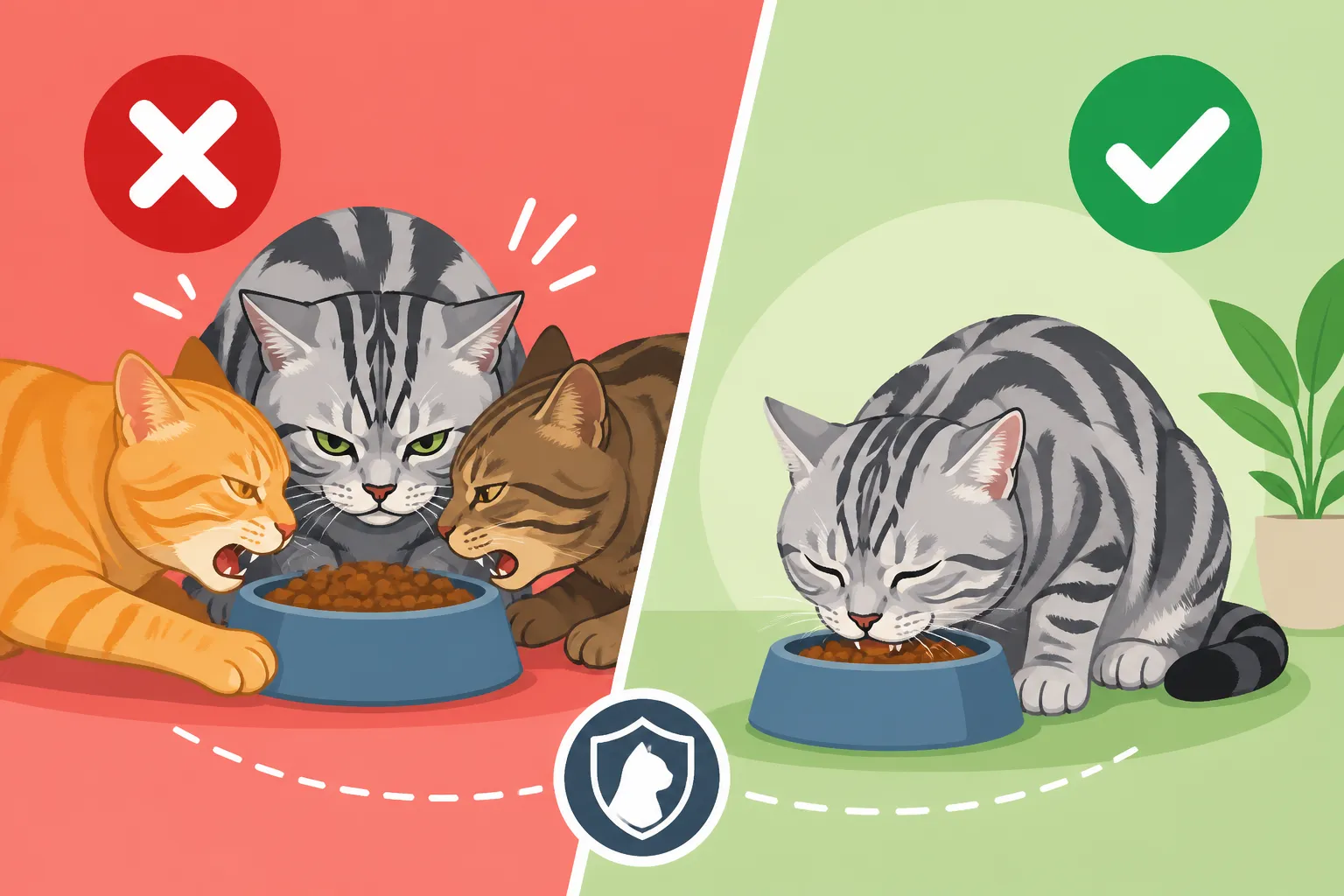
Consider your American Shorthair's ancestry for a moment. They weren't bred to politely share a communal feast; they were bred to hunt and eat on their own terms. While they've adapted beautifully to domestic life, the underlying wiring remains. When multiple cats are forced to eat in close proximity, it often leads to what's known as "resource guarding." One cat might physically block access to the food, or simply stare down a housemate, using body language to communicate, "This is mine." The other cat, rather than engaging in a direct confrontation, might defer, leading to undereating or a hurried, anxious eating style. This quiet stress can be easily missed but significantly impacts a cat's well-being and digestion. How Much a Working Framed American Shorthair Should Eat might seem like a straightforward question, but the answer changes dramatically when feeding alongside competitors.
Why Multi-Cat Feeding is a Recipe for Stress and Potential Health Problems
When cats are forced to share feeding spaces, or even just eat within sight of each other, it can lead to a host of behavioral and health issues that are often attributed to other causes. The subtle stresses of communal dining can disrupt the peace in your home and affect your American Shorthair's long-term health.
One of the biggest concerns is resource guarding, which we touched on earlier. This isn't always overt fighting. Often, it's a silent dance of intimidation. A more dominant cat might position itself near the food, preventing others from approaching until they've had their fill, or even after. The subordinate cat, sensing this tension, might choose to eat only when the coast is clear, or might race through their meal in a frantic effort to get some food before it's gone or contested. This hurried eating can lead to digestive upset, vomiting, and a general state of anxiety around food. It’s also important to remember that not all cats are good at self-regulating, especially if they feel competition; Why a Bowl Left Down Undoes an American Shorthair can become very apparent if one cat is constantly eating more than their fair share.
This chronic stress has real physical consequences. Cats that eat too quickly or under duress can suffer from indigestion, vomiting, and even conditions like inflammatory bowel disease exacerbated by anxiety. On the flip side, the more dominant cat might overeat, leading to weight gain and obesity, a common problem for indoor American Shorthairs whose hunting days are behind them. What Extra Weight Does to an American Shorthair's Working Frame can include joint issues, diabetes, and a decreased quality of life. Conversely, the more timid cats might undereat, leading to malnutrition or weight loss. It becomes incredibly difficult to monitor individual intake, making it hard to notice if one cat isn’t eating enough due to illness, or if another is consistently stealing food. Trying to understand Whether an American Shorthair Knows When It Is Full becomes impossible when they're driven by competitive instinct.
Furthermore, feeding disputes can spill over into other areas of the cats' lives. The stress around food can escalate into broader territorial conflicts, impacting their use of litter boxes, resting spots, and even their general interactions. Imagine constantly feeling like you have to compete for your next meal; it's an exhausting and unsettling way to live. This underlying tension can undermine the bond between your cats and lead to a generally less harmonious household. Even seemingly placid American Shorthairs can experience this low-level stress, which can lead to behavioral changes like increased hiding, irritability, or even inappropriate urination if their sense of security is compromised. How to Introduce an American Shorthair Without a Territory Fight often starts with separate resources, and feeding is at the top of that list.
Practical Strategies for Peaceful, Individual Mealtimes
The good news is that there are many effective strategies to ensure each of your American Shorthairs can eat in peace, minimizing stress and promoting better health. It might take a little adjustment, but the benefits for your cats' well-being are immeasurable.
Creating Separate Dining Areas
The most straightforward approach is to feed your cats in entirely separate rooms. This might sound like a hassle, but it's incredibly effective. One cat in the kitchen, another in the bathroom, and perhaps a third in a spare bedroom. Close the doors while they eat. This eliminates visual and physical competition, allowing each cat to focus solely on their meal without feeling rushed or threatened. This method is particularly effective if you have cats with very different eating paces or dietary needs, such as one on a prescription diet and another on regular food. It ensures that the specific amount of food, like How Many Calories a Working Framed American Shorthair Needs a Day, meant for each cat is actually consumed by them.
If separate rooms aren't feasible, consider using vertical space. Cats naturally feel safer and more confident when they are elevated. Place one food bowl on a sturdy cat tree or a high shelf (ensure it's safe and stable), and another on the floor. This creates a perceived distance and a sense of individual territory. You might find that a more timid cat prefers the elevated spot, while a bolder one is content on the ground. However, be mindful that one cat doesn't simply claim both spots. You might need to experiment with different heights and locations to find what works best for your specific feline dynamics.
Leveraging Technology: Microchip and Timed Feeders
For those who need a more automated solution, microchip feeders are a game-changer, especially in multi-cat households where one cat is prone to stealing another's food. Brands like SureFeed (which you can often find on Amazon or Chewy) are designed to open only for the cat whose microchip or RFID tag it recognizes. This ensures that each cat eats only their own food, making it ideal for managing special diets, weight loss programs, or medications. Imagine the relief of knowing your American Shorthair on a specific therapeutic diet isn't having their food pilfered by a housemate! This truly answers the question Whether a Microchip Feeder Works in a Two American Shorthair House with a resounding yes.
Timed feeders are another excellent tool, particularly for controlling portion sizes and establishing a routine. While they don't prevent inter-cat food stealing on their own, pairing them with separate feeding locations can be very effective. Set multiple timed feeders to dispense food simultaneously in different rooms, allowing each cat to eat without feeling rushed. This can also help you portion out meals more accurately, which is crucial for a breed like the American Shorthair that can easily put on weight if not managed. When considering the best options for your cats, look for reliable models that offer flexible programming and are easy to clean. Many reputable pet supply retailers, like Chewy, offer a wide selection of these devices.
Routine and Consistency
Whatever method you choose, consistency is key. Cats thrive on routine. Feeding at the same times each day helps reduce anxiety and establishes predictability. They learn to expect food at certain intervals and in specific locations, which can minimize resource guarding and stress. A predictable schedule helps your American Shorthair feel secure, knowing their next meal is coming and won't be contested. Remember, even though Why an American Shorthair is a Low Anesthetic Risk indicates a robust physical constitution, they still benefit immensely from a stable and predictable environment to maintain overall well-being.
| Feeding Method | Pros | Cons | Ideal For |
|---|---|---|---|
| Free Feeding | Convenient for owners | Easy overeating, resource guarding, difficult to monitor individual intake | Single, self-regulating cat |
| Scheduled Meals | Better portion control, routine established | Still prone to competition if bowls are shared | Single cat or highly compatible multi-cat households |
| Separate Rooms | Eliminates competition, perfect for special diets, reduces stress | Requires owner presence at mealtime, logistics of multiple rooms | All multi-cat households, especially those with dietary needs or conflict |
| Microchip Feeders | Ensures individual cats eat only their food, prevents stealing, excellent for special diets | Initial investment cost, cats need to be chipped/tagged, may not prevent all forms of intimidation | Multi-cat homes with dietary differences, food stealing, or resource guarding |
| Vertical Feeding | Utilizes space, provides perceived separation | Not foolproof against all competition, may be inaccessible for older/less agile cats | Multi-cat homes with limited horizontal space, agile cats |
The Long-Term Benefits of Feeding Your American Shorthair Separately
Implementing separate feeding strategies might seem like an extra step in your daily routine, but the long-term benefits for your American Shorthair and the overall harmony of your multi-cat home are truly worth the effort. It's about more than just preventing fights; it's about fostering a healthy, stress-free environment for your feline family.
One of the most immediate and significant advantages is improved health and weight management. When each cat has their own undisturbed feeding station, you can precisely control their portions. This is especially vital for American Shorthairs, a breed known for its sturdy build and hearty appetite. Without the pressure of competition, a cat can eat at their own pace, and you can easily monitor how much each individual is consuming. This helps prevent both overeating, which can lead to obesity and associated health issues like diabetes, and undereating, which might indicate an underlying health problem. You can properly implement a weight loss plan if needed, ensuring that each cat gets the exact amount of food recommended to reach What an American Shorthair Weighs at One and How Much Is Left or maintain a healthy weight.
Beyond physical health, separate feeding dramatically reduces stress and anxiety in your cats. Imagine the relief of not having to constantly look over your shoulder while you eat. This feeling of security at mealtime translates into a calmer, more confident cat overall. You'll likely see a decrease in subtle aggressive behaviors, like staring or swatting, and a general improvement in the relationships between your cats. A less stressed cat is often a happier, more playful, and more affectionate cat. This peace of mind is invaluable, especially for the stoic American Shorthair who might otherwise hide their discomfort rather than openly display it.
Lastly, separate feeding fosters a stronger bond between you and each individual cat. Mealtime becomes a positive interaction rather than a source of tension. You can give each American Shorthair individual attention as they eat, reinforcing trust and positive associations. It also allows you to observe their eating habits more closely, giving you early warning signs if something is amiss. You'll truly understand each cat's unique personality and preferences without the distorting lens of competition. By making mealtime a safe, solitary, and consistent experience, you're not just feeding your cats; you're nurturing their well-being and strengthening the foundations of a harmonious home.
Disclaimer
This article is for general informational purposes only and does not constitute professional advice. Laws, prices and regulations vary by location and change over time. Consult a qualified professional for guidance on your specific situation.