Whether an American Shorthair Prefers Sisal or Cardboard
It's a familiar scenario for so many cat parents: you’ve invested in what you think is the perfect scratching post, only to find your beloved American Shorthair still enthusiastically sharpening their claws on your favorite armchair. Choosing the right scratching surface for these wonderfully sturdy cats can feel like a mystery, but understanding their natural instincts and preferences, especially between popular options like sisal and cardboard, is key to saving your furniture and keeping your feline friend happy. This guide will help you navigate the great scratching material debate, ensuring your American Shorthair gets exactly what they need.
Understanding Your American Shorthair's Scratching Instincts
Before we dive into the merits of sisal versus cardboard, let’s take a moment to really understand why our American Shorthairs feel the irresistible urge to scratch in the first place. It’s not just about destroying your upholstery, I promise! This behavior is deeply ingrained, a legacy of their wilder ancestors and their long history as working cats.
Your American Shorthair scratches for a variety of critical reasons, and recognizing these helps us provide the best outlets. Firstly, scratching is a vital form of claw maintenance. Cats shed the outer layers of their claws, revealing the sharp, new ones underneath. Think of it like a manicure, but much more intense! Without appropriate surfaces, their claws can become overgrown, painful, and even impact their ability to walk or grip. Secondly, it's a powerful way to stretch and exercise their muscles. Watch your cat scratch: they extend their bodies fully, arching their backs and flexing their shoulders, getting a full-body workout that feels incredibly good.
But perhaps most importantly, scratching is a significant method of marking territory. Cats have scent glands in their paws, so every time they scratch, they’re leaving behind both a visual mark and a unique scent signature. It’s their way of saying, “This is my home, my space,” to themselves and any other felines in the vicinity. For an American Shorthair, a breed that historically patrolled barns and ships, this territorial marking is particularly strong. They come from a lineage where asserting their presence was part of their job, especially when it came to keeping rodent populations in check. The American Shorthair Still Hunts, Whether You Want It To or Not This strong, independent nature means they value their routines and boundaries, and scratching is a core part of establishing those. Ignoring this instinct or failing to provide suitable scratching alternatives means they will find their own solutions, and those solutions are often your most cherished possessions.
The Case for Sisal Scratching Posts for Your American Shorthair
When you think of a traditional scratching post, you're likely picturing one wrapped in sisal. This natural fiber, derived from the agave plant, has long been a go-to for cat scratchers, and for good reason. It offers a unique combination of durability and texture that can be incredibly appealing to many American Shorthairs.
The Durability and Feel of Sisal
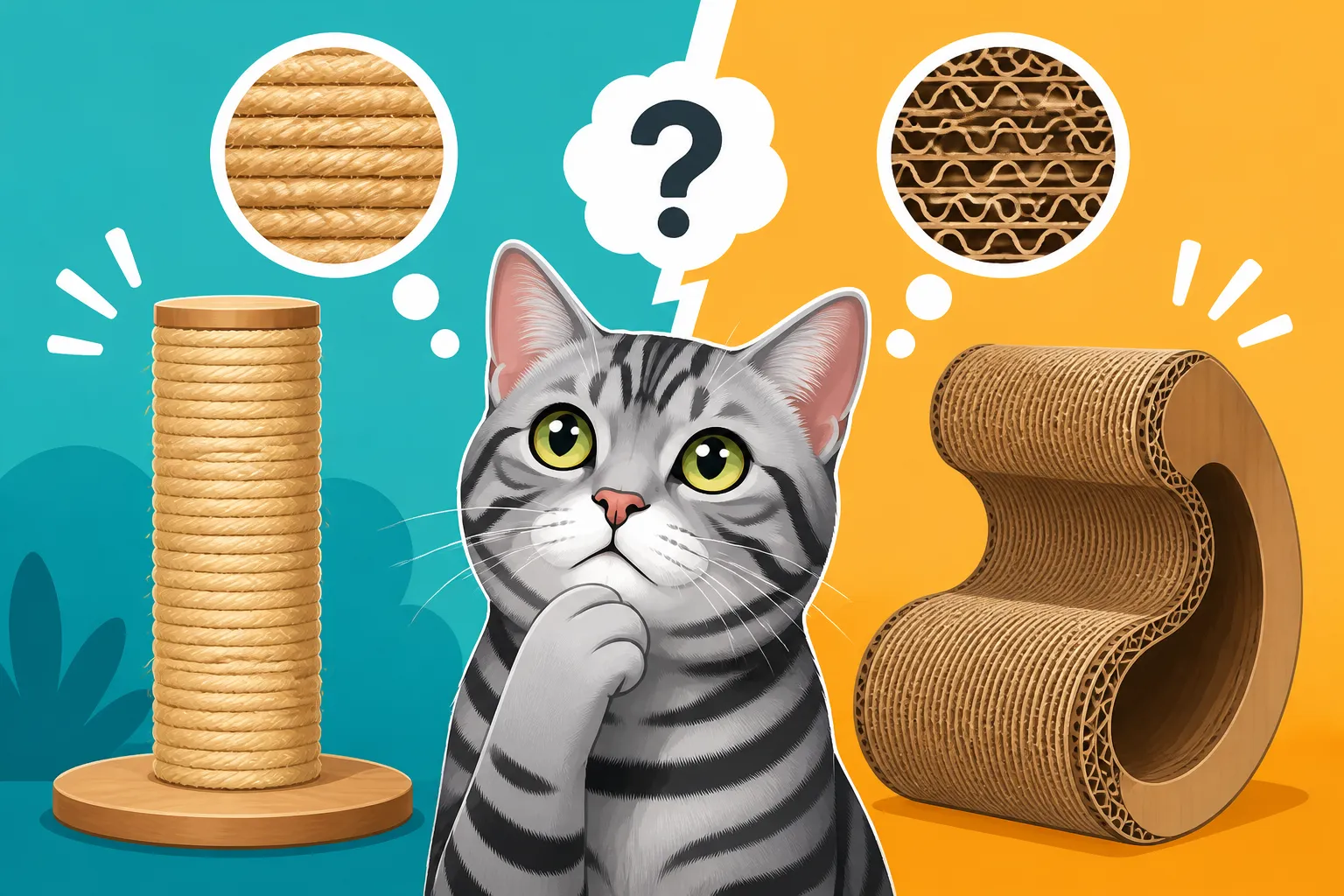
Sisal's texture is often described as coarse, fibrous, and tightly woven. For an American Shorthair, this can be fantastic because it closely mimics the rough bark of a tree trunk – the ultimate natural scratching surface. When a cat sinks its claws into sisal, it provides substantial resistance, allowing them to get a really satisfying, deep scratch. This resistance helps effectively remove those old claw sheaths and gives them the full-body stretch they crave. You'll often find sisal in two main forms: sisal rope, which is tightly wound around a core, and sisal fabric, which covers a flat surface. Many American Shorthairs seem to enjoy the varied sensation, and a robust sisal post feels secure under their paws, giving them the confidence to really dig in. They are solid, sturdy cats, and they need a scratching surface that can stand up to their impressive strength. A flimsy, wobbly post won't cut it, but a well-constructed sisal post will provide the stability they demand. You'll frequently see sisal covering taller, vertical posts, which are excellent for cats who prefer to stretch upwards while scratching, really working those back muscles.
Maintenance and Longevity
One of the biggest advantages of a good sisal scratching post is its longevity. While no scratching post lasts forever (nor should it, as wear and tear are signs of a well-used and loved item!), sisal tends to hold up very well against the powerful claws of an American Shorthair. Because it's so durable, you won't find yourself replacing it nearly as often as some other types of scratchers. Over time, sisal might fray a bit, but this often makes it even more appealing to cats as it gives them more loose fibers to pull and shred, which many find immensely satisfying. Cleaning a sisal post is usually quite straightforward; a quick vacuum or brush-down can remove loose fibers and shed fur. If it gets dirty, a damp cloth with mild soap can usually spot clean it, but always allow it to dry completely. A high-quality sisal post, perhaps found on Amazon or through specialty pet retailers like Chewy, can become a long-term fixture in your home. Remember, the goal is to provide a consistent, satisfying outlet for their scratching needs, and sisal delivers on that front. Which Post Lets an American Shorthair Condition Its Claws
The Allure of Cardboard Scratchers for American Shorthairs
Cardboard scratchers have exploded in popularity over recent years, and it’s not hard to see why. They offer a completely different tactile experience from sisal, one that many American Shorthairs find absolutely irresistible.
The Appeal of a Shreddable Surface
Unlike the tough, fibrous resistance of sisal, cardboard scratchers provide a gloriously shreddable surface. The act of tearing and ripping the corrugated cardboard can be incredibly satisfying for a cat, mimicking the tearing action they might use on prey or other natural elements in the wild. It gives them an immediate, tangible result for their efforts, which can be very reinforcing. I've seen many American Shorthairs become completely engrossed in systematically deconstructing a cardboard scratcher, bits of cardboard flying as they work. This isn't just about sharpening claws; it's about the sheer joy of destruction, a harmless outlet for their inner predator. Cardboard scratchers come in a fantastic array of shapes and sizes: flat mats, curved lounge-style scratchers, angled wedges, and even bowl-shaped options that your cat can curl up in after a vigorous scratching session. This variety allows you to cater to your American Shorthair’s preferred scratching posture, whether they like to stretch out horizontally, lean against a curve, or attack from an angle. Some cats even enjoy pulling out individual pieces of cardboard, really getting a full "hunt and destroy" experience that satisfies their primal urges.
Cost-Effectiveness and Variety
One of the undeniable benefits of cardboard scratchers is their affordability and the sheer variety available. Because they are generally less expensive than sisal posts, you can experiment with different shapes, sizes, and placements without a significant financial commitment. This is particularly useful when you're still figuring out your American Shorthair's specific preferences. You can pick up a few different styles from Chewy or Amazon and place them strategically around the house to see which one becomes the favorite. When one gets thoroughly shredded (a sign of success!), it’s easy and affordable to replace. This also makes them a great option for multi-cat households or for placing in several rooms, ensuring your American Shorthair always has an appropriate outlet nearby. From an environmental perspective, most cardboard scratchers are made from recycled materials and can be recycled again once your cat has completely decimated them, making them a relatively guilt-free purchase. The fact that they are disposable isn't a drawback but rather a feature, allowing for fresh, satisfying scratching experiences again and again.
How to Determine Your American Shorthair's Personal Preference
The truth is, there's no universal answer to whether an American Shorthair prefers sisal or cardboard. Every cat, even within a breed known for its amiable nature, is an individual with unique quirks and preferences. What drives one cat wild with scratching delight might be completely ignored by another. The key is to become a keen observer of your own feline companion.
The Experimentation Phase: Offering Both Options
The absolute best way to figure out your American Shorthair's preference is to offer both sisal and cardboard scratchers simultaneously. Don't just get one of each and stick them in a corner; think strategically about placement. Place a sisal post in a prominent area where your cat likes to stretch or mark, perhaps near their favorite napping spot or a high-traffic entryway. Then, put a cardboard scratcher in another prime location, maybe by a window they like to perch at or in a room where they spend a lot of time.
Consider offering both vertical and horizontal options for each material. Some cats are strictly vertical scratchers, while others prefer to stretch out along the floor. Your American Shorthair might enjoy a tall sisal post for a full stretch, but also a flat cardboard scratcher for a quick horizontal claw trim. To initially entice them, you can try sprinkling a little catnip on the new scratchers or using a pheromone spray specifically designed to attract cats to scratching surfaces. Positive reinforcement is always your best friend – if you see your American Shorthair using the new scratcher, offer praise or a small treat.
Observing and Adapting
Once you've introduced both types, it's time to become a cat detective. Pay close attention to which scratcher your American Shorthair gravitates towards most frequently. Do they prefer the satisfying shred of cardboard, leaving a trail of little bits? Or do they lean into the tough resistance of the sisal, pulling at the fibers? Observe their body language: are they stretching fully, looking content, and returning to the same spot? This is your feedback loop.
Don't be afraid to adjust. If a scratcher isn't being used, try moving it to a different location. Sometimes, a subtle shift can make all the difference. If they ignore a vertical post, perhaps they’d prefer a horizontal cardboard lounger. You might also notice they use different types for different activities – perhaps sisal for a morning stretch and cardboard for an afternoon de-stress session. It's not uncommon for cats to develop a preference over time, or even to use both for different purposes. Remember, a cat’s preference isn’t static, and what they like today might not be what they like in a year. Keep a variety available, and replace well-loved (and well-worn) scratchers promptly. How Many Scratching Posts an American Shorthair Needs
Maximizing Success: Beyond Just the Material
While the choice between sisal and cardboard is central, there are other crucial factors that significantly influence whether your American Shorthair will actually use the scratching post you provide. Overlooking these details can lead to frustrated cats and damaged furniture, regardless of how perfect the material seems.
Stability and Size Matter
This is a non-negotiable, especially for a sturdy, muscular breed like the American Shorthair. A flimsy, wobbly scratching post is worse than no post at all. Imagine trying to get a good stretch or really dig your claws into something that tips over or slides away as soon as you apply pressure. It’s annoying, unsafe, and will immediately discourage your cat. American Shorthairs are solid, well-built cats, and they need a scratching post that can withstand their full weight and enthusiasm. Look for posts with a wide, heavy base that prevents tipping. If it’s a tall post, ensure it’s firmly anchored. For cardboard scratchers, make sure they are heavy enough not to slide across the floor during an intense scratching session. A stable scratcher provides confidence and allows your cat to fully engage in the satisfying act of scratching without hesitation.
Placement is Key
You could have the most expensive, perfectly textured scratcher in the world, but if it’s in the wrong spot, your American Shorthair will ignore it. Cats are territorial, and they want to scratch where it matters most to them. Often, this is right in the heart of the action, near their favorite napping spots, by windows where they watch the world, or, crucially, exactly where they currently scratch your furniture. If your American Shorthair has taken a liking to your sofa arm, place a highly appealing scratcher directly in front of that spot, or even cover the sofa arm with the scratcher temporarily. Why an American Shorthair Keeps Its Claws Conditioned on Your Sofa This redirects their natural instinct to the appropriate surface.
Think about the “flow” of your home. Cats often like to stretch and scratch upon waking from a nap, so having a scratcher near their bed is a great idea. Placing them near entryways or high-traffic areas also makes sense, as these are places where they want to leave their scent mark. Don't hide the scratchers away in an unused room; make them accessible and prominent.
Encouragement and Reinforcement
The final piece of the puzzle is positive encouragement and consistent reinforcement. When you first introduce a new scratcher, make it inviting. As mentioned, a sprinkle of catnip or a rub with silvervine can work wonders. Play with your American Shorthair near the scratcher, perhaps using a wand toy that leads them to stretch up and interact with it.
Crucially, never punish your cat for scratching in the "wrong" place. This only teaches them to fear you or to scratch covertly when you're not around. Instead, gently redirect them to the appropriate scratcher. Pick them up and place their paws on the scratcher, or physically lead them to it and demonstrate scratching yourself (or pretend to). When they use the correct scratcher, praise them enthusiastically, offer a small treat, or engage in a favorite play session. Over time, your American Shorthair will associate the scratcher with positive experiences and understand it's the designated spot for their important claw maintenance and territorial marking. Consistency is key, and with patience, your American Shorthair will become a scratcher superstar, leaving your furniture intact.
Here's a quick comparison of sisal and cardboard scratchers to help you decide:
| Feature | Sisal Scratchers | Cardboard Scratchers |
|---|---|---|
| Material | Natural agave fibers, woven or roped | Corrugated paper layers |
| Texture | Coarse, tough, resistant, mimics tree bark | Shreddy, yielding, offers ripping sensation |
| Durability | Very durable, long-lasting | Disposable, wears out faster |
| Cost | Generally higher initial investment | More affordable, easily replaceable |
| Shapes/Types | Primarily vertical posts (rope/fabric), mats | Wide variety: flat, angled, curved, bowl, vertical |
| Claw Benefit | Excellent for deep stretching, removes sheaths | Satisfying shredding, good for full claw engagement |
| Maintenance | Easy to clean, occasional fraying | Leaves cardboard bits, requires frequent replacement |
| Appeal | Great for vigorous scratchers, full-body stretch | Appealing for shredding instinct, variety of postures |
| Environmental | Long-lasting reduces waste | Often made from recycled materials, recyclable |
Disclaimer
This article is for general informational purposes only and does not constitute professional advice. Laws, prices and regulations vary by location and change over time. Consult a qualified professional for guidance on your specific situation.