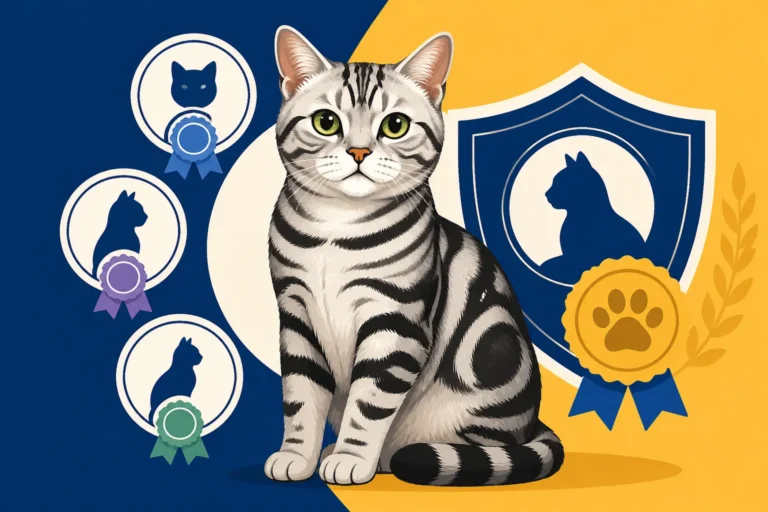
Whether the American Shorthair Is Popular Outside America
A cat breed can be familiar in photos and still be hard to find from a responsible breeder in your own country. That mismatch is part of the American Shorthair’s story outside the United States: people may recognize its sturdy build and silver tabby coat, while local registries and breeding communities give it much less visibility.
How popular is the American Shorthair outside the United States
The American Shorthair is known internationally, but recognition is not the same as widespread availability. In some places, people encounter the breed through cat shows, imported pedigrees, or online content; in others, the name is familiar while registered breeders are few.
It also helps to separate three different things: whether a registry recognizes the breed, whether breeders actively produce it, and whether the average household is likely to own one. Those measures do not always line up. A breed can be recognized by an organization without appearing often in local homes, and a cat that looks similar may be much more common than a registered American Shorthair.
Familiarity is not the same as local popularity
The American Shorthair has a clear identity in its home country: a medium-to-large, sturdy cat with a balanced body and a short, dense coat. Its silver tabby pattern is especially recognizable. Outside the United States, however, many people may simply describe a similar-looking cat as a tabby or domestic shorthair rather than identifying it as an American Shorthair.
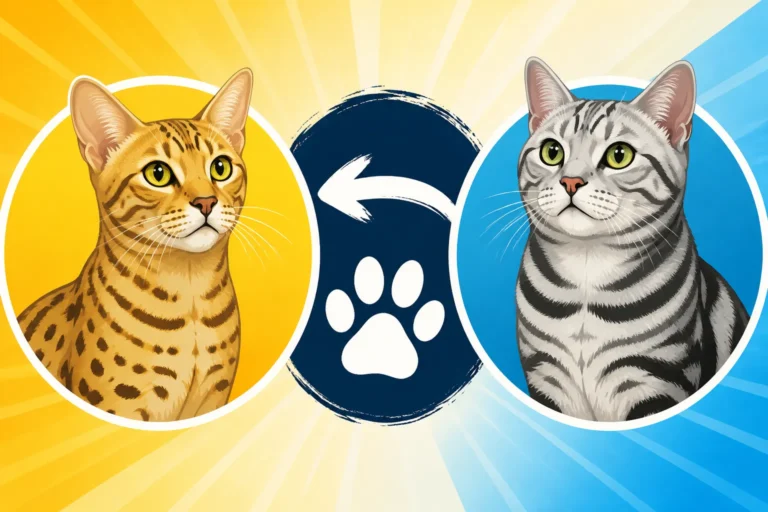
That distinction matters when you are trying to judge popularity. A person in London, Paris, or Sydney might see cats with the same general coat pattern every week, but those cats are not necessarily registered American Shorthairs. Coat color and body shape alone do not establish pedigree, and a domestic shorthair can look remarkably similar.
As a result, the breed may seem more common in photographs, social media, or general pet discussions than it is in local breeding programs. Seeing an American Shorthair featured in a post does not tell you whether a nearby breeder has a litter, whether local registries recognize the breed, or whether the cat’s pedigree can be documented.
Popularity depends on what you are measuring
For a prospective owner, “popular” often means “Can I realistically find one near me?” For a registry, it may mean the number of cats registered or shown. For a casual cat lover, it may mean how often the breed appears in entertainment or online. These are related, but they answer different questions.
A practical comparison looks like this:
| Measure | What it tells you | What it does not tell you |
|---|---|---|
| Registry recognition | Whether a particular organization accepts the breed under its rules | How many cats live in the country |
| Breeder availability | Whether registered kittens are being bred locally or imported | Whether the breed is widely known |
| Show presence | Whether breeders and owners participate in local competitions | How common the breed is among household pets |
| Online visibility | Whether people encounter the breed in media or searches | Whether a listing represents a verified pedigree |
| Similar-looking cats | How often the general appearance occurs | Whether those cats are American Shorthairs |
If you are researching the breed’s broader profile, How Popular the American Shorthair Is and Where the American Shorthair Ranks in Registrations are useful companion topics. Registration figures can show activity within a particular organization, but they should not be treated as a complete census of every cat in a country.
Why the breed’s visibility varies by country
Cat-breed popularity grows through a mix of local history, breeder networks, show rules, and public preference. A breed with many established breeders and strong show participation in one country can be uncommon elsewhere, even when its temperament and appearance appeal to the same kinds of households.
The American Shorthair also competes for attention with breeds that have deeper local breeding networks or a stronger presence in a region’s cat culture. That does not make it less suitable as a pet. It simply means that a person searching for one may need to spend more time checking credentials and considering whether an import is practical.
Registry recognition shapes what people see
Cat registries help define which cats can be entered under a specific breed name in shows and breeding records. Their rules differ, and recognition by one organization does not automatically mean acceptance by another. For an international buyer, this can affect how a breeder documents a kitten and which competitions the cat may enter.
Before contacting breeders, identify the registry or registries that matter in your country. Then check whether the American Shorthair is listed, what pedigree documents are required, and whether imported cats can be registered locally. The overview Which Registries Recognize the American Shorthair can help frame those questions. You can also check the organization’s own breed listings rather than relying only on a breeder’s website or a social post.
This is particularly useful when a seller uses terms such as “American-type,” “American Shorthair mix,” or “silver tabby.” Those descriptions may be honest descriptions of appearance, but they do not necessarily mean a cat is a registered American Shorthair. Ask for the pedigree and registration details, and make sure the issuing organization is one your local registry accepts.
The breed’s position differs across regions
In some countries, the American Shorthair is easier to find because breeders import breeding cats or maintain connections with overseas programs. In other places, the breed may be known mainly through online searches and occasional show entries. That difference can change the experience of buying one: a local kitten may be available in one region, while another buyer may need to wait, travel, or investigate an import.
Europe is a good example of why it is worth checking country by country rather than making a continent-wide assumption. A breed can have a small, dedicated following in one European community and very limited availability elsewhere. Whether the American Shorthair Is Bred in Europe explores that question more specifically, while Whether the GCCF Recognizes the American Shorthair and Whether the FIFe Recognizes the American Shorthair can help readers understand why recognition by one major registry may not translate into recognition by another.
Asia is similarly varied. Japan has an active cat culture and a substantial interest in pedigreed cats, but the presence of a breed in a country does not mean it is equally common in every city or recognized in every organization. For a more focused look, see Whether the American Shorthair Is Popular in Japan and Whether the American Shorthair Is Bred in Asia. A buyer in Tokyo may face different options from someone in a smaller city or in another Asian country.
Local cat names can blur the picture
In everyday conversation, many people use “shorthair” as a description rather than a breed name. That can make searches confusing. A listing may show a short-haired tabby with a broad face and compact body, but if the breeder cannot provide a verifiable pedigree, you should not assume the cat is an American Shorthair.
This confusion works both ways. A genuine pedigree American Shorthair may be mistaken for an ordinary tabby because the breed was developed for a natural, functional appearance rather than an extreme look. Conversely, a cat that resembles the breed may be marketed with the name even when its ancestry is unknown.
When breed identity matters to you, look for consistent documentation: the registered names of parents, the registry that recorded the litter, and a pedigree that can be checked. A photograph can help you assess appearance, but it cannot confirm breed status.
What to expect when looking for one outside America
Finding an American Shorthair abroad can take more than a quick search. A good process is to begin with registry rules, then look for breeders whose records and health practices can be reviewed. If local options are limited, compare the full responsibilities of importing a cat—not just the kitten’s purchase terms.
Start with local registries and breeder directories
Search the recognized cat organizations in your country and see whether they list the American Shorthair. If the breed is accepted, check whether the registry offers a breeder directory, show calendar, or process for verifying a litter. These routes are generally more useful than relying on a general classified listing, where breed labels may be applied loosely.
Then contact breeders with specific questions. Ask which registry issued the kitten’s papers, whether the parents are registered, what health screening has been done, and whether the breeder can explain the kitten’s upbringing and socialization. A responsible breeder should be comfortable discussing these details and should not treat ordinary questions as an insult.
The American Shorthair’s reputation for a sturdy, balanced body should not be used as a reason to skip health questions. Ask about the family’s health history and the screening relevant to the breeder’s lines. The guide What an American Shorthair Breeder Should Have Screened offers a useful checklist, and Which Health Results an American Shorthair Breeder Must Show is a related resource when comparing documentation.
Check imports carefully before committing
If the nearest suitable breeder is overseas, ask early about the whole process. Import requirements can involve veterinary documentation, vaccinations, microchipping, transport arrangements, and rules set by both the sending and receiving countries. Requirements differ by route, so confirm them with the relevant authorities and a veterinarian familiar with international pet travel.
Think about the kitten’s welfare as well as logistics. A long journey, unfamiliar surroundings, and a sudden change in routine can be stressful. Ask how the breeder plans travel, what support they provide, and whether the kitten is old enough and prepared to travel under the applicable rules. A promising photo and an appealing coat pattern are not enough reason to rush through these questions.
Also consider what happens after arrival. You will need a local veterinarian, a suitable carrier, familiar food during the transition, and a quiet room where the kitten can settle. Chewy may be one place a US-based owner checks for ordinary pet supplies, but a US retailer’s product range does not tell you what is available or deliverable in another country. Check local retailers and veterinary recommendations before relying on a shopping list made for a different market.
Compare a registered cat with a similar-looking local cat
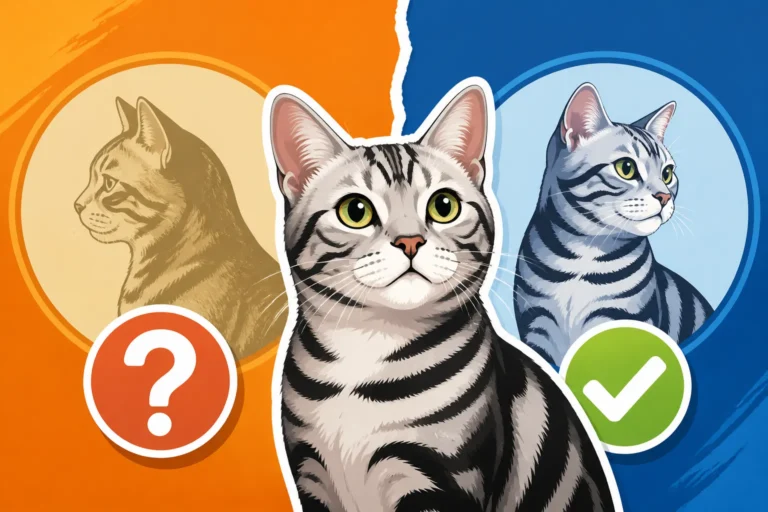
If your priority is the American Shorthair’s general look and companionable qualities, it may be worth considering whether a local domestic shorthair could meet your needs. Many cats outside the United States have short coats, tabby markings, and sturdy builds. A shelter cat may offer the appearance you like without the cost and logistics of finding an imported pedigree.
The trade-off is documentation. A shelter cat’s background may be unknown, while a registered kitten comes with a recorded pedigree and a clearer account of its lineage. Neither option is automatically the better pet. The right choice depends on whether breed documentation, predictable lineage, and the experience of working with a breeder matter to you.
If you are comparing a shelter cat with a pedigree, How an American Shorthair Differs From a Domestic Shorthair explains why appearance alone is not enough to make that distinction. And if a shelter cat has caught your eye, Whether a Shelter Cat Can Match an American Shorthair may help you think through the choice without assuming that a pedigree is the only route to a healthy, rewarding companion.
How to judge the breed’s popularity where you live
Instead of asking whether the American Shorthair is popular worldwide, use a few local checks. They will give you a more honest picture of availability and help you avoid confusing internet visibility with a reliable local breeding community.
Look for repeated signs of an active community
A single breeder listing can disappear or turn out to be outdated. Stronger evidence of an active local presence includes several breeders with verifiable pedigrees, cats appearing at recognized shows, and local registry staff who can explain how the breed is recorded. These signs do not guarantee that a kitten is available right away, but they show that the breed has more than a passing online presence.
You can also contact a cat club or show organizer and ask whether American Shorthairs have been entered locally. If the answer is that the breed is recognized but rarely shown, that tells you something different from a region with multiple active breeders and regular entries. Either way, it is more useful than a search result count.
Check whether listings use consistent names and documentation. A page that repeatedly describes cats as “American Shorthair type” may be advertising resemblance rather than registered ancestry. That wording is not automatically deceptive, but it should prompt you to ask what the seller means and what records are available.
Read online listings as clues, not proof
Search engines and social platforms can make a rare breed look common because they gather images from many countries. A breeder’s page may also target international buyers even if the breeder has no local presence. Treat online visibility as a starting point for research, not evidence of a strong breeding network.
The same caution applies to shopping sites. Chewy, for example, can be a reference point for how a US pet retailer organizes food, litter, and basic supplies, but browsing its products does not show whether American Shorthairs are popular in your country. Availability, delivery, and product suitability depend on where you live, so check local options and follow your veterinarian’s guidance when choosing food or health-related products.
For a new owner, the more practical question may be whether you can access the care and supplies the cat needs consistently. Chewy may help a US household compare everyday pet products, while owners elsewhere will need to check their own local retailers. In either case, the cat’s needs—not a retailer’s catalog—should guide decisions about nutrition, enrichment, and routine care.
Set realistic expectations about waiting and choice
If the breed is uncommon near you, you may have fewer breeders to compare and less choice in coat pattern, sex, or timing. Waiting for a suitable litter can be safer than choosing the first available kitten from an unverified seller. A responsible breeder’s willingness to discuss health, temperament, and the household the kitten will join matters more than a quick promise of availability.
If importing is the only realistic route, compare the added responsibilities against adopting locally. The decision is personal: some people specifically value a documented American Shorthair lineage, while others mainly want a sturdy, short-coated companion and are happy to consider a domestic shorthair. Neither choice needs to be defended as the universally correct one.
Chewy can be part of a US owner’s routine for looking up general supplies, but it should not be mistaken for a source of breed verification. For any seller—online or local—confirm the cat’s pedigree through the relevant registry, ask for health records, and take time to understand the terms before sending money.
Ultimately, the American Shorthair is visible beyond the United States, but its everyday availability varies considerably. In some places, it has a small, established community; in others, it is mostly a familiar name attached to a less common registered breed. Checking local registry rules, breeder records, and show activity will tell you far more than appearance or online buzz alone.
Disclaimer
This article is for general informational purposes only and does not constitute professional advice. Laws, prices and regulations vary by location and change over time. Consult a qualified professional for guidance on your specific situation.