Whether the FIFe Recognizes the American Shorthair
If you are checking a pedigree and cannot find “American Shorthair” in a FIFe breed list, the gap is not necessarily a problem with the cat’s paperwork. FIFe does not recognize the American Shorthair as one of its recognized breeds. This guide explains what that means for registration, shows, imported pedigrees, and anyone comparing FIFe records with other cat registries.
Does FIFe recognize the American Shorthair
FIFe, the Fédération Internationale Féline, is an international federation whose member organizations register cats and organize shows under FIFe rules. Its breed recognition system determines which breeds can be entered under a recognized breed name and judged against a FIFe standard.
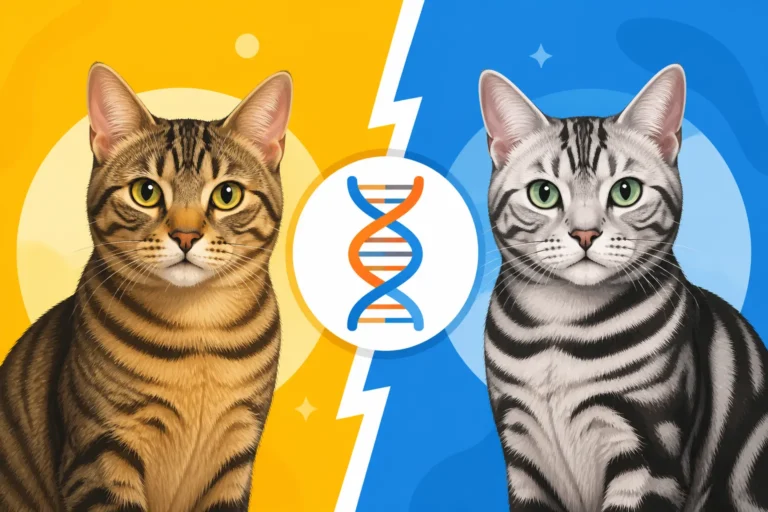
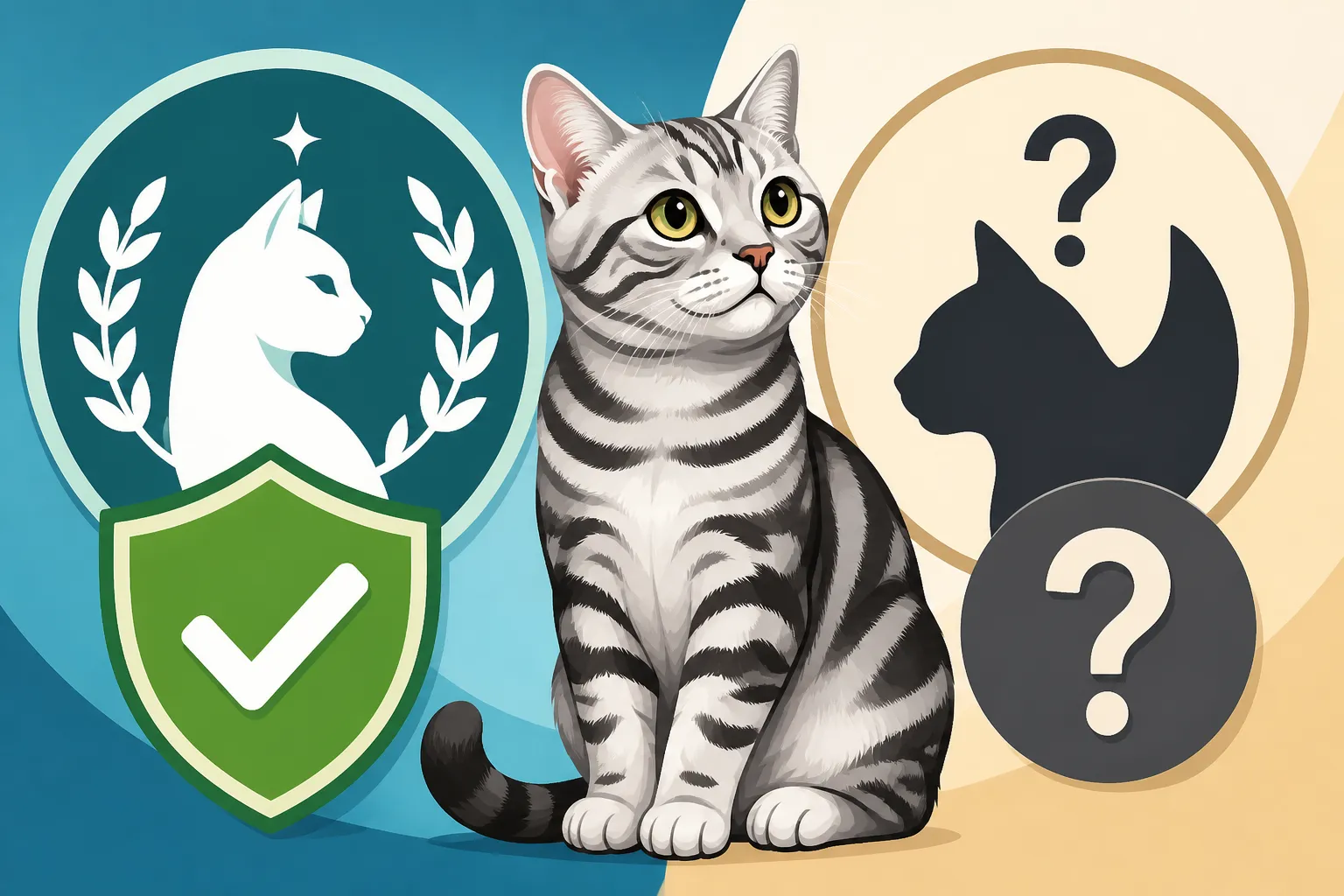
The American Shorthair is not recognized by FIFe as a breed. That is a registry classification, not a judgment that the cat is invalid, unhealthy, or not a genuine American Shorthair. The breed is recognized by other registries, including organizations in North America, but recognition by one organization does not automatically carry over to another.
What non-recognition means in practice
If a cat has an American Shorthair pedigree from a registry outside FIFe, that pedigree can still be meaningful within the registry that issued it. It may document the cat’s ancestry and breed status there. But the document does not, by itself, make the cat a FIFe-recognized American Shorthair.
This distinction can surprise people who assume that a pedigree is a universal passport. It is closer to a record maintained within a particular system: each registry has its own accepted breeds, rules, and procedures for recording cats. A breeder or owner should check with the relevant FIFe member organization to find out whether and how it will record a particular imported cat. Rules for recording cats that do not belong to recognized breeds can vary, and recording is not the same as recognition.
That also means a FIFe show entry should not be assumed to be available in the American Shorthair breed class. A cat might be eligible for a different entry category under local rules, or it might not be eligible for that show at all. The answer depends on the show regulations and the national FIFe member, so it is worth asking before paying entry fees or making travel plans.
Why FIFe and other registries may differ
Cat registries are independent organizations. They do not all recognize the same breeds at the same time, use identical breed standards, or apply identical registration procedures. A breed can have an established standard and pedigree system within one organization without being recognized by another.
For example, the American Shorthair is often confused with the European Shorthair because of the similar names and short coats. They are separate breeds with separate histories and standards. FIFe recognition of the European Shorthair does not mean that it also recognizes the American Shorthair. If you are sorting out that distinction, How an American Shorthair Differs From a European Shorthair is a useful companion topic.
The broader background also matters: the American Shorthair developed as a distinct pedigreed breed from cats that were once commonly described as domestic shorthairs. Its name and breed status are not interchangeable with the generic label for a shorthaired cat. Why the American Shorthair Was Called Domestic Shorthair Until 1966 explains how the breed’s identity became more clearly separated from the everyday term.
What an American Shorthair pedigree can and cannot prove
An American Shorthair pedigree is best understood in the context of the organization that issued it. It may establish a cat’s recorded ancestry under that registry’s rules, but it does not guarantee that another registry will accept the cat under the same breed classification.
This is not unusual in pedigree animals. Each organization decides which breeds it recognizes and what documentation it requires. When a cat crosses between registry systems, the receiving organization may need to review the documents, apply its own rules, or decline to register the cat as a recognized breed.
Check the issuing registry and the receiving registry
Start by looking at the paperwork itself. Note the registry name, the cat’s registered name, registration number, date of issue, and any breed or lineage information shown. If the cat is being imported or considered for a FIFe show, contact the FIFe member organization in the country where you intend to register or exhibit the cat. Ask what the document allows in that specific system.
A practical question is: “Can this cat be registered or entered with your organization, and if so, under what category?” That is more useful than asking only whether the pedigree is “accepted,” because acceptance might refer to recording the ancestry rather than recognizing the cat as a breed. Get an explanation in writing when the decision affects breeding plans, show eligibility, or a purchase.
Be cautious about relying on informal assurances from a seller, online discussion, or a breed description on a shopping site. Chewy product or breed information may help someone understand general cat-care needs, but it does not determine a cat’s registry status. The same is true of breeder advertisements: a confident label is not a substitute for documents and confirmation from the relevant registry.
What a pedigree does not automatically guarantee
A pedigree does not necessarily guarantee that a cat meets every registry’s current breed requirements, is eligible for breeding, or qualifies for a particular show class. It records information within a system; the organization receiving it decides what to do with it.
It also cannot prove every claim a seller may make about temperament, future size, health, or show potential. Those questions require different evidence. For instance, a pedigree may help explain ancestry, but it is not the same as veterinary records or health screening. For a closer look at the limits of ancestry documents, see What an American Shorthair Pedigree Guarantees.
The same caution applies to DNA testing. A consumer DNA result may offer clues about ancestry, but it does not replace a registry-issued pedigree or compel FIFe to recognize a breed. Whether a DNA Test Tells an American Shorthair From a Moggy covers why DNA results and formal breed registration answer different questions.
Showing or registering an American Shorthair in a FIFe country
A person who owns an American Shorthair in a country with a FIFe member organization may still be able to participate in cat-related activities. What is available depends on local rules and the specific event. The important point is not to assume that participation means the cat is recognized as an American Shorthair within FIFe.
Before making plans, contact the national member organization or show organizer. Explain where the cat is registered, provide the pedigree details they request, and ask whether the cat can be entered, recorded, or shown in any category. Ask separately about registration, show eligibility, and breeding permissions; these are related but distinct decisions.
Questions to ask before entering a show
A short email can prevent a frustrating day at the show hall. Include the cat’s registered breed, the name of the registry that issued its pedigree, and the country where you want to show. Then ask:
- Can this cat be entered under FIFe rules?
- If so, which class or category applies?
- Does the organization need to see the original pedigree or certified copies?
- Does entry create FIFe recognition, or is the cat being shown in a separate category?
- Are there additional requirements for an imported cat?
Do not rely on the presence of a similar-looking breed in the show catalog. A European Shorthair entry, for example, does not make an American Shorthair eligible in the same class. The names may sound related to a newcomer, but breed classification depends on the registry’s rules and standards, not simply on coat length or appearance.
| What you are checking | What it tells you | What it does not automatically tell you |
|---|---|---|
| American Shorthair pedigree from another registry | The cat’s recorded ancestry within the issuing registry | That FIFe recognizes the breed or will register the cat the same way |
| FIFe breed list | Which breeds FIFe recognizes under its system | Whether a non-recognized cat can be recorded or entered in another category |
| Show organizer’s answer | Whether the cat can participate in that specific event and how | Whether the cat qualifies for breeding or recognized-breed status |
| DNA result | Genetic information offered by the testing service | Formal pedigree status or automatic registry acceptance |
If you are choosing a kitten or adult cat
If you are buying specifically for FIFe showing or breeding, make registry compatibility part of the conversation before you commit. Ask the breeder which organization issued the pedigree and whether they have contacted the relevant FIFe member about the cat’s eligibility. Avoid treating “international pedigree” as a guarantee that every registry will classify the cat identically.
If your priority is having a companion rather than competing in a particular registry’s breed classes, FIFe recognition may not affect daily life with the cat at all. The cat still needs the same thoughtful veterinary care, safe home environment, nutrition, and enrichment. A registry label is useful for documenting lineage; it does not determine whether an individual cat will be a good fit for your household.
Chewy and other retailers can be convenient places to explore routine supplies once you know what your cat needs, but shopping listings cannot confirm pedigree or show eligibility. For a potential purchase, focus first on the breeder’s records, the cat’s health information, and written guidance from the registry that matters to you. If you are weighing pedigree documentation more generally, Whether Papers Are the Only Proof of an American Shorthair offers useful context.
How to avoid common FIFe recognition misunderstandings
The most common misunderstanding is that “not recognized by FIFe” means “not a real American Shorthair.” It does not. It means the breed is not included as a recognized breed in FIFe’s system. The cat may have a valid pedigree from another organization, and that pedigree remains relevant within its own registry.
A second misunderstanding is that recognition by one major registry guarantees recognition everywhere. It does not. Organizations set their own standards and procedures. That is why two people can look at the same pedigree and receive different answers from different registries without either answer changing the cat’s ancestry.
Use precise language when discussing the cat
When speaking with a breeder, show organizer, or registry, say “American Shorthair registered with [the issuing registry]” rather than assuming “FIFe-recognized American Shorthair.” That wording gives the other person the information needed to answer accurately.
Also separate three questions that are often blended together:
- Is the cat an American Shorthair under the issuing registry’s records?
- Will a FIFe member record the cat or its pedigree?
- Can the cat compete in a FIFe show, and in what category?
The answer to one question does not settle the others. If a breeder says a cat can be “registered in Europe,” ask which registry will register it and whether that means breed recognition, pedigree recording, or a different status. Clear language now can save disappointment later.
If you want to understand how official breed identity is established in the first place, What the American Shorthair Standard Asks For explains the role of a breed standard. And if you are comparing a pedigreed cat with a shorthaired shelter cat, How an American Shorthair Differs From a Domestic Shorthair explains why appearance alone cannot establish formal breed status.
The simplest way to handle the question is to treat FIFe recognition, pedigree validity, and an individual cat’s identity as separate matters. FIFe does not recognize the American Shorthair as a breed in its recognized breed system. A cat may still have a legitimate American Shorthair pedigree from another registry, but any FIFe registration or show options should be confirmed directly with the relevant member organization before you make plans.
Disclaimer
This article is for general informational purposes only and does not constitute professional advice. Laws, prices and regulations vary by location and change over time. Consult a qualified professional for guidance on your specific situation.