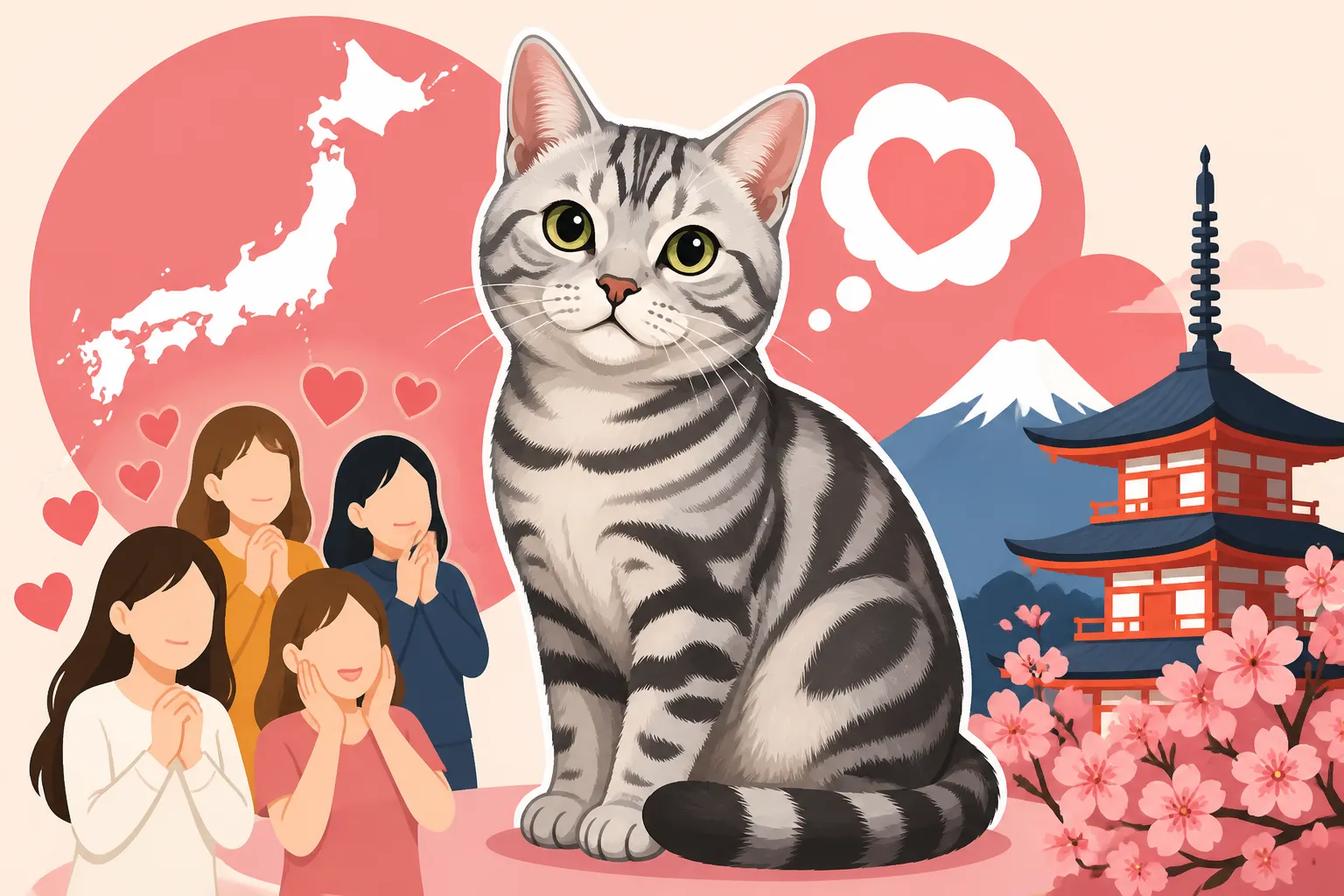
Whether the American Shorthair Is Popular in Japan
If you’re seeing American Shorthairs everywhere in Japanese cat videos but can’t tell whether they’re genuinely popular or simply familiar online, the answer depends on what “popular” means. The breed is recognizable in Japan, but visibility, registrations, search interest, and household ownership measure different things. This guide explains how to read those signals without mistaking a viral cat or a ranking snapshot for the whole picture.
How popular is the American Shorthair in Japan
A familiar breed, but popularity depends on the measure
The American Shorthair is known in Japan by its full breed name, アメリカンショートヘア, and is often shortened conversationally to アメショ, or “Ame-sho.” That familiarity matters: a breed name people recognize is more likely to appear in conversations, pet listings, social posts, and cat-related media. But name recognition alone doesn’t tell us how many Japanese households own one.
There isn’t one definitive measure of a cat breed’s popularity. A survey of people who plan to buy a kitten may produce a different picture from a registry’s record of pedigreed cats, an insurance company’s customer data, or a search engine’s trend information. Each captures a particular slice of pet ownership, not every cat in Japan.
It’s also important to distinguish the American Shorthair from a domestic shorthair that happens to have a silver tabby coat or a sturdy build. Many cats can look broadly similar, but appearance alone does not establish pedigree. For a closer look at the distinction, see How an American Shorthair Differs From a Domestic Shorthair.
Why a breed may seem more popular online than it is in homes
Social media rewards appealing images and repeatable stories. The American Shorthair’s round face, solid body, and familiar tabby markings photograph well, so a few widely shared cats can create the impression that the breed is everywhere. A popular account, a memorable advertisement, or a character in a video can make a breed feel especially prominent without showing how common it is among Japanese households.
Online search results can also be shaped by where a person is browsing from and what they have recently looked at. Someone searching from Tokyo for “silver tabby kitten” may see pet listings and posts that are not representative of the country as a whole. And an American-focused retailer such as Chewy can provide a glimpse into US pet shopping, but its catalog and customer activity are not evidence of demand in Japan.
This is why the fairest answer is not a hard ranking unless the ranking clearly states what it measures. The American Shorthair is a familiar, visible breed in Japan, but the level of visibility should not automatically be read as proof that it is one of the country’s most commonly owned cats.
What shapes the breed’s appeal in Japan
A practical appearance that feels approachable
The American Shorthair has a sturdy, balanced look rather than the extremely shortened face or unusually compact body associated with some other breeds. Its coat comes in many colors and patterns, with the silver tabby often being the image people recognize first. That classic pattern is one reason the breed can be easy to identify in photos and advertising.
The cat’s working-cat background also contributes to its image. American Shorthairs developed from practical, adaptable cats rather than from a goal of creating an extreme body shape. People drawn to a robust-looking, shorthaired cat may find that profile appealing. For more on the breed’s history, see Where the American Shorthair Comes From and How Farm Work Shaped the American Shorthair.
That said, looks are only one part of choosing a cat. A prospective owner in Osaka, Sapporo, or a smaller city still needs to think about the individual cat’s temperament, veterinary needs, and fit with the household. Breed descriptions can offer clues, but they cannot promise exactly how one kitten will behave.
A name and image that travel well
Some breeds have instantly recognizable features that make them easy to identify even for people who have never owned a cat. The American Shorthair’s tabby pattern and solid build can give it that kind of visual familiarity. In Japan, the short nickname “Ame-sho” also makes the breed easy to discuss in everyday conversation and online searches.
The silver tabby has become especially associated with the breed’s public image. That does not mean every American Shorthair is silver, or that silver tabbies are necessarily the most common color in every setting. It simply means that this pattern is a strong visual shorthand. The role of that distinctive look is explored in The Silver Tabby That Made the American Shorthair Famous.
Breed recognition can also be reinforced by imported media and international pet culture. A Japanese viewer may encounter an American Shorthair through a social account or program made elsewhere, then see the breed name repeated by local owners and sellers. That cross-border visibility can increase awareness, even when it doesn’t directly indicate how many cats are registered or living in Japan.
How to judge Japanese popularity signals
Rankings are useful, but read the fine print
When you see an article or chart naming Japan’s “most popular cat breeds,” look for the organization behind it and the group it surveyed. A breeder registry reflects registered pedigree cats. An insurance company’s data reflects its own policyholders. A pet retailer, adoption group, or survey site may represent yet another audience.
| Popularity signal | What it can tell you | What it cannot establish on its own |
|---|---|---|
| Pedigree registry records | How many cats of a breed were registered through that registry | The total number of cats in Japan, including unregistered pets |
| Insurance data | Which breeds appear among the company’s insured customers | The breed mix across all Japanese households |
| Search interest | What people are looking for online during a particular period | How many people actually own or acquire the breed |
| Social media activity | Which cats or posts attract attention | A reliable national ownership ranking |
| Pet listings | Which cats are being advertised in a particular marketplace | The number of successful placements or long-term ownership |
A ranking can still be helpful if you treat it as a snapshot rather than a final verdict. Check whether it covers pedigree cats only, whether it uses a particular region or customer base, and whether it counts registrations, inquiries, or ownership. Those details can explain why two rankings tell different stories.
US-facing signals are especially easy to misread when researching a Japanese question. For example, Chewy search results or reviews may help someone understand what American customers discuss, but they don’t measure Japanese registrations, sales, or household ownership. The same caution applies to US breed lists: useful for context, not a substitute for Japan-specific data.
Registration and appearance are not the same thing
A cat may be described informally as an American Shorthair because it resembles the breed, especially if it has a short coat, tabby markings, and a sturdy frame. In everyday conversation, that may be enough for someone to describe what the cat looks like. Pedigree registration is a different matter and depends on documented lineage and the rules of the relevant registry.
This difference affects popularity estimates. A registry count may be accurate for cats registered with that organization while leaving out unregistered cats, mixed-breed cats, and cats whose owners don’t know or document their ancestry. Conversely, a marketplace that labels cats by appearance may include animals that are not registered American Shorthairs.
If you’re trying to understand how breed identity is established, Whether Papers Are the Only Difference an American Shorthair Has and Whether a DNA Test Tells an American Shorthair From a Moggy offer useful context. The key point is simple: a visual resemblance can explain why a type of cat is recognizable, but it is not a reliable way to count pedigreed American Shorthairs.
What Japanese owners should consider beyond popularity
Choose the individual cat, not a trend
A breed’s visibility can be a starting point for research, but it is not a reason on its own to bring a cat home. Think about your daily schedule, your living space, the cost of routine veterinary care, and whether everyone in the household is comfortable with a pet. An apartment in central Tokyo and a house with outdoor space outside the city may present very different practical questions, even for the same breed.
Ask about the cat’s health history, temperament, and early care. If you are considering a breeder, request clear information about parent cats, veterinary checks, and the kitten’s records. If you are considering adoption, focus on the individual cat’s known needs and behavior rather than trying to confirm a pedigree label that may not be available.
The American Shorthair is often described as adaptable, but no breed is a perfect match for every owner. A quiet adult cat may suit one household better than a lively kitten; another family may have the time and patience to support a kitten through its energetic stages. What an American Shorthair Pedigree Predicts About Temperament can help set expectations, while still keeping the individual cat at the center of the decision.
Look for responsible information, not just popularity claims
A responsible listing or breeder conversation should give you room to ask questions rather than pressure you to act quickly because a breed is fashionable. Ask what health screening has been done, what documentation is available, and what support is offered if the cat needs care after coming home. Be cautious when a seller relies mainly on phrases such as “rare,” “highly popular,” or “perfect for everyone” without clear details about the specific cat.
Chewy is a US retailer, so its product pages and reviews are not a guide to where Japanese owners can find a particular breed or what local services are available. It may appear in English-language searches and can be useful as an example of why search results cross borders, but Japanese readers should look for local veterinary practices, registries, adoption organizations, and breeder information when making a real ownership decision.
Likewise, a breed’s apparent prominence in Japan should not be mistaken for a guarantee that finding a responsibly raised kitten will be easy. Availability changes by location and time, and a carefully planned adoption may take patience. For guidance on evaluating a breeder, see Which Questions to Ask an American Shorthair Breeder and What an American Shorthair Pedigree Guarantees.
Disclaimer
This article is for general informational purposes only and does not constitute professional advice. Laws, prices and regulations vary by location and change over time. Consult a qualified professional for guidance on your specific situation.