Where an American Shorthair Chooses to Sleep
It's a common mystery for many cat parents: you invest in a plush, expensive cat bed, strategically placed in a quiet corner, only to find your beloved American Shorthair curled up in a cardboard box, perched precariously on a bookshelf, or stretched out on your freshly laundered shirt. Their sleeping choices often seem utterly illogical to us, but trust me, there's always a reason. This guide will delve into the fascinating, instinct-driven world of where your American Shorthair chooses to sleep, helping you understand their preferences and create environments they'll truly adore.
The Instincts Guiding Your American Shorthair's Sleep Choices
When it comes to sleep, our American Shorthairs aren't just looking for a soft spot; they're governed by deep-seated instincts that have been honed over centuries as efficient mousers and independent survivors. Their choices aren't random; they're a complex calculation of safety, comfort, and primal needs. Understanding these underlying drives is the first step to truly appreciating their peculiar napping habits.
The Need for Security and Safety
Imagine being a smaller predator, always aware of potential threats, even in your sleep. That's a tiny glimpse into your American Shorthair's world, even if they've never seen a mouse outside of a toy. Their ancestors were self-sufficient, relying on their wits and instincts to stay safe while resting. This hardwired need for security dictates many of their sleeping preferences. They'll often seek out spots that offer a sense of enclosure or protection, somewhere they can feel hidden and less vulnerable.
This can manifest as choosing a spot under a bed, tucked away in a closet, or even inside a laundry basket. They're not being fussy; they're seeking a den-like environment where they can relax fully, knowing they're less likely to be surprised. A noisy household, for instance, might drive a cat to seek out the quietest, most secluded corners for uninterrupted sleep. How an American Shorthair Handles Household Noise explores how they typically react to such stimuli, and you'll find that retreating to a safe sleep spot is often their first coping mechanism. They want to feel like they have a barrier between themselves and the world, even if that barrier is just a pile of your clean towels.
Seeking Warmth or Coolness
Cats are incredibly adept at regulating their body temperature, and their sleep spots are often chosen with this in mind. You might notice your American Shorthair gravitating towards sunny spots on the floor during cooler months, soaking up every ray of warmth. Conversely, in the height of summer, they'll stretch out on cool tile floors, in a bathtub, or even try to squeeze into the sink.
This isn't just about simple comfort; it's about energy conservation. Maintaining an optimal body temperature requires energy, and if they can find an external source of warmth or coolness, they can spend less energy on thermoregulation and more on, well, being a cat. You'll often see them adjust their position or location throughout the day as the sun moves or the house temperature changes. Providing options, like a cozy blanket in winter or a cooling mat in summer, can help them meet these needs. If you're wondering how to keep them comfortable in warmer weather, How to Keep an Indoor American Shorthair Cool in Summer offers some excellent tips that indirectly influence their sleeping spot choices.
The Drive for Observation and Control
Despite their love for hidden, secure spots, American Shorthairs also have a strong instinct to observe their territory and maintain a sense of control, even while napping. Their wild ancestors would often find elevated perches to rest, allowing them a panoramic view of their surroundings to spot prey or detect threats from a distance. This "king of the castle" mentality is still very much alive in our domestic companions.
This is why cat trees and tall shelves are so popular. A high vantage point gives them a feeling of superiority and command over their environment. From a lofty perch, they can survey their domain without being disturbed, monitoring the comings and goings of their human family, other pets, or even the birds outside the window. This isn't just about feeling safe; it's about feeling informed and in charge. They want to know what's happening around them, even if they're only half-awake.
Decoding Your American Shorthair's Favorite Napping Nooks
Once you understand the instinctual drives, it becomes much easier to interpret why your American Shorthair chooses the specific, sometimes bewildering, places they do for their daily naps. They're not trying to annoy you by sleeping on your clean laundry; they're simply optimizing for their primal needs. Let's explore some common choices and what they truly signify.
The Allure of High Places and Vertical Spaces
The top of the refrigerator, the highest tier of a cat tree, the back of the sofa, or even a bookshelf – these are prime real estate for an American Shorthair looking for a nap. As mentioned, this ties back to their predatory instincts, offering a commanding view. From up high, they can observe everything without feeling vulnerable or exposed. It's a strategic move, allowing them to rest while staying "on duty."
Think about it from their perspective: if they're on the floor, they might be stepped on, or startled by a sudden noise. Up high, they're out of the main traffic flow and can relax with peace of mind. Investing in good vertical spaces, like a sturdy cat tree you can find on Chewy or Amazon, is one of the best ways to cater to this need. How Much Vertical Space an American Shorthair Needs delves deeper into how essential these elevated spots are for their mental and physical well-being. These spots aren't just for play; they're vital for a sense of security during rest.
Cozy, Enclosed Hideaways
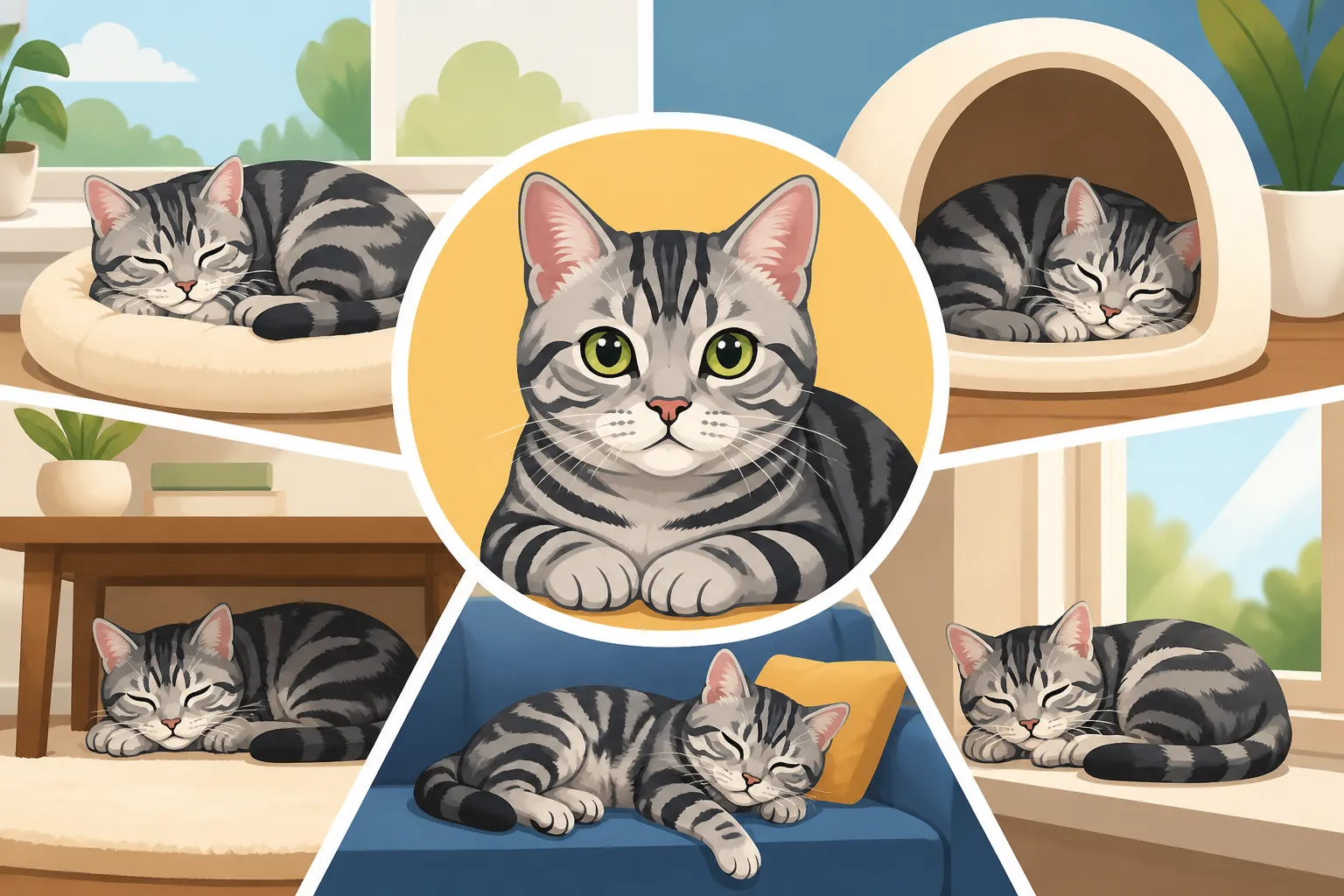
On the flip side of the observation deck, American Shorthairs also adore cozy, enclosed spaces. This preference is deeply rooted in their need for security. A small, dark, enclosed area mimics a den, providing a feeling of safety and protection from potential predators or disturbances. This is where you'll find them in cardboard boxes, under blankets, inside cabinets, or even burrowed deep in a pile of clothes.
These hideaways offer tactile comfort as well – the feeling of being snuggled in, with soft surfaces all around them. It's a place where they can truly let their guard down and enter a deep sleep without worrying about their surroundings. If your cat frequently seeks out these spots, consider offering a variety of options. A cave-style cat bed or a simple, clean box can be a huge hit. They especially appreciate these spots if the household is busy or there are young children or other pets around that might disturb their rest.
The Unexpected Comfort of Human Company (or Proximity)
Despite their independent nature, American Shorthairs often choose to sleep in close proximity to their human companions. This might be on your bed, on a chair right next to yours, or even nestled against your legs while you're relaxing on the couch. This isn't just about affection (though that's certainly part of it!); it's also about a feeling of safety and shared warmth.
From a practical standpoint, humans are often a significant source of warmth, especially in cooler environments. Furthermore, being near you provides a sense of security; they know you'll likely deter any perceived threats. It’s a testament to the bond you share that they trust you enough to sleep soundly in your presence. However, it's also important to remember that they might appreciate the option of being near you without necessarily being on you. A cat bed at the foot of your bed, for example, offers both proximity and their own defined space. How Long an American Shorthair Sits on a Lap might give you some clues about their affection levels, but remember, even when they're not on your lap, simply being in the same room is a form of companionship for them.
| Sleeping Location | Primary Instinct Fulfilled | Why Your American Shorthair Chooses It | Potential Downsides (for you!) |
|---|---|---|---|
| High Cat Tree/Shelf | Observation, Security | Excellent vantage point, feels safe from ground-level disturbances. | Can be hard to retrieve if needed, accumulates fur. |
| Inside Cardboard Box | Security, Enclosure | Dark, cozy, feels like a den, easy to hide. | Boxes get squashed, look untidy. |
| Under the Bed/Furniture | Security, Seclusion | Hidden, quiet, low traffic, good for deep sleep. | Hard to find them, collects dust bunnies. |
| On Your Bed/Pillow | Warmth, Proximity, Security | Shared warmth, comfort, sense of safety with trusted human, soft surface. | Fur on bedding, disturbed sleep (yours!). |
| Sunny Window Sill | Warmth, Observation | Absorbs solar warmth, allows outdoor viewing, often high up. | May damage curtains, can get too hot in summer. |
| Cool Tile/Bathtub | Coolness | Excellent for dissipating body heat in warm weather. | Less "cozy" for long naps, can be noisy when wet. |
| Laundry Basket | Enclosure, Scent, Softness | Smells like you, soft clothes, cozy and enclosed. | Interrupts laundry, clothes get fur. |
Crafting the Perfect Sleep Sanctuary for Your American Shorthair
Now that we understand why your American Shorthair chooses their particular sleep spots, we can start to intentionally create spaces they'll love. It's not about forcing them into a specific bed, but rather about providing options that align with their natural inclinations, making it easier for them to choose a spot that works for both of you.
Offering a Variety of Beds and Surfaces
Cats, including our sturdy American Shorthairs, appreciate choices. Don't assume one type of bed will suit all their moods or needs. Just as you might prefer a firm mattress one night and a soft armchair for a quick nap, your cat also has varying preferences. Consider offering a range of options:
- Enclosed beds: These mimic dens and fulfill their need for security. Think cave beds, igloo beds, or even a simple box with a soft blanket inside.
- Open, plush beds: For those times they want to stretch out and feel pampered. Look for orthopedic options for older cats on Chewy or Amazon, as Caring for an Old American Shorthair suggests, comfort becomes paramount with age.
- Raised beds/hammocks: These satisfy their desire for elevation. A window hammock or a cat tree with a soft perch can be a big hit.
- Cooling mats: Especially useful in warmer climates or for cats who tend to overheat.
- Soft blankets and towels: Sometimes, the simplest option is the best. Cats love to knead and nest in soft fabrics.
Place these different options in various locations around your home, taking into account light, temperature, and traffic flow, which leads us to our next point.
Strategic Placement of Sleep Spots
The "perfect" bed is useless if it's in a location your American Shorthair doesn't feel comfortable or safe in. Location, location, location!
- High traffic vs. quiet corners: Offer beds in both. Some cats enjoy being in the thick of things, observing from a safe distance, while others need absolute quiet for deep sleep.
- Warm vs. cool zones: As discussed, their internal thermostat guides them. Place some beds in sunny spots (but not so sunny they overheat!) and others in naturally cooler areas.
- Vertical opportunities: Place cat trees near windows so they can observe the outside world. This doubles as a hunting post for their natural instincts, as mentioned in Why a Window Is a Hunting Post to an American Shorthair.
- Near you: If your cat loves sleeping with you, consider a small, comfortable bed right at the foot of your bed or next to your favorite armchair. This provides proximity without requiring them to sleep directly on you, offering a compromise.
Observe where your American Shorthair currently likes to nap. If they always choose a particular chair, try placing a new bed on that chair. If they love the top of the bookshelf, see if you can add a stable, soft cushion there.
Maintaining Consistency and Routine
Cats are creatures of habit, and while American Shorthairs are generally adaptable, a predictable environment can enhance their sense of security, especially around their sleep areas. Try to keep their chosen sleep spots consistent. If you move a bed, they might ignore it for a while until they re-evaluate its new location.
Regular cleaning of their beds and blankets is also important. Cats are fastidious, and a fresh, clean bed is always more inviting. Use mild, cat-safe detergents to avoid strong chemical smells that might deter them. A sense of routine, even with something as simple as when you offer their meals, can contribute to their overall feeling of security and well-being, allowing them to relax more fully into their chosen sleep spots. Why a Self Sufficient American Shorthair Copes With a Long Day highlights their ability to manage independently, but a stable home environment always enhances their comfort.
When an American Shorthair's Sleep Habits Change
While American Shorthairs are generally quite robust and adaptable, significant changes in their sleeping habits can sometimes be a subtle indicator that something is amiss. It’s important to be observant and recognize when a shift is more than just a temporary whim.
Recognizing Shifts in Sleep Patterns
Your American Shorthair typically spends a significant portion of their day sleeping or napping – sometimes up to 16 hours or more! If you notice a sudden, sustained change in this routine, it warrants attention. Are they sleeping much more than usual, becoming lethargic, and hard to rouse? Or are they sleeping significantly less, pacing, restless, and unable to settle?
Perhaps they've suddenly abandoned all their favorite high perches for hiding spots under furniture, or vice-versa. Maybe they used to love sleeping on your bed but now exclusively sleep in a distant, secluded closet. These kinds of drastic alterations in their preferred sleep locations or overall sleep duration can be a red flag. American Shorthairs are often stoic, so subtle changes in behavior, like sleep patterns, can be their way of communicating discomfort or illness. How Much an American Shorthair Sleeps can give you a baseline of what's normal for the breed, helping you identify deviations.
Environmental Factors and Stress
Before jumping to conclusions about health issues, consider any recent changes in their environment that might be causing stress or discomfort. American Shorthairs, while generally tolerant, still react to their surroundings. Have you moved furniture, brought in a new pet, or had houseguests? Is there new construction noise nearby? Even seemingly minor changes can disrupt a cat's sense of security and influence where they choose to sleep.
A cat feeling stressed might seek out more secluded, hidden places to sleep, trying to escape the perceived threat or disturbance. Conversely, an anxious cat might become clingier, sleeping closer to you than usual for reassurance. Ensuring their environment is stable and offering plenty of safe, private hideaways can help mitigate stress. Puzzle feeders, which you can easily find on Amazon, can also help redirect their energy and provide mental stimulation, reducing overall anxiety. If you suspect stress is the culprit, addressing the environmental trigger is key.
Consulting Your Vet About Health Concerns
If you've ruled out environmental stressors and your American Shorthair's sleep changes persist, or if they are accompanied by other symptoms like changes in appetite, litter box habits, or energy levels, it's absolutely time to consult your veterinarian. Many underlying health conditions can manifest as altered sleep patterns or preferences.
For example, an older cat experiencing joint pain might abandon their favorite high perches because jumping has become uncomfortable. Why an Old American Shorthair Slows Before It Limps details how subtle these changes can be. A cat with hyperthyroidism might be restless and sleep less, while a cat with kidney disease might sleep more due to fatigue. Even obesity can affect their ability to find comfortable sleeping positions or reach certain spots. Why an Old American Shorthair's Weight Should Be Watched highlights how crucial monitoring weight becomes as they age. Your vet can perform a thorough examination and recommend diagnostics to get to the bottom of the issue, ensuring your beloved American Shorthair gets the care they need to return to their normal, peaceful slumber.
Disclaimer
This article is for general informational purposes only and does not constitute professional advice. Laws, prices and regulations vary by location and change over time. Consult a qualified professional for guidance on your specific situation.