How Little an American Shorthair Bothers to Say
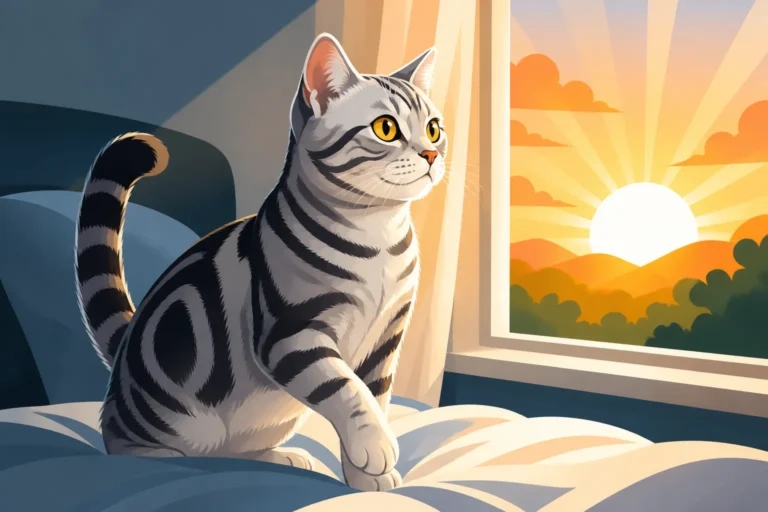
It's a common misconception that all cats are vocal, constantly meowing for attention or complaining about an empty food bowl. Many new American Shorthair owners, used to chattier breeds or the boisterous neighborhood tabby, might even find themselves wondering if their cat is broken. The truth is, if your American Shorthair rarely bothers to say much, it's not a sign of aloofness or disinterest; it's simply a hallmark of their quiet, self-possessed nature. This guide will help you understand why your American Shorthair is such a silent observer and how to interpret their subtle, yet deeply communicative, language.
The Quiet Legacy: Why American Shorthairs Aren't Chatty
The roots of the American Shorthair's quiet demeanor run deep, tracing back through centuries of practical utility rather than purely aesthetic breeding. Their ancestors weren't bred for companionship in the laps of nobility, but for their prowess as working cats, and that job demanded stealth, not chatter.
A History of Silent Hunting
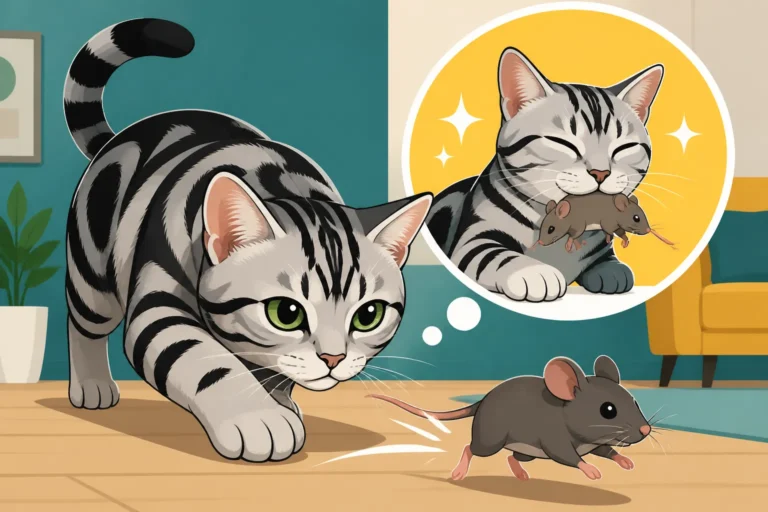
Imagine a ship's cat, a barn cat, or a frontier cat. Their primary role was pest control. To successfully hunt mice, rats, and other vermin, these cats needed to be silent, observant, and deadly efficient. A loudly meowing cat would have sent all potential prey scattering, rendering them useless in their vital role. Natural selection favored the quietest, most stealthy cats, those who could stalk, pounce, and eliminate threats without drawing attention. This genetic predisposition for quietness became deeply ingrained in the lineage that would eventually become the American Shorthair.
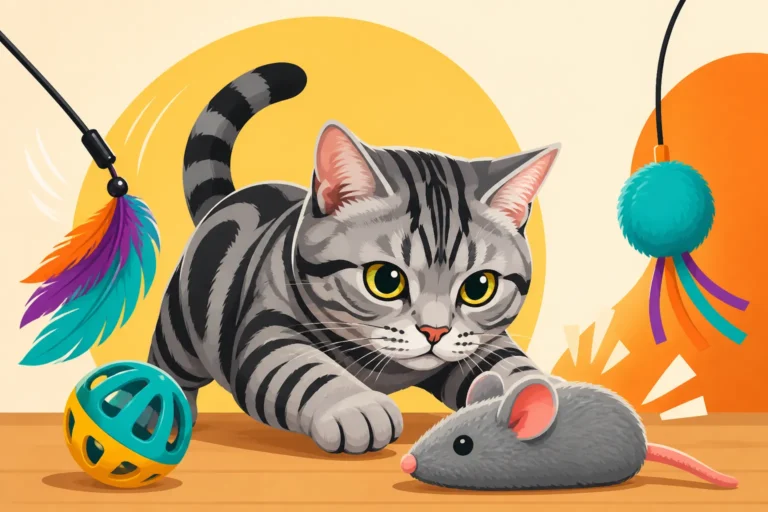
This historical context explains why, even today, your American Shorthair might demonstrate incredibly focused hunting instincts, albeit often directed at feather toys or crinkly balls rather than live prey. Their ancestors' survival depended on being unseen and unheard until it was too late for their target. This isn't a behavior that simply disappears when a cat moves from a barn to a living room; it's a fundamental part of their genetic makeup. They're still observing, still processing, still 'hunting' in their own way, but they're doing it with the same quiet intensity that served their forebears so well.
The Self-Sufficient Nature
Beyond their hunting heritage, the American Shorthair's quietness is intrinsically linked to their independent and self-reliant temperament. These cats weren't initially bred to be constant companions who needed to "talk" to their humans to get by. They were capable problem-solvers who handled their own business, whether it was finding food, securing territory, or simply entertaining themselves. This long history of self-sufficiency means they don't generally feel the need to vocalize demands for attention, food, or playtime as frequently as some other breeds.
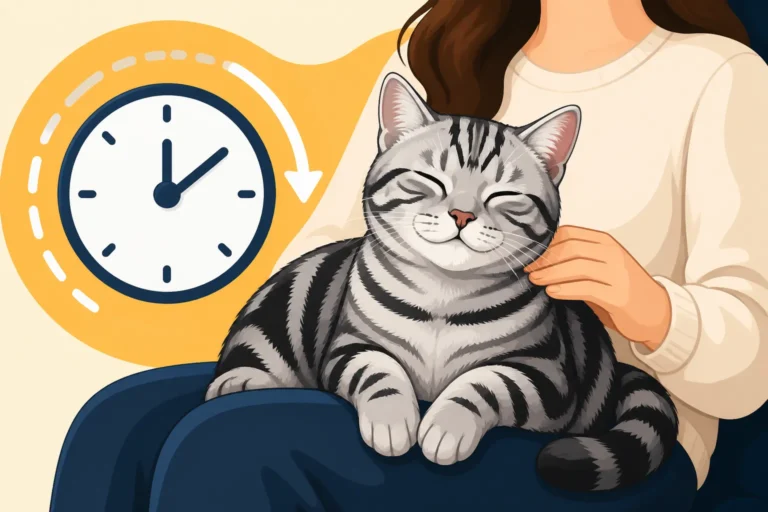
An American Shorthair is often content to simply share your space, perhaps observing your activities from a nearby perch rather than actively participating in a noisy exchange. They thrive on routine and predictability, and their quietness reflects their calm acceptance of their environment. While they appreciate your presence and affection, they rarely demand it with insistent meows. Instead, you might find them quietly settling beside you on the sofa, a silent invitation for a gentle stroke. This gentle companionship is one of their most endearing qualities, even if it's expressed with minimal fanfare. Why a Working Bred American Shorthair Sits Beside You Rather Than On You speaks volumes about this subtle interaction.
A Breed Standard That Doesn't Prioritize Vocalization
When you look at the official breed standards for the American Shorthair, you'll notice a strong emphasis on their robust build, strong jaws, beautiful coat patterns, and calm, amiable temperament. What you won't find is any mention of their vocal tendencies. Unlike some breeds where a distinctive voice or a propensity for "talking" might even be considered a characteristic, the American Shorthair's quietness is simply an inherent trait that goes unmentioned because it's not a primary focus of selection.
Breeders have historically focused on maintaining the American Shorthair's health, conformation, and gentle disposition, which naturally carried over the quiet nature of their working ancestors. There's no incentive within the show ring to produce a more vocal American Shorthair, nor is there a penalty for a quiet one. This lack of specific selective pressure means that the characteristic quietude has simply continued through the generations. It's not something they were bred for specifically, but rather a trait that was never bred out because it wasn't seen as a fault; instead, it was a functional advantage that contributed to their overall calm and adaptable personality.
Decoding the Silent Signals: What an American Shorthair Does Instead of Meowing
Just because your American Shorthair isn't a chatterbox doesn't mean they aren't communicating. Their language is rich, complex, and expressed primarily through body language, subtle gestures, and predictable routines. Learning to "read" your cat's silent cues is one of the most rewarding aspects of sharing your home with this magnificent breed.
Body Language is Their Primary Language
For an American Shorthair, their entire body is a communication tool. Every flick of a tail, every shift in ear position, every slow blink or direct stare carries a message. Learning to interpret these subtle cues is key to understanding their needs, desires, and emotional state.
Consider the tail, for instance. A tail held high with a slight curve at the tip often indicates confidence and contentment. A tail tucked low might signal caution or slight apprehension. A rapid, twitching tail usually means irritation or a strong focus on something. Their ears are another expressive feature; forward-pointing ears mean they're attentive and relaxed, while flattened ears are a clear sign of fear, anger, or discomfort. When an American Shorthair gives you a slow blink, it's the feline equivalent of "I love you" or "I trust you," a gesture of deep affection and contentment. A gentle head rub or "bunting" against your leg is a way of marking you with their scent, claiming you as part of their family, and showing affection. You might even notice subtle shifts in their posture – a relaxed, sprawling position indicates comfort, while a crouched, tense stance suggests vigilance or readiness to pounce. How an American Shorthair Asks Without Nagging by simply being in a particular way.
The Power of the Gaze and the Head Nuzzle
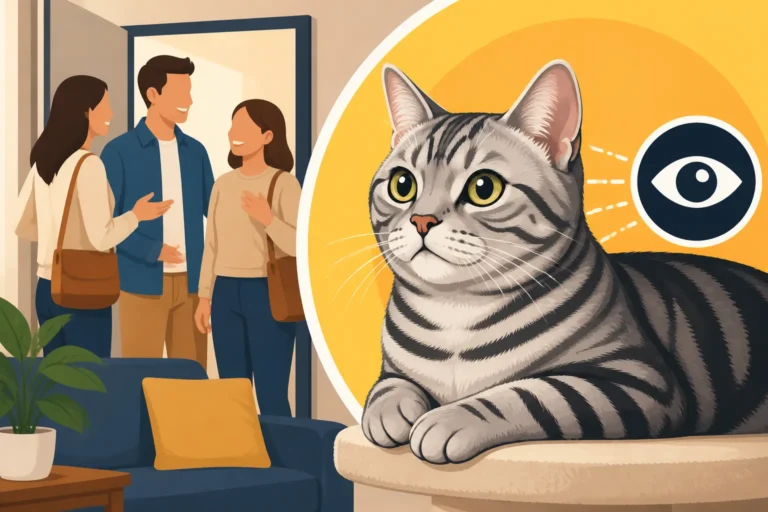
If you live with an American Shorthair, you've undoubtedly experienced the intensity of their gaze. They are masters of silent persuasion through eye contact. A sustained, unblinking stare directed at you, then perhaps pointed towards their food bowl, is a classic way for them to say, "Hey, human, my dinner plate appears to be empty." They don't need to meow; they simply know that if they look at you with enough conviction, you'll eventually get the message.
Similarly, head nuzzles and rubs are profound expressions of their bond with you. When your American Shorthair bumps its head against your hand, face, or leg, they are not only showing affection but also mingling their scent with yours, reinforcing the social connection and marking you as part of their trusted inner circle. It's a quiet, intimate gesture that speaks volumes about their comfort and trust in your presence. They might approach quietly, rub their cheek against your leg, and then settle nearby, communicating their desire for closeness without uttering a single sound.
Positional Cues and Routine-Based Communication
American Shorthairs are creatures of habit, and they cleverly integrate their needs into your daily routines. They've mastered the art of "being in the right place at the right time" to convey their messages. If your cat habitually receives breakfast at 7 AM, you might find them silently waiting by the food dish a few minutes beforehand, or perhaps sitting patiently at your feet as you prepare coffee. They expect you to notice their presence and connect it to the established routine.
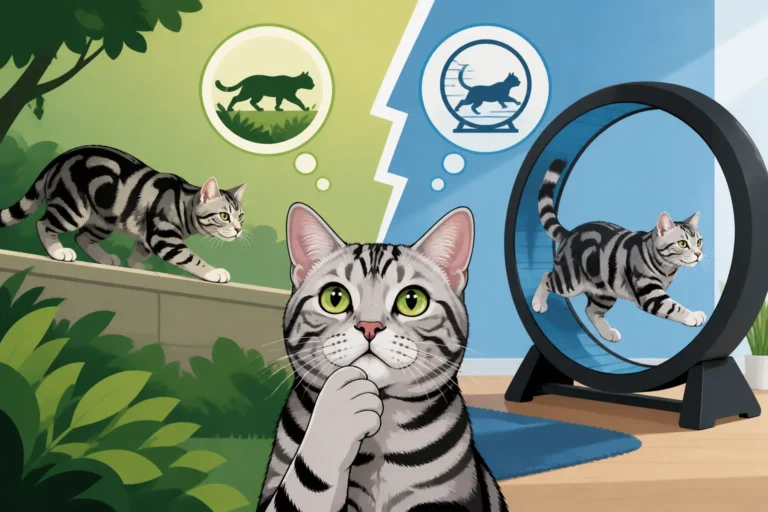
This extends to other areas of their life too. If they want to go outside (and are allowed), they might sit patiently by the door, gazing expectantly at the handle. If they're craving some playtime, they might bring a favorite toy and drop it at your feet, then look at you with that expectant gaze. They rely on you, their perceptive human, to understand these subtle prompts. Their days are often structured around quiet patrols and periods of rest, and their positional cues are a natural extension of this organized existence. How an American Shorthair Splits Its Day Between Patrol and Sleep and how these routines become part of their communication.
When Silence Speaks Volumes: Recognizing Needs in a Quiet Cat
While an American Shorthair's quiet nature is part of their charm, it also places a greater responsibility on their owners to be observant. Because they rarely vocalize their discomfort or pain, subtle behavioral changes can be the only indicators that something is amiss.
Subtle Changes as Indicators of Discomfort or Illness
This is perhaps the most critical aspect of living with a quiet cat: a slight deviation from their normal routine or demeanor can be a huge red flag. A highly vocal cat might tell you something is wrong with a persistent cry or a change in their meow, but an American Shorthair will almost certainly show you.
For example, if your normally calm and independent American Shorthair suddenly starts hiding more than usual, becomes less interactive, or shows a decrease in appetite, these are all significant signs that they might be unwell or experiencing stress. A reduction in grooming, a change in coat condition, or even a less enthusiastic greeting when you come home could indicate discomfort. Why a Limp in a Stoic American Shorthair Is Never Minor in a breed known for its stoicism. Because they are so adept at masking pain (another trait from their wild ancestors who wouldn't show weakness), any subtle shift in their quiet patterns warrants careful investigation. Don't wait for a dramatic meow; by then, the issue might be quite advanced.
Observing Eating, Drinking, and Litter Box Habits
These fundamental bodily functions offer objective data points for monitoring your quiet American Shorthair's health. Any significant change in their eating habits, whether it's eating less, more, or being unusually finicky, should be noted. Similarly, tracking their water intake is crucial. If you notice they're drinking significantly more or less, it could point to a health issue. Many owners find that a good quality ceramic or stainless steel water fountain, readily available on Amazon, encourages more consistent hydration, making it easier to spot changes in drinking patterns.
The litter box is another critical diagnostic tool. Changes in the frequency, volume, or consistency of urine or feces are strong indicators of potential health problems. An American Shorthair might strain to urinate or defecate silently, so you need to observe closely if they're spending an unusual amount of time in the box or making repeated trips. Since they won't cry out in discomfort, these environmental clues become paramount. Consistent monitoring of these habits is your best defense against silently developing illnesses.
The Rare Vocalization: A Call for Immediate Attention
While American Shorthairs are generally quiet, they can vocalize, and when they do so in an unusual or distressed manner, it's a profound signal that demands immediate attention. Think of it as their emergency alarm button. If your typically silent American Shorthair suddenly starts letting out loud, sustained, or unusually plaintive meows, especially if accompanied by other signs of distress like hiding, restlessness, or altered posture, it's a clear indication of pain, fear, or a serious medical issue.
This isn't just a casual "hello" or a polite request for food. This is them reaching a point where their usual subtle communication isn't enough, and they are genuinely suffering or terrified. When an Already Quiet American Shorthair Has Gone Too Quiet can be a concern, but a sudden increase in distressed vocalization from a normally quiet cat is an even more urgent one. In such cases, contact your veterinarian without delay. It means they need help, and they're breaking their lifelong habit to tell you.
| Communication Type | Vocal Cues (Rarely Seen) | Behavioral Cues (Commonly Seen) | Meaning/Context |
|---|---|---|---|
| Affection | Soft purr (close contact) | Slow blinks, head nuzzles, rubbing, kneading | "I trust you," "I love you," "You're my family." |
| Hunger/Thirst | Mild meow (if very insistent/frustrated) | Staring at food/water bowl, sitting by fridge/faucet, following you to kitchen | "My bowl is empty," "I need refreshment." |
| Playtime | Occasional chirrup at toy | Bringing a toy, crouching, tail twitching, staring at you then toy | "Let's play," "I'm feeling active." |
| Discomfort/Pain | Sustained, unusual, distressed meow | Hiding, lethargy, reduced appetite, altered posture, grooming less | "Something is wrong," "I hurt." |
| Attention | Rare, soft trill or single meow | Sitting near you, gentle paw tap, walking across keyboard, head bunt | "Acknowledge me," "I'd like some interaction." |
| Fear/Stress | Hiss, growl, low moan | Flattened ears, puffed fur, hiding, tail tucked, wide eyes | "I'm scared," "Leave me alone," "This situation is stressful." |
Living with a Quiet Companion: Embracing the American Shorthair's Demeanor
Embracing the quiet nature of an American Shorthair means learning to appreciate a different kind of bond. It's less about verbal exchanges and more about shared presence, subtle understanding, and mutual respect.
Building Trust Through Observational Understanding
Building a deep connection with an American Shorthair isn't about teaching them to talk; it's about you learning their language. This requires patience, keen observation, and a willingness to tune into the nuanced world of feline body language and routine. Spend time simply watching your cat. What are their habits? How do they react to different situations? What are their subtle cues for happiness, contentment, or slight irritation?
By observing your American Shorthair, you’ll start to pick up on their individual quirks and understand their unspoken requests. This builds a unique kind of trust, where your cat knows you understand them without a word needing to be uttered. It's a bond based on intuition and mutual respect for their independent spirit. The more you observe, the more you'll realize just how much they communicate, even in their silence. How Undemanding an American Shorthair Really Is can lead to a deeper, more perceptive relationship.
Providing a Calm and Predictable Environment
An American Shorthair, with their calm and predictable nature, thrives in an equally stable and serene home environment. They are generally adaptable, but excessive noise, sudden changes, or chaotic surroundings can be particularly stressful for a cat that prefers to communicate and exist quietly.
Maintaining a consistent routine for feeding, playtime, and quiet time can greatly contribute to their sense of security. They appreciate knowing what to expect. While they generally cope well with change, providing them with safe, quiet spaces where they can retreat and observe from a distance is invaluable. A comfortable cat bed in a sunny spot, a high perch on a cat tree (many excellent, sturdy options can be found on Amazon), or even just a cozy box can serve as their sanctuary. Respecting their need for personal space and quiet moments reinforces their trust in you and helps them feel secure in their territory. How an American Shorthair Copes With Change by relying on your consistency.
Enriching Their Lives Beyond Vocal Interaction
Just because your American Shorthair isn't chatty doesn't mean they don't need mental and physical stimulation. In fact, their strong hunting instincts mean they absolutely require outlets for their prey drive, even if those activities are performed in silence.
Focus on interactive play that mimics the hunt. Wand toys, for example, are fantastic for engaging their stalking, chasing, and pouncing behaviors. Look for durable wand toys on Amazon with various attachments like feathers or soft mice. Make sure to let them "catch" the prey at the end of a play session to satisfy their instinct. Puzzle feeders, also widely available, are excellent for making them "work" for their food, stimulating their minds and slowing down meal times, which is great for their physical and mental health. Vertical spaces, such as tall cat trees or wall-mounted shelves, provide them with observation posts and opportunities to climb and explore their territory, satisfying their natural need for height and vantage points. Engaging with them through these activities, even without a chorus of meows, strengthens your bond and fulfills their innate needs. Which Wand Toy Reads as Prey to an American Shorthair best helps fulfill their primal instincts.
Disclaimer
This article is for general informational purposes only and does not constitute professional advice. Laws, prices and regulations vary by location and change over time. Consult a qualified professional for guidance on your specific situation.