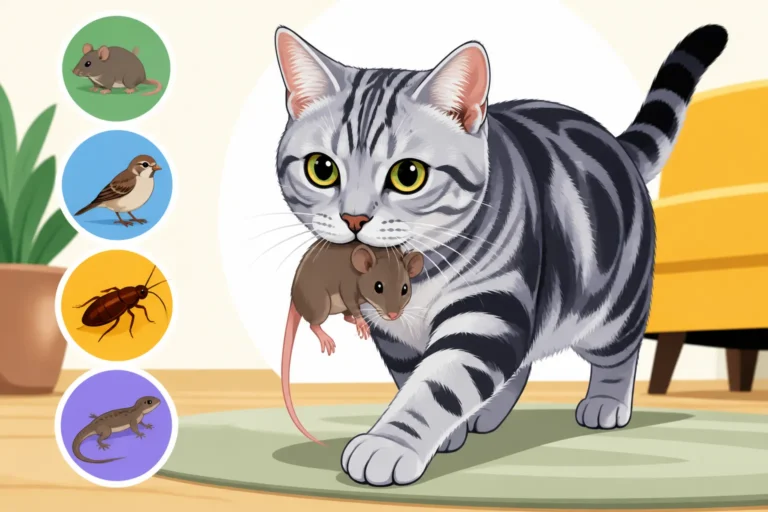
How Well a Collar Bell Stops an American Shorthair
It’s a common scenario for American Shorthair owners: you adore your robust, intelligent cat, but their deeply ingrained hunting instincts can sometimes lead to unwanted "gifts" on your doorstep or concerns about local wildlife. Many of us turn to collar bells, hoping that a tiny jingle will be enough to give birds and small critters a fighting chance. This guide dives deep into whether these bells truly work for such a naturally stealthy breed and explores more effective strategies to manage their impressive prey drive.
The American Shorthair's Undeniable Hunting Instinct
Let's be honest, the American Shorthair wasn't bred to be a couch potato. Their history is steeped in utility, purpose, and a very real job description that involved keeping vermin in check. This isn't just a quaint historical fact; it's a fundamental aspect of their being that continues to shape their behavior today. Understanding this deep-seated drive is the first step in managing it responsibly.
Why the Prey Drive Runs So Deep
Our beloved American Shorthairs carry a legacy stretching back centuries, a time when their ancestors earned their keep as invaluable members of human households, ships, and farms. These were not pampered pets; they were essential workers. They kept rats and mice at bay on transatlantic voyages and protected precious grain stores in barns across the developing continent. This wasn't a job they could afford to be mediocre at; survival often depended on their prowess. Over generations, the cats most effective at hunting were the ones who thrived and passed on their genes. This natural selection carved out a breed with an exceptional prey drive, keen senses, and a physical build perfectly adapted for the chase.
It's crucial to realize that this isn't a "flaw" in their character, nor is it a sign of naughtiness when your American Shorthair brings you a captured mouse or bird. It's simply them fulfilling an ancient, hardwired directive. Even an American Shorthair that has never set paw outside, living a pampered indoor life, will display these instincts, whether it's through intense play with a feather wand or an uncanny ability to spot a rogue fly. They haven't forgotten their heritage; it's part of their genetic blueprint. This deep-seated instinct means that managing their hunting tendencies requires more than just a superficial solution. For more on this, check out Why Centuries of Ratting Left the American Shorthair Its Drive.
How an American Shorthair Hunts
To truly appreciate the challenge a collar bell faces, you need to understand the master hunter you're dealing with. The American Shorthair's hunting style is a clinic in stealth, patience, and explosive power. They don't just stumble upon prey; they actively seek it out, using every one of their senses. Their broad, muscular body is built for powerful bursts of speed and agility, allowing them to navigate varied terrain with silent grace.
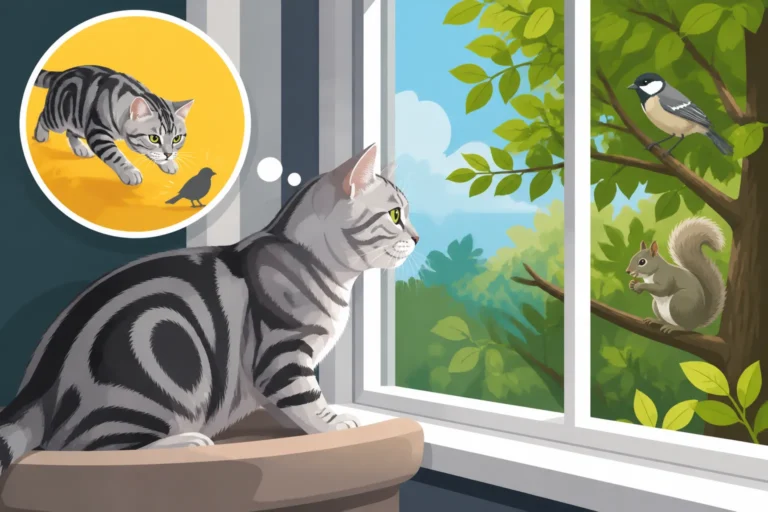
Picture this: your American Shorthair, eyes fixed, body low to the ground, tail twitching ever so slightly. This is the stalk, a slow, deliberate approach, often using cover to remain unseen. They're masters of blending into their surroundings, moving almost imperceptibly. Their short, dense coat, while lovely to stroke, also contributes to their quiet movement, allowing them to slip through bushes and tall grass without rustling. Once they've closed the distance, there's that moment of frozen stillness, assessing, waiting for the perfect opportunity. Then, with a sudden, powerful pounce, they strike. It's often so quick that the prey has no time to react, a testament to their efficiency. You can see these behaviors in action even during playful interactions. Learning about How an American Shorthair Stalks and How an American Shorthair Pounces truly illustrates their formidable hunting abilities. This combination of stealth, patience, and lightning-fast execution makes them incredibly effective hunters, which, unfortunately for local wildlife, is precisely why a simple bell often falls short.
The Theory Behind the Collar Bell
For many cat owners, a small bell attached to their cat's collar feels like a responsible, straightforward solution to protect local birds and small mammals. The logic seems sound: if the cat makes a noise, the prey will hear it and have time to escape. But as we'll explore, the reality for a skilled hunter like the American Shorthair can be a little more complex.
How a Bell Is Supposed to Work
The fundamental idea behind a collar bell is simple: auditory warning. When your cat moves, the bell jingles, producing a sound that is meant to alert potential prey animals to the cat's presence. This gives the bird or rodent a crucial head start, theoretically allowing them to flee to safety before the cat can launch an attack. It's designed to disrupt the cat's natural stealth, turning an otherwise silent predator into a noisy alarm system.
Many owners hope this slight disadvantage will be enough to significantly reduce their cat's hunting success. It’s a widely adopted practice, seen as a humane way to balance a cat's desire for outdoor exploration with the undeniable impact they have on local ecosystems. The belief is that the sound acts as a constant, passive deterrent, reducing the element of surprise that is so critical to a successful hunt. For a cat that’s naturally quiet, like the American Shorthair with its compact build and focused movements, introducing a sound seems like a logical countermeasure to their innate hunting advantages.
The Reality: Limitations of the Bell
However, the effectiveness of a collar bell is often overstated, particularly when it comes to intelligent and persistent hunters like the American Shorthair. While a bell might offer some initial deterrent, cats are incredibly adaptive creatures. They learn. They observe. And they are surprisingly adept at mitigating the "disadvantage" a bell presents. Over time, many cats learn to move in ways that minimize the bell's jingle – a slower, more deliberate stalk, or even holding their head and neck in a specific position to keep the bell from ringing. Some even learn to shake their head to make the initial sound, then freeze, giving the impression they've moved on before resuming their silent approach.
Moreover, prey animals themselves can become habituated to the sound. In areas with many bell-wearing cats, birds and squirrels might start to associate the jingle with general background noise rather than an immediate threat. The sound range of a tiny bell is also quite limited. If a cat is stalking through dense foliage or approaching from a distance, the jingle might not be loud enough or distinct enough to provide an adequate warning. It's a bit like putting a tiny, muffled alarm on a highly trained ninja; they’ll find a way to work around it. For an American Shorthair, whose entire being is geared towards the hunt, a small bell is often a minor inconvenience rather than a true deterrent. Considering How Much Wildlife an American Shorthair Takes in spite of these efforts can be eye-opening.
Why American Shorthairs Can Outsmart a Bell
You might think a cat couldn't possibly "outsmart" a bell, but it's less about conscious thought and more about their natural instincts and incredible adaptability. An American Shorthair's entire genetic history is dedicated to hunting efficiency, and that drive doesn't simply vanish when a small piece of metal is added to their collar.
Their Natural Stealth and Intelligence
American Shorthairs possess a remarkable blend of physical attributes and cognitive abilities that make them formidable hunters. Their agile bodies, compact and muscular, allow for incredibly quiet movement. They can navigate through grass, undergrowth, and around obstacles with minimal sound. Their paws are soft, and their movements are often fluid and deliberate. This physical stealth is paired with sharp intelligence. Cats are highly observational animals; they learn through trial and error, and they quickly associate actions with outcomes. If a cat finds that jingling alerts prey, it will naturally, instinctually, adjust its behavior to minimize that sound.
This isn't necessarily a conscious decision like a human making a strategic move. Instead, it's an inherent behavioral modification driven by their deep hunting instinct. They learn to stalk slower, to freeze more often, or even to move their head in a way that keeps the bell quiet until they are close enough to strike. Their focus on the hunt is so intense that they will find ways to overcome obstacles. Think about how a cat can move How Fast an American Shorthair Is Over Short Distances when it needs to; that explosive speed is part of a calculated approach, and a bell merely adds another variable to their complex hunting equation. It's a game of cat and prey, and the cat is usually the one with centuries of evolutionary advantage on its side.
Prey Adaptation and Auditory Blindness
It's not just the cat that adapts; prey animals also learn and change their behavior. In suburban environments, where outdoor cats are common and many wear bells, local wildlife—especially birds—can become accustomed to the jingle. Initially, a bell might startle them, but over time, if they frequently hear bells without an immediate threat, the sound can become less alarming. It simply fades into the background noise of their daily lives. This phenomenon is known as habituation.
Imagine living in a city where sirens are a daily occurrence. At first, you might jump, but eventually, you learn to distinguish between a siren heading away and one coming directly towards you, or simply tune them out until they are very close. Wildlife exhibits similar learning patterns. They might learn to associate a certain type of jingle with "the neighbor's cat" and understand its usual hunting patterns. Furthermore, the bell only works if the prey can hear it before the cat is too close to escape. If the cat is already in its final pounce, or if background noise like wind or traffic drowns out the jingle, it offers no protection. This adaptive response from both predator and prey highlights why relying solely on a collar bell for wildlife protection is often a futile effort.
More Effective Alternatives to Reduce Hunting
Given the American Shorthair's powerful hunting instincts and the limitations of collar bells, many owners are left wondering what truly effective steps they can take. The good news is there are several proactive strategies that can genuinely reduce your cat's impact on wildlife while still ensuring they lead a rich, fulfilling life. It's about redirecting that innate drive, not suppressing it entirely.
Enriching the Indoor Environment
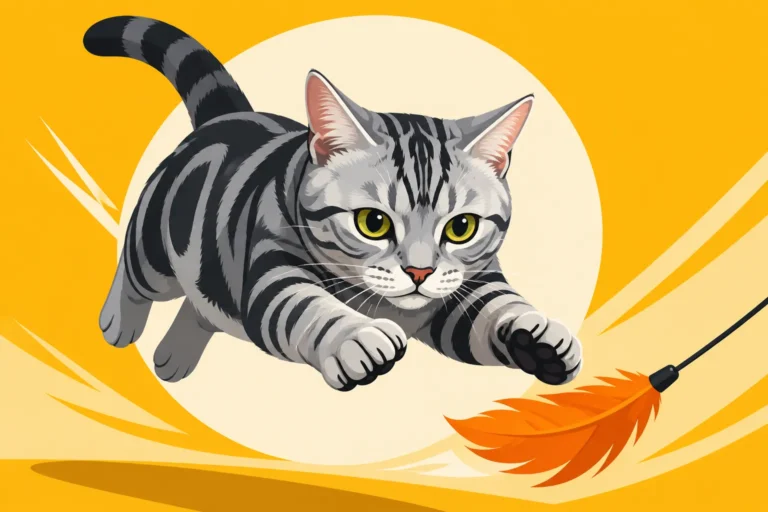
The most impactful way to prevent your American Shorthair from hunting outdoors is to keep them safely indoors. However, simply keeping them inside isn't enough; you must provide ample enrichment to satisfy their natural instincts. An under-stimulated indoor cat can develop behavioral problems, but a well-engaged cat is a happy cat. Start with interactive play sessions, mimicking the hunt sequence. Use wand toys with feathers or small plush animals on the end, allowing your cat to stalk, chase, pounce, and "catch" their prey. This is absolutely critical for draining that pent-up energy and satisfying their prey drive in a safe, controlled environment. Aim for several short sessions throughout the day, especially around dawn and dusk when their hunting drive is naturally highest.
Puzzle feeders are another fantastic tool. Instead of simply putting their food in a bowl, make them work for it. There are many excellent options available on Amazon, from simple balls that dispense kibble to more complex mazes. This taps into their foraging and problem-solving skills, turning mealtime into a mental and physical challenge that mimics the "effort" of a hunt. Vertical space is also vital; cat trees, shelves, and window perches allow them to observe their territory from a high vantage point, which is a natural behavior for a predator surveying its domain. Consider a sturdy, multi-level cat tree from Amazon that your American Shorthair can climb and scratch. You can discover more about Which Wand Toy Reads as Prey to an American Shorthair and Whether a Puzzle Feeder Satisfies an American Shorthair for ideas. By providing these outlets, you channel their instinct in a way that is safe for both your cat and local wildlife. How Many Hunts a Day an Indoor American Shorthair Needs is a useful read here.
Supervised Outdoor Access or Catios
While keeping an American Shorthair indoors is ideal for wildlife protection, some owners still want their cats to experience fresh air and outdoor stimuli. If you decide to allow any outdoor access, supervision is key, and contained spaces are even better. Harness and leash training can be a rewarding experience for both of you, allowing your American Shorthair to explore a controlled outdoor environment under your direct watch. Start with short sessions in a quiet area and gradually increase the duration as your cat becomes comfortable. This allows them to sniff, explore, and stretch their legs without posing a threat to birds or small mammals.
Even better are secure outdoor enclosures, commonly known as catios. These can range from small window boxes to elaborate, multi-level structures with tunnels and platforms, providing a safe and stimulating outdoor experience. Catios allow your American Shorthair to enjoy the sights, sounds, and smells of the outdoors without any risk of them hunting, getting into fights, or being exposed to dangers like traffic or predators. Many excellent pre-fabricated catios are available on Amazon, or you can find plans to build your own. This offers the best of both worlds: your cat gets safe outdoor time, and wildlife remains protected. For comprehensive information, explore Whether a Catio Satisfies an American Shorthair's Drive and Why Letting an American Shorthair Outside Is a Real Decision. Remember, a catio offers substantial benefits over a traditional cat flap and unrestricted access, which can be explored in Whether an American Shorthair's Cat Flap Is Worth the Risk.
High-Visibility Collars
While traditional collar bells have proven largely ineffective for preventing hunting, some owners explore other types of collars as a deterrent. High-visibility collars, often brightly colored or featuring reflective patterns, are designed to make your cat more noticeable to prey animals, especially birds. The idea here is purely visual: a flash of bright color might break the cat's camouflage and give a bird a split-second warning, allowing it to take flight.
These collars are not a foolproof solution, and they certainly don't stop a determined American Shorthair from hunting entirely. They rely on the prey seeing the collar in time, which isn't always possible in dense foliage or low light. They also do nothing to alert ground-dwelling prey like rodents. However, as an additional layer of protection, particularly for cats that have some supervised outdoor access, a bright or patterned collar can contribute to making them slightly less stealthy. When choosing a collar, always ensure it's a quick-release or breakaway design to prevent your cat from getting snagged and injured. While a visual deterrent is a step up from an ineffective sound, it's still far less reliable than preventing the hunt through indoor enrichment or contained outdoor spaces. For more on what an outdoor cat needs, see What an Outdoor American Shorthair Needs That an Indoor One Does Not.
Below is a table summarizing the effectiveness and considerations for different methods of preventing hunting behavior in American Shorthairs:
| Method | Primary Mechanism | Effectiveness for American Shorthair | Pros | Cons |
|---|---|---|---|---|
| Collar Bell | Auditory warning | Low to Moderate | Easy to implement, inexpensive | Cats adapt, prey habituates, limited sound range |
| Indoor Enrichment | Redirects prey drive | High | Fulfills cat's instincts, full wildlife protection | Requires owner engagement, space for toys |
| Catio (Enclosure) | Physical barrier | High | Safe outdoor access, full wildlife protection | Initial cost, requires space, may need assembly |
| Harness & Leash | Supervised access | High | Direct control, bonding with owner | Requires training, time commitment, constant supervision |
| High-Visibility Collar | Visual warning for prey | Low to Moderate | Simple, inexpensive | Only works if seen, less effective for ground prey |
| Keeping Indoors | Eliminates opportunity | Highest | Complete wildlife protection, cat safety | Requires significant indoor enrichment |
Disclaimer
This article is for general informational purposes only and does not constitute professional advice. Laws, prices and regulations vary by location and change over time. Consult a qualified professional for guidance on your specific situation.