What an Indoor American Shorthair Does With a Mouser’s Instinct
It’s a common scenario: you’ve welcomed a beautiful American Shorthair into your home, expecting a calm, affectionate companion, only to find them stalking dust bunnies like they’re the last mouse on earth, or batting at your feet with the intensity of a seasoned predator. This guide will explore the deep-seated mousing instinct that still thrives in our beloved indoor American Shorthairs and provide practical ways to satisfy these innate drives in a safe, enriching environment, ensuring a happy cat and a harmonious household.
Understanding the American Shorthair's Innate Hunting Drive
Let’s be honest, for centuries, cats weren't just pets; they were integral members of the household, earning their keep. The American Shorthair, in particular, carries a rich legacy as a working cat, and that history isn't something that disappears just because they've moved from the barn to your living room. Their instincts are a testament to their heritage, and understanding this is the first step to truly appreciating and managing their behavior.
Centuries of Purpose-Bred Instincts
Imagine a sturdy cat aboard a ship sailing across the Atlantic, or patrolling a bustling farmstead, its keen eyes scanning for any sign of a rodent. That’s the American Shorthair's lineage. These cats were bred, not for fancy show traits initially, but for their robust health, adaptable temperament, and, most crucially, their exceptional hunting prowess. They were the original pest control, essential for protecting food stores and preventing disease. This constant need to hunt, to be alert, and to execute a precise predatory sequence became ingrained in their very DNA. When you see your American Shorthair intently watching a fly buzz by the window, you’re witnessing millennia of natural selection and a few centuries of deliberate selection for precisely that kind of focus. It's not a flaw; it's a feature, a living echo of their ancestors' vital role.
The Difference Between a Working Cat and a Lap Cat
While many modern breeds have been selectively bred to minimize their prey drive or to be more overtly affectionate and reliant on human interaction, the American Shorthair retains much of its original, self-sufficient character. They weren't bred to sit on laps all day, though many enjoy a good cuddle on their own terms. Their purpose was to patrol, hunt, and manage their territory independently. This distinction is crucial for owners to grasp. Expecting an American Shorthair to be a purely decorative, passive companion is setting both of you up for frustration. Instead, recognize that their active, alert nature is a reflection of their successful past, and it needs an outlet even in the most comfortable, modern home. They are a cat that still needs a job, even if that job is simulated. What an American Shorthair Bred Only for Usefulness Turns Out Like delves deeper into this unique temperament.
Why the Instinct Never Truly Disappears
It’s tempting to think that since your American Shorthair has never seen a wild mouse, their hunting instinct would fade. But instinct isn't learned; it's inherited. It’s a hardwired program, passed down through generations. Even if your cat has always been indoors, that primal urge to stalk, chase, pounce, and "kill" remains vibrant. It's why they might treat your feet like scurrying prey under the blankets, or why a stray leaf blowing past the window can capture their full, undivided attention. This instinct is fundamental to their identity as a feline. Trying to suppress it is not only futile but can lead to stress and behavioral issues. Our goal as owners isn't to eliminate the instinct, but to provide safe, appropriate, and satisfying avenues for its expression.
The Instinctive Hunting Sequence Indoors
Cats are creatures of habit and instinct, and hunting is perhaps their most deeply ingrained. Even within the confines of a home, the American Shorthair will attempt to replicate the full hunting sequence, sometimes to hilarious, sometimes to perplexing, and sometimes to destructive effect. Understanding this sequence helps us provide better outlets.
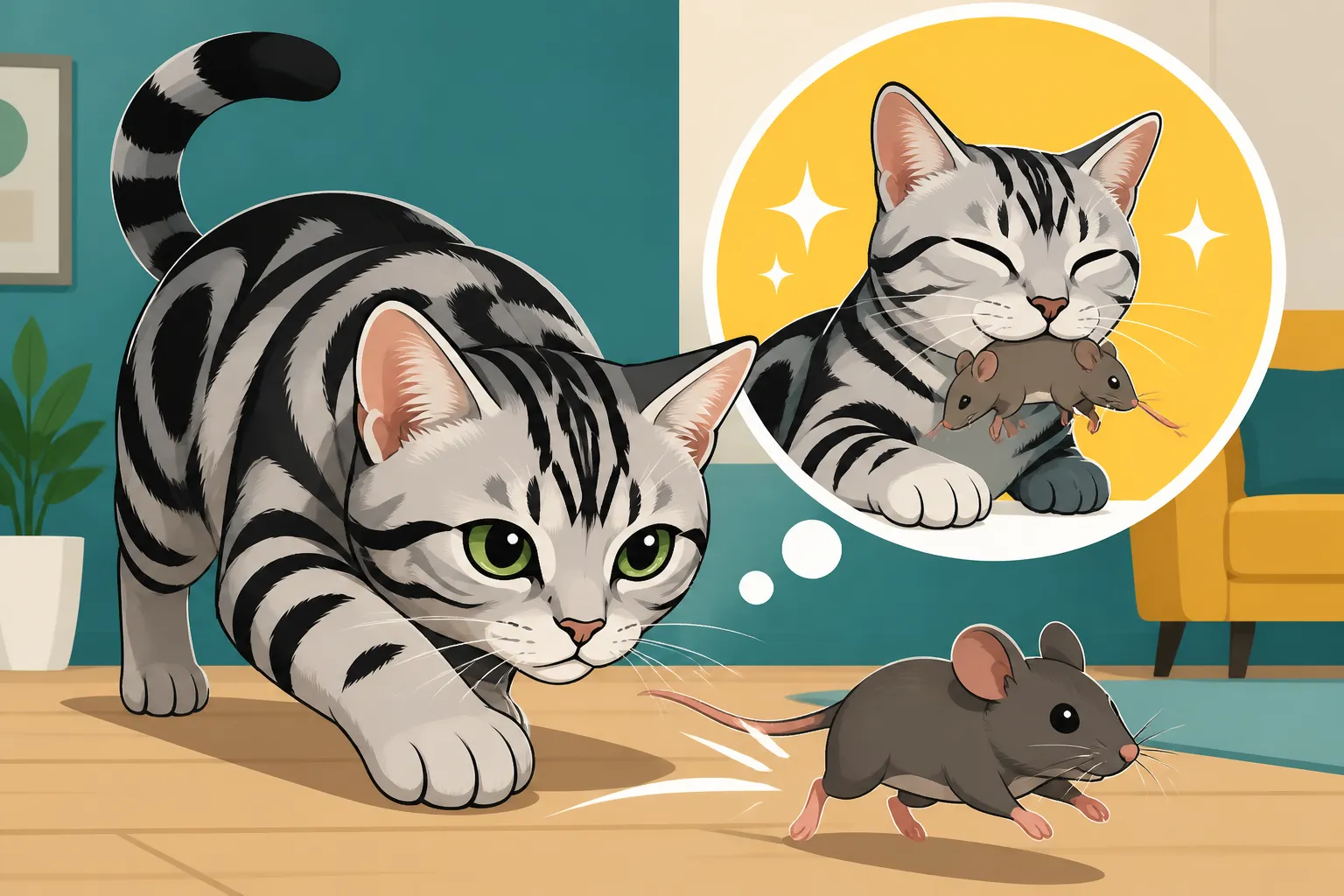
Stalking, Pouncing, and the "Kill Bite"
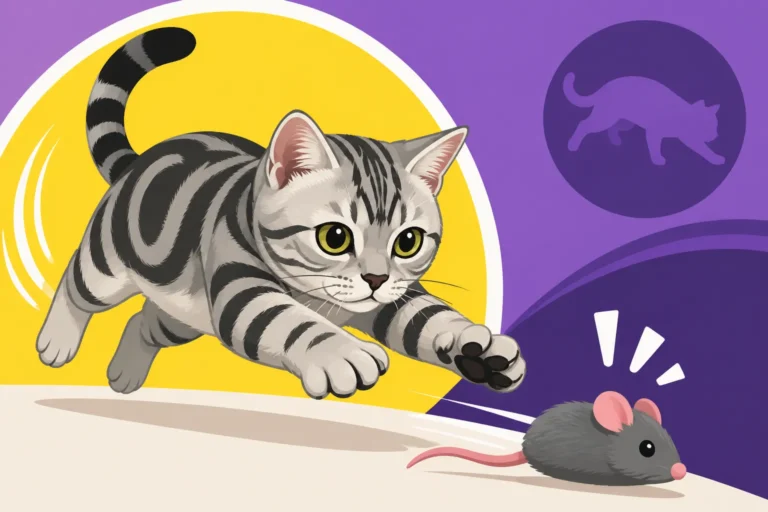
A cat's hunt isn't just about the final pounce; it's a meticulously choreographed ballet of observation, stealth, chase, capture, and the final "kill bite." Your indoor American Shorthair might "stalk" your moving hand under a blanket, or slowly creep towards a dangling shoelace with intense focus. The sudden lunge, the precise grab with claws, and the characteristic bite to the "neck" of the toy are all part of this ancient ritual. They don't just swat; they incapacitate. This entire sequence is profoundly satisfying for a cat, releasing pent-up energy and mental stimulation. If a toy merely gets batted around without ever being "caught" or "killed," the sequence is incomplete, and your cat can be left feeling frustrated and unfulfilled. Providing toys that allow for this full, satisfying process is key. How an American Shorthair Hunts provides an in-depth look at this behavior.
The Challenge of Modern House Prey
In nature, prey animals are diverse, unpredictable, and offer varying levels of challenge. In our homes, the "prey" available to an American Shorthair is often static, repetitive, or simply uninteresting. A fluffy mouse toy that always sits in the same spot quickly loses its appeal. This lack of varied, stimulating prey is a major source of boredom for an indoor hunting machine. Your cat might then turn to alternative "prey," such as curtain cords, houseplant leaves, or even your unsuspecting toes. It’s not malice; it’s an attempt to find something that mimics the challenge and movement of real prey. We need to intentionally introduce dynamic, engaging "prey" into their environment to keep their instincts sharp and prevent them from inventing their own, less desirable, games.
Bringing You Their "Catch"
One of the most endearing, if sometimes alarming, behaviors of an American Shorthair with a strong hunting instinct is bringing you their "kill." This might be a favorite toy deposited at your feet, or a rogue moth they've expertly dispatched and proudly presented. This behavior stems from several deep-seated feline motivations. Firstly, it's a display of their hunting prowess – they are showing you what a capable provider they are, just as a mother cat would bring prey to her kittens. Secondly, it can be an invitation to share the spoils or even to "teach" you how to hunt, especially if they perceive you as a less-than-competent predator (which, let's face it, most humans are, in cat terms!). It's a compliment, a sign of trust, and a clear indication that their hunting drive is very much alive. A simple "thank you" and a positive interaction can reinforce this bond. Why an American Shorthair Presents Its Kill explains this charming trait in more detail.
Redirecting the Hunting Drive Through Play
Since we can't let our indoor American Shorthairs hunt actual mice (and who would want to?), redirecting their powerful instincts through structured, engaging play is absolutely essential. This isn't just about entertainment; it's about fulfilling a fundamental biological need.
Interactive Play as a Substitute Hunt
Think of interactive playtime not as frivolous fun, but as crucial "training" for your feline athlete. Wand toys, especially those with feathers or soft, fur-like attachments, are invaluable here. The goal is to mimic the erratic, unpredictable movements of natural prey. Drag the toy across the floor, hide it behind furniture, make it "flutter" and "dart." Don't just wave it in front of them. Make your cat work for it, stalk it, and anticipate its movements. This kind of play engages both their physical agility and their mental strategy. Dedicate at least two sessions of 10-15 minutes each day to this kind of play. These aren't just moments of exercise; they are crucial opportunities for your American Shorthair to engage their hunting sequence from start to finish. You can find a wide variety of these engaging toys on Amazon.
Choosing the Right "Prey" Toys
Not all toys are created equal when it comes to satisfying a hunter. Look for toys that:
- Mimic natural prey: Feathers, fur, crinkly sounds, and erratic movements are key. Avoid toys that are too bright, hard, or don't offer a satisfying "feel" when caught.
- Allow for a full hunting sequence: The toy should be able to be stalked, chased, pounced on, and "killed." This means toys that can be dragged or dangled are often more effective than static toys.
- Are safe and durable: Given the intensity of an American Shorthair's play, toys need to withstand enthusiastic pouncing and biting. Avoid anything with small parts that could be ingested.
- Are rotated regularly: Keep a selection of toys and rotate them every few days to prevent boredom. A toy that's been "dead" for a while can suddenly become exciting again when it reappears. Which Toys Finish an American Shorthair's Hunt offers more insights into selecting the best playthings.
| Toy Type | How it Satisfies Instinct | Best For | Considerations |
|---|---|---|---|
| Wand Toys | Stalking, chasing, pounce, capture | Mimicking flying/scurrying prey | Requires human interaction, rotate attachments |
| Kicker Toys | "Kill bite," bunny kicks | Releasing aggressive predatory energy | Ensure durable, safe materials |
| Crinkle Balls | Chase, capture, sound stimulation | Fast-moving prey, independent play | Can get lost easily, some cats ignore them |
| Feather Teasers | Visual stimulation, flying prey | Engaging sight and pounce | Feathers can be ingested, supervise play |
| Spring Toys | Erratic movement, batting | Quick reflexes, independent batting | Can roll under furniture, less "kill" satisfaction |
| Plush Mice | Stalking, carrying, "killing" | Realistic feel, carrying "prey" back | Replace when tattered, can become stale if static |
The Importance of the "Catch"
This is perhaps the most overlooked aspect of play. Many owners use laser pointers, which are fantastic for exercise and triggering the chase reflex, but they never allow the cat to actually catch their "prey." This can be incredibly frustrating for a cat, leading to anxiety and redirected aggression. Imagine chasing something endlessly, only for it to vanish every time you get close. It's maddening! Always end a laser pointer session by immediately switching to a physical toy that your American Shorthair can capture, bite, and feel triumphant over. This completes the hunting sequence and provides crucial mental satisfaction. The "catch" provides the crucial psychological reward that validates their efforts and tells their brain the hunt was successful. Why an American Shorthair Needs to Catch the Toy explores this concept further.
Enriching the Indoor Environment for a Hunter
An indoor environment, no matter how comfortable, can quickly become monotonous for a cat designed to patrol vast territories and engage with a dynamic outdoor world. Thoughtful environmental enrichment is key to keeping your American Shorthair mentally stimulated and physically active.
Vertical Space and Observation Points
American Shorthairs, with their history of surveying farms and landscapes, have a strong need for vertical territory. High perches, cat trees, shelves, and window seats aren't just decorative items; they are prime observation posts. From these elevated positions, your cat can survey their "territory," watch the world outside (a continuous source of visual stimulation), and feel secure. This satisfies their natural inclination to climb and to find safe vantage points, much like their ancestors would have used barn rafters or tree branches. Consider placing a sturdy cat tree from a reputable brand you can find on Amazon near a window, or installing cat-friendly shelving. This allows them to physically and mentally explore their home in three dimensions, breaking up the monotony of the ground floor. How High an American Shorthair Needs to Get is a great resource for ideas on vertical enrichment.
Puzzle Feeders and Foraging Opportunities
In the wild, cats spend a significant portion of their day hunting for food. For our indoor American Shorthairs, food often appears magically in a bowl, requiring no effort whatsoever. This misses a huge opportunity for mental and physical enrichment. Puzzle feeders, which require your cat to "work" for their food by batting, nudging, or rolling a device to release kibble, are excellent for this. They mimic the challenge of a hunt, rewarding effort with sustenance. You can also hide portions of their daily kibble around the house in various safe spots – on shelves, under blankets, inside empty paper towel rolls – encouraging them to "forage" for their meals. This simple change can transform mealtime from a passive event into an engaging activity, slowing down eating and engaging their problem-solving skills. Look for durable, easy-to-clean puzzle feeders from brands available on Amazon. Whether a Puzzle Feeder Satisfies an American Shorthair goes into more detail.
Creating a Varied and Stimulating Territory
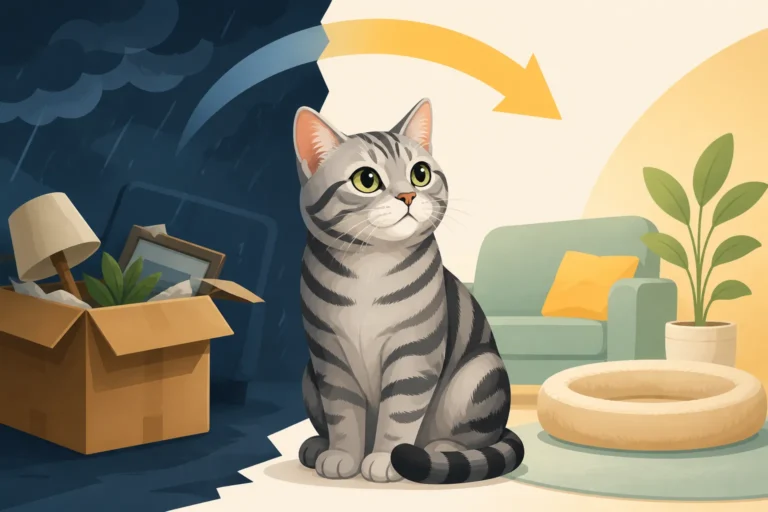
Beyond vertical space and puzzle feeders, think about diversifying their entire indoor "territory." This could include rotating toys, providing different textures to scratch (vertical posts, horizontal scratchers, cardboard, sisal), and creating "hideouts" with cardboard boxes or soft tunnels. Even changing the furniture layout periodically can offer new perspectives and exploration opportunities. For an American Shorthair, who traditionally would have a varied outdoor patrol route, consistent novelty is vital. Consider a catio – a safe, enclosed outdoor space – if feasible. This offers the smells, sounds, and sights of the outdoors without the dangers, providing unparalleled sensory enrichment. The more dynamic and engaging their environment, the less likely they are to become bored and resort to undesirable behaviors.
Managing Unexpected "Prey" Deliveries
Despite our best efforts to provide appropriate play and enrichment, your American Shorthair's keen instincts mean they'll likely still find real-world "prey" in your home, from buzzing insects to fallen leaves. Learning how to react is key to a calm household.
Flies, Bugs, and Other Uninvited Guests
It's inevitable: a fly will buzz into your house, a spider will crawl across the ceiling, or a beetle will make its way indoors. For your American Shorthair, these are not just pests; they are prime, live hunting opportunities. Expect full-on stalk-and-pounce maneuvers. While it's generally harmless for your cat to hunt common house insects, be mindful of any potentially toxic bugs (e.g., certain spiders if you live in an area with venomous species) or those that might sting (like wasps). Most common house flies, moths, and small spiders are usually fine for your cat to engage with. After the "hunt," your cat might eat their catch or, just as often, present it to you. Acknowledge their success with calm praise. Remember, this is them doing their "job" – the very job their ancestors excelled at. How Often an American Shorthair Catches Flies discusses this natural behavior.
The "Gift" of a Toy or Household Item
Sometimes, your American Shorthair will bring you a toy, a hair tie, a sock, or even a pen, dropping it at your feet with a proud meow. As mentioned before, this is often a "gift" or an invitation to play. The best response is usually positive reinforcement: a gentle pat, a soft voice, and maybe engaging with the item for a moment. If it's a toy, pick it up and initiate a short play session. If it's a household item you'd rather not have them "hunt," calmly put it away and immediately redirect their attention to an appropriate toy. The key is to avoid scolding or negative reactions, as this can confuse or upset your cat, who is merely following their natural instincts and trying to interact with you. How to React When an American Shorthair Brings You Something offers more advice.
Dealing with Actual Rodents
While most indoor American Shorthairs won't encounter actual rodents, it can happen, especially in older homes, apartments, or rural settings. If a mouse or small rat does make its way inside, your cat's hunting instinct will kick into overdrive. It's a double-edged sword: on one hand, your cat is doing exactly what they were bred for. On the other, wild rodents can carry diseases and parasites. If your cat catches a rodent, try to intervene carefully, perhaps by using a broom to gently separate them, and remove the prey yourself. Always wear gloves, as a captured or deceased rodent can transmit disease. If your cat has been playing with or consuming wild rodents, it's wise to discuss parasite prevention with your vet. This is one of those times when their powerful instinct is incredibly effective, but also requires our careful management for their health and safety. Why an American Shorthair Cannot Live With a Bird or Hamster also discusses prey drive towards other small animals.
Addressing Frustration and Behavioral Issues
When an American Shorthair's mousing instinct isn't adequately satisfied, that pent-up energy and mental frustration can manifest in a variety of undesirable behaviors. It's not about being "naughty"; it's a call for help, a sign that their innate needs aren't being met.
When Instinct Leads to Destructive Behavior
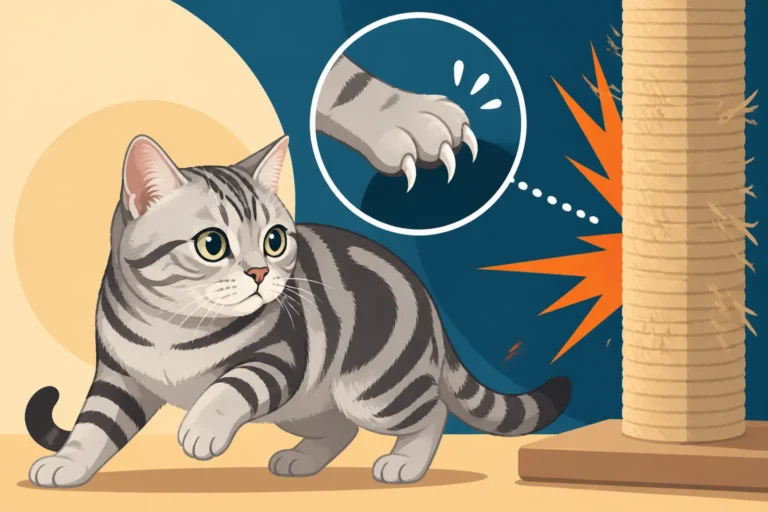
A bored American Shorthair with a high prey drive might turn their hunting focus onto your belongings. This could mean shredded toilet paper rolls, clawed furniture, or batting objects off shelves. They're not trying to destroy your home out of spite; they're attempting to create their own "prey" or to stimulate themselves in any way they can. The curtain cord swinging in the breeze becomes a snake to stalk. The leg of the sofa offers a satisfying surface for claw conditioning. This destructive behavior is a strong indicator that you need to ramp up their interactive playtime, introduce more puzzle feeders, and enrich their environment with appropriate scratching posts and vertical spaces. Ignoring these signs will only exacerbate the problem, making them more entrenched over time. Why an American Shorthair Keeps Its Claws Conditioned on Your Sofa is a relevant read.
Over-Grooming and Stress Signs
Internalized frustration can also manifest as stress-related behaviors, such as over-grooming. A cat might excessively lick or chew at their fur, leading to bald patches, skin irritation, or even open sores. This compulsive behavior often serves as a self-soothing mechanism when a cat feels anxious, bored, or unable to express natural behaviors. While over-grooming can also be a sign of allergies or other medical issues, if it coincides with a lack of environmental stimulation and appropriate play, it's highly likely that their unfulfilled hunting drive is playing a role. If you notice your American Shorthair over-grooming, a vet visit is always the first step to rule out medical causes, but then turn your attention to their enrichment needs.
Aggression Towards People or Other Pets
When a cat's predatory energy has no appropriate outlet, it can sometimes be redirected towards people or other pets in the household. This might look like "play aggression" – ambushing your ankles, pouncing on your hands, or stalking another pet. While some of this is normal play, excessive or increasingly aggressive behavior can signal a deeper issue of frustration. Your American Shorthair isn't trying to hurt you; they're simply trying to complete their hunting sequence using the only moving "prey" available to them. This is particularly common if owners use their hands or feet as toys during kittenhood, inadvertently teaching the cat that humans are fair game for hunting. If you observe this, immediately stop using body parts as toys, increase structured interactive play, and consider professional advice from a feline behaviorist.
Why Exercise Isn't Enough: Mental Stimulation is Key
We often equate a cat's well-being with physical activity, assuming that if they run around enough, they'll be happy. While physical exercise is undoubtedly important, for a breed like the American Shorthair with such a strong mousing instinct, mental stimulation is equally, if not more, vital.
The Cognitive Demands of Hunting
Hunting is a profoundly intelligent activity. It involves problem-solving, strategic planning, patience, observation, and quick decision-making. A cat doesn't just run after anything that moves; they assess, calculate, and adapt their approach. They learn the patterns of their prey, use cover, and time their attacks. When an American Shorthair is deprived of these cognitive challenges, their sharp minds can become restless and bored. Simply chasing a laser pointer might provide physical exercise, but it doesn't engage the full intellectual capacity of a hunter. Think of it like a highly intelligent person being given only simple, repetitive tasks – they might be busy, but they won't be fulfilled.
The Boredom Trap for Indoor Hunters
An indoor cat's life can be incredibly predictable compared to their wild counterparts. The same rooms, the same furniture, the same toys day in and day out. For a cat whose ancestors thrived on the unpredictable excitement of the hunt, this can be a serious "boredom trap." Boredom in cats isn't just a mild inconvenience; it can lead to stress, lethargy, overeating, and the behavioral issues discussed earlier. The American Shorthair's history means they thrive on novelty and challenge. We need to continuously introduce new elements, new games, and new ways for them to engage their senses and intellect. Signs an American Shorthair Has Nothing Left to Hunt can help you recognize when boredom has set in.
Keeping a Sharp Mind Active
So, how do we keep that sharp, hunter's mind active?
- Rotation is Key: Rotate toys frequently. Don't leave all toys out all the time. Bring out a few different ones each day or week to keep them fresh and exciting.
- Novelty: Introduce new textures, scents, and sounds safely. A new cardboard box, a crinkly tunnel, or even a safe new plant (check for toxicity!) can provide fresh exploration.
- Training: Yes, you can train cats! American Shorthairs are intelligent and can learn tricks, respond to their names, or even walk on a harness. This engages their minds and strengthens your bond. Treats (available on Amazon) can be great motivators. Which Tricks a Prey Driven American Shorthair Learns Fastest offers some ideas.
- Observation: Give them plenty of opportunities to watch the world. A bird feeder outside a window can be hours of entertainment, providing mental stimulation without actual hunting.
Living Harmoniously with a Primal Hunter
Welcoming an American Shorthair into your life means embracing a creature whose essence is intertwined with a rich history of self-sufficiency and hunting prowess. It’s not about changing who they are, but about creating an environment where their true nature can flourish safely and happily.
Embracing Their True Nature
The first step to a harmonious relationship with your American Shorthair is acceptance. Accept that they are, at their core, a hunter. This isn't a flaw; it's a testament to their strength, intelligence, and adaptability. Instead of fighting against their instincts, learn to work with them. Understand that their sudden bursts of energy, their intense focus on a dust mote, or their desire to pounce on your feet aren't misbehaviors, but expressions of their authentic selves. When you appreciate these traits, you can then channel them constructively, turning potential frustrations into opportunities for enrichment and bonding. This shift in perspective is incredibly powerful for both you and your cat. Whether a Landrace Origin Explains the American Shorthair's Health hints at the robust nature of this breed.
Building a Stronger Bond Through Play
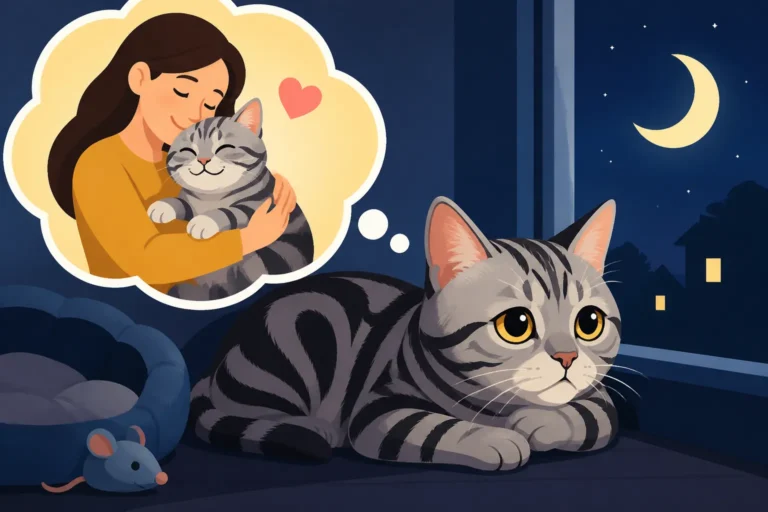
Interactive play is one of the most powerful tools you have for bonding with your American Shorthair. When you engage in a simulated hunt, you're tapping into their deepest instincts, communicating with them on a primal level. You become their hunting partner, the facilitator of their greatest joy. These daily play sessions aren't just for them; they're for you too. It’s a chance to observe their agility, their intelligence, and their pure, unadulterated feline grace. It builds trust, reinforces positive associations, and fulfills their need for attention in a way that truly resonates with them. A tired, satisfied hunter is a happy cat, and a happy cat is a wonderful companion. How an American Shorthair Shows Affection Between Patrols demonstrates their unique way of showing love.
The Joy of a Satisfied American Shorthair
Ultimately, a truly satisfied American Shorthair is a joy to live with. They are calm, confident, and less likely to engage in destructive or stress-related behaviors. When their hunting instincts are met through consistent, engaging play and a stimulating environment, they can then fully relax into their role as a beloved family member. They might still bring you their favorite toy with a proud chirp, or watch the birds outside with an intense stare, but these will be signs of a well-adjusted, fulfilled cat, not a frustrated one. By honoring their innate mousing instinct, you unlock the full potential of your American Shorthair, allowing their unique personality to shine through, creating years of happy companionship.
Disclaimer
This article is for general informational purposes only and does not constitute professional advice. Laws, prices and regulations vary by location and change over time. Consult a qualified professional for guidance on your specific situation.