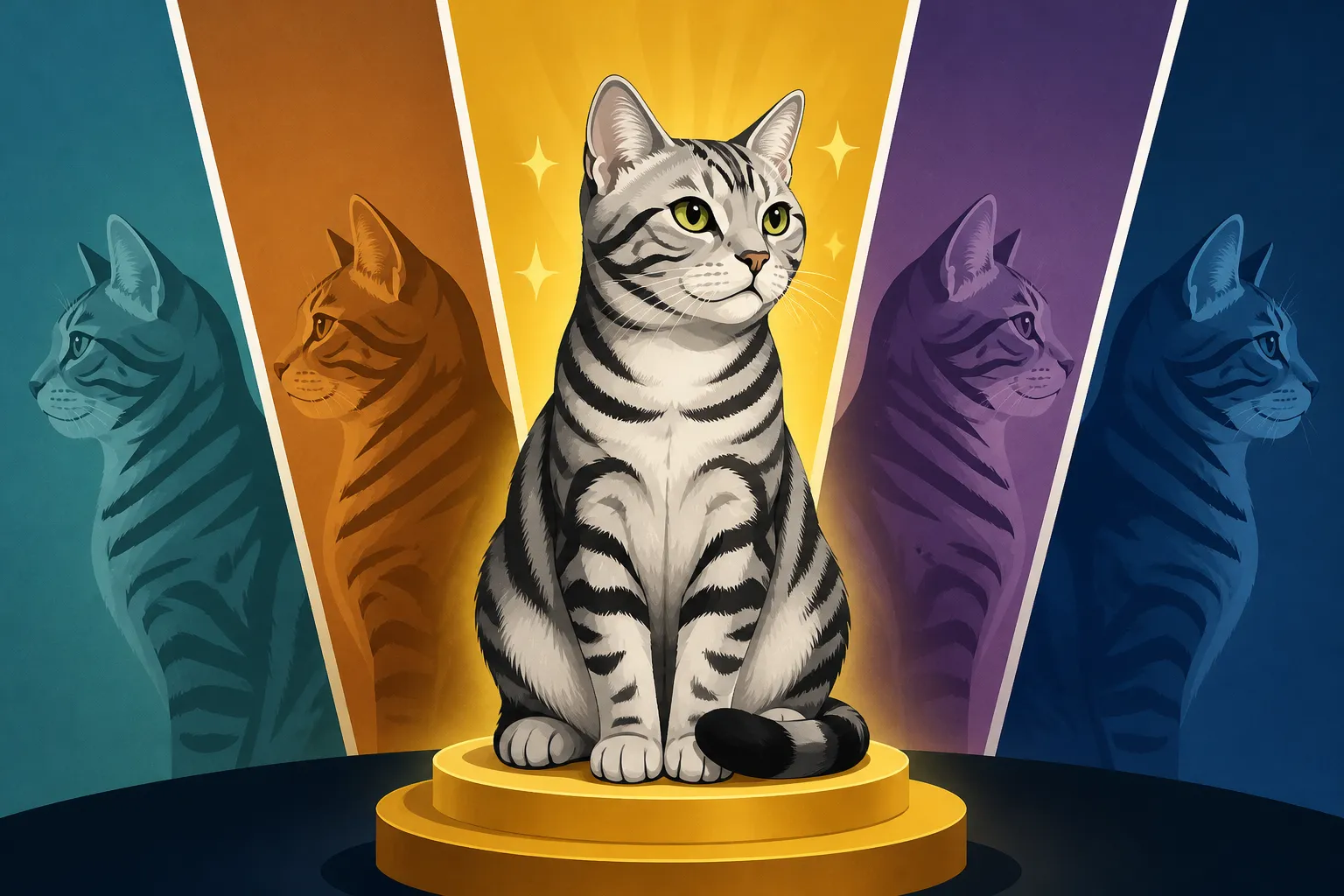
Which Decade the American Shorthair Peaked In
For the American Shorthair, the 1960s are the strongest answer if “peak” means the decade when the breed’s modern identity became especially visible: in 1966, its name changed from Domestic Shorthair to American Shorthair. That does not prove the breed was most numerous or most popular then. The answer depends on what kind of peak you mean.
The 1960s were a turning point for the breed’s identity
The name change made the distinction clearer
Before 1966, the cats now called American Shorthairs were known as Domestic Shorthairs. That older name could describe a broad range of shorthaired cats, including cats without a registered pedigree. The change gave breeders and registries a more distinct label for a particular pedigreed breed.
That distinction matters when judging a “peak.” The American Shorthair did not suddenly appear in the 1960s, and ordinary shorthaired cats had been part of American life long before then. Rather, the decade marks a moment when the breed’s identity was being separated more clearly from the general population of domestic cats. For the story behind that decision, see Why the American Shorthair Name Changed in 1966 and What the Breed Was Called Before American Shorthair.
The new name also helped address a practical problem. A breed name that sounded interchangeable with “ordinary shorthaired cat” could make it harder for a pedigreed cat to stand out at a show or for a breeder to explain what made its lineage distinctive. The name American Shorthair pointed to a defined breed and its history, rather than to coat length alone.
So, if you are asking when the modern American Shorthair became most recognizable as a named pedigree, the 1960s are a sensible answer. If you mean when the breed had the most cats, the most registrations, or the greatest public affection, the name change by itself cannot settle that question.
The breed was established well before its modern name
The American Shorthair’s background reaches much further back than the 1960s. Its ancestors were working cats valued for controlling rodents, including cats kept aboard ships and on farms. That practical history helped produce a sturdy, capable cat rather than one developed primarily for an extreme appearance.
The breed also had formal standing long before the name change. It was among the breeds recognized in the early history of the Cat Fanciers’ Association, which began registering cats in the early twentieth century. The American Shorthair therefore had a pedigree identity before it received its current name. The American Shorthair Was One of the CFA's Five Founding Breeds and Which Year the CFA Recognized the American Shorthair offer more context on that early recognition.
This timeline is important because “peak” can blur two different stories: the long history of cats with the breed’s working roots, and the later public identity of the American Shorthair as a distinct pedigree. A cat may be common in homes and farms for generations without being widely recognized under a particular breed name.
| What “peak” could mean | What the 1960s tell us | What the decade does not prove |
|---|---|---|
| Recognition as a named breed | The 1966 name change gave the breed a clearer identity | That it was the decade with the most registered cats |
| Historical presence in North America | The breed’s working-cat roots reach back much earlier | That its ancestors were formally tracked as American Shorthairs |
| Show visibility | A distinct name could help breeders present the breed more clearly | That show entries or wins reached a high point then |
| General popularity | The decade may feel like a turning point in the breed’s story | That the breed was more popular than in every other decade |
Why there is no simple popularity peak
“Popular” can refer to very different measures
A breed can be popular in several ways. It might rank highly in pedigree registrations, appear frequently at cat shows, be familiar to the general public, or simply be common in households. Those measures do not necessarily move together. A cat can be a familiar companion without ever being registered as a pedigree, while a breed can have strong show recognition without being one of the most common cats in homes.
This makes a single peak decade difficult to identify. The American Shorthair’s practical ancestry overlaps with the wider history of domestic cats in North America. But a historical count of all shorthaired cats would not be the same as a count of cats formally registered as American Shorthairs. The first category is broad; the second depends on breeding records and registry definitions.
The distinction is still relevant today. A retailer such as Chewy may make breed information and cat supplies easy to browse, but product listings or searches are not a historical census. The same is true of a breed’s visibility in popular culture: being recognizable does not automatically mean it led registration totals.
Registrations are not the same as household numbers
If you want to identify a registration peak, the most useful evidence would be year-by-year records from a cat registry, using consistent breed names and categories. The name transition complicates comparisons: records before 1966 may use Domestic Shorthair, while later records may use American Shorthair. A fair comparison would need to establish exactly which cats each record includes.
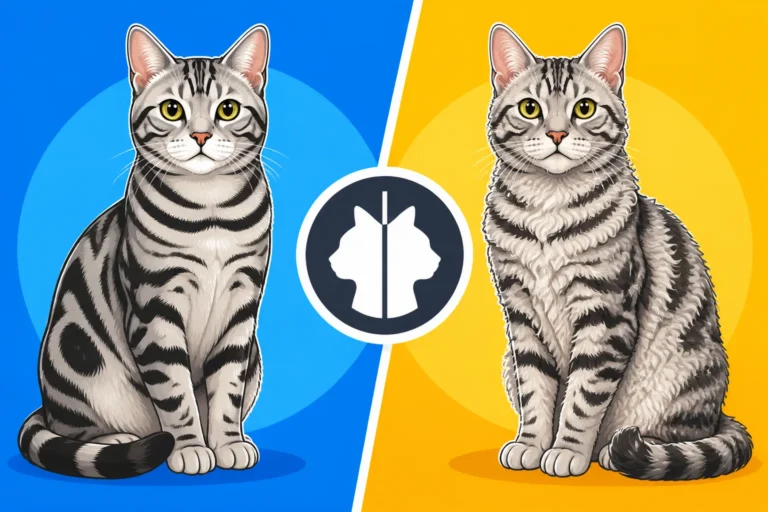
Household numbers are even harder to reconstruct. Many people have had cats that resemble American Shorthairs without owning a registered American Shorthair. A silver tabby with a strong, square build may look the part, but appearance alone cannot establish pedigree. How an American Shorthair Differs From a Domestic Shorthair explains why the resemblance can cause confusion.
Modern visibility creates another measurement trap. A breed may appear frequently in online searches, social posts, or shopping categories without having the highest population. A Chewy search can help an owner find food, litter, or toys, but it cannot tell you whether the breed was more common in the 1960s than in another decade. If a retailer’s page features a breed prominently, that reflects a contemporary shopping context—not a complete historical record.
The silver tabby helped make the breed recognizable
A memorable look can create a perceived high point
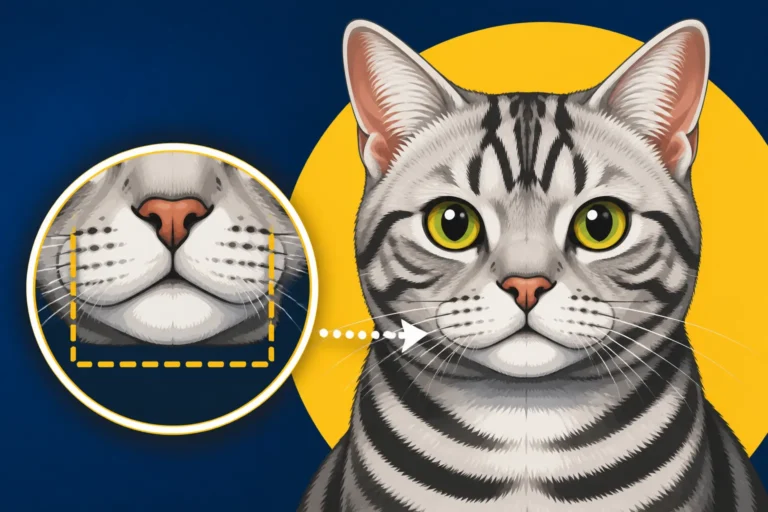
The American Shorthair is associated with a substantial build, a rounded face, and a dense coat. Its classic silver tabby pattern is particularly recognizable, with dark markings set against a pale silver background. A striking visual identity can make a breed feel prominent even when there is no evidence that it reached its highest numbers at the same time.
The silver tabby’s popularity also gives the breed a shorthand image. Someone who has never studied pedigrees may still recognize the pattern or associate it with a sturdy, distinctly American-looking cat. That visual familiarity can strengthen the sense that the breed had a particular cultural peak, especially when a memorable cat appears in advertising, illustration, or other public-facing settings. Learn more in The Silver Tabby That Made the American Shorthair Famous.
Still, familiarity is not a count. A distinctive image can be widely recognized while the breed’s registration numbers are modest compared with those of other pedigrees. Conversely, a common-looking cat may be plentiful without most people knowing its registered breed. Appearance helps explain reputation, but it cannot identify a numerical high point on its own.
Breed image and breed population can diverge
The American Shorthair’s appeal partly comes from looking like a robust, familiar cat rather than a highly exaggerated show type. That can make it seem less unusual than breeds with a strikingly different silhouette or coat. People may know the look without knowing the breed name, particularly when they encounter a cat in a shelter or in a neighbor’s home.
That familiarity can also feed an understandable misconception: if many cats look similar, perhaps the American Shorthair must be one of the most common pedigrees. But a resemblance does not confirm a registered lineage. A cat’s pedigree depends on documented ancestry, not simply on a silver tabby pattern, a broad chest, or a rounded head.
For the same reason, modern shopping visibility is a limited clue. Chewy and other retailers may make it easier to browse supplies while learning about different breeds, but the products available for a breed do not establish how many registered cats existed in a past decade. Treat retail pages as practical shopping tools, not as evidence of a historical popularity curve.
So, which decade did the American Shorthair peak?
The best concise answer is the 1960s—with an important qualification
If “peak” means a defining moment in the breed’s modern identity, the 1960s are the best-supported answer. The 1966 change from Domestic Shorthair to American Shorthair gave the breed a clearer name and helped distinguish it from the broader population of ordinary shorthaired cats.
If “peak” means the decade when the breed had the most registered cats, won the most shows, or was most common in American homes, the answer is not established by the name change. Those questions need specific, comparable records. Without them, confidently naming a numerical or popularity peak would confuse a documented milestone with a measurement that has not been shown.
A helpful way to phrase it is: The American Shorthair’s clearest identity milestone came in the 1960s, but that is not the same as proving its all-time popularity peak. This also fits the breed’s longer history: the working-cat roots came first, formal recognition followed, and a more distinctive modern name arrived later. For broader comparisons of the breed’s standing, see Where the American Shorthair Ranks Among Cat Breeds and How Popular the American Shorthair Is.
If you are researching the breed for a class project, family history, or a possible adoption, keep those categories separate. A date associated with a name change is easy to verify and meaningful. A claim that a breed was “at its most popular” needs a defined measure and records to support it. That small distinction keeps the history accurate without taking anything away from the American Shorthair’s long-standing place in American homes.
Disclaimer
This article is for general informational purposes only and does not constitute professional advice. Laws, prices and regulations vary by location and change over time. Consult a qualified professional for guidance on your specific situation.