Why an American Shorthair Takes Three Years to Fill Out
An American Shorthair can look like a grown cat well before its body has finished developing. That gap can leave owners wondering whether their kitten is unusually small, whether a sturdy shape means extra weight, or when to change food. This guide explains why the breed may take around three years to fill out and how to track healthy growth without rushing it.
Why American Shorthairs take time to fill out
Adult-looking does not always mean fully developed
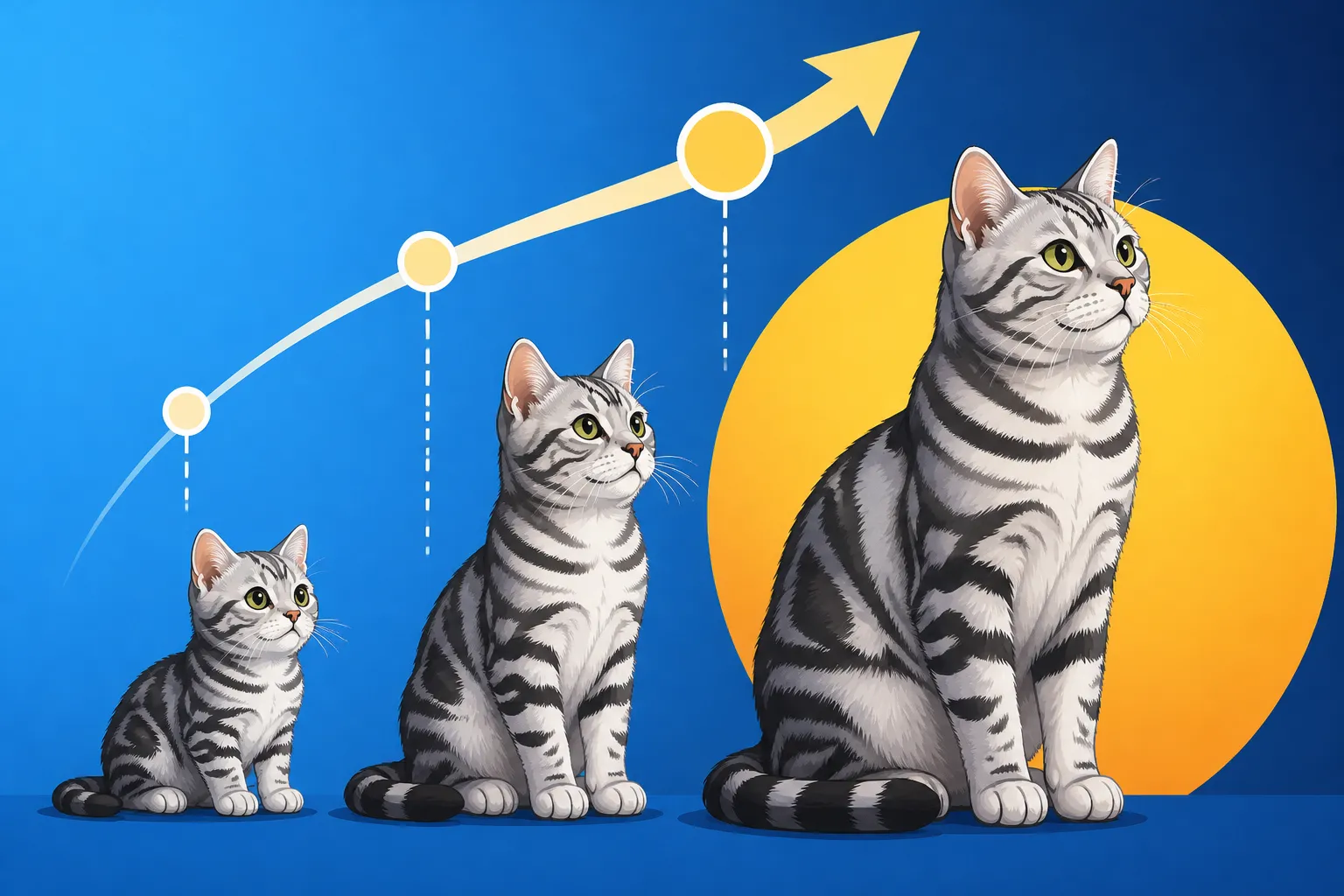
American Shorthairs are a medium-to-large, sturdy breed, and their growth is not always obvious from one month to the next. A young cat may reach close to adult height and length before the chest, shoulders, and overall musculature look fully developed. That gradual change is what people often mean when they say an American Shorthair takes three years to “fill out.”
The phrase is a useful generalization, not a deadline every cat must meet. Many cats look substantially mature earlier, while some continue developing their adult proportions over a longer period. Genetics, sex, nutrition, activity, and individual growth patterns all play a part. A cat who is still lean at two years old is not automatically behind, just as a broad-looking cat at one year old is not necessarily finished growing.
American Shorthairs are also known for a solid, balanced build rather than a delicate one. Their body can look more substantial as the chest and shoulders develop, but a healthy adult should still have a waist when viewed from above and ribs that can be felt under a light covering of fat. For a closer look at the breed’s frame, see How Big an American Shorthair Gets and Why an American Shorthair Is Built Square.
Growth happens in stages
A kitten’s most rapid growth usually happens early in life, but development does not stop as soon as the cat looks adult-sized. The body keeps changing in proportion. A young cat may seem long-legged or narrow through the chest, then gradually gain a more balanced outline as the torso and musculature mature.
That can be especially noticeable in a breed with a broad chest and strong frame. An adolescent American Shorthair may look rangy one season and more solid the next, even without a dramatic change in height. The difference is often in proportions and muscle development, not simply in the number on the scale. If you are comparing your cat with breed descriptions, remember that How Big an American Shorthair Gets is a better question than “How heavy should every American Shorthair be?” Weight alone can’t show whether a particular cat is the right size for its frame.
It’s also normal for individual cats to mature at different rates. Littermates may not fill out at the same time, and a male and female from the same family can have noticeably different adult builds. The breed’s square, substantial appearance develops gradually; Why an American Shorthair Is Built Square helps explain why a healthy adult may look more solid than a leaner, lighter-framed cat.
What “filling out” should look like
Healthy maturation means a cat’s body gradually takes on adult proportions while staying in good condition. You may notice a stronger-looking chest, more muscle over the shoulders and thighs, or a body that appears less leggy. These changes should not come with a round belly, a disappearing waist, or difficulty grooming and jumping.
It’s easy to mistake fat for the last stage of growth, especially with a naturally sturdy breed. A round shape can look reassuringly “grown up,” but excess weight is not the same as mature muscle. Check how the body feels as well as how it looks: the ribs should be easy to feel with gentle pressure, and there should be a slight waist behind the ribs when viewed from above. Your veterinarian can help assess body condition and distinguish a solid frame from excess fat.
| What you notice | What it may mean | What to do |
|---|---|---|
| Gradual increase in chest and muscle, with a visible waist | Normal maturation may be underway | Keep tracking weight and body condition |
| A young cat still looks lean but is energetic and eating normally | Individual growth pace or build | Discuss growth at routine vet visits |
| Weight rises quickly and the waist becomes hard to see | Possible excess body fat | Ask your vet to review portions and body condition |
| Poor appetite, low energy, vomiting, or weight loss | Not simply slow development | Contact your veterinarian |
How to follow growth without overfeeding
Track the trend, not a single weigh-in
A single weight rarely tells the whole story. A cat’s weight can shift with meals, hydration, and the timing of a weigh-in, while gradual changes in body condition may be more meaningful. If you can, weigh your cat on the same scale under similar conditions and keep a simple record. Monthly tracking is often easier to interpret than weighing repeatedly and worrying over small day-to-day changes.
Pair the number with observations. Does your cat still have a waist? Can you feel the ribs? Is your cat active and grooming comfortably? If you notice a sharp change in weight, appetite, or energy, contact your veterinarian rather than assuming it is a normal growth spurt.
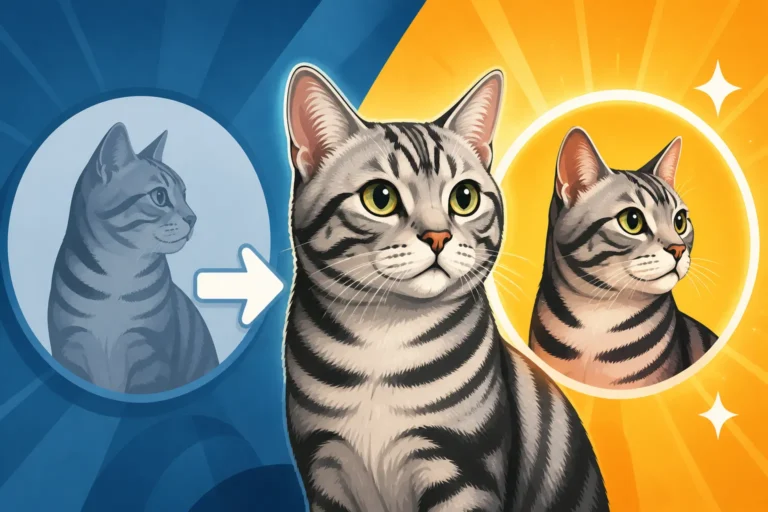
A photo taken from above and from the side every few weeks can also help you spot slow changes. Try to take the pictures in the same place and position. This is not a substitute for a veterinary exam, but it can give you a clearer comparison than memory alone. The question is not whether your cat matches a generic weight chart; it is whether their body is developing steadily and staying in a healthy condition.
Feed for life stage and body condition
Growing cats need food suited to growth, but more food does not guarantee a larger, healthier adult. Follow the feeding guidance on the food you use as a starting point, then adjust with your veterinarian based on your cat’s age, activity, body condition, and growth pattern. Portion needs vary, so an amount that works for one American Shorthair may be too much or too little for another.
Once a cat is ready to move from kitten food to adult food, make the change gradually and discuss the timing with your veterinarian. Avoid extending a high-calorie diet simply because you hope your cat will become bigger. The aim is healthy development, not the heaviest possible adult weight. If you are comparing food options, retailer listings such as Chewy’s can make it easier to review product labels and life-stage information, but your veterinarian is the right person to help decide what suits your cat.
Treats count toward daily intake, too. A few extras may seem harmless, but regular treats can add up, particularly in an indoor cat whose activity level is modest. Measure meals instead of topping up the bowl by eye, and check with your veterinarian before putting a growing cat on a weight-loss plan. A kitten or adolescent should not be restricted abruptly without professional guidance.
What can affect the pace of development
Genetics, sex, and individual variation
An American Shorthair’s eventual size and shape are influenced by inherited traits. Even within a breed, cats don’t all share identical proportions. Some have a broader chest or heavier bone, while others remain more moderate in build. A pedigree can offer clues about family traits, but it cannot promise an exact adult weight or a specific age when a cat will look fully mature.
Sex can influence adult size and muscle mass, too, though there is plenty of overlap between individual cats. Neutering may also change energy needs and appetite, so it is worth revisiting portions with your vet after the procedure. A cat who gains weight quickly after neutering may need a feeding adjustment, not extra time to “grow into” a rounder shape.
For these reasons, comparisons with a friend’s cat, a breeder’s photograph, or an online weight chart can be misleading. Use comparisons as a rough reference, not a pass-or-fail test. Your cat’s own growth history, body condition, and veterinary checks are more useful guides than a breed average viewed in isolation.
Activity and daily routine
Movement contributes to muscle tone and overall fitness, but an indoor lifestyle does not prevent healthy development. It does mean that food portions may need closer attention because a cat who spends the day sleeping between window-watching sessions may burn fewer calories than a more active cat.
Short play sessions, climbing opportunities, and food puzzles can help keep a young cat engaged. The goal is not to force exercise or make a kitten work off every meal. It is to provide regular, safe opportunities to move, stalk, chase, and climb. If you’re choosing food puzzles or other enrichment supplies, Chewy’s product categories can be useful for comparing styles; choose something sturdy, appropriate for your cat’s size, and easy to clean.
Activity changes with age and personality. One American Shorthair may race through the hallway every evening, while another prefers a quiet window perch and brief bursts of play. Both can be healthy. Focus on whether your cat moves comfortably and maintains a suitable body condition, rather than expecting every cat to have the same daily energy level.
When to ask a veterinarian about growth
Signs that deserve a closer look
A slow-looking growth pattern by itself is not necessarily a problem. It becomes more concerning when it appears alongside other changes. Reduced appetite, persistent vomiting or diarrhea, poor energy, a dull coat, or unexplained weight loss are reasons to contact your veterinarian. So is rapid weight gain that makes movement or grooming harder.
Pay attention to changes in function, not just appearance. A young cat who suddenly stops jumping, seems weak, or avoids normal play may need an examination. Cats can hide discomfort, and a change in behavior may be the first visible clue that something is wrong. Don’t wait for a cat to become visibly ill before asking about a persistent change.
If your cat seems much smaller than expected, your veterinarian can review their growth history, check body condition, and decide whether further assessment is appropriate. Bring any weight records and note changes in appetite, food, stool, and activity. Those details can make the conversation more useful than a general concern that the cat “hasn’t filled out.”
Making routine checks count
Routine veterinary visits are a good time to ask whether your cat’s development looks appropriate. Instead of focusing only on the scale, ask the vet to assess body condition, muscle tone, and overall health. If you have noticed a change between visits, mention when it began and whether it has continued.
It also helps to bring the food packaging or a clear photo of its label, along with an estimate of how much your cat eats each day. If you buy food or supplies through Chewy, keep the product details handy so you can discuss the exact diet rather than relying on a brand name alone. Food needs can change as a cat matures, becomes less active, or gains weight, so check in before making a major adjustment.
The most reassuring pattern is steady development with good energy, a healthy appetite, comfortable movement, and a body condition that stays appropriate. An American Shorthair may take time to develop its adult outline, but “three years” is a rough description of gradual maturation—not a reason to ignore sudden changes or encourage weight gain.
Disclaimer
This article is for general informational purposes only and does not constitute professional advice. Laws, prices and regulations vary by location and change over time. Consult a qualified professional for guidance on your specific situation.