Why an American Shorthair’s Muzzle Is Square
A square muzzle can make an American Shorthair look sturdier than a random-bred tabby, but the shape is more than a cute feature. It comes from the breed’s overall head structure and should look balanced, not flattened or exaggerated. This guide explains what “square” means, how the muzzle develops, and when a change in your cat’s face deserves a closer look.
What a square muzzle looks like on an American Shorthair
The muzzle is part of a broader head shape
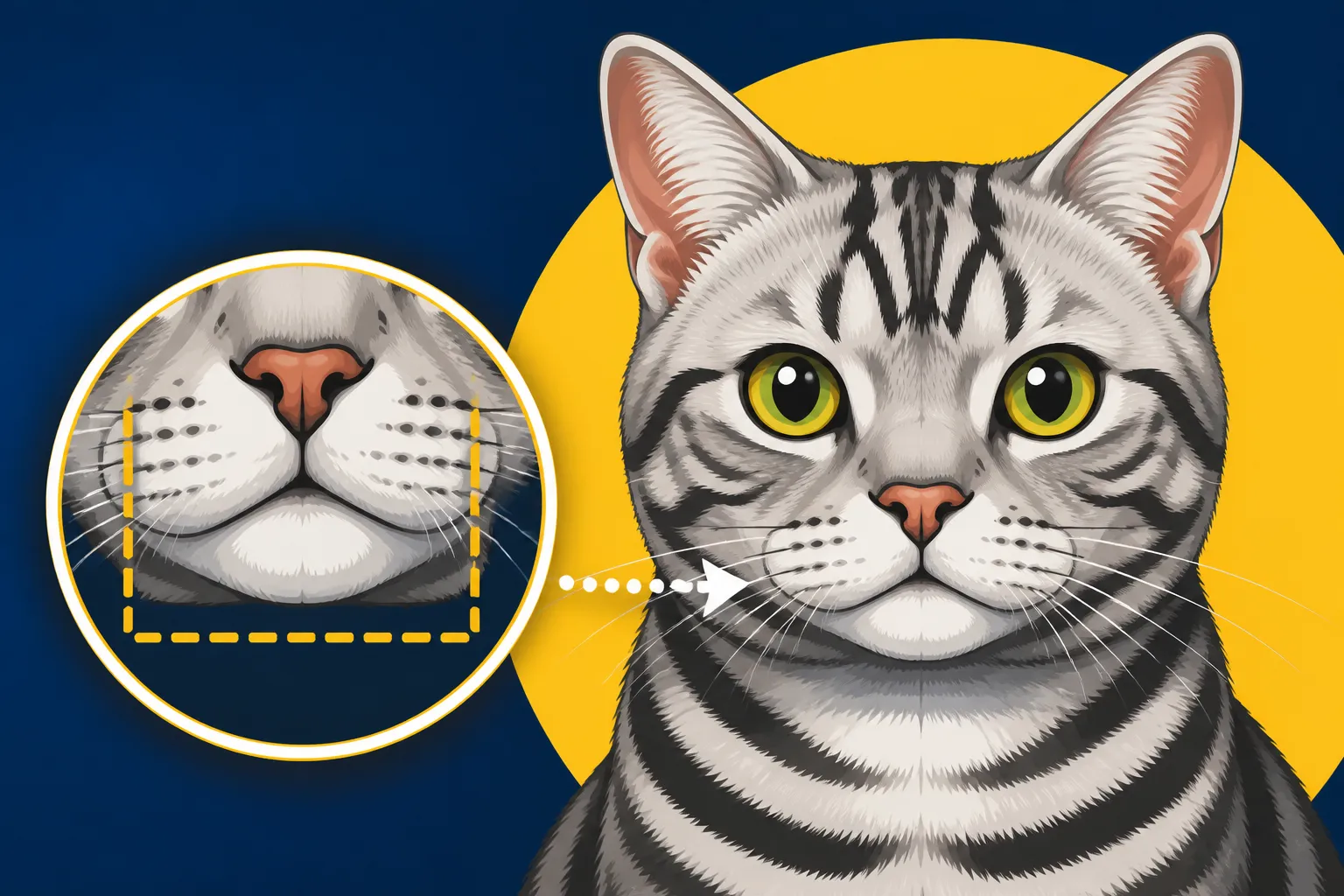
When people describe an American Shorthair’s muzzle as square, they are talking about its overall outline: the area around the nose, whisker pads, cheeks, and chin looks broad and substantial rather than narrow or pointed. Seen from the front, the lower face can appear to have fairly straight sides and a firm base. The impression comes from several features working together, not from one unusually large part.
A square muzzle should also look proportionate to the rest of the head. The American Shorthair is known for a strong, broad face, so a muzzle that appears solid can fit the breed’s general type. But “square” does not mean block-shaped in a way that overwhelms the eyes, nose, or skull. Balance matters more than a single dramatic feature.
That distinction is useful when looking at photos online. A close-up taken from below can make almost any cat’s jaw look larger, while a wide-angle phone lens can distort the nose and cheeks. For a more reliable impression, look at several clear photos from the front and side, taken at ordinary eye level. For the broader head outline, see What Shape an American Shorthair's Head Should Be.
Whisker pads, cheeks, and chin all contribute
The whisker pads sit on either side of the nose and help give the muzzle its shape. On an American Shorthair, those pads can look full, especially when the cat’s face is mature and its cheeks have filled out. The jaw and chin add to the solid appearance, while the nose and mouth area remain part of a naturally proportioned face.
It can be tempting to judge the muzzle by the cheeks alone, but cheek fullness is not the same thing as a square muzzle. A cat can have rounded cheeks and still have a relatively tapered lower face. Conversely, a cat with a broad muzzle may not have especially prominent cheeks. Look at the whole face rather than zooming in on one feature.
A cat’s expression can also change how square its face appears. Relaxed whiskers, a slightly open mouth, or a particular head angle can make the muzzle seem wider or narrower. If you are comparing your cat with a written breed description, use several angles and consider the full head shape. What the American Shorthair Standard Asks For offers a useful way to think about how individual features fit together.
A square muzzle is not a flat face
“Square” describes the outline and breadth of the muzzle; it does not mean the face should be flat. A broad, sturdy muzzle still has a visible nose and a natural transition between the forehead, nose, and mouth. The goal is a balanced face, not a compressed one.
This is an important distinction because people sometimes assume that a more extreme-looking face must be more representative of a breed. In reality, exaggerating one trait can make the whole head look less balanced. A very short-looking nose, crowded features, or a face that appears pinched or unusually compressed should not be treated as proof of better breed type.
If a cat’s facial shape seems to affect its comfort, breathing, eating, or grooming, that is a separate concern from whether the muzzle looks square. Appearance alone cannot establish a health problem, but a noticeable functional difficulty is worth discussing with a veterinarian. The guide Whether an Extreme American Shorthair Head Would Bring Problems explores why “more pronounced” does not automatically mean “better.”
Why the American Shorthair has a sturdy-looking muzzle
The face fits the breed’s overall build
The American Shorthair is generally described as a solid, muscular cat with a broad chest and a substantial frame. Its head and muzzle are part of that overall impression. A narrow, delicate-looking face might appear less in keeping with the sturdy type people expect, while a broad muzzle can make the cat look strong without needing an exaggerated feature.
That does not mean every American Shorthair should have an identical face. Cats vary in head width, cheek fullness, and the way their features read at different ages. Sex, individual ancestry, body condition, and maturity can all affect the overall impression. Breed type is best understood as a combination of traits, not a checklist where one feature determines whether a cat “counts.”
The square muzzle also sits alongside other features, including the shape of the head, the set of the ears, the eyes, and the body’s proportions. If you are curious about the breed’s general silhouette, What an American Shorthair Looks Like by the Standard gives a broader frame of reference. It is more useful to consider that whole picture than to compare only muzzle width.
A strong face suits a working-cat history
The American Shorthair developed from sturdy domestic cats that lived and worked alongside people. Their ancestors were valued for practical abilities such as hunting rodents around homes, farms, and ships. Over time, breeders developed the recognized American Shorthair as a distinct breed, while the sturdy, capable look remained part of its identity.
The muzzle is not a tool that proves a cat can hunt, and its shape should not be treated as a direct measure of bite strength or hunting ability. Still, the broad face contributes to the breed’s characteristic solid appearance. It is one visible piece of a type associated with strength and substance rather than a fine-boned or delicate outline. Ships Carried the American Shorthair's Ancestors as Ratters explains the historical background behind that practical image.
Strong jaws are another related feature, but they are not interchangeable with a square muzzle. The jaw refers to the structure of the lower face, while “muzzle” usually describes the area around the nose and mouth. They can contribute to a similar impression of sturdiness, but it helps to keep the terms separate. For more on the jaw feature, read Why the American Shorthair Kept Strong Jaws.
Breed resemblance does not prove pedigree
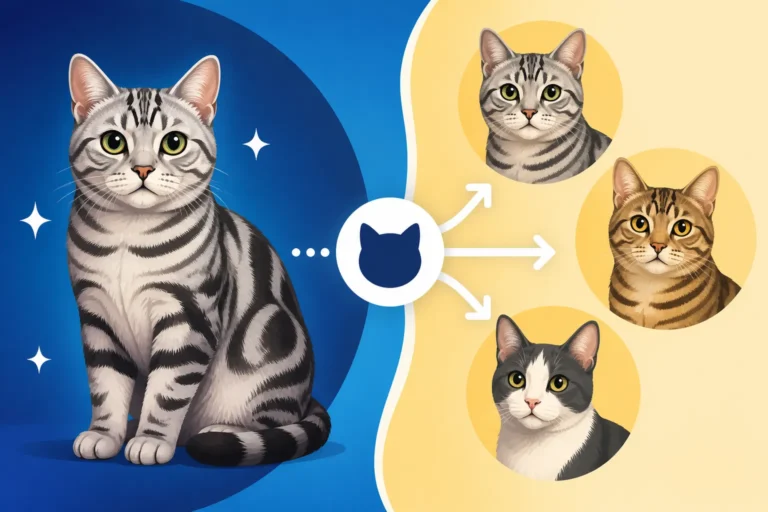
A domestic shorthair can have a broad face, a sturdy body, or markings that look similar to those of an American Shorthair. Those similarities do not establish that the cat is a pedigreed American Shorthair. Individual cats in the general population have a wide range of appearances, and traits can overlap across breeds.
This matters particularly for shelter adopters and people shopping from informal listings. A seller might point to a square-looking muzzle as evidence of breed identity, but one physical feature cannot confirm ancestry. A pedigree claim should be supported by appropriate registration and records, not by a resemblance in a photograph. How an American Shorthair Differs From a Domestic Shorthair explains why similar looks do not make the terms equivalent.
Likewise, breed identification is not a judgment of a cat’s value as a companion. A domestic shorthair with a handsome square face can be healthy, affectionate, and wonderful to live with whether or not it has a pedigree. If your main concern is choosing a pet, temperament, health history, and fit with your household are more practical considerations than trying to match a single facial feature.
How the muzzle changes as an American Shorthair grows
Kittens can look less square than adults
An American Shorthair kitten may have a softer, more rounded face than an adult. The head is still developing, and the body has not yet taken on its mature proportions. A young kitten can therefore look narrow or fine-boned compared with photos of fully grown cats, even if it will develop a broader appearance later.
Growth does not happen uniformly. The face, body, and coat can change at different rates, so a kitten’s proportions may look temporarily out of balance. That is one reason a single photo or an early impression is a poor basis for deciding what an adult cat’s muzzle will look like. Ask to see photos of mature related cats if you are trying to understand how a particular line tends to develop.
Even then, adult relatives are examples rather than guarantees. Kittens from the same litter can mature differently, and individual variation is normal. The breed’s overall type becomes easier to assess with maturity, but there is no need to worry simply because a young cat does not yet have a strongly defined square face.
Weight can change the face’s appearance
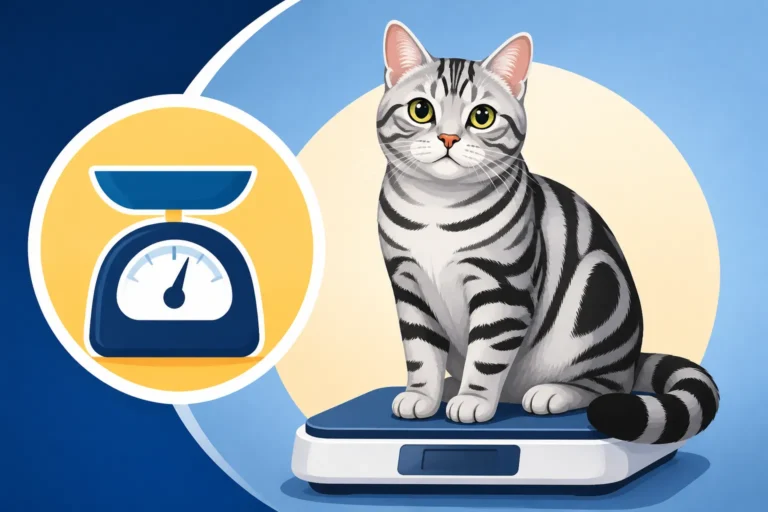
A cat carrying extra weight may look fuller around the cheeks and lower face. That can make the muzzle seem broader, but added facial fullness is not the same as the underlying bone and head shape. It is easy to mistake a rounder outline for a more “square” one, especially when looking at a front-facing photo.
Body condition is best assessed across the whole cat. You can ask your veterinarian to help you evaluate your cat’s weight and frame rather than using the face as a guide. A broad muzzle is not a reason to assume a cat is overweight, and a narrow-looking muzzle does not rule out excess weight elsewhere.
Changes in facial appearance that come with weight gain may be gradual. By contrast, sudden swelling, a new lump, facial asymmetry, or tenderness should not be dismissed as a breed trait. If your cat’s face changes noticeably over a short period, contact a veterinarian, particularly if your cat seems uncomfortable or is eating differently.
Aging can alter the overall expression
As an American Shorthair ages, its face may appear different because of changes in muscle, body condition, teeth, or the way it holds its head. Some older cats lose muscle, while others gain weight as their activity changes. Dental discomfort can also affect eating and facial behavior, although you cannot diagnose a dental problem simply by looking at the muzzle.
Pay attention to changes from your cat’s usual appearance rather than comparing it only with breed photos. Is one side suddenly fuller? Is your cat avoiding food, dropping food, pawing at its mouth, or resisting face touches? Those changes are more informative than whether the face looks square by breed standards.
For routine observation, take an occasional photo from the front and side in similar lighting. This can help you notice gradual changes without turning normal variation into a worry. If a change is abrupt, painful, or accompanied by trouble eating or breathing, seek veterinary advice instead of waiting for a photo comparison to settle the question.
How to assess a square muzzle without overreading it
Look at the whole cat, not one close-up
When judging an American Shorthair’s appearance, start with the whole outline. Consider the head’s width, the muzzle, the nose, the chin, and the way the face relates to the body. A square-looking lower face may be one part of a balanced head, but it cannot tell you everything about breed type, health, or ancestry.
Use photos taken at a natural angle where possible. A close-up lens, tilted head, strong shadows, or a cat looking upward can all change how broad the muzzle appears. Compare images taken from similar distances and angles, and avoid making strong conclusions from a single image on a sales page or social media post.
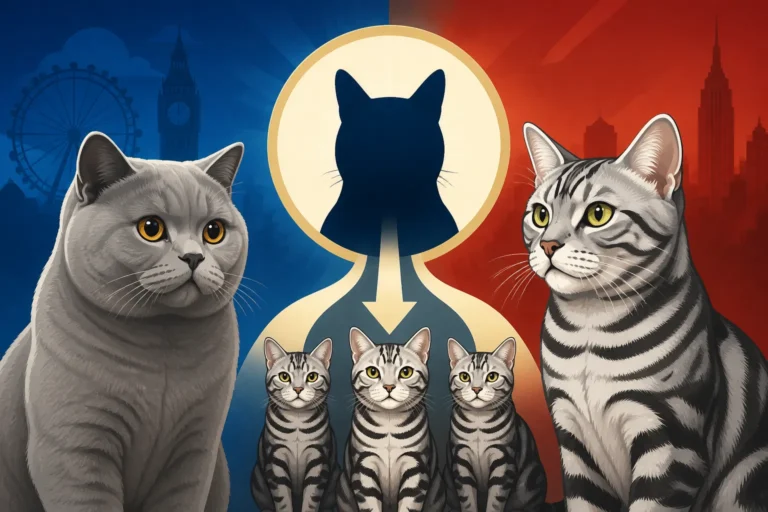
If you are comparing an American Shorthair with a British Shorthair, remember that both breeds can look sturdy, but their overall type is not identical. Coat texture, head proportions, and other features help distinguish them; a square-looking muzzle by itself does not. See How an American Shorthair Differs From a British Shorthair for a wider comparison.
Separate appearance questions from health questions
A muzzle can be broad and entirely comfortable for the cat. The key health questions are functional: can your cat breathe comfortably, eat normally, groom itself, and open and close its mouth without apparent difficulty? A visual description cannot replace an examination, but these everyday observations can help you recognize when something has changed.
Contact your veterinarian if you notice facial swelling, a sudden change in symmetry, drooling, difficulty chewing, blood around the mouth, persistent pawing at the face, or a change in appetite. Breathing difficulty should be treated as urgent. These signs are not explained away by calling a face “square” or “breed typical.”
For breeders or prospective buyers, ask about health records and the parents’ general condition rather than focusing solely on show photos. Responsible evaluation considers the animal’s welfare and function, not just an attractive outline. The same balanced approach applies whether you are meeting a kitten, an adult cat, or a rescue whose background is unknown.
| What you notice | What it may mean | A sensible next step |
|---|---|---|
| Broad muzzle that looks balanced with the head | Normal variation within a sturdy breed type | Consider the whole face and body rather than one feature |
| Kitten with a softer or narrower-looking face | The face may still be developing | Reassess as the cat matures; avoid judging from one photo |
| Fuller cheeks alongside overall weight gain | Weight may affect the face’s appearance | Ask a veterinarian to assess body condition |
| Sudden swelling or new facial asymmetry | A change that needs attention, not a breed label | Contact a veterinarian |
| Trouble eating, drooling, or apparent mouth pain | Possible oral or other health concern | Arrange veterinary advice promptly |
| A square muzzle offered as proof of pedigree | Appearance alone cannot establish ancestry | Request relevant registration and lineage records |
Use breed descriptions as context, not a pass-or-fail test
A written standard can help explain the American Shorthair’s intended appearance, but it is not a diagnostic tool or a promise that every pet cat will match a show ideal. Standards describe breed type; individual cats still vary. A pet can have a narrower muzzle or less prominent cheeks and remain a much-loved companion.
If you are buying from a breeder, ask how they describe the kitten’s expected adult appearance and what records they provide. A thoughtful breeder should be able to discuss the whole cat and answer reasonable questions without relying on a single trait as proof of quality. If you are adopting, focus on the cat in front of you: its behavior, health information, and the care it needs.
The simplest takeaway is that a square muzzle is a broad, sturdy-looking feature that fits the American Shorthair’s overall type. It should be balanced rather than exaggerated, and it tells you little on its own about a cat’s health or pedigree. Look at the whole face, notice changes over time, and let comfort and function matter more than an idealized photograph.
Disclaimer
This article is for general informational purposes only and does not constitute professional advice. Laws, prices and regulations vary by location and change over time. Consult a qualified professional for guidance on your specific situation.