How Barn Work Selected the American Shorthair’s Build
For generations, domestic shorthair cats arriving on North American shores faced an undeniably harsh existence. Life wasn't about plush beds and endless bowls of kibble; it was a rugged battle for survival against vermin, unforgiving weather, and scarce resources. This challenging environment, particularly the demands of barn work, was the ultimate architect of the American Shorthair's robust physique, shaping a feline built for endurance, strength, and an unwavering hunting instinct. This guide delves into how those early working conditions meticulously selected for the distinct physical characteristics we admire in the American Shorthair today.
The Formidable Demands of the Early American Barn
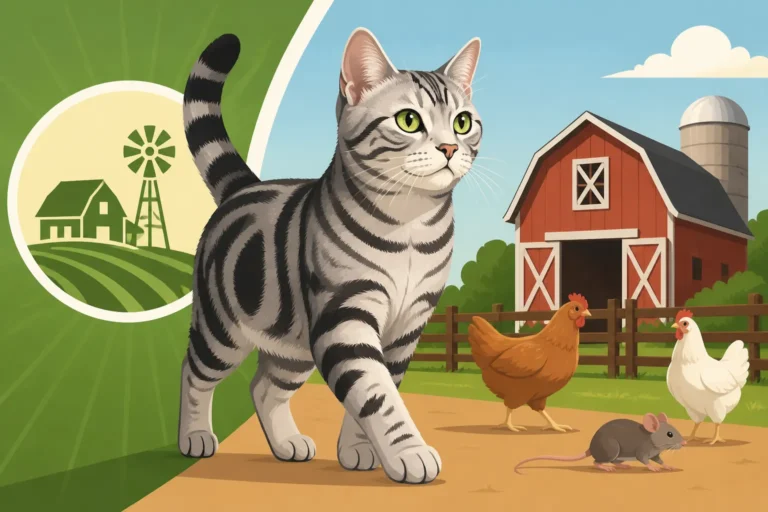
Imagine the scene: vast, untamed lands, newly settled farms, and essential food stores constantly under threat from rodents. The cats of this era weren't pampered pets; they were vital members of the farm ecosystem, earning their keep through sheer grit and hunting prowess. Their very survival, and the survival of the crops they protected, depended on their physical capabilities and mental fortitude.
Surviving a Harsh Frontier Environment
The environment itself was a relentless selector. Early American farms, from the bustling port towns to the sprawling agricultural lands, presented a gauntlet of challenges. Winters were often brutal, with snow and ice, while summers could be sweltering and humid. Shelter, while provided, was rarely luxurious, often a drafty barn or a simple lean-to. There were no climate-controlled homes for these animals. This meant that any cat too delicate, too prone to illness, or too sensitive to temperature extremes simply wouldn't thrive, much less reproduce. Nature ruthlessly culled the weak, favoring those with inherent resilience.
These cats also largely fended for themselves. While a farmer might offer scraps or a warm spot by the fire, regular, consistent feeding was not a guarantee. They had to be self-sufficient hunters, relying on their instincts and physical attributes to secure their meals. This constant need to hunt, to patrol, and to defend their territory selected for cats that were not only tough but also remarkably independent. It wasn't just about catching prey; it was about navigating a world without constant human oversight, dodging predators, and finding safe places to rest and raise kittens. The very act of living on the frontier meant a life of constant adaptation and physical exertion.
The Essential Role of a Working Cat
On these early American farms, a good cat was worth its weight in gold. Rodents, whether mice, rats, or other small pests, could decimate stored grains, spread disease, and damage property. Without effective pest control, a farmer's livelihood was constantly at risk. This placed an immense selective pressure on the cats. Farmers weren't looking for beauty or cuddliness; they needed efficient, tireless hunters. A cat that could keep a barn clear of rodents was invaluable, ensuring its own survival and the propagation of its strong, effective genes.
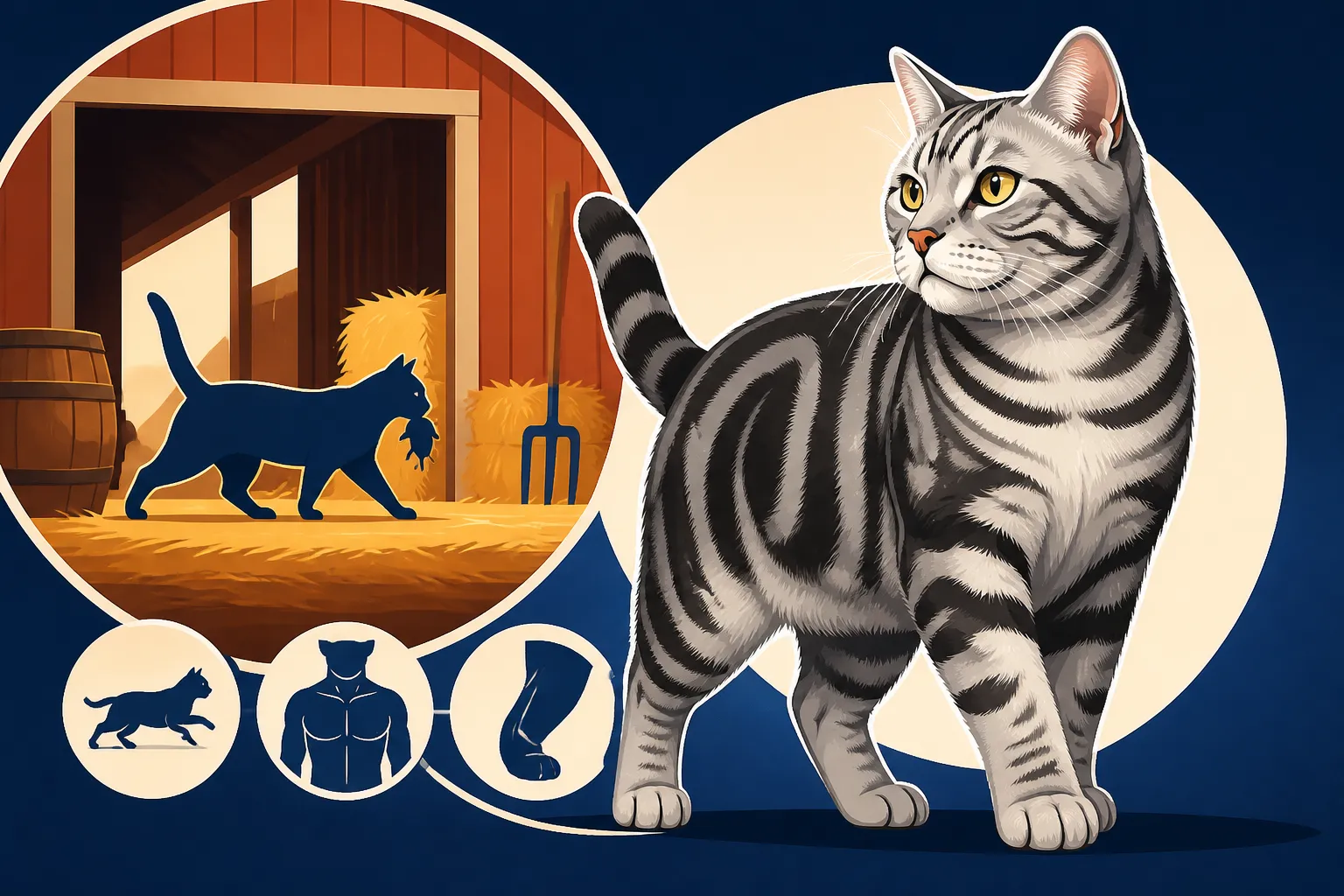
This "job" wasn't a casual affair; it was a full-time commitment. From dawn till dusk, and often through the night, these cats were on patrol. They needed the stamina to cover large territories, the strength to dispatch a variety of prey, and the agility to navigate cluttered barn spaces, haylofts, and dense undergrowth. Their daily routine involved stalking, chasing, pouncing, and sometimes fighting, all of which honed their physical capabilities and reinforced the genetic traits that made them successful. This continuous, demanding work shaped their skeletal structure, musculature, and even their sensory perception, ensuring they were perfectly adapted to their crucial role. How Farm Work Shaped the American Shorthair directly addresses these pressures.
Building a Better Mouser: Physical Adaptations
The relentless demands of barn life didn't just favor healthy cats; it actively shaped their physical form. Every aspect of the American Shorthair's build, from its broad shoulders to its powerful jaws, tells a story of survival and efficiency in a working role.
The Powerhouse Physique: Musculature and Frame
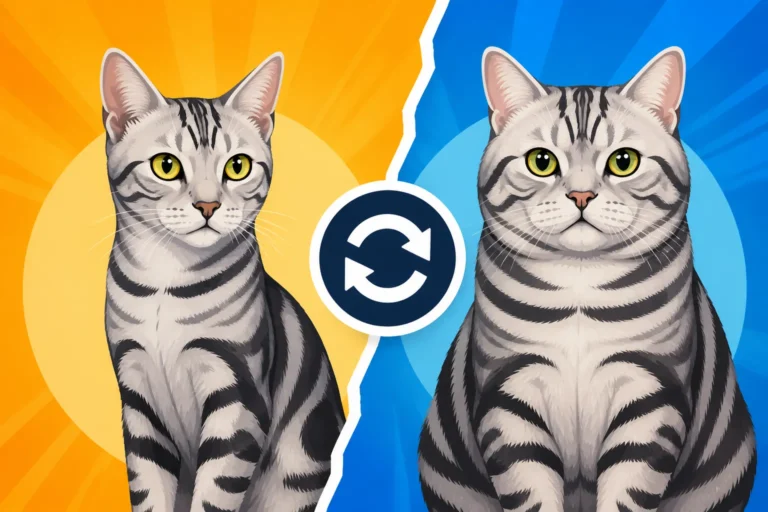
The archetypal American Shorthair boasts a robust, medium-to-large frame, a testament to centuries of natural selection for strength and endurance. This isn't a delicate, spindly cat; it's a solid, well-muscled animal designed for action. The broad chest and well-developed shoulders are crucial for powerful pounces and bursts of speed. Imagine a cat launching itself from a stack of hay to intercept a darting mouse – it requires explosive power in the forequarters. This muscularity isn't for show; it's for performance, allowing for quick accelerations, sharp turns, and effective takedowns. Why the American Shorthair Kept a Broad Chest delves deeper into this particular trait.
Their legs are of medium length, sturdy and well-boned, providing a stable foundation for their muscular body. These aren't the long, graceful legs of a sighthound, but rather the compact, powerful limbs of a short-distance sprinter and jumper. They offer excellent leverage for climbing, jumping onto elevated perches to scout for prey, and navigating uneven terrain. The compact, powerful body, often described as "cobby" but with athletic intent, means a lower center of gravity, aiding in stability and maneuverability during a hunt. Their strong hindquarters provide the thrust needed for rapid propulsion and impressive leaps, essential for catching agile prey or escaping danger. This entire skeletal and muscular arrangement is a finely tuned machine, optimized for the physical rigors of a working life.
Durable Features: Head, Jaws, and Paws
Beyond the overall frame, specific features of the American Shorthair's head, jaws, and paws also bear the hallmarks of their barn-dwelling ancestry. Their head is typically large and round, with full cheeks and a strong, square muzzle. This robust cranial structure isn't just aesthetically pleasing; it provides ample space for powerful jaw muscles. The jaws themselves are strong and well-aligned, capable of delivering a firm, decisive bite. Why the American Shorthair Kept Strong Jaws explains the importance of this trait for dispatching prey quickly and efficiently. A weak bite meant a lost meal, or worse, an injured hunter. These cats needed to be effective killers to survive, and their dentition and jaw strength reflect that necessity.
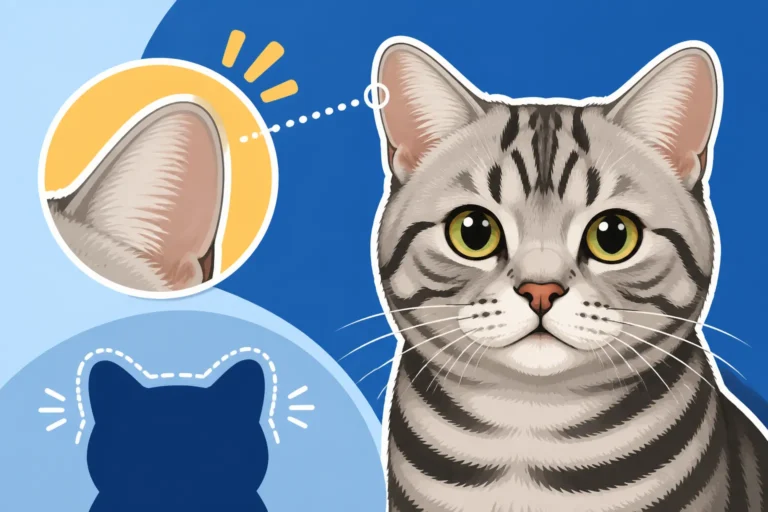
Their paws are another example of functional design. They are round and firm, with thick pads, built for durability across various surfaces – from rough barn floors and uneven ground to thorny bushes and even icy patches. These sturdy paws provide good traction and cushioning, minimizing injury during constant patrols and chases. The claws, while retractable, are strong and sharp, perfect for gripping prey, climbing, and defending themselves. A cat whose paws were prone to injury or lacked sufficient grip would quickly find itself at a disadvantage in a demanding environment where every tool counted. Even their medium-sized, slightly rounded ears are positioned to provide excellent directional hearing, crucial for pinpointing the rustle of a mouse in the hay or the distant growl of a predator.
| Trait | Ancestral Working Purpose | Modern Pet Benefit |
|---|---|---|
| Broad Chest / Muscular Build | Powerful pouncing, strong chases, endurance for daily patrols. | Athleticism, ability to climb and jump, generally healthy and active. |
| Strong Jaws / Square Muzzle | Efficiently catching and dispatching rodents, eating tough prey. | Healthy bite alignment, less prone to dental issues (though still need care), robust appearance. |
| Sturdy, Medium-Length Legs | Agility, balance, jumping power for varied terrain. | Good balance, capable of engaging in active play, reduces strain on joints. |
| Dense, Hard Coat | Protection from weather (cold, damp, heat), minor injuries. | Low-maintenance grooming, sheds dirt easily, less prone to matting. The American Shorthair's Coat Was Built for Weather, Not a Judge explores this. |
| Independent Temperament | Self-reliance, coping alone, efficient hunting without human aid. | Adaptable to varied households, tolerates being alone, not overly demanding. |
The Ancestral Blueprint: Traits That Persisted
Even though most American Shorthairs today live a comfortable life indoors, the blueprint forged by their working ancestors remains. These foundational traits are why the breed is often celebrated for its hardiness, adaptable nature, and relatively good health.
Functional Coat and Resilient Health
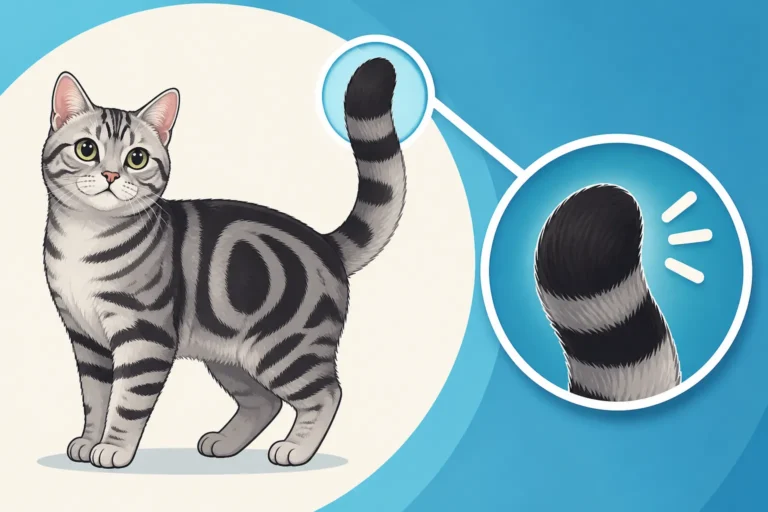
The American Shorthair's coat is another direct result of its working past. Unlike some modern breeds developed for a soft, plush feel, the American Shorthair’s coat is described as short, dense, and firm. This isn't a coincidence. This type of coat provided excellent insulation against the harsh winters and some protection from the elements year-round. It's also easy to maintain, shedding dirt and debris naturally, meaning less matting and a lower need for human intervention – a huge plus for a cat that was largely self-sufficient. The American Shorthair's Coat Was Built for Weather, Not a Judge goes into detail on its weather-resistant qualities.
Furthermore, the general health and vigor of the American Shorthair are rooted in this history. Cats that were frail, prone to illness, or carried significant genetic defects simply didn't survive long enough to pass on their genes in the demanding farm environment. Natural selection favored robust immune systems, strong constitutions, and an inherent resistance to many common ailments. This is partly why the American Shorthair is often considered a generally healthy breed, with a wider genetic pool compared to some more intensely line-bred pedigrees. Their landrace origin and natural selection process are strong factors in their health profile. Whether a Landrace Origin Explains the American Shorthair's Health delves into this evolutionary advantage.
The Legacy in Today's American Shorthair
The legacy of the barn cat is clearly visible in the modern American Shorthair. While they may not be chasing rats in a dusty barn, their physical attributes still reflect their heritage. The strength in their limbs and body means they are often agile and enjoy climbing, even if it's just to the top of a What a Cat Tree an American Shorthair Will Actually Use Costs or bookshelf. Their robust build contributes to their overall longevity and ability to maintain a healthy weight when properly cared for. How Much a Working Framed American Shorthair Should Eat can be a guide for their dietary needs.
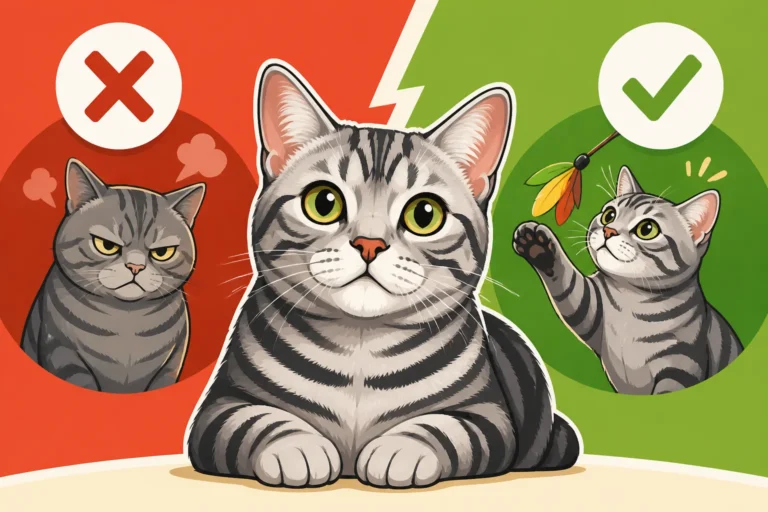
Their stable temperament, too, is a product of this selection. Cats that were overly nervous, aggressive, or fragile in disposition would not have been effective hunters or tolerated on a busy farm. This has given the American Shorthair a reputation for being calm, adaptable, and generally good-natured, making them an excellent choice for a wide range of households. They tend to be confident and curious, exploring their territory with the same quiet purpose as their ancestors. An American Shorthair Fits Any Household speaks to their remarkable adaptability.
Even their strong hunting drive, often evidenced by a fascination with toys or insects, is a direct link to their ancestors. The American Shorthair Still Hunts, Whether You Want It To or Not reminds us that this instinct is hardwired. While we provide them with enrichment and regular meals today, the fundamental characteristics that made them such successful working cats have endured, proving that function truly did shape form for this incredible breed. Their enduring popularity and consistent type are a testament to the effectiveness of nature's design.
Disclaimer
This article is for general informational purposes only and does not constitute professional advice. Laws, prices and regulations vary by location and change over time. Consult a qualified professional for guidance on your specific situation.