What a Cat Tree an American Shorthair Will Actually Use Costs
It's a frustratingly common scenario: you invest your hard-earned money in a beautiful, multi-level cat tree, envisioning your beloved American Shorthair regally surveying their domain from the top perch, only to find them completely ignoring it in favor of your old cardboard box or, worse, your brand-new sofa. This guide is here to unravel the mystery of what makes a cat tree truly appealing to an American Shorthair, and what kind of investment you're really making to ensure it becomes a cherished part of their territory, not just an expensive dust collector.
Why Your American Shorthair Might Be Snubbing That Fancy Cat Tree
When you’re trying to pick out a cat tree for your American Shorthair, it's easy to get caught up in aesthetics or what looks like a good deal. But if you’ve ever brought home a stylish, modern cat tower only for your cat to give it the cold shoulder, you know the disappointment is real. The truth is, American Shorthairs aren't just any cat; they have specific needs and instincts that a generic, off-the-shelf cat tree often fails to meet. Understanding these fundamental traits is the first step toward finding a piece of furniture they’ll actually love and use.
Understanding Their Innate Need for Surveying and Security
Our American Shorthairs carry the legacy of working cats, descendants of those hardy felines who patrolled ships and barns, keeping rodent populations in check. This history has ingrained in them a strong sense of territory and a need for strategic vantage points. They’re not just looking for a place to nap; they're looking for a place to observe their surroundings, to feel secure, and to keep an eye on their kingdom—which, in your home, means your living room. A cat tree that’s too low, too tucked away, or too open leaves them feeling exposed rather than empowered. They want to be able to see what's happening without necessarily being in the thick of it. Think about it: a cat on the floor can be easily approached from all sides, but a cat up high has a significant advantage, often feeling safer and more in control. They are keen observers, often preferring to watch quietly from a distance rather than be the center of attention. This goes back to their independent nature, a trait nurtured over generations where they were never bred to be particularly demanding. Why an American Shorthair Was Never Bred to Need You really highlights this aspect of their personality.
Many mass-produced cat trees are designed with flimsy perches or small, enclosed boxes that might suit a tiny kitten but offer little in the way of true security or expansive views for an adult American Shorthair. If your cat tree doesn't provide a commanding view or a truly secure cubby, it simply won't resonate with their deep-seated instincts. They won't see it as a valuable asset to their personal territory.
The Importance of Stability for a Solid, Muscular Build
One of the most defining characteristics of the American Shorthair is their robust, muscular physique. These aren't delicate, wispy cats; they are solid, agile athletes built for strength and purpose. When an American Shorthair, which can easily weigh between 10 to 15 pounds or even more for a male, launches itself onto a cat tree, it needs to know that the structure will hold firm. There’s nothing more off-putting for a cat than a wobbly perch or a swaying tower. A cheap, lightweight cat tree might look appealing in the store, but in your living room, it quickly becomes a precarious hazard that your intelligent American Shorthair will instinctively avoid. They don't want to risk a fall or feel unstable while trying to scale it.
Imagine your cat, full of the robust energy and agility characteristic of their breed—How Much of a Working Cat's Energy the American Shorthair Kept is a great read on this—attempting to climb a flimsy structure. If it wobbles even slightly, they’ll quickly lose confidence. This isn't just about safety; it's about comfort and trust. A cat needs to trust its environment, and a rickety cat tree betrays that trust. They need something that feels grounded and secure, mirroring their own strong, balanced build.
What Makes a Cat Tree a Winner for the American Shorthair
So, if those flimsy, carpet-covered tubes aren't cutting it, what does make a cat tree a worthwhile investment for your American Shorthair? It comes down to understanding and catering to their natural behaviors, physical attributes, and desire for both comfort and a strategic overview of their home. You're not just buying a piece of furniture; you're investing in a functional habitat enhancement that speaks to their core feline nature.
Designing for Durability and Confidence: The Sturdy Structure
For an American Shorthair, stability is paramount. Forget anything that looks like it could topple over with a strong gust of wind or a playful leap. You need to look for features that ensure the tree stays firmly planted on the ground, no matter how vigorously your cat uses it.
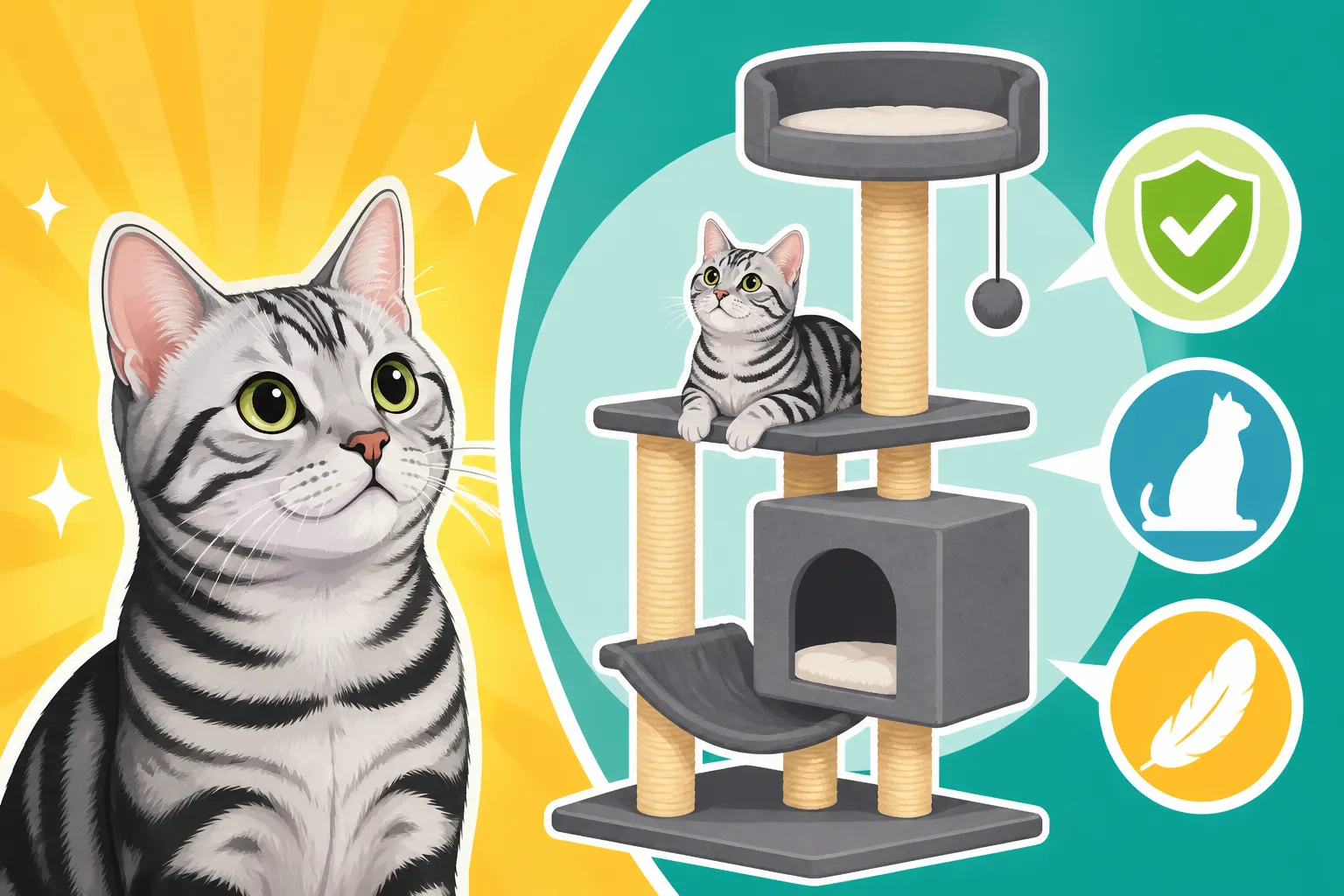
- Wide, Heavy Bases: The foundation of a good cat tree is crucial. A wide, heavy base made from solid wood or thick pressed board provides the necessary counterbalance for your cat's weight and energetic movements. If the base looks small compared to the height and number of platforms, it's a red flag.
- Thick Posts and Secure Fastenings: The vertical posts should be substantial, not thin cardboard tubes wrapped in rope. Look for posts that are at least 3-4 inches in diameter, ensuring they can support the weight without bending or breaking. The platforms themselves should be securely bolted, not just stapled or glued, to these posts. If you can attach the tree to a wall with a bracket, even better! This provides an extra layer of security and confidence for your cat, especially if you have a particularly tall unit. A cat that feels safe and confident will be far more likely to use its tree, even if it's scaling it to the very top. How Much an American Shorthair Climbs a Cat Tree often depends on how secure they feel on it.
- Quality Materials: While you don't necessarily need a custom-built piece, opt for materials like solid wood, plywood, or high-density particle board over flimsy pressboard or cardboard. These materials contribute significantly to the overall stability and longevity of the tree, meaning your investment lasts longer and provides continuous enjoyment for your cat.
Meeting Their Instincts: Vantage Points and Cozy Retreats
An American Shorthair wants choices. They want to be able to survey their domain from a high perch, feeling safe and in control, but they also appreciate a cozy, enclosed space for quiet contemplation or a deep nap.
- Multiple Levels and Heights: A good cat tree will offer a range of heights, allowing your American Shorthair to choose their ideal observation post. The highest perch should ideally offer a good view of the room, perhaps near a window, satisfying their innate curiosity. How High an American Shorthair Needs to Get is often dictated by their desire to see everything.
- Spacious Perches: Those working cat ancestors appreciated a good stretch. Make sure the perches are large enough for your American Shorthair to comfortably lie down and stretch out, not just balance precariously. A cat that feels cramped won't linger.
- Enclosed Spaces or Condos: Beyond open perches, a "cat condo" or enclosed cubby offers a sense of security and a quiet retreat. These should also be adequately sized for your American Shorthair to turn around and lie down comfortably. It gives them a private sanctuary within their territory, a place to disappear when the household gets a bit too noisy, or simply to take a nap where they feel completely safe. It's a key feature to cater to their calm and sometimes private nature; they're not always looking for direct interaction. What an American Shorthair Does Instead of Demanding often includes finding a quiet spot to observe.
Materials That Matter: Scratching and Comfort
A cat tree isn't just about climbing; it's also a crucial piece of equipment for maintaining claw health and overall well-being. The materials used play a huge role in its appeal.
- Sisal Rope Scratching Surfaces: Sisal rope is the gold standard for scratching posts because its texture mimics tree bark, which cats naturally gravitate towards. Ensure the sisal is tightly wound and covers a significant portion of the posts. This allows your American Shorthair to really dig in and get a satisfying scratch, helping them shed old claw layers and mark their territory. This is vital for saving your furniture. Why an American Shorthair Keeps Its Claws Conditioned on Your Sofa is a common problem if good scratching options aren't provided. Look for a tree that offers vertical scratching opportunities, which is how most cats prefer to stretch and condition their claws. Which Post Lets an American Shorthair Condition Its Claws is another great resource for understanding suitable scratching surfaces.
- Comfortable Fabric for Lounging: While sisal is great for scratching, the lounging platforms should be covered in a soft, durable material. Short-pile carpet, faux fur, or even canvas can work. Avoid cheap, thin fleece that will quickly pill and tear, exposing the hard surface underneath. The material should be easy to clean, as accidents happen, and a cat tree needs to be maintained for hygiene and continued appeal.
- Interactive Elements (Optional but Fun): Some cat trees come with dangling toys, ropes, or even hammocks. While not strictly necessary, these can add an extra layer of engagement. Just make sure any dangling toys are securely attached and won't break off easily, or they could become a choking hazard. For a cat with a strong prey drive, these can provide excellent mental and physical stimulation. Just remember that anything hanging needs to be robust enough to withstand a powerful American Shorthair strike! Why a Stalking American Shorthair Knocks Off a Shelf demonstrates their strength and determination.
Navigating the Costs of Quality Cat Trees
Let's talk brass tacks: what kind of financial outlay are we really talking about for a cat tree your American Shorthair will actually use? It's easy to get sticker shock when you see some of the higher-end options, but remember that this is an investment in your cat's well-being and, frankly, the longevity of your furniture. The cost can vary wildly depending on size, materials, and features, but understanding the general tiers can help you set realistic expectations.
Unpacking the Price Tiers: From Budget-Friendly to Premium Investment
Cat trees generally fall into a few broad price categories, each offering a different level of quality and feature set. It’s important to match your budget with your American Shorthair’s specific needs.
- Budget-Friendly (Under $100): These often include smaller trees, single posts with a few platforms, or entry-level models. While you can find a stable option in this range, you'll need to be very selective. They often use lighter materials like thin particle board and polyester fleece. These might be suitable for a kitten or a very small, less active cat, but for a full-grown, muscular American Shorthair, they might lack the necessary stability and durability. If you’re lucky, you might find a solid single-post scratcher in this range that your cat will adore, but a multi-level structure can be a gamble.
- Mid-Range ($100 – $300): This is where you'll start finding more robust options. Trees in this category typically feature thicker posts, more stable bases, and better quality carpeting or faux fur. You'll see multi-level designs with several perches, condos, and ample sisal scratching surfaces. Many popular brands offer excellent choices in this price bracket, providing a good balance of durability and features that will satisfy most American Shorthairs. This is often the sweet spot for many owners, offering significant value. You can often find a good selection of these on sites like Chewy, which makes it easy to compare features and read reviews from other cat parents.
- Premium Investment ($300+): At the higher end, you're looking at cat trees made with solid wood construction, often featuring modular designs, custom finishes, and high-quality, durable textiles. These are built to last for many years, sometimes even a lifetime, and can be considered pieces of furniture that complement your home decor. They offer superior stability, often boast very large perches and condos, and are designed for multiple cats or very active, larger breeds. While the initial outlay is significant, the longevity and consistent use by your cat can make it a worthwhile long-term investment. Some specialized pet furniture brands, or even custom builders, fall into this category.
Here’s a quick overview of what you might expect at each price point:
| Price Tier | Typical Features | Durability & Stability | American Shorthair Suitability |
|---|---|---|---|
| Under $100 | Small, single-level, limited scratching surfaces | Often flimsy, lightweight | Generally poor for adults |
| $100 – $300 | Multi-level, several perches/condos, good sisal posts | Moderate to high stability, thicker posts | Good, solid investment |
| $300+ | Solid wood, custom designs, premium materials, large | Excellent, built to last | Excellent, long-term solution |
Decoding the Value: What Drives the Cost of a Good Cat Tree
Several factors contribute to the price tag of a cat tree, and understanding them helps you make an informed decision and spot a truly good value.
- Size and Height: Naturally, a larger, taller cat tree requires more materials and more complex construction, driving up the price. If you have the space, a taller tree provides more vertical territory, which is highly prized by cats. For an American Shorthair that loves to observe, a multi-level structure with a top perch that reaches near the ceiling is often worth the extra cost.
- Materials Used: This is perhaps the biggest factor. Cat trees made from solid wood or high-quality plywood will always be more expensive than those made from particle board or cardboard tubes. The type of carpeting or fabric also matters; durable, dense carpet will last longer and stand up to more abuse than cheap fleece. Sisal rope quality varies too; tightly woven, thick sisal lasts much longer. Investing in better materials means a longer-lasting product that won't need replacing as often, which can save you money in the long run.
- Construction Quality: How well is it put together? Are the pieces securely fastened with bolts and screws, or are they flimsy staples and glue? Does it have a wide, heavy base? Is it prone to wobbling? Higher construction quality means better stability and durability, which, as we've discussed, is essential for a robust American Shorthair. A well-constructed tree reduces the risk of injury and increases your cat's confidence in using it.
- Brand Reputation and Design: Some brands specialize in high-quality, long-lasting cat furniture and their prices reflect that. Innovative designs, aesthetic appeal, and modular systems that allow for expansion or customization can also command a higher price. While not strictly about functionality, a well-designed tree can also integrate better into your home. Sites like Chewy offer a wide range of brands, from budget-friendly options to more premium selections, allowing you to choose based on reputation and reviews.
- Added Features: Extra amenities like hanging toys, built-in scratching pads, multiple enclosed condos, or ramps can increase the cost. While some of these are nice-to-haves, prioritize core features like stability, height, and good scratching surfaces before splurging on extras.
Smart Choices and DIY: Cat Trees on Any Budget
Finding a great cat tree for your American Shorthair doesn't always mean spending a fortune. With a little savvy shopping and perhaps some DIY ambition, you can provide your feline friend with a stimulating and comfortable vertical haven without completely draining your wallet. The goal is always utility and safety over sheer expense or elaborate design.
Finding the Best Bang for Your Buck: Shopping Strategies
Sometimes, the best value isn't the cheapest item, but the one that lasts and gets used consistently. Here are some ways to be a smart shopper:
- Shop Sales and Discounts: Pet supply retailers, both online and brick-and-mortar, frequently have sales. Keep an eye out for seasonal clearances, holiday promotions, or even signing up for newsletters from places like Chewy to get coupon codes. Patience can pay off, allowing you to get a mid-range tree at a budget-friendly price.
- Consider Second-Hand (with caution): You can often find used cat trees on local marketplaces or at garage sales. The key here is extreme caution. While the price might be right, you must thoroughly inspect any used cat tree for damage, instability, and, crucially, signs of fleas or other parasites. A deep clean and disinfectant are absolutely mandatory before bringing it into your home. It’s a riskier strategy, but for those on a tight budget, it can sometimes yield a diamond in the rough.
- Focus on Essential Features: Rather than getting dazzled by a tree with every bell and whistle, prioritize the core needs of your American Shorthair: stability, height, and good scratching surfaces. A simpler, sturdy tree with a few well-placed perches will be far more appreciated than a sprawling, complex, but wobbly structure. Sometimes, less is truly more when it comes to effective cat furniture. Think about What a Scratching Post for an American Shorthair Costs as a baseline for necessary investment.
- Read Reviews and Look for "Cat-Proof" Claims: Before committing, read product reviews from other cat owners. Pay special attention to comments about stability, durability, and whether larger cats use the tree. Look for terms like "heavy-duty," "stable base," or "solid construction." While no product is truly indestructible, these keywords often indicate a better investment. When considering overall pet care costs, a durable cat tree can reduce future expenses, much like investing in a good pet insurance plan from a provider like Healthy Paws can mitigate unexpected vet bills.
Building Your Own: Personalizing for Your American Shorthair
If you're a bit handy, or know someone who is, building your own cat tree can be a fantastic way to create a bespoke piece that perfectly fits your American Shorthair's needs and your home's aesthetic, often at a lower cost than a premium store-bought option.
- Utilize Existing Furniture: You don't always need a freestanding unit. You can augment existing bookshelves or sturdy cabinets by adding carpeted platforms or sisal-wrapped posts. Securely mount shelves to walls to create vertical pathways and high perches. Always ensure everything is firmly attached and can withstand your cat’s weight.
- Simple Platform Systems: You can create a multi-level system by buying sturdy wooden planks, covering them with carpet or sisal, and securely mounting them to wall studs at varying heights. Add connecting ramps or stairs if your cat is less agile. This gives your American Shorthair the desired vertical space without the need for a single, large structure. Remember, How Much Vertical Space an American Shorthair Needs is often more important than how wide the structure is.
- DIY Scratching Posts: If your primary goal is to provide good scratching options, you can easily wrap sturdy wooden posts with sisal rope. You can buy sisal rope in bulk and attach it tightly with glue and staples. These can then be standalone or incorporated into larger structures.
- Safety First for DIY: Always use non-toxic materials, ensure all screws and nails are deeply recessed, and sand any rough edges. The stability of a DIY project is entirely on you, so double-check everything for wobbles or potential collapse. Your American Shorthair relies on your diligence for its safety. Also, make sure any materials you use for carpet or fabric coverings are tightly secured and don't fray easily, which could pose a choking hazard. When considering a long and healthy life for your cat, like The Fifteen to Twenty Years the American Shorthair Was Given, ensuring their environment is safe and stimulating is key.
Remember, the best cat tree is the one your American Shorthair actually uses and feels safe on. By prioritizing stability, appropriate height, and durable materials, you can make a wise investment that contributes positively to your cat's well-being and happiness for years to come.
Disclaimer
This article is for general informational purposes only and does not constitute professional advice. Laws, prices and regulations vary by location and change over time. Consult a qualified professional for guidance on your specific situation.