Why an American Shorthair’s Ears Are Slightly Rounded
An American Shorthair’s ears are meant to look balanced, not sharp or oversized: the tips are slightly rounded, and the ears sit in proportion to the head. That small detail can be easy to miss in photos, especially when comparing breeds or judging a kitten’s appearance. This guide explains what the shape means, what it does not prove, and when an ear change deserves attention.
What slightly rounded ears look like
The shape is subtle, not blunt
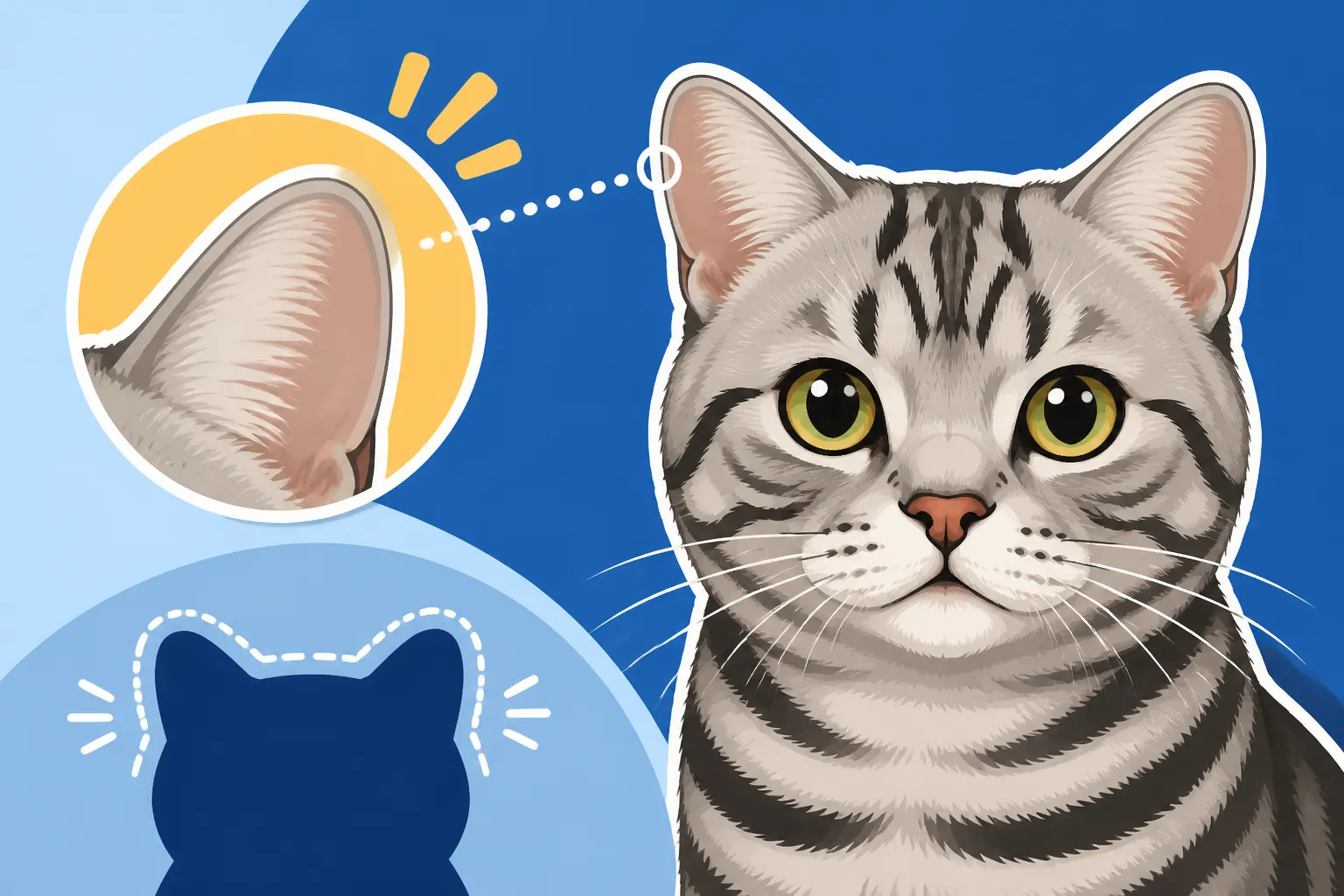
“Rounded” does not mean that an American Shorthair has circular ears or a folded ear flap. The outer edges rise from the head to a soft, gently curved tip rather than ending in a distinctly pointed peak. From the front, the ears should appear fairly natural and moderate, complementing the cat’s head rather than dominating it.
The word “slightly” matters. A rounded tip can be subtle enough that you notice it only when looking closely at the ear’s outline. Some cats’ ears may look more pointed in a particular photograph because of the camera angle, the way the cat is holding its head, or tufts of hair at the tips. One snapshot is not a reliable way to decide whether a cat fits a breed description.
The ears are also considered in relation to the rest of the head. A feature that looks prominent on a small kitten may seem more proportionate as the cat grows. For the broader picture of head shape and balance, see What Shape an American Shorthair's Head Should Be and What the American Shorthair Standard Asks For.
Placement and proportion matter too
Ear tips are only one part of the overall impression. American Shorthair ears are generally described as medium in size and set apart, with their shape and placement working alongside the skull, eyes, and muzzle. The goal is not to make the ears look as small or rounded as possible. It is to keep them in proportion with a sturdy, balanced head.
That proportion can be tricky to assess in a young cat. Kittens’ heads and bodies are still developing, and their ears can seem large compared with the rest of them for a while. Coat length and color can also change how clearly the ear outline shows in a picture. A dark rim, pale inner ear, or visible tip hairs may affect what your eye picks out first.
When you look at the face as a whole, the ears should not distract from the rest of the expression. They sit alongside the eyes and muzzle as parts of a balanced head—not as an isolated feature to measure by itself. The square muzzle is another part of that distinctive outline, discussed in Why an American Shorthair's Muzzle Is Square.
Why the ear shape is part of the breed’s look
A balanced outline reflects the overall type
The American Shorthair is known for a solid, well-proportioned appearance rather than an exaggerated one. Its slightly rounded ears contribute to that look by softening the upper outline of the head without making the ears seem low, folded, or unusually broad. It is a modest detail within a larger picture of balance.
This does not mean that every American Shorthair will have ears that look identical. Individual variation is normal, and lighting, posture, age, and photography all affect how a cat’s features appear. A cat turning its head toward a sound may hold its ears at different angles; a relaxed cat may angle them outward. Those temporary positions can change the apparent silhouette without changing the ear’s basic shape.
It is helpful to think of breed features as a combination rather than a checklist of single traits. A rounded ear tip alone cannot establish that a cat is an American Shorthair. Pedigree, documented background, and the rest of the cat’s characteristics matter. A tabby cat with softly rounded ears may simply be a domestic shorthair; visual resemblance does not make the two interchangeable. For that distinction, see How an American Shorthair Differs From a Domestic Shorthair and How to Tell an American Shorthair From a Random Bred Tabby.
How the ears compare with a British Shorthair
American Shorthairs and British Shorthairs can both have rounded-looking ear tips, so the ears alone are not a dependable way to tell them apart. The broader head shape, body, coat, and overall proportions offer more useful context. Breed comparisons are best made by looking at the whole cat rather than searching for one feature that appears decisive.
For example, a photograph cropped tightly around the face might make two cats seem similar. A full-body view can reveal differences in build and proportions, while a pedigree provides information that appearance cannot. The comparison How an American Shorthair Differs From a British Shorthair is useful when you are trying to understand those broader distinctions.
A judge evaluating a pedigreed cat considers the standard as a whole, not just whether the ear tips look rounded. A pet owner does not need to inspect a cat as if it were in a show ring, either. If you are choosing a kitten, it is more practical to review the breeder’s records and ask about health and registration documents than to rely on ear shape as proof of breed.
| Feature | What to notice | What it does not establish |
|---|---|---|
| Ear tip | A gentle curve rather than a sharply pointed outline | Breed identity by itself |
| Ear size | Moderate size in proportion to the head | Whether the cat is healthy |
| Ear placement | Ears that fit the overall balance of the face | Pedigree or registration |
| Ear position | Movement in response to sound, attention, or mood | A permanent change in ear shape |
| Ear condition | Clean-looking skin without persistent odor or discharge | A diagnosis based on appearance alone |
Ear shape, movement, and everyday health
Ears change position throughout the day
A cat’s ears are mobile. They may point forward when the cat is interested, rotate toward a sound behind it, or angle sideways when the cat is uncertain or relaxed. That movement is part of ordinary feline communication and listening. It does not mean the ear itself has become more pointed or rounded.
This is why a still photo can be misleading. If one ear is turned toward a sound while the other faces forward, the two may look different in shape or size. A cat may also flatten its ears briefly when startled or uncomfortable. Consider the situation and the cat’s overall behavior instead of drawing conclusions from one moment.
If you want to learn more about the appearance of the face as a whole, What Shape an American Shorthair's Eyes Should Be offers another useful point of comparison. Like the eyes, ears should be considered in context. A feature’s shape is one thing; a sudden change in how a cat holds or uses it is another.
When a change deserves attention
The breed’s characteristic ear outline is not a health test. A cat may have perfectly typical-looking ears and still develop an ear problem, while an unusual-looking ear tip may simply be natural variation. Pay more attention to changes from your cat’s normal behavior than to small differences in appearance between cats.
Contact a veterinarian if you notice persistent head shaking, repeated scratching at the ears, sensitivity when the area is touched, an unusual smell, discharge, swelling, or a sudden head tilt. These signs can have different causes, and guessing at home may delay the right treatment. Avoid putting cotton swabs into the ear canal or using a cleaner unless a veterinarian has recommended it for your cat.
Routine care does not necessarily mean routine cleaning. If your cat’s ears look comfortable and your veterinarian has not advised cleaning, there may be no need to add products to the grooming routine. If a vet recommends a particular cleaner, follow their instructions and use only a product appropriate for cats. Chewy may be one place owners look for a veterinarian-recommended supply, but the choice of product and how to use it should come from the veterinary guidance you received. For more on signs that call for attention, read How Rarely an American Shorthair Gets an Ear Infection.
What to look for in a kitten or adult cat
When assessing a cat’s ears, look at both their outline and their condition, but keep those questions separate. For appearance, notice whether the tips have a gentle curve and whether the ears seem proportionate to the head. For health, check for persistent redness, visible debris, odor, discharge, or signs that the cat is uncomfortable.
If you are buying a pedigreed kitten, ask the breeder for registration and health information rather than treating a rounded ear tip as proof. You can also ask how the kitten’s parents’ health and temperament are documented. A responsible breeder should be able to explain the records they provide and answer questions about the kitten’s care. If paperwork is unclear, Which Registries Recognize the American Shorthair can help you understand why registry details matter.
For an adopted cat, incomplete history is common and does not make the cat any less deserving of a good home. A veterinarian can assess the cat’s ears during a general checkup and advise you whether anything needs follow-up. If you need to obtain a recommended cleaner or other basic care item, Chewy is one possible retailer to check; make sure the product matches the veterinarian’s advice rather than choosing one based on a breed label. And if you are comparing products, Chewy listings should not replace a veterinary exam when symptoms are present.
A slightly rounded ear tip is best understood as one small piece of the American Shorthair’s balanced appearance. It can help describe the breed’s look, but it cannot verify a cat’s pedigree or tell you whether the ears are healthy. Look at the whole head for appearance, and watch for changes in comfort or behavior when thinking about health.
Disclaimer
This article is for general informational purposes only and does not constitute professional advice. Laws, prices and regulations vary by location and change over time. Consult a qualified professional for guidance on your specific situation.