Which Post Lets an American Shorthair Condition Its Claws
An American Shorthair conditions claws using sisal rope or cardboard scratching posts that provide necessary resistance and proper height.
Change the room, not the cat.
Litter box avoidance, scratching and furniture, multi-cat tension and night activity — and the vertical space, play routines and feeding puzzles that solve more than correction does.
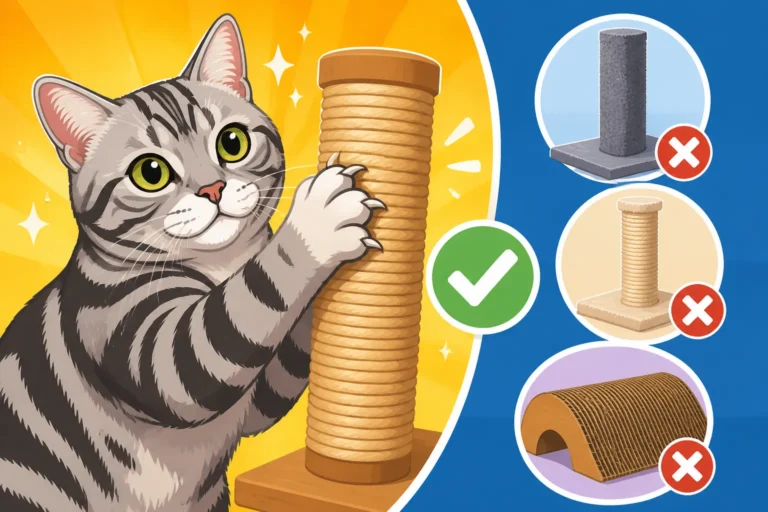
An American Shorthair conditions claws using sisal rope or cardboard scratching posts that provide necessary resistance and proper height.
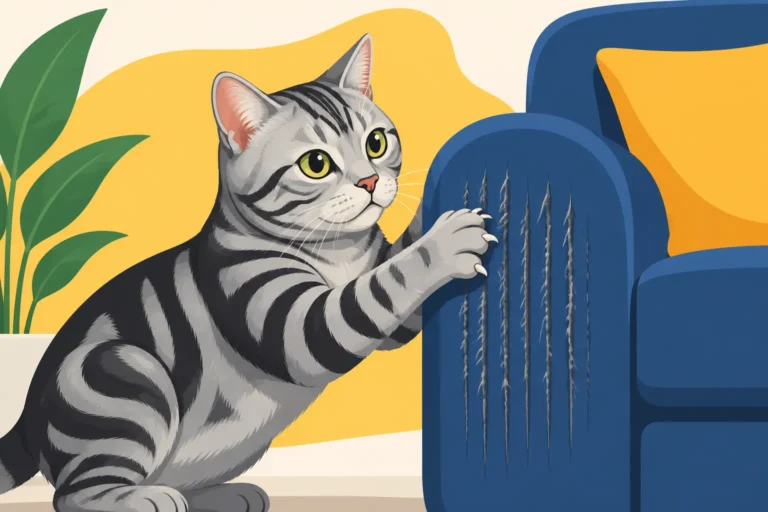
American Shorthair claw conditioning involves instinctual behaviors like shedding dead claw layers and marking territory around your home.
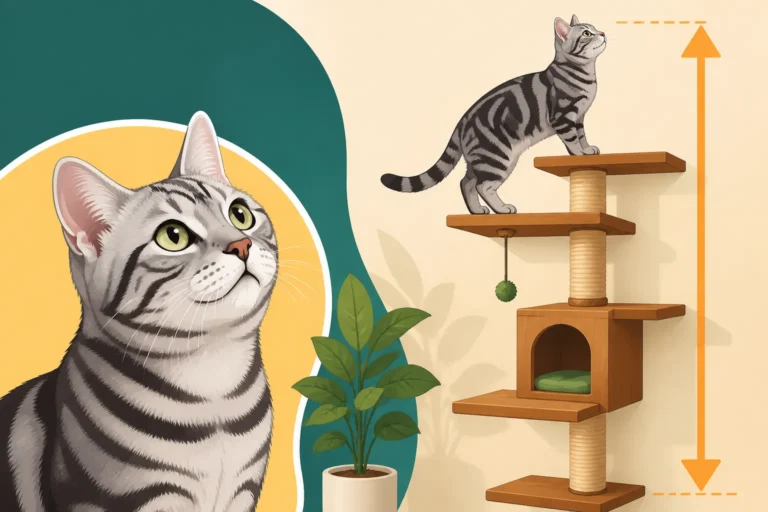
Vertical space requirements and climbing needs for an American Shorthair help explain feline instincts, territory management, and home design options.
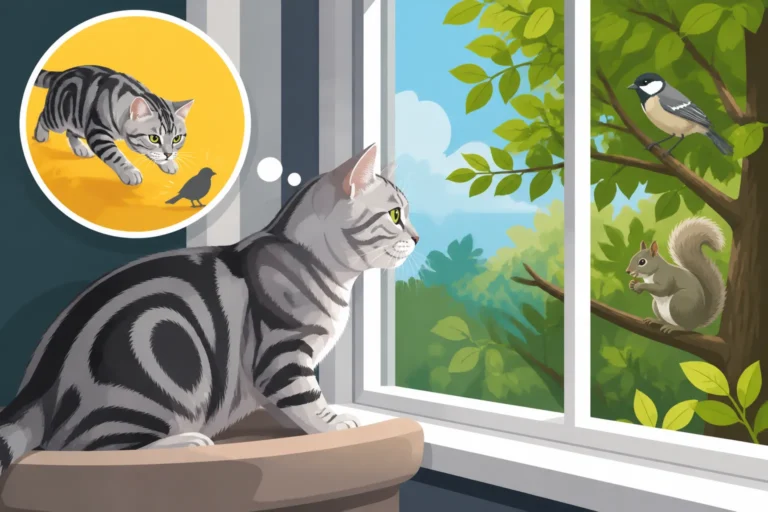
Window watching offers American Shorthairs a vital hunting outlet, fulfilling primal instincts through safe observation and mental enrichment.
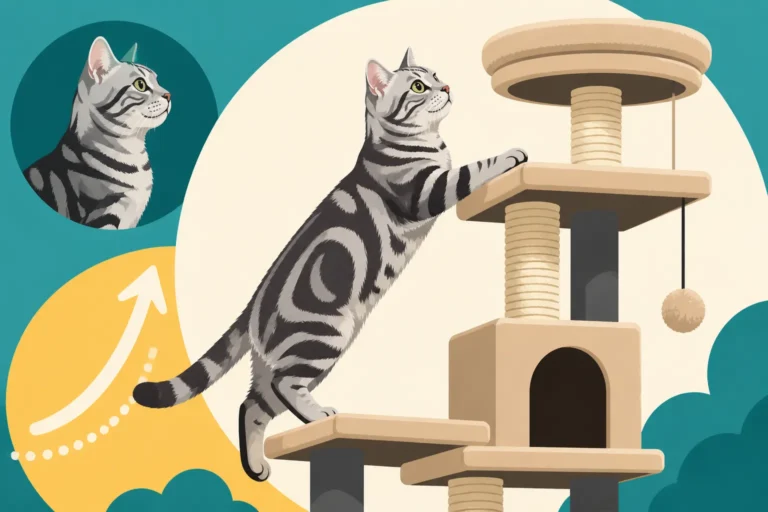
An American Shorthair climbs a cat tree to satisfy natural instincts, exercise muscles, and survey territory from elevated perches.
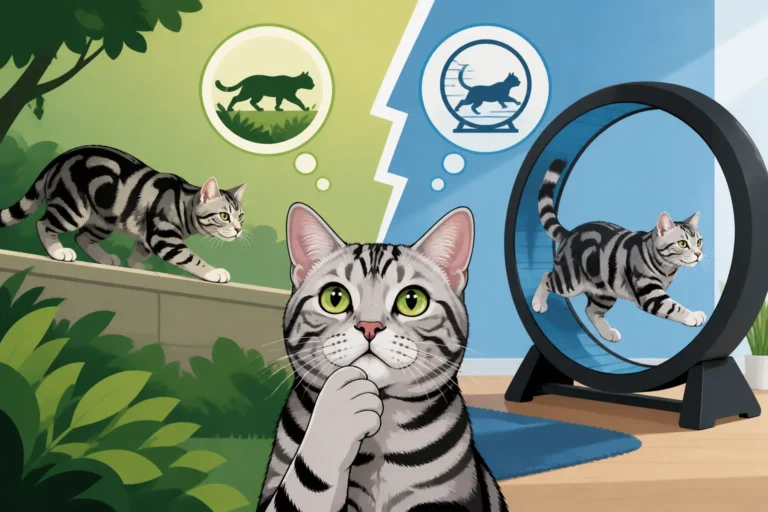
American Shorthair exercise wheels provide great physical conditioning, but they cannot replace ancestral patrol instincts and exploration.
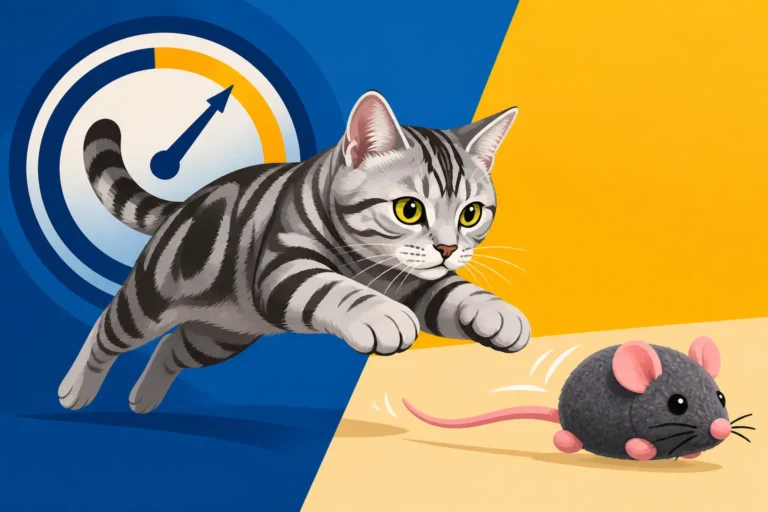
American Shorthair hunt simulation sessions typically last five to fifteen minutes, involving stages from stalking to the kill.
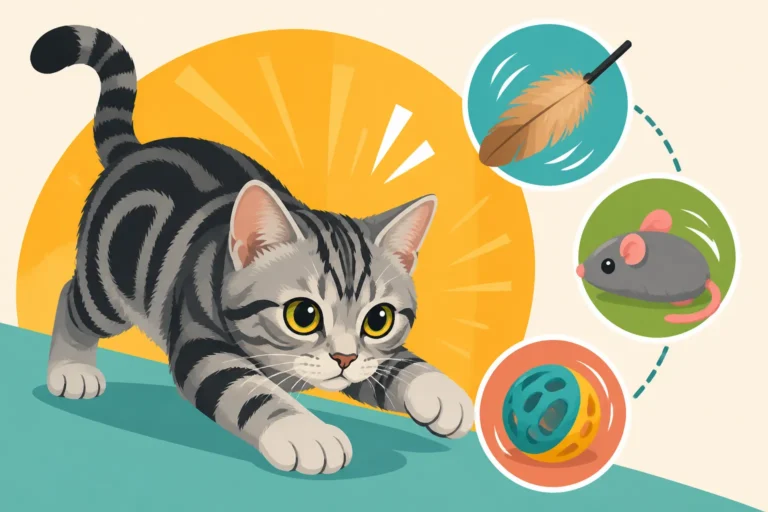
American Shorthair daily hunting needs include three to five structured play sessions to satisfy the feline predator instinct.
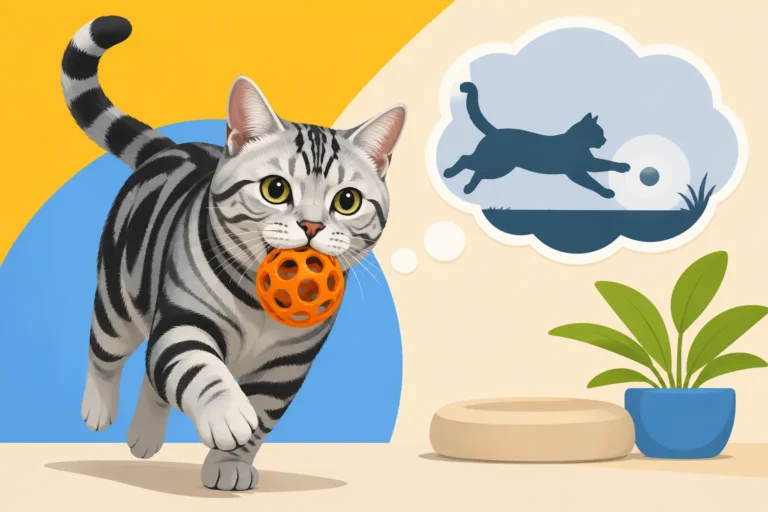
The American Shorthair uses ancient hunting instincts to fetch toys, reflecting centuries of working cat heritage in a short play session.
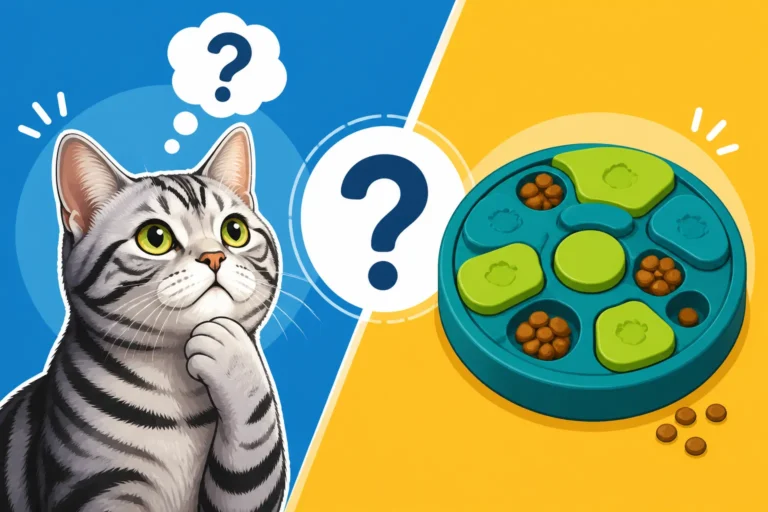
American Shorthair owners learn how puzzle feeders engage hunting instincts and where these toys fail to fully satisfy cats.