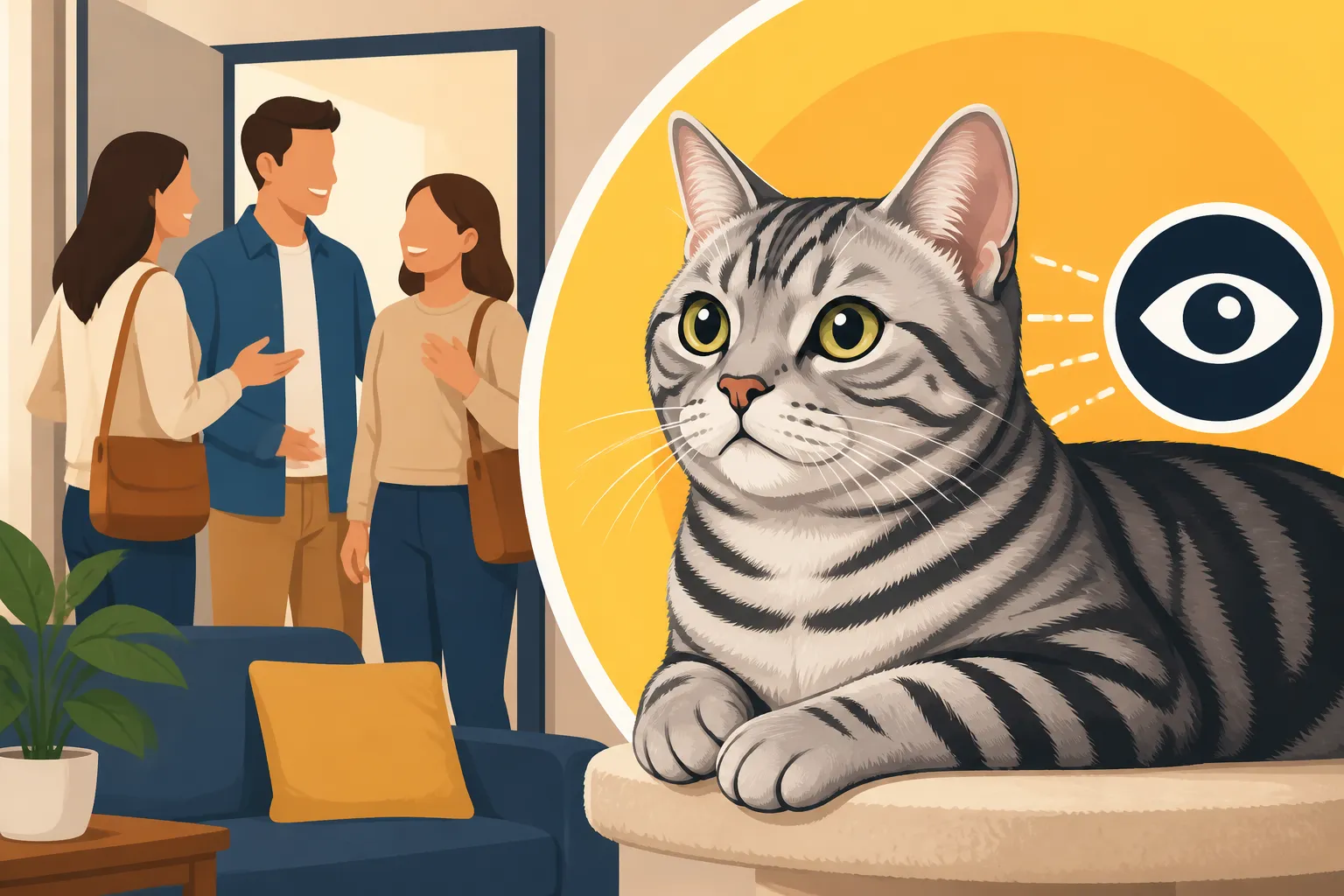
Why an American Shorthair Watches Guests Instead of Hiding
It's a common experience for cat parents: the doorbell rings, and suddenly your feline friend transforms into a furry phantom, vanishing beneath the nearest sofa or into a hidden closet. Many cats are masters of the disappearing act when new people enter their territory. However, if you share your home with an American Shorthair, you might have noticed a distinctly different pattern. Instead of a swift retreat, your American Shorthair often prefers to remain visible, observing newcomers with a calm, sometimes almost regal, gaze. This detailed guide will delve into the historical roots, inherent temperament, and territorial instincts that explain why your American Shorthair chooses to be a watchful host rather than a vanishing act.
The American Shorthair's Watchful Nature: More Than Just Curiosity
When you see your American Shorthair calmly surveying a new guest, it's easy to assume they're just being curious. And while curiosity certainly plays a role, there's a much deeper, more ingrained reason for this behavior. It stems from centuries of their ancestors' roles and their finely tuned evolutionary traits. These cats weren't bred to be ornamental lap warmers; they were working animals whose very survival depended on their keen observational skills and unwavering composure.
A Legacy of Self-Reliance and Utility
The ancestors of the American Shorthair were invaluable members of any household or ship, primarily tasked with keeping rodent populations under control. Imagine a ship's cat crossing the Atlantic, encountering new ports, new people, and entirely unfamiliar environments on a constant basis. Or a barn cat, whose territory might extend across fields and farmhouses, routinely interacting with strangers, livestock, and other animals. In such dynamic, often challenging settings, a cat that fled at every new sight or sound wouldn't have survived, let alone thrived.
These cats developed a robust, self-reliant nature. Instead of immediate flight, their instinct was to assess. They needed to quickly discern whether a new presence was a threat, a potential meal, or simply a non-factor in their daily routine. This critical assessment skill, honed over generations, meant they learned to observe first, processing information before committing to a reaction. It's a fundamental part of What an American Shorthair Bred Only for Usefulness Turns Out Like – a temperament built for practical effectiveness, not for timidity. This isn't to say they were reckless, but rather incredibly discerning.
This legacy means that modern American Shorthairs carry within them this deep-seated need to evaluate their surroundings and the individuals within them. They aren't prone to blind panic; their mental programming dictates a more measured response. They stand their ground, not out of aggression, but out of an intelligent, ancestral need to understand their environment. It’s a quiet strength, a testament to their working-class roots, that allows them to interact with the world around them in a highly perceptive way.
An Inherited Calm in New Situations
Beyond their historical role, the American Shorthair possesses an inherently balanced and stoic temperament that sets them apart from many other breeds. While some cats are known for being particularly shy, sensitive, or prone to anxiety, the American Shorthair is celebrated for its equable disposition. This isn't an accident; it's a characteristic that breeders have consciously sought to preserve, recognizing the value of a calm and stable companion.
This inherent calm translates directly to how they handle novel situations, including the arrival of guests. They rarely become overwhelmed or frantic. Instead, they demonstrate a quiet confidence in their own abilities and their safety within their established territory. They don't feel the immediate need to disappear because they trust their judgment and their environment. This is why How an American Shorthair Assesses Before It Approaches often involves a long, steady gaze rather than a dart to cover. Their default is to investigate and understand, not to flee.
The intelligence of the American Shorthair also plays a significant role here. They are not merely reacting instinctually; they are actively processing the new stimuli. They weigh the unfamiliar scents, sounds, and visual cues, deciding whether the new person is someone to be wary of, indifferent to, or perhaps, eventually, even friendly with. This deliberate processing, rather than an automatic flight response, is a hallmark of their well-adjusted and thoughtful nature. Their stable disposition makes them excellent companions, capable of adapting to various household dynamics without undue stress.
Territory and Observation: How an American Shorthair Sizes Up Visitors
For any cat, their home is their kingdom, a meticulously mapped territory where every scent, sound, and shadow is familiar. When a new person, particularly a stranger, steps across the threshold, it's more than just a social call for your American Shorthair – it's an event that triggers their deep-seated territorial and observational instincts. They aren't just watching; they are actively assessing a new variable in their personal domain.
The Home as Their Hunting Ground
Imagine your American Shorthair's ancestors patrolling a vast farm or a bustling dockyard. Every corner, every shadow, was part of their hunting ground, their territory. The introduction of a new person meant a potential disruption, a competitor, or perhaps an opportunity. Your modern American Shorthair, even in the cozy confines of your living room, retains this ingrained "patrol" instinct. When a guest arrives, it's not merely a person; it's an unfamiliar entity moving through their carefully mapped environment.
They will often seek a vantage point from which they can observe the entire room without feeling vulnerable. This might be from the back of a sofa, a tall cat tree, or even a bookshelf. Providing vertical space, such as a sturdy cat tower you picked up from Amazon, can greatly aid their sense of security and allow them to fulfill this observational need comfortably. From these elevated positions, they can take in the whole scene, analyzing the guest's movements, voice, and even the nuances of your interactions with them. This isn't just passive watching; it's an active gathering of intelligence.
This behavior is a deep-seated part of their being, a remnant of their past where maintaining situational awareness was key to survival. They aren't being hostile, but rather incredibly thorough. They're updating their internal map of the territory, noting the changes and determining the new status quo. It’s a constant, subtle process that underlines their connection to their environment, even if that environment is now a comfortable indoor space.
Reading the Room: Non-Verbal Cues and Energy
Cats are phenomenal at picking up on subtle cues that humans often miss. When a new guest arrives, your American Shorthair is taking in a wealth of sensory information. New scents, carried on clothing or shoes, instantly signal an unfamiliar presence. The pitch and tone of a new voice, the speed and energy of their movements, and even the general aura they bring into the room are all meticulously processed.
They are incredibly attuned to the dynamics between you and your guest. If you're relaxed, welcoming, and showing no signs of distress, your American Shorthair interprets this as a positive or neutral signal. Your calm demeanor reassures them that this new person is not a threat. Conversely, if you were anxious or guarded, they would pick up on that immediately and likely become more wary themselves. This mirroring of your emotions is a powerful tool in their assessment process. It's a subtle dance where your reactions confirm or deny their initial instincts.
This keen ability to "read the room" allows them to make informed decisions about how to proceed, or if they need to proceed at all. They're evaluating if the newcomer is loud and boisterous, quiet and respectful, or unpredictable. All these factors contribute to their overall assessment and dictate whether they will eventually approach for a sniff, remain a watchful sentinel, or, in rare cases, decide that a tactical retreat is warranted. This sophisticated level of observation is a testament to their intelligence and their finely tuned senses, demonstrating how How an American Shorthair Greets a Visitor is less about immediate interaction and more about careful consideration.
A Calm Demeanor: Why This Breed Rarely Panics
The American Shorthair's capacity for observation without immediate flight is deeply tied to their innate calm and stoicism. Unlike some breeds that might be prone to anxiety or skittishness, the American Shorthair typically possesses a stable and unflappable personality. This isn't just a matter of personality; it’s a built-in coping mechanism that has served their lineage well for centuries.
The Stoicism of the Self-Sufficient Hunter
To be an effective working cat, whether on a ship or a farm, required a certain level of emotional resilience. A cat that panicked at every unexpected sound or sudden movement would have been a liability, not an asset. This deep-seated stoicism is a core trait of the American Shorthair breed. They are not easily startled, and they seldom react with dramatic displays of fear. Their approach is usually one of measured consideration, a pause to evaluate, rather than an immediate, frantic flight.
This means that while a dropped plate might send some cats scattering, an American Shorthair is more likely to simply flick an ear, open an eye, or perhaps slowly turn its head before returning to its nap or patrol. This same calm extends to human visitors. They absorb the newness of the situation, rather than being overwhelmed by it. For owners, this is a significant advantage, as a truly terrified cat can be difficult to manage and may even exhibit destructive behaviors. With an American Shorthair, you're generally spared that level of intense, fear-driven reaction. They embody a quiet confidence, which makes them incredibly reassuring companions in a busy household.
Their self-sufficient history is key to understanding this. A cat that had to hunt for its own meals and protect its territory couldn't afford to be perpetually anxious. They had to be present, aware, and capable. This is precisely Why a Self Reliant American Shorthair Rarely Panics Alone or with new guests. Their default setting is one of grounded composure, making them remarkably adaptable and easygoing pets.
Confidence in Their Own Space
A cat's behavior, particularly around strangers, is a strong indicator of its sense of security within its environment. When an American Shorthair feels safe, secure, and confident in its home, it is far less likely to hide from guests. Instead, it feels empowered to remain visible, observing from a strategic distance. This confidence is a hallmark of the breed, a testament to their generally stable and well-adjusted personalities.
They know their home. They know the layout, the escape routes, and their preferred safe spots, even if they choose not to use them immediately. This foundational sense of security allows their natural curiosity and observational instincts to take precedence over fear. It's a stark contrast to cats who may hide due to a history of trauma, insufficient socialization, or an inherently nervous disposition. The American Shorthair's typically placid nature and often predictable upbringing, especially from responsible breeders, contribute greatly to this steadfast confidence.
Their relaxed body language around guests is another telling sign. You're unlikely to see a crouching posture, flattened ears, or a tucked tail unless they feel genuinely threatened, which is rare in a typical home setting. Instead, their ears might be forward and alert, their tail held in a neutral or gently swaying position, indicating active engagement with their surroundings rather than fear. This confidence in their own space is one of the many reasons Why an American Shorthair Fits Any Household, as they adapt to new people and situations with a grace that minimizes stress for both cat and owner.
Engaging with the Observer: When Watching Turns to Interaction (or Not!)
So, your American Shorthair is watching your guests, rather than hiding. What's next? This watchful behavior doesn't always guarantee an immediate desire for interaction, but it certainly opens the door. Understanding how to respect their boundaries and encourage positive encounters can turn a curious observer into a calm, if sometimes reserved, participant in your social gatherings.
Allowing the Guest to Make the First Move (Subtly)
The golden rule when interacting with a cautious cat, especially an American Shorthair sizing up a stranger, is patience and subtlety. Advise your guests to resist the urge for an immediate, enthusiastic approach. Direct eye contact, loud noises, or sudden movements can be perceived as confrontational or alarming to a cat. The most effective strategy is often to simply ignore the cat at first, allowing them to initiate contact on their own terms.
Guests can try subtle invitations once the cat seems settled in its observation post. A slow blink, a quiet, gentle voice, or simply offering a passive hand for the cat to sniff (without trying to pet) can be effective. If your American Shorthair is food-motivated, a small, soft treat offered indirectly, or placed on the floor nearby, might pique their interest. Sometimes, a quiet interactive toy, like a feather wand or even a laser pointer (used carefully to allow a "catch"), available from Amazon, can entice them to engage from a comfortable distance, turning observation into playful interaction.
This patient approach allows the American Shorthair to feel in control of the situation. They dictate the pace and nature of the interaction, which significantly reduces any potential stress or defensiveness. Remember, they are assessors; once they've determined a guest is not a threat and perhaps even a source of mild entertainment or treats, they may gradually lower their guard. It’s all about empowering them to make that decision confidently. This measured approach ties into their general calm when dealing with change, as seen in Why an American Shorthair Copes With Change.
Respecting Boundaries and Timing
Even if your American Shorthair is a bold observer, it’s crucial to understand that watching isn't always an invitation for physical contact. Many American Shorthairs, while tolerant, are not inherently "lap cats" with strangers. They might be perfectly content to observe from afar, and that’s a form of participation in itself. How Much an American Shorthair Likes Being Picked Up can vary greatly, but generally, they appreciate having their feet on the ground, especially with unfamiliar hands.
It’s vital to educate your guests about respecting your cat's personal space. A pushy interaction – forcing attention, trying to pick them up, or persistent petting when the cat is showing signs of disinterest – can quickly undo any trust that has been built. Signs of discomfort might be subtle: a twitching tail, ears rotating slightly backward, a direct unblinking stare, or a stiffening of their body. If you see these signals, it’s time to back off and give them space. Why an American Shorthair Retreats Before It Scratches highlights their natural inclination to avoid conflict, but pushing them too far can breach that boundary.
Ultimately, your American Shorthair’s decision to watch rather than hide is a testament to their robust temperament and confidence. Reassure your guests that a cat who doesn't immediately demand attention isn't rude; it's simply being an American Shorthair. Their calm, watchful presence is their unique way of welcoming. Providing them with easily accessible, comfortable hideaways, like a cozy cat bed or cubby you found on Amazon, even if they rarely use it with guests present, reinforces their sense of security. It gives them the option, which itself is reassuring.
| Behavior Trait | Typical Cat Reaction to Guests | American Shorthair Reaction to Guests |
|---|---|---|
| Initial Response | Hides, flees, seeks seclusion | Observes, watches from a distance |
| Vocalization | Silence, occasional warning hiss | Quiet, infrequent soft meow or chirp |
| Body Language | Crouched, tail tucked, dilated eyes | Alert, relaxed posture, neutral tail |
| Approachability | Avoids contact, stays hidden | May approach cautiously, on its terms |
| Duration of Watch | Stays hidden until guests leave | May observe for extended periods, then relax or engage |
| Engagement | Minimal to none | May engage with quiet interaction or play, if comfortable |
| Comfort Level | Low to moderate | High to very high |
Disclaimer
This article is for general informational purposes only and does not constitute professional advice. Laws, prices and regulations vary by location and change over time. Consult a qualified professional for guidance on your specific situation.