What a Stalking American Shorthair Knocks Off a Shelf
It’s a tale as old as time for many cat parents: you walk into a room, only to find your favorite knick-knack or an important item sprawled on the floor, usually in several pieces. You look at your otherwise innocent-looking American Shorthair, who promptly pretends to be asleep, and you just know they're the culprit. This guide is here to unravel the mystery of why your stalking American Shorthair considers your shelves a prime hunting ground and, more importantly, what you can do to protect your treasured possessions and maintain your sanity.
The American Shorthair's Predatory Instincts and Your Home
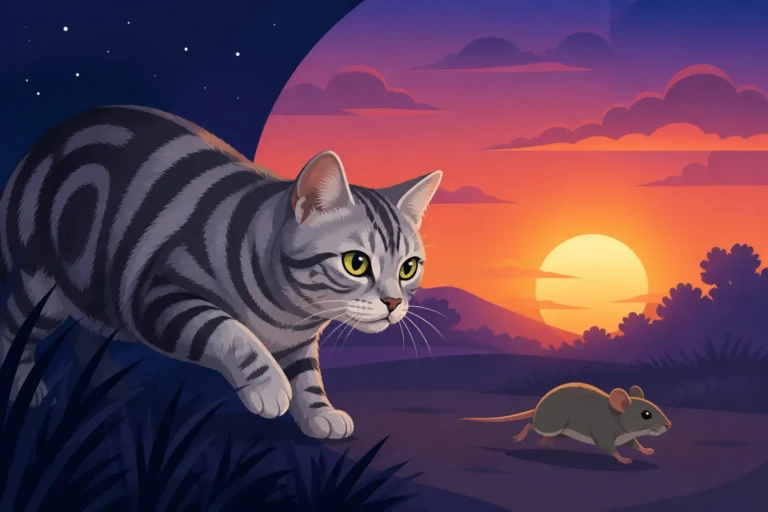
Before they were cherished household companions, American Shorthairs were working cats. Their very existence was intertwined with the crucial job of keeping ships and farms free of rodents. This isn't just a quaint historical fact; it's a deeply ingrained part of their genetic makeup that continues to influence their behavior, even in the most comfortable, well-fed domestic environments.
Why Stalking is Hardwired into Their DNA
Think about the millennia of selective breeding and natural selection that shaped the American Shorthair. These cats weren't bred for fancy coats or extreme features; they were bred for function. Their acute senses, stealthy movements, and powerful pounces were all honed for successful hunting. It stands to reason that Centuries of Ratting Left the American Shorthair Its Drive, and that drive doesn't simply disappear because they now get their meals from a bowl.
This intrinsic drive means that even a cat with a full belly and a warm bed still possesses the urge to hunt. It's not about hunger; it's about the innate satisfaction of the chase, the stalk, the pounce, and the "kill." When a cat observes a small object, it triggers a sequence that mimics hunting prey. Their pupils dilate, their body lowers, their tail twitches, and they enter that focused, predatory state. Every movement, every twitch of an ear, is about assessing the "prey" and planning the strike.
This behavior is a complex, hardwired program. They aren't trying to be mischievous or destructive in a human sense; they're simply following their instincts. Understanding this fundamental truth is the first step in managing their interactions with your belongings. It helps us approach the situation with empathy, recognizing that our cats are just being cats, even if it's frustrating for us.
Your Home as a Hunting Ground
To an American Shorthair, your meticulously arranged shelves, countertops, and mantels aren't just decorative spaces; they're potential hunting perches, vantage points, and territories to be explored. Anything that sits upon them can instantly become an object of interest, a potential "mouse" to be investigated and, quite often, knocked off. The vertical world of your home is just as important as the horizontal ground space, if not more so. How High an American Shorthair Needs to Get is often directly related to their perceived territory and hunting range.
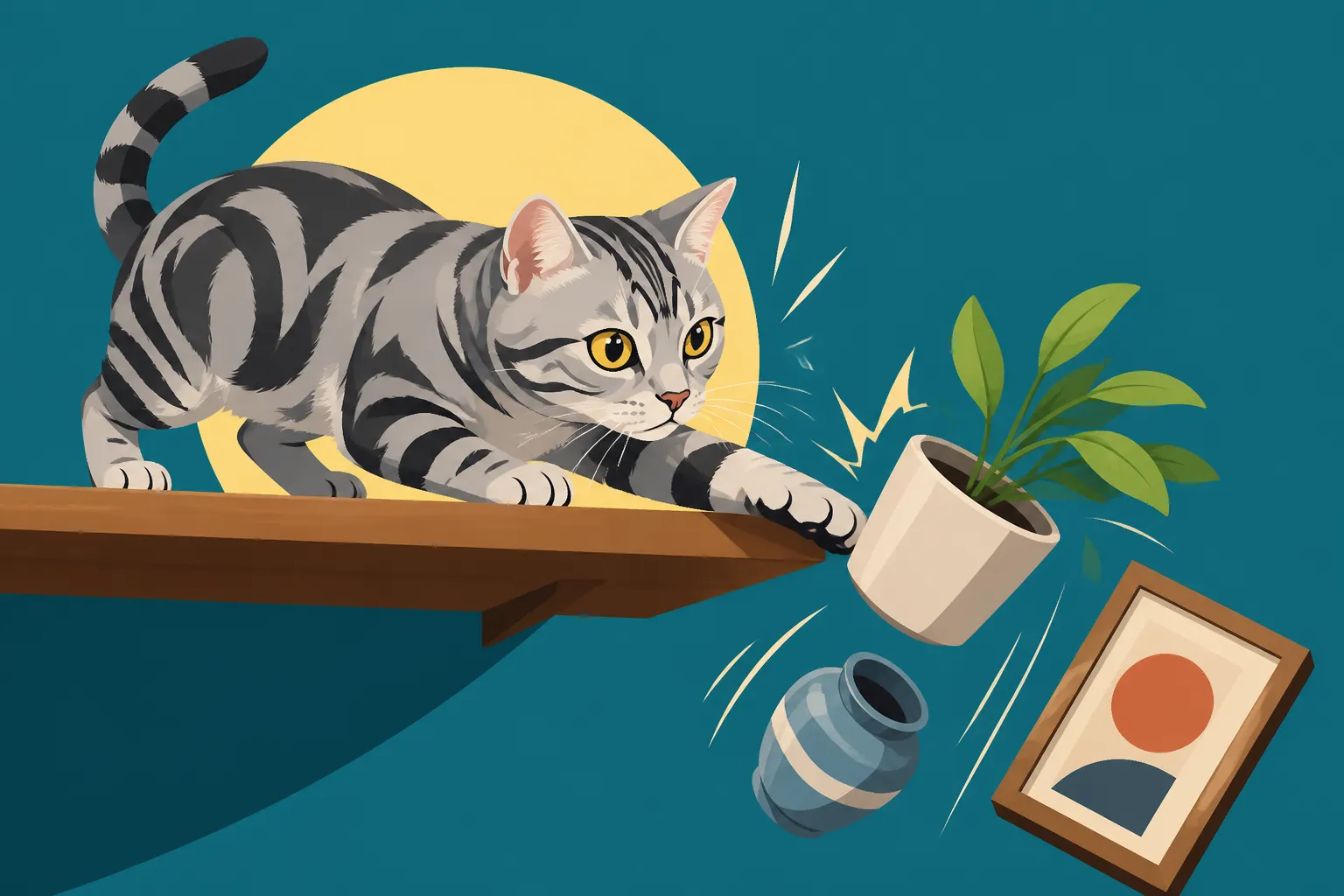
From their perspective, a shelf offers a fantastic elevated position to survey their domain, observe potential "prey" (be it a dust bunny or your new ceramic bird), and launch a surprise attack. That decorative vase or photo frame isn't seen as fragile; it's a static object ripe for interaction. The simple act of batting it with a paw and watching it tumble provides the mental and physical stimulation that a real hunt would. The clatter and scatter of the falling item further engage their senses, making it an exciting, albeit messy, experience for them.
It's also a way for them to scent-mark their territory and assert their presence. Moving objects around, even if it means knocking them down, is a very cat-like way of saying, "This is my space, and I interact with it." This perspective helps us to see their behavior not as naughtiness, but as a natural expression of their intrinsic needs within the confines of our human homes.
The Most Common Casualties of the Shelf Wars
So, what exactly attracts your American Shorthair's attention and makes it a prime target for a gravity experiment? It turns out, certain characteristics of objects are simply irresistible to a cat driven by the urge to hunt and explore.
The Lure of Dangling and Lightweight Objects
Cats are creatures of movement and sound. Anything that dangles, wobbles, or is lightweight enough to be easily manipulated with a paw instantly becomes a fascinating target. Think about a pendulum clock, a tassel on a curtain, or even the cord of your blinds. These items mimic the erratic, tempting movements of small prey, drawing your American Shorthair in like a moth to a flame. They’re like living toys, even if they weren't intended to be.
Small figurines, remote controls, pens, hair ties, car keys, and even small picture frames are frequently among the casualties. These items are often small enough for a cat to bat around, light enough to tumble, and sometimes have an interesting texture or sound when they hit the floor. The sound itself – the clink, the thud, the shatter – is often part of the "reward" for the cat, further reinforcing the behavior. It's an auditory thrill, much like the rustle of leaves or the squeak of a mouse. This is also why How Often an American Shorthair Catches Flies can be quite high indoors – anything that moves in their field of vision is fair game.
Furthermore, many common household items are simply within easy batting distance. If your American Shorthair decides to perch on a bookshelf or window sill, anything on that surface or within their reach becomes fair game for inspection. Their powerful, muscular bodies, designed for agile movement, make them perfectly capable of reaching even seemingly secure items.
The "Gravity Experiment" and Why They Do It
Beyond the sheer thrill of the hunt, cats are also incredibly curious, intelligent creatures. They are constantly learning about their environment through interaction. One of the ways they do this is by performing what we lovingly (or exasperatedly) call "gravity experiments." They push an object to the edge, watch it fall, and observe the outcome. This is a fundamental way for them to understand cause and effect. "If I push this, it makes a noise and goes away." They're not being vindictive; they're being scientists.
This behavior is particularly common if your American Shorthair is feeling under-stimulated or bored. A cat with excess energy or a lack of appropriate outlets for its natural hunting instincts will find its own entertainment. And what could be more entertaining than a perpetually changing landscape of falling objects, especially if it gets a reaction from their human? It's a classic sign of What an Indoor American Shorthair Does With a Mouser's Instinct when they don't have actual mice to chase. The act of knocking things off shelves provides both mental engagement and physical activity, ticking several boxes for a cat that evolved to be constantly alert and active.
It's also worth noting that sometimes, it's a bid for attention. If your cat learns that knocking something off a shelf immediately brings you into the room, even if it's to scold them, they've achieved their goal. Negative attention can still be attention, and for a cat seeking interaction, any response is better than none. This is especially true if you typically have a busy schedule and your cat feels a bit overlooked during the day.
Strategies to Protect Your Possessions (and Your Sanity)
Living with a cat that loves to explore vertically and perform gravity experiments doesn't mean you have to live in a barren home. There are plenty of strategies you can employ to minimize damage and redirect your American Shorthair's natural instincts into more acceptable channels.
Cat-Proofing Your Environment
The first line of defense is to make tempting targets less accessible or less appealing. Start by critically assessing your shelves and surfaces from a cat's perspective. Get down on their level, literally. What looks like a fun climbing opportunity? What could be easily batted off? Prioritize moving truly valuable or fragile items to closed cabinets, display cases, or rooms where your cat isn't allowed unsupervised.
For items you can't or don't want to move, consider securing them. Museum putty, often found on Amazon, is a fantastic, non-toxic, removable adhesive that can anchor small figurines, vases, or photo frames to a surface, making them much harder to dislodge. Another option is to create barriers. If a particular shelf is a constant problem, you might consider placing items further back or using decorative blocks to prevent access to the edge. Providing alternative, approved vertical spaces is crucial. Invest in sturdy cat trees, wall-mounted shelves, or window perches. These give your American Shorthair appropriate places to climb, survey their territory, and nap high up, reducing the appeal of your decorative shelves. How Much Vertical Space an American Shorthair Needs is often underestimated; giving them more options can make a big difference.
| Object Type | Why Cats Love It | Solution |
|---|---|---|
| Small, Lightweight | Easy to bat, makes noise, mimics small prey | Store in drawers, use museum putty, put away. |
| Dangling/Wobbly | Mimics erratic movement, highly stimulating | Secure cords, remove tassels, replace with solid. |
| Fragile/Expensive | Often unique textures/shapes, high breakage value | Closed cabinets, high inaccessible shelves. |
| Anything on Edge | Easy for "gravity experiments," cause & effect | Move items to center, clear edges completely. |
| Items for Attention | Gets human reaction when knocked down | Ignore falling, increase play/enrichment. |
Redirecting Hunting Behavior with Appropriate Play
Since knocking things off shelves is often a manifestation of their hunting drive, providing appropriate outlets for this instinct is paramount. Interactive play sessions are your best friend here. Aim for at least two to three dedicated play sessions per day, each lasting around 10-15 minutes. The goal is to simulate the hunting sequence: stalk, chase, pounce, and catch.
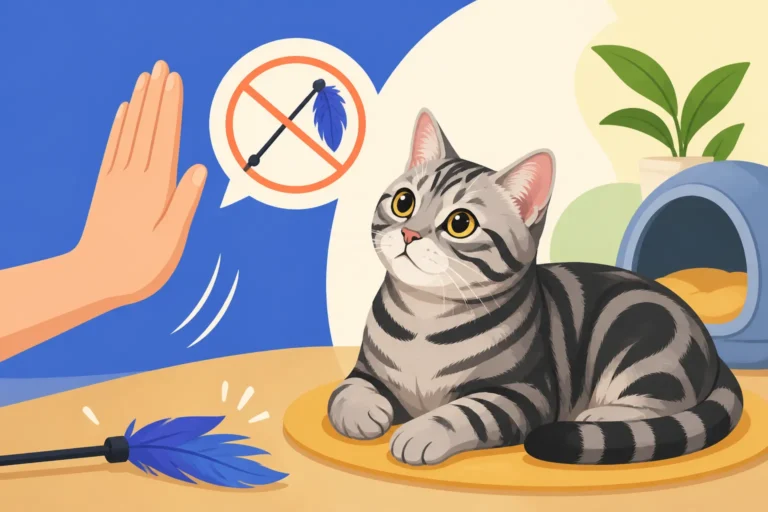
Wand toys with feathers, fabric, or small plush attachments are perfect because they mimic the unpredictable movement of prey. Let the "prey" hide, dart, and pounce. Allow your American Shorthair to stalk it, then encourage explosive bursts of energy. Crucially, always allow your cat to "catch" the toy at the end of the session. This provides a satisfying conclusion to the hunt, fulfilling their natural instinct for the "kill." How to End a Play Session With an American Shorthair properly is key to preventing frustration and ensuring they feel successful. If they never catch their prey, it can lead to anxiety or redirected aggression.
Another excellent way to channel their foraging and hunting skills is through puzzle feeders. These ingenious devices require your cat to "work" for their food by batting, pawing, or manipulating the feeder to release kibble or treats. This taps into their natural problem-solving abilities and satisfies their instinct to "hunt" for their meals, much like their ancestors did. You can find a wide variety of puzzle feeders on Amazon to suit different levels of difficulty. This also addresses Whether a Puzzle Feeder Satisfies an American Shorthair's need for mental stimulation. You can even simply hide portions of their regular kibble around the house in different spots, encouraging them to patrol and "find" their food.
Understanding and Managing Boredom and Stress
A bored American Shorthair is a creative American Shorthair, and their creativity often involves your personal belongings. Recognizing the signs of boredom or stress in your cat can help you intervene before your favorite vase becomes collateral damage. Signs might include excessive grooming, lethargy, increased vocalization, or indeed, destructive behaviors like knocking items off shelves.
Enrichment isn't just about toys; it's about stimulating their senses and providing variety in their environment. Window perches are a simple yet effective tool, offering a "cat TV" view of the outside world, which can be endlessly fascinating. Consider rotating toys to keep things fresh, or investing in different textures and types of scratching posts (sisal, cardboard, carpeted). Which Post Lets an American Shorthair Condition Its Claws is important – offer a variety! Some cats prefer vertical posts, others horizontal.
Sometimes, a perceived lack of companionship can lead to attention-seeking behaviors. While American Shorthairs are generally self-reliant, some thrive with a feline friend. However, bringing a second cat into the home is a significant decision and requires careful consideration of personalities and introduction protocols. Whether a Solitary American Shorthair Wants Another Cat is a complex question, and it's not a universal solution for all behavioral issues. If your cat is alone for long periods, enriching their environment and ensuring plenty of interaction when you are home is even more critical.
When to Consider Professional Help
While many of these behaviors are normal for an American Shorthair, there are times when it's appropriate to seek professional guidance. It's never a sign of failure to ask for help; it's a sign of a responsible and caring pet parent.
Persistent or Destructive Behavior
If your American Shorthair's shelf-clearing habits escalate beyond occasional mischief into truly persistent or destructive patterns, it might be time for a closer look. This means if they are consistently targeting irreplaceable items, causing significant damage, or if the behavior seems compulsive and unresponsive to your redirection efforts.
Also, be mindful of any sudden changes in behavior. A cat that was previously well-behaved but suddenly starts knocking everything over could be signaling an underlying issue. This could be a medical problem, stress from a change in the household (new pet, new person, change in routine), or even anxiety. If you notice other concerning symptoms like a change in appetite, litter box habits, or a sudden withdrawal from interaction, a visit to your veterinarian is the first step. Why a Withdrawn American Shorthair Should See a Vet cannot be overstated, as health issues can often manifest as behavioral problems.
It's important not to punish your cat for these behaviors. Punishment, especially if it's not immediate and directly linked to the act, is ineffective with cats and can lead to fear, anxiety, and a breakdown of trust, often exacerbating the problem rather than solving it. Instead, focus on prevention and redirection.
Consulting a Feline Behaviorist
If you've ruled out medical issues with your vet and tried various environmental enrichment and redirection techniques without success, consulting a certified feline behaviorist can be incredibly beneficial. These professionals specialize in understanding cat psychology and can provide a tailored assessment of your American Shorthair's specific situation. They can help identify the root cause of the behavior, whether it's related to anxiety, boredom, territoriality, or something else entirely.
A behaviorist can offer a fresh perspective, suggest advanced enrichment strategies, and help you implement a behavior modification plan that is specific to your cat's needs and your home environment. They can guide you on everything from advanced training techniques to optimizing your cat's daily routine for maximum satisfaction. For instance, they might recommend specific types of interactive toys or feeders, many of which are readily available on Amazon, that are better suited to your cat's individual play style. Working with a behaviorist is a proactive step towards a happier, healthier relationship with your American Shorthair, ensuring both your belongings and your furry friend thrive.
Disclaimer
This article is for general informational purposes only and does not constitute professional advice. Laws, prices and regulations vary by location and change over time. Consult a qualified professional for guidance on your specific situation.