How to Find the Ribs on a Square Built American Shorthair
It's incredibly frustrating, isn't it? You love your American Shorthair, you want to make sure they're healthy, but trying to figure out if they're at a good weight can feel like a guessing game. Their naturally sturdy, muscular build makes it genuinely difficult to tell what's solid cat and what might be a little extra padding. This guide is here to walk you through exactly how to find those elusive ribs, giving you a clear, hands-on way to assess your beloved cat's body condition and ensure they stay happy and healthy.
Understanding the American Shorthair's Unique Physique
The American Shorthair isn't like some of the more delicate, fine-boned breeds out there. They're built like brick houses, designed for strength and resilience, which is wonderful in so many ways. But this very trait, their famous "square build," can become a real challenge when you're trying to monitor their weight. It's easy to dismiss a little extra girth as just part of their sturdy nature, and before you know it, a subtle weight gain can become a significant health concern.
Why Their "Square Build" Masks Weight Changes
When you look at an American Shorthair, you see a cat with broad shoulders, a deep chest, and well-developed musculature. This isn't a fluffy cat; their coat is dense but relatively short, hugging a powerful frame. This dense muscle and solid bone structure can effectively hide the early signs of fat accumulation. On a lankier breed, a slight weight increase might make their ribs less obvious, but on an American Shorthair, those ribs are already naturally less prominent due even to their optimal weight. This means you have to be much more diligent and "hands-on" to detect changes.
Many owners find themselves struggling with this. You might pat your cat, feel solidity, and assume all is well, when in fact, a layer of fat is slowly building up over that muscle. It's not a reflection of your care; it's just the nature of their robust physique. This can lead to a delay in recognizing weight gain, which is why a consistent, physical check-up at home is so crucial. Without a clear method, it's easy to let things slide, mistaking a heavier cat for a truly muscular one.
The Ancestral Reason for Their Muscular Frame
To truly appreciate why American Shorthairs are built this way, we need to look back at their history. These cats weren't originally bred for looks or lap sitting; they were working cats, invaluable companions on ships and farms across North America for centuries. Their job was to hunt rodents, protect food stores, and keep vermin populations in check. This demanding lifestyle required incredible strength, agility, and stamina. Over generations, nature selected for the most robust, capable hunters, resulting in the deep-chested, well-muscled physique we see today. If you're curious about their origins, you can learn more about How Farm Work Selected the American Shorthair's Build.
This working heritage means they possess a naturally strong, dense bone structure and powerful muscles, especially across their chest, back, and hindquarters. This isn't just aesthetic; it's functional. When you feel your American Shorthair, you're feeling generations of efficient pest control. However, this same impressive musculature, combined with a thick coat, can make it surprisingly difficult to gauge their body condition by sight alone. Their frame allows them to carry extra weight more discreetly than other breeds, making traditional visual cues less reliable.
The Hands-On Method: Locating the Ribs
Given their sturdy build, the most accurate way to assess your American Shorthair's weight isn't just by looking; it's by touching. This isn't about squeezing or being rough, but about a gentle, deliberate palpation of their rib cage. It’s a simple technique, but one that yields much more reliable information than just glancing at them from across the room.
Step-by-Step Guide to the Rib Palpation Test
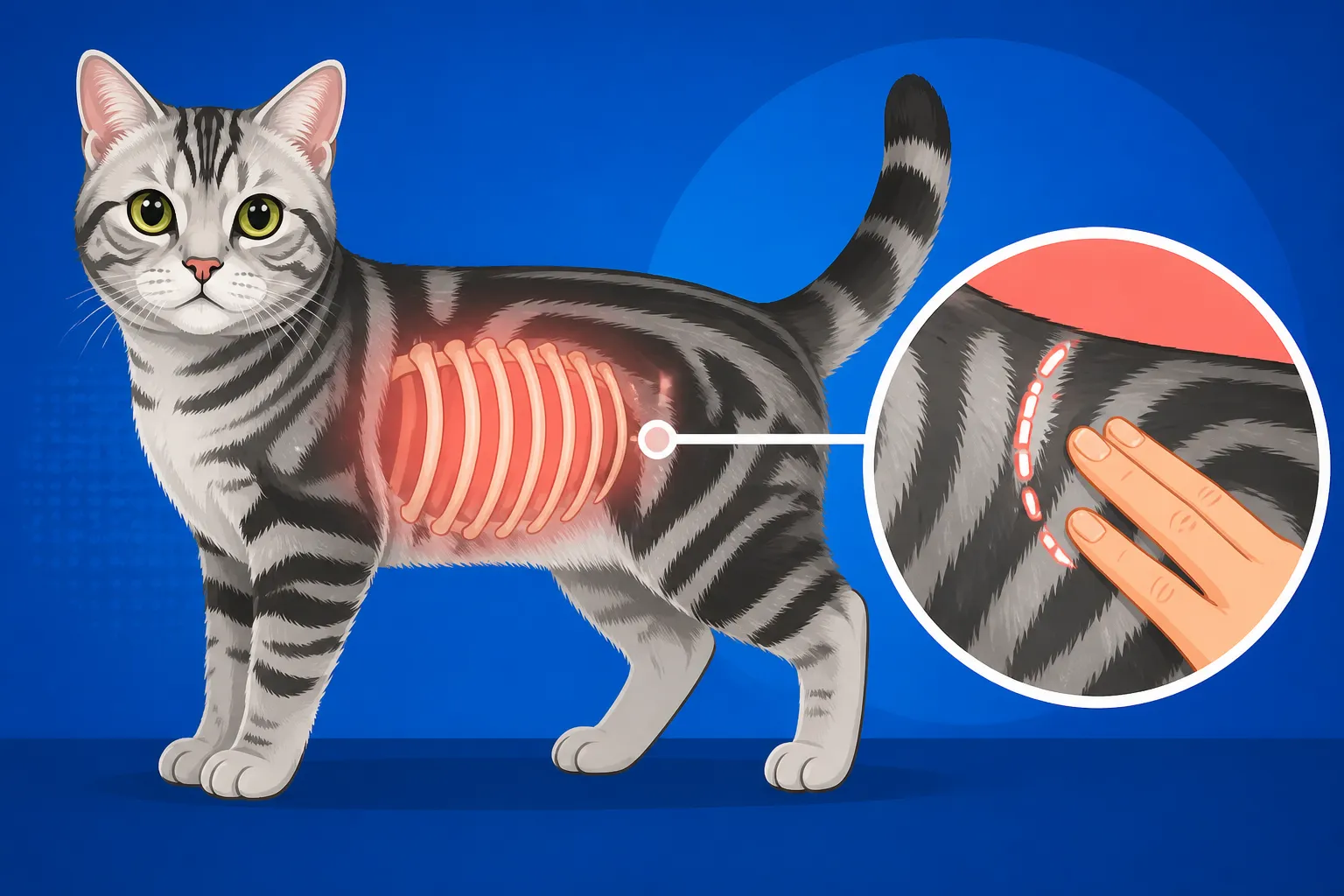
To perform the rib palpation test, start by getting your American Shorthair in a relaxed state. This might be when they're purring on your lap, or simply lounging contentedly. Approach them calmly and gently. Place both of your hands on either side of their chest, just behind their front legs. You'll want your fingertips facing towards their head, and your palms resting lightly on their sides.
Now, with a very light, almost feather-light pressure, slowly run your fingers along their rib cage, moving from front to back. Imagine you're gently strumming a guitar, or lightly feeling for the ridges on a washboard. You're not trying to dig in or press hard. What you should be feeling for are the individual bumps of their ribs, covered by a thin layer of muscle and a minimal amount of fat. You should be able to distinguish each rib without having to push hard, but they shouldn't feel sharp or directly under the skin. It’s a subtle sensation, and it might take a few tries to get the hang of it, especially if you haven't done it before. Consistent practice will make you an expert at reading your cat's body. If you're noticing any unusual stiffness or reluctance from your cat during this process, it might be worth investigating if it's just their normal stoicism or something more. Here's a helpful guide on How to Tell an American Shorthair's Stiffness From Middle Age.
What a Healthy Rib Feel Indicates
When your American Shorthair is at a healthy weight, their ribs should feel like the back of your hand when it's flat, rather than the prominent knuckles of your fist. You can feel them, but they aren't sticking out. There's a subtle, almost padded layer over them, which indicates a healthy amount of muscle and a very thin, ideal covering of fat. You should be able to count the ribs easily with gentle pressure, feeling them distinctly under your fingertips. If you have to press firmly to feel them, or if you can't feel them at all, that's a red flag indicating your cat might be carrying too much weight.
Conversely, if their ribs feel very prominent, almost sharp or directly under the skin with no padding, your cat could be underweight. A healthy American Shorthair should feel solid and muscular, not bony or fragile. The goal is that "just right" feeling – a clear indication of their robust bone structure and muscle, without an excessive or insufficient fat layer. This hands-on assessment is far more reliable than just looking, as their dense coat and broad frame can often hide subtle shifts in body condition.
Interpreting Your Findings: Beyond Just Ribs
Once you've mastered feeling for the ribs, you're already ahead of the game. But a comprehensive assessment of your American Shorthair's body condition goes beyond just that. You need to combine the rib check with other visual and tactile cues to get a complete picture. This helps you understand if your cat is underweight, overweight, or perfectly in that healthy zone.
Identifying Signs of Underweight vs. Overweight
When your American Shorthair is underweight, the ribs will feel very prominent, almost like you're touching them directly through the skin with minimal to no padding. You might also notice a very defined waistline, almost a "cinching in" behind the ribs, and a distinct abdominal tuck (where the belly recedes significantly upwards towards the hind legs). Their spine might feel more prominent, and their hip bones could be easily felt or even seen. They might also show some muscle wasting, especially over their back and hindquarters.
On the other hand, if your American Shorthair is overweight, their ribs will be difficult, if not impossible, to feel without significant pressure. You might notice a lack of a discernible waist, with their body looking more like a continuous, broad cylinder from chest to tail. There might be an obvious "abdominal sag," where their belly hangs down, and a clear layer of fat over their hips and tail base. Their face might appear rounder, and they may seem generally less active. Catching these signs early is crucial. For more details on what to look for, check out How to Spot Weight Gain on a Square Built American Shorthair.
To help you put all these observations together, here’s a simplified Body Condition Score (BCS) table:
| Score | Description | Ribs (Palpation) | Waistline (Visual) | Abdominal Tuck (Visual) | General Impression |
|---|---|---|---|---|---|
| 1 (Emaciated) | Severe malnutrition | Easily visible, no fat | Extreme, sunken | Very pronounced | Severely thin, bony |
| 2 (Thin) | Underweight | Easily felt, minimal fat | Evident, slight tuck | Clear | Lean, slight muscle loss |
| 3 (Ideal) | Healthy weight | Easily felt, thin fat layer | Discernible | Present | Well-proportioned, muscular |
| 4 (Overweight) | Excess weight | Difficult to feel, moderate fat | Indistinct | Minimal to absent | Rounded, broad |
| 5 (Obese) | Grossly overweight | Cannot feel, thick fat layer | Absent, bulging | Absent, pendulous belly | Very heavy, significant fat |
When to Seek Veterinary Advice and Professional Assessment
It's one thing to do these checks at home, but if you're ever unsure about your American Shorthair's body condition, or if you notice a significant change – rapid weight loss or gain – it's always best to consult your veterinarian. They can provide a professional body condition score, use accurate scales, and help you develop a tailored plan. They can also rule out any underlying health issues that might be contributing to weight changes. Sometimes, a seemingly healthy cat might have an underlying metabolic condition or illness that affects their weight.
Don't hesitate to reach out to your vet; they are your best resource for maintaining your cat's health. Early detection and intervention are key, whether it's adjusting their diet and exercise or addressing a medical concern. A proactive approach means you're doing everything you can to ensure your American Shorthair enjoys a long and vibrant life. Having pet insurance, like a policy from Healthy Paws, can be a huge relief, covering a large portion of unexpected vet visits and treatments, making sure you never have to delay getting your furry friend the care they need. Regular check-ups are vital, and you might be surprised by How Regularly a Healthy American Shorthair Still Needs Checking.
Maintaining Ideal Weight for a Long, Healthy Life
Finding the ribs is just the first step. The real goal is to maintain that ideal body condition throughout your American Shorthair's life. This involves a thoughtful approach to their diet, ensuring they get enough activity, and consistent monitoring. It’s an ongoing commitment, but one that pays dividends in their overall health and longevity.
Diet and Exercise for the American Shorthair
Since American Shorthairs are no longer actively hunting mice for their meals, their caloric intake needs to be carefully managed. Free-feeding, where food is left out all day, can quickly lead to weight gain for this breed, whose ancestors had to work hard for every bite. Instead, consider portion control, offering two or three measured meals a day. High-quality wet food can be beneficial as it provides hydration and can be more filling with fewer calories than dry kibble, helping with satiety. Look for cat foods with high protein content to support their muscular build. You can find more detailed advice on Portioning for an American Shorthair That Once Worked for Meals and Feeding an American Shorthair That No Longer Hunts Its Food.
Exercise is equally important. American Shorthairs retain a strong prey drive, so interactive play is key. Think wand toys that mimic birds or mice, allowing them to stalk, pounce, and "catch" their prey. Aim for at least two to three short play sessions daily. Puzzle feeders can also be a fantastic way to engage their minds and make them "work" for a portion of their food, tapping into those ancestral hunting instincts and slowing down their eating. This kind of active play isn't just about burning calories; it's vital for their mental stimulation and overall well-being. Getting them to engage in this kind of activity is critical for their physical health and prevents boredom. You can explore Play That Finishes the Hunting Sequence for an American Shorthair for ideas.
The Role of Regular Check-ups and Monitoring
Maintaining an ideal weight is a marathon, not a sprint. Regular monitoring at home, coupled with annual veterinary check-ups, forms the cornerstone of preventative health care for your American Shorthair. Your vet will not only perform a thorough physical exam but also weigh your cat and discuss any changes in their body condition. These yearly visits are crucial for catching any subtle health issues before they become major problems, including those related to weight, such as developing diabetes or joint problems.
Keep a mental (or even written) note of your cat's weight fluctuations and rib condition. If you notice them becoming harder to feel, or if their waistline starts to disappear, you know it's time to adjust their food portions or increase their activity. The American Shorthair is generally a healthy, long-lived breed, but obesity can significantly shorten their lifespan and lead to costly and uncomfortable health problems. Proactive management of their weight is one of the most impactful things you can do to ensure they live out their full, healthy life. This is where pet insurance, like Healthy Paws, truly shines, providing peace of mind that you'll have support for anything from routine check-ups to managing more serious conditions, like Obesity Is What Ending the American Shorthair's Job Cost It, should they arise. Ensuring your cat remains at a healthy weight can literally add years to their life, as discussed in How Many Years Extra Weight Takes Off the American Shorthair's Lifespan.
Disclaimer
This article provides general information and recommendations. It is not a substitute for professional veterinary advice, diagnosis, or treatment. Always seek the advice of your veterinarian or other qualified health provider with any questions you may have regarding a medical condition.