How a Thickened Heart Throws a Clot in an American Shorthair
It's an utterly terrifying scenario for any cat parent: you wake up or come home to find your beloved American Shorthair suddenly unable to use their back legs, perhaps crying out in pain. This horrifying event, known as a saddle thrombus, is often a direct and devastating consequence of an underlying heart condition, specifically Hypertrophic Cardiomyopathy (HCM), that might have been quietly progressing for years. This guide will meticulously break down how a thickened heart can lead to such a critical blood clot and, crucially, what you can do when faced with this emergency.
Understanding Hypertrophic Cardiomyopathy (HCM) in American Shorthairs
Hypertrophic Cardiomyopathy, or HCM, is the most common heart disease in cats, and while American Shorthairs are celebrated for their robust health, it's unfortunately still a condition they can develop. It’s vital for owners to understand what this means for their typically stoic and resilient companions.
What a Thickened Heart Really Means
At its core, HCM is characterized by an abnormal thickening of the heart muscle walls, particularly the muscular wall of the left ventricle. Imagine your cat's heart as a powerful pump designed for efficient blood flow. In a healthy heart, these walls are supple and expand and contract with ease. With HCM, these walls become stiff and bulky, much like trying to inflate a balloon inside a progressively stiffening, smaller box. This thickening makes it difficult for the heart to relax and fill with blood properly between beats. The heart tries to compensate by working harder, which can, paradoxically, lead to even more thickening over time. This reduces the amount of blood the heart can pump out to the body, impacting overall circulation.
Why HCM is a Concern for American Shorthairs
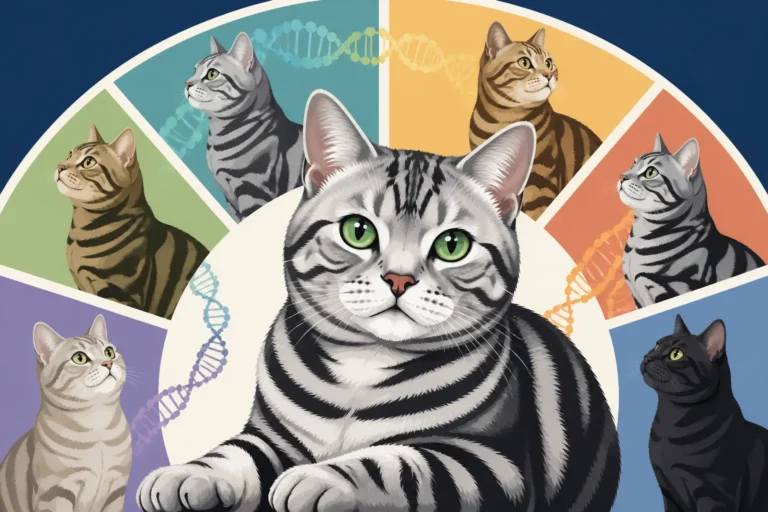
American Shorthairs are renowned for being a breed with minimal inherited health issues, often considered The American Shorthair Is the Control Group of Cat Breeding. However, HCM stands out as HCM Is the One Inherited Disease the American Shorthair Kept. While not as rampant or notoriously breed-specific as in, say, Maine Coons or Ragdolls, American Shorthairs still carry a genetic predisposition. This means that while they might not show the extreme physical characteristics of some designer breeds, the subtle genetic blueprint for a thickened heart can still be present within their lines. This inherent risk makes awareness and proactive monitoring critical for every American Shorthair owner, regardless of their cat's perceived good health.
How HCM Progresses Silently
One of the most insidious aspects of HCM is its tendency to progress silently, often for years, without any outward symptoms. In the early stages, your American Shorthair might appear perfectly healthy, maintaining their usual playful demeanor and hearty appetite. There are no obvious signs of illness, no coughing, no labored breathing. The first indication often comes during a routine veterinary check-up, where a vet might detect a heart murmur or an irregular heartbeat during a physical examination. These subtle findings are crucial clues that warrant further investigation, like an echocardiogram, to truly assess the heart's structure and function. Waiting for more obvious signs like lethargy, reduced appetite, or difficulty breathing means the disease is likely already in its more advanced stages, making intervention more challenging. This silent progression underscores Why an American Shorthair Still Needs a Yearly Heart Scan and why relying solely on a gene test for clearance isn't enough, as explained in Why a Gene Test Cannot Clear an American Shorthair's Heart. The disease often begins to show physical changes to the heart around The Age an American Shorthair's Heart Starts to Thicken.
The Mechanics of Clot Formation in an HCM-Affected Heart
The real danger of HCM, especially in its more advanced stages, isn't just the failing heart itself, but the increased risk of blood clot formation, which can have catastrophic consequences. This is where the quiet, internal struggle of the heart becomes an acute, life-threatening emergency.
The Role of Turbulent Blood Flow
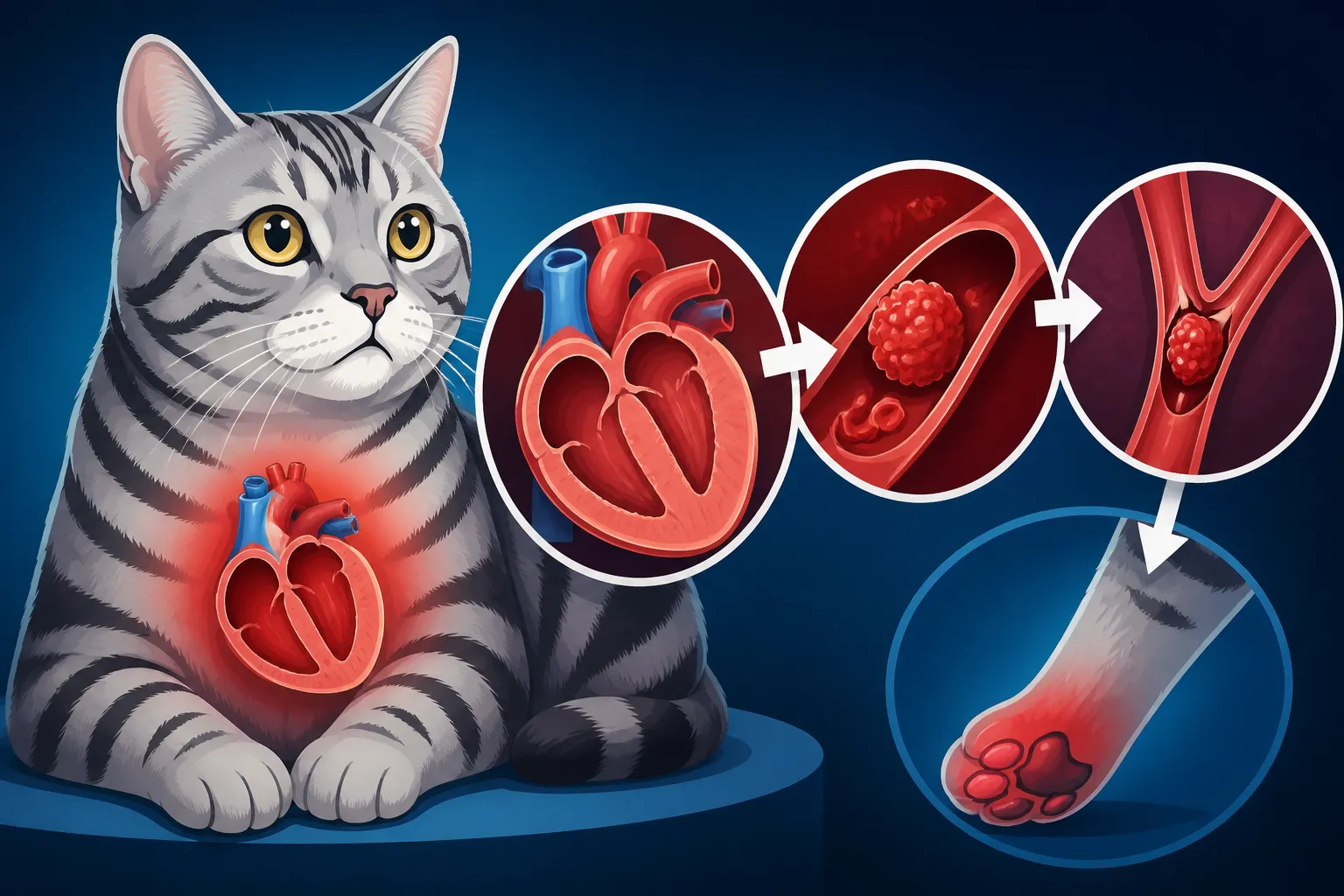
When the heart muscle walls thicken due to HCM, the smooth, laminar flow of blood within the heart chambers becomes disrupted. Instead of flowing cleanly and efficiently, the blood encounters obstructions and irregularities, leading to turbulent, chaotic movement. This turbulence is particularly pronounced in the left atrium, the chamber that receives oxygenated blood from the lungs before passing it to the left ventricle. Imagine water swirling erratically in a constricted pipe rather than flowing steadily. This abnormal flow not only hinders the heart's pumping efficiency but also damages the delicate inner lining of the heart, known as the endothelium. When this lining is injured, it becomes "sticky," a perfect surface for platelets, which are essential for blood clotting, to aggregate and start forming a thrombus, or blood clot.
The Connection Between the Left Atrium and Clot Risk
The left atrium plays a disproportionately large role in the risk of clot formation in cats with HCM. As the thickened left ventricle struggles to relax and fill, the left atrium has to work much harder to push blood into it. Over time, this constant strain causes the left atrium to enlarge, sometimes significantly. A larger atrium, combined with the turbulent blood flow discussed earlier, creates ideal conditions for blood stasis—meaning the blood pools and moves very slowly, if at all, in certain areas. This stagnant blood, coupled with the damaged endothelial lining, forms a deadly combination where clots are much more likely to form. During an echocardiogram, a veterinarian might even observe what's called "spontaneous echo contrast" or "smoke" within the enlarged left atrium. This "smoke" isn't actual smoke, but rather microscopic swirling red blood cells visible on ultrasound, indicating severe blood stasis and a very high risk of clot development. This critical chamber is a key area of concern when monitoring American Shorthairs for What an American Shorthair Shows Before Its Heart Fails.
What Happens When a Clot Breaks Free
The true crisis unfolds when a piece of this formed blood clot, now called an embolus, breaks away from the heart wall. Once freed, this embolus travels swiftly through the arterial system, carried by the very blood flow it once obstructed. The destination is usually an artery that is too narrow for the embolus to pass through, causing it to lodge and completely cut off blood supply downstream. The most common, and devastating, location for this blockage in cats is the "saddle" of the aorta, where the main artery splits to supply blood to both hind legs. This event, known as a feline aortic thromboembolism (FATE) or "saddle thrombus," leads to acute ischemia – a severe lack of blood flow – to the hind limbs. The result is immediate and excruciating pain, often leading to complete or partial paralysis of one or both back legs. It's the sudden, heartbreaking reason Why an American Shorthair Suddenly Loses Its Back Legs.
Recognizing the Signs of a Thromboembolism
Spotting the signs of a blood clot is critical because it's a dire emergency. Recognizing these indicators quickly can make a difference, though the prognosis is often grim.
Sudden Hind Leg Paralysis (Saddle Thrombus)
The most classic and recognizable presentation of a thromboembolism in an American Shorthair is a sudden onset of hind leg paralysis, often accompanied by severe pain. Your cat might suddenly cry out, collapse, and be unable to move or drag one or both back legs. They may thrash or bite at their legs due to the intense pain. When you touch the affected limbs, you'll notice they feel distinctly cold to the touch, often much colder than their front paws or body. Their paw pads might also appear pale, bluish, or even purplish due to the lack of blood flow. Another critical diagnostic sign for a veterinarian is the absence or severe weakening of the femoral pulses in the groin area, which indicates the blockage. This combination of symptoms is a red flag that demands immediate emergency veterinary care.
Other Locations for Clots
While the hind legs are by far the most common target for a blood clot, it's important to remember that an embolus can travel to other parts of the body, leading to a variety of less obvious, but still serious, symptoms. Clots can lodge in the arteries supplying the forelegs, causing acute lameness, pain, and coldness in a front limb. Although less frequent, they can also block blood flow to vital internal organs like the kidneys, intestines, or even the brain. When this happens, symptoms can be more vague and challenging to pinpoint, ranging from vomiting, loss of appetite, and severe abdominal pain if the intestines are affected, to seizures, disorientation, or other neurological deficits if the brain is deprived of blood. These less common presentations highlight the complexity of diagnosing clots in some instances, but any sudden, severe change in your cat's health should always prompt an immediate veterinary visit.
Distinguishing From Other Conditions
Given the dramatic presentation of a saddle thrombus, it's natural for owners to wonder if it could be something else entirely, like a spinal injury, severe arthritis, or trauma. While these conditions can indeed cause hind leg weakness or paralysis, there are key differentiators that point specifically to a blood clot. The defining characteristics of a saddle thrombus are the sudden, acute onset of severe pain, coupled with cold hind limbs and absent or weak femoral pulses. A cat with a spinal injury might have pain but usually normal limb temperature and pulses. Arthritis typically has a gradual onset, characterized by stiffness and reluctance to move rather than acute paralysis and extreme pain. Trauma would have an obvious external cause, but the internal signs of a clot would still be unique. Because of the critical nature of this condition, it is paramount to seek immediate veterinary attention. Only a veterinarian can perform the necessary physical examination, including palpating pulses and assessing blood flow (sometimes using a Doppler ultrasound), and potentially an echocardiogram to confirm the underlying heart disease. Do not delay, as time is of the essence in managing this severe emergency.
| Symptom / Condition | Saddle Thrombus (Clot) | Arthritis/Hip Dysplasia | Spinal Injury (e.g., trauma) |
|---|---|---|---|
| Onset | Sudden, acute, devastating | Gradual, progressive | Sudden (often with a history of trauma) |
| Pain | Severe, intense, often audible distress | Chronic, intermittent stiffness | Moderate to severe, depends on injury |
| Limb Temperature | Cold to the touch (hind legs) | Normal | Normal |
| Paw Pad Color | Pale, bluish, or purplish | Normal | Normal |
| Femoral Pulses | Absent or very weak in hind legs | Normal and strong | Normal and strong |
| Ability to Move | Complete paralysis of hind legs | Stiff, reluctant to jump or use stairs | Variable weakness or paralysis |
| Emergency Level | Immediate Life-Threatening Emergency | Urgent Vet Visit (not acute emergency) | Immediate Emergency |
Emergency Action and Management for Clot Events
Facing a blood clot event in your American Shorthair is one of the most stressful experiences a cat owner can endure. Knowing what to do immediately and understanding the subsequent treatment is vital.
Immediate Steps to Take
When you suspect your American Shorthair has suffered a blood clot, the very first thing to do is remain as calm as possible, difficult as that may be. Your cat is experiencing excruciating pain and distress, and your calm demeanor can help prevent further agitation. Immediately call your veterinarian or the nearest emergency veterinary clinic. This is not an issue that can wait; it is a true, life-threatening emergency, and every minute counts. Explain your cat's symptoms clearly: sudden paralysis, severe pain, cold limbs, and any vocalization.
While preparing for transport, handle your cat with extreme gentleness. They are in immense pain and may instinctively lash out, even at you. Carefully place them in a carrier or on a soft, supportive blanket to minimize movement of their affected limbs. Do not try to massage or rub the legs, as this can worsen the situation or cause your cat more pain. While affected limbs might feel cold, avoid using direct heat sources like heating pads or hot water bottles, which can cause burns to skin with compromised blood flow. A warm, soft blanket for comfort during the frantic journey to the vet is appropriate. Speed is of the essence, as the viability of the affected tissue rapidly deteriorates without blood supply.
Veterinary Diagnosis and Treatment
Upon arrival at the veterinary clinic, the diagnostic process will typically involve a thorough physical examination, focusing on palpating the femoral pulses and assessing the temperature and color of your cat's limbs. A Doppler ultrasound might be used to confirm the absence of blood flow in the affected arteries. An echocardiogram will be performed to assess the severity of the underlying HCM, identify any existing clots within the heart, and evaluate the function of the heart muscle. Blood tests will also be conducted to assess overall health, kidney function (which can be affected by clots), and blood clotting parameters.
Acute treatment for a saddle thrombus focuses on several critical areas. First and foremost is aggressive pain management; strong analgesics are essential to alleviate your cat's intense suffering. The next priority is to try and prevent further clot formation and, if possible, gently break down the existing clot. This usually involves administering blood thinners, such as injectable heparin, and oral antiplatelet medications like clopidogrel (Plavix), which helps prevent platelets from sticking together. Supportively, IV fluids, oxygen therapy, and medications to stabilize heart function may be given in an intensive care unit setting. The costs associated with such an emergency can be substantial, often running into thousands of dollars for diagnostics, hospitalization, and medication. Having pet insurance, like a plan from Healthy Paws, can be a huge relief in these financially taxing situations, helping cover some of the extensive bills from What an American Shorthair's Emergency Visit Costs.
Long-Term Management and Prevention
The prognosis for cats suffering from a saddle thrombus is unfortunately guarded to poor, especially if both hind legs are severely affected or if the underlying heart disease is very advanced. Many cats do not recover, or face severe long-term complications, including permanent nerve damage or loss of limb function. However, if your American Shorthair does survive the initial acute crisis, the focus shifts to lifelong management of the underlying HCM and proactive prevention of future clot events.
This typically involves a regimen of cardiac medications, which may include diuretics to manage fluid accumulation, ACE inhibitors to help the heart work more efficiently, and beta-blockers to control heart rate and rhythm. Crucially, lifelong anti-clotting medications, such as daily clopidogrel (often sold as Plavix for humans, but prescribed in specific feline doses), will be prescribed to significantly reduce the risk of another devastating clot. It is absolutely imperative that any anti-clotting medication, especially aspirin, is only given under strict veterinary guidance, as incorrect dosages can be toxic to cats. Regular follow-up echocardiograms are essential to monitor the progression of HCM and the effectiveness of the medications, as outlined in Which Drugs Slow an American Shorthair's Heart Disease. These ongoing veterinary visits and medications represent a significant commitment, and this is another area where pet insurance providers like Healthy Paws can truly help manage the long-term financial burden of a chronic condition. While we can't cure HCM, the goal of this comprehensive management plan is to maximize your American Shorthair's comfort, extend their active years, and maintain their quality of life, understanding that HCM is a progressive disease that may eventually impact their longevity. For more about the long-term prognosis, you can look into How Many Months Follow an American Shorthair's HCM Diagnosis. When considering Whether Insurers Price the American Shorthair Low, remember that even a low-risk breed can face significant health challenges requiring substantial financial input, which highlights the value of comprehensive coverage for things like What an American Shorthair's Senior Panel Costs.
Disclaimer
The information provided in this article is for educational and informational purposes only, and does not constitute veterinary advice. Always consult with a qualified veterinarian for any health concerns or before making any decisions related to your pet's health and treatment.